Lulutox Tea Review 2026What Is Inside, and Who It Suits
 |Medically Reviewed by Editorial Team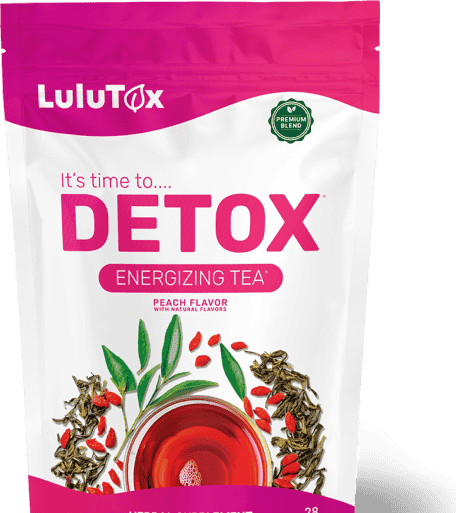
Lulutox Tea is a supplement formula built around Dandelion Leaf, Milk Thistle, Matcha Green Tea and Yerba Mate. Below is what is actually in it, what those ingredients are understood to do, and the kind of person it suits. It will not suit everyone, and we say so where that is the case.
90-Day Guarantee
Free Shipping
Secure Checkout
On this page
Score Breakdown
Pros & Cons
Pros
- Twelve botanicals in one blend
- An easy daily habit to keep
- No capsules or powders
- Caffeine from matcha and yerba mate
Cons
- No amounts published for any ingredient
- Contains caffeine, so not one for the evening
Who Is This For?
Recommended For:
Lulutox Tea is a good fit if you are:
- A daily tea habit
Not Recommended For:
Worth a word with your doctor first if you are:
- anyone sensitive to caffeine, and anyone taking it late in the day
- anyone pregnant, breastfeeding, or under 18
- anyone on prescription medication, until a pharmacist has seen the ingredient list
Summary
The ingredient doing most of the work here is Green Tea Extract (EGCG). EGCG inhibits catechol-O-methyltransferase, the enzyme that degrades noradrenaline, which modestly prolongs adrenergic signalling and raises energy expenditure. Research on it tends to show an effect from around 250 mg EGCG/day, which is the figure worth holding in mind when you read any label in this category.
What it has going for it: twelve botanicals in one blend, An easy daily habit to keep, No capsules or powders and Caffeine from matcha and yerba mate. The main thing to weigh against that is that no amounts published for any ingredient, which is worth knowing before you order rather than after.
One thing to be straight about: Lulutox Tea does not publish per-serving amounts for its ingredients, so there is no way to check any of them against the research. That is common in this category rather than unusual, but it is the difference between a formula you can assess and one you take on trust.
Ingredient Breakdown
Lulutox Tea lists 6 ingredients. Here is what the research says about the ones that carry the formula.
Green Tea Extract (EGCG). Green tea extract is the backbone of most thermogenic products we review, standardised to EGCG, its principal catechin. EGCG inhibits catechol-O-methyltransferase, the enzyme that degrades noradrenaline, which modestly prolongs adrenergic signalling and raises energy expenditure. Trials generally start to see an effect from about 250 mg EGCG/day.
Panax Ginseng. Panax ginseng is the ginseng with the trial record; it should not be confused with Siberian ginseng, which is an unrelated plant. Ginsenosides, of which more than a hundred have been identified, with Rb1 and Rg1 the most studied. Trials generally start to see an effect from about 200 mg/day of standardised extract.
Caffeine. Caffeine is the most reliably effective ingredient in this entire library, and the one most likely to be hidden. Antagonises adenosine receptors, blocking the signal that accumulates through the day and produces the sensation of tiredness. Trials generally start to see an effect from about 2 mg/kg body mass.
The formula also contains Dandelion Leaf, Milk Thistle and Yerba Mate. These have less human research behind them than the ingredients above, so treat them as supporting rather than as the reason to buy.
Quality & Testing
Lulutox Tea does not state that it is independently tested. That is not the same as saying it failed a test, since most brands in this category simply do not commission one, but it does mean nobody outside the company has verified what is in the bottle. It is manufactured in USA. Any supplement sold in the US has to be produced under 21 CFR 111, the FDA's manufacturing rules. Brands often present that as a distinction; it is the legal floor. A certification from a named independent body such as NSF or USP is the thing that actually separates one manufacturer from another, and we only note it where a brand claims it.
Value for Money
Lulutox Tea does not publish a standing price on its own page. The figure moves with whichever bundle is being promoted that week, which is normal for direct-to-consumer supplements and makes a like-for-like comparison awkward.
The question worth asking is not what a bottle costs but what a day costs, and whether the ingredients you are paying for are present in amounts that do anything. In this category the price range is wide and it correlates poorly with formula quality: some of the most expensive options here are the least specific about what is inside them.
If you are comparing Lulutox Tea against something else, compare the named active ingredients first and the headline price second.
Side Effects & Safety
Lulutox Tea is generally well tolerated. Nothing in it is unusual for the category, and most people take it without noticing anything beyond what they were hoping for. The points below are the ones worth being aware of rather than reasons to avoid it.
Green Tea Extract (EGCG). Nausea, stomach upset and insomnia at higher doses, the last usually from the caffeine in combination products.
Panax Ginseng. Insomnia is the most common, which argues for morning dosing.
Worth checking. Reduces non-haem iron absorption, so it should be separated from iron supplements and iron-rich meals.
As with any supplement, start at the stated serving and give it a week before you judge how it sits with you. If you take prescription medication, show the ingredient list to a pharmacist first.
Final Verdict
Our Verdict
Lulutox is a loose-leaf blend of twelve botanicals including dandelion, milk thistle, matcha, yerba mate and ginseng. It is a pleasant daily habit rather than a formula built around a studied dose, and the brand publishes no amounts for any of the twelve, so there is nothing to check a label against. Worth it if you want a tea you will actually drink every morning; not the place to look if you want a specific ingredient at a specific amount.
Best For:
Frequently Asked Questions
Medical Disclaimer
The content on this page is for informational purposes only and is not intended as medical advice, diagnosis, or treatment. Always consult your physician or qualified healthcare provider before starting any new supplement regimen. Individual results may vary.
Sources & References
- Oketch-Rabah HA et al. 2020. United States Pharmacopeia comprehensive review of the hepatotoxicity of green tea extracts. Toxicol Rep.
- EFSA 2018. Scientific opinion on the safety of green tea catechins.
- LiverTox. Green Tea. NIH National Institute of Diabetes and Digestive and Kidney Diseases.
- Cochrane systematic review. Ginseng for erectile dysfunction.
- Jang DJ et al. 2008. Red ginseng for treating erectile dysfunction: a systematic review. Br J Clin Pharmacol.
- Kim HG et al. 2013. Antifatigue effects of Panax ginseng: a randomised, double-blind, placebo-controlled trial. PLoS One.
- Guest NS et al. 2021. International Society of Sports Nutrition position stand: caffeine and exercise performance. J Int Soc Sports Nutr.
- Goldstein ER et al. 2010. International Society of Sports Nutrition position stand: caffeine and performance. J Int Soc Sports Nutr.