Green tea extract produces a modest, statistically real amount of weight loss, not a dramatic one. The best available data, a 2023 grade-assessed meta-analysis pooling 59 randomized trials and roughly 3,802 participants, found a weighted mean difference of −0.64 kg compared with placebo. That is about a pound and a half. It is real, it is reproducible across dozens of trials, and it will not replace a calorie deficit or a training program.
The practical takeaway: expect a slow, incremental effect that builds over 8 to 12 weeks, not a fat-melting shortcut. Green tea extract works best as an add-on to diet and exercise changes you are already making, not as the plan itself.
Before starting, talk to your doctor or pharmacist, especially if you take blood thinners, have liver disease, or are on psychiatric medication. A few specifics worth knowing up front:
- The pooled effect above comes from grade-assessed randomized controlled trials, the strongest evidence tier available for supplements.
- A 12-week high-dose EGCG trial, registered as NCT02147041, used 856.8 mg of EGCG daily and found measurable reductions in weight, BMI, and waist circumference in women with central obesity.
- Authorities like NCCIH and consumer-health resources both flag safety considerations that matter more than most marketing copy admits.
Key Takeaways
Green tea extract produces a small, statistically consistent reduction in body weight, and its benefit multiplies when paired with exercise rather than taken alone.
| Point | Details |
|---|---|
| Modest average effect | Pooled data from 59 RCTs shows a WMD of −0.64 kg versus placebo, a real but small effect. |
| Effective dose and timeline | Trials used 50 to 900+ mg EGCG per day, with most measurable change appearing at 8 to 12 weeks. |
| Main safety caveat | Concentrated high-dose extracts carry a rare but documented liver injury risk, plus interactions with blood thinners and other medications. |
| Practical next step | Consult your doctor or pharmacist, start at a low dose with food, and pair it with diet and exercise changes. |
| Where to compare products | Rankofsupplements reviews individual green tea extract products against trial-based EGCG dosing and third-party testing standards. |
Table of Contents
- Does Green Tea Extract Cause Weight Loss? What the Research Shows
- How Does EGCG Help With Fat Loss?
- What Dose of Green Tea Extract Do Studies Actually Use?
- How Long Does It Take to See Results From Green Tea Extract?
- What Are the Side Effects and Risks of Green Tea Extract?
- How Do You Choose a Safer Green Tea Extract Supplement?
- How Should You Take Green Tea Extract for Weight Loss?
- Who Should Avoid Green Tea Extract or Talk to a Doctor First?
- Sample Dosing Approaches (Illustrative Only)
- What the Evidence Actually Tells Us
- Find a Green Tea Extract Product Backed by Real Dosing Data
- Sources
- FAQ
Does Green Tea Extract Cause Weight Loss? What the Research Shows
The strongest signal comes from the meta-analysis mentioned above, and it is worth noting that it showed a modest but statistically significant average difference in weight change between people taking green tea extract and those taking a placebo. Multiple randomized trials contributed to this estimate, supporting the consistency of the finding. But heterogeneity across those trials is real. Some used brewed tea, some used concentrated capsules, some ran for four weeks, others for a year. Extract standardization varied wildly, and several studies paired supplementation with exercise programs while others tested it alone. A related systematic review flags exactly this: differences in dosage, extract type, and co-interventions make it hard to pin an exact number on any individual’s expected result.
Key statistic: Across 59 RCTs and about 3,802 participants, green tea extract produced a WMD of −0.64 kg (95% CI −0.97 to −0.30; P < 0.001) versus placebo.
One trial worth knowing by name is the Chen et al. 12-week randomized, double-blind, placebo-controlled study, registered under NCT02147041. Women with central obesity took 856.8 mg of EGCG a day, a genuinely high dose, and saw significant drops in weight, BMI, and waist circumference compared with placebo. The trial also measured appetite hormones and found favorable shifts, including lower ghrelin and higher adiponectin, giving a biological explanation for why the scale moved.
A handful of consistent patterns show up across the literature:
- Effects tend to be larger when green tea extract is combined with an exercise program rather than taken alone.
- Higher EGCG doses correlate with bigger waist circumference reductions in several trials, though not always with proportionally bigger weight loss.
- A systematic review from 2025 confirms the general direction: most trials in adults with obesity show reductions in body weight and BMI, with exercise as a consistent amplifier.
How Does EGCG Help With Fat Loss?
EGCG, short for epigallocatechin gallate, is the catechin responsible for most of green tea’s biological activity. It is the compound researchers measure in trials, and it is the number you should look for on a supplement label instead of vague “green tea extract” claims.
The mechanisms proposed for weight effects include:
- Thermogenesis. EGCG may modestly raise the number of calories your body burns at rest, though the effect size in humans is small compared with animal studies.
- Increased fat oxidation. Some trials report a shift toward burning more fat for fuel during exercise, particularly at higher EGCG doses.
- COMT inhibition. EGCG can inhibit an enzyme called catechol-O-methyltransferase, which breaks down norepinephrine. Slowing that breakdown may prolong norepinephrine’s metabolic and appetite-suppressing signals.
- Appetite hormone shifts. The Chen trial found lower ghrelin (a hunger-signaling hormone) and higher adiponectin (linked to fat metabolism) after 12 weeks of high-dose EGCG.
- Metabolic rate. A few studies show a small uptick in resting energy expenditure, generally in the range of tens of calories a day, not hundreds.
Caffeine matters here too. EGCG and caffeine appear to work synergistically, which is part of why some supplement blends include both. But if you already drink coffee or tea daily, your body may have built some tolerance to caffeine’s metabolic effects, which can blunt the combined benefit.
An analysis in HerbalGram frames green tea extract accurately: it behaves more like a metabolic amplifier for exercise and energy expenditure than a standalone fat-loss agent. Take away the diet and training, and the amplifier has nothing to amplify.

One more wrinkle: COMT genotype varies between individuals, and some early research suggests people with certain COMT variants may respond differently to catechins. The evidence here is preliminary, so treat it as a possible modifier, not a reason to expect a dramatically different result from your own genetics.
What Dose of Green Tea Extract Do Studies Actually Use?
Trials study green tea in several forms, and the differences matter for anyone trying to translate research into a real product on a shelf.
- Brewed green tea (loose leaf or tea bags), the least concentrated and most variable form.
- Standardized green tea extract (GTE) capsules or tablets, which list a reliable EGCG or total catechin content.
- Decaffeinated extracts, used in trials designed to isolate EGCG’s effects from caffeine’s.
- EGCG-standardized isolates, the most concentrated form and the one used in higher-dose clinical trials like Chen’s.
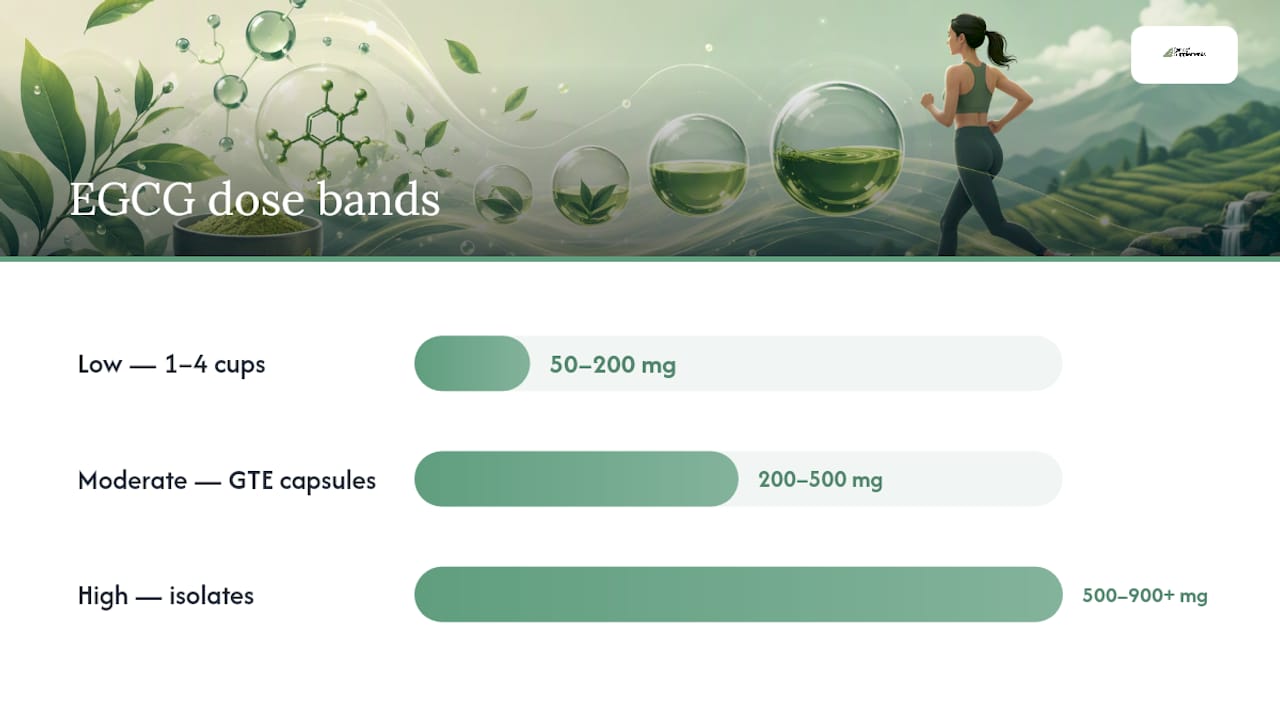
Doses across the research vary by a wide margin, generally clustering into three practical bands:
| Dose Band | EGCG per Day | Approximate Source |
|---|---|---|
| Low | 50 to 200 mg | 1 to 4 cups of brewed green tea |
| Moderate | 200 to 500 mg | Standard GTE capsules, most commercial supplements |
| High (clinical-trial style) | 500 to 900+ mg | Concentrated isolates, e.g. Chen trial’s 856.8 mg/day |
A dose-response meta-analysis found some of the clearest waist circumference benefits at doses of 800 mg per day or higher, while lower doses showed weaker or inconsistent signals. That does not mean higher is automatically better for you personally. It means the trials that used higher doses tended to find bigger effects, which is a different statement, and one that comes with more safety considerations discussed below.
For a real-world anchor, Examine.com estimates roughly 50 mg of EGCG per cup of brewed green tea. Hitting even the low end of the moderate dose band (200 mg) through tea alone means drinking about four cups a day, consistently, which is a bigger ask than swallowing a capsule.
For more detail on how EGCG content translates across brands, Rankofsupplements’ ingredient page on green tea extract dosage and liver safety breaks down label reading in more depth.
How Long Does It Take to See Results From Green Tea Extract?
Patience matters more than dose in this category. Here is a realistic timeline based on trial windows:
- Weeks 1 to 2: Unlikely to notice any measurable change on the scale. Most trials do not even measure outcomes this early because the effect size is too small to detect.
- Weeks 8 to 12: This is the typical study window, and it is where most published trials report their results. Expect small but measurable changes, often in the range of half a kilogram to two kilograms depending on dose and whether exercise was part of the protocol.
- 6 months and beyond: Longer trials suggest the benefit can continue accumulating modestly if you stay consistent, though the rate of loss tends to slow after the initial adjustment period.
Individual response varies a lot, and that variability is not random noise. Baseline BMI, how closely you stick to a calorie-controlled diet, whether you exercise regularly, the dose you take, and possibly your genetics all shift where you land within that range. Trials that paired green tea extract with structured exercise consistently reported larger reductions than trials testing the supplement alone, which lines up with the “metabolic amplifier” framing from the mechanisms section above.
What Are the Side Effects and Risks of Green Tea Extract?
Most people tolerate green tea extract well at typical doses. The mild, common side effects include nausea, stomach upset, and jitteriness from the caffeine content, particularly in decaffeinated-labeled products that still contain trace caffeine.
The rarer but more serious concern is liver injury. Case reports of hepatotoxicity, meaning liver damage, have shown up in the medical literature tied specifically to concentrated extract supplements, not brewed tea. A Health Canada safety review links this risk to dose and duration: higher doses taken for longer stretches carry more risk than a cup of tea after dinner.
Hepatotoxicity from green tea extract is rare, but it is documented in the medical literature and appears concentrated among high-dose, long-duration extract users rather than tea drinkers.
Drug interactions are the other major consideration, and they are more common than most people expect. Cleveland Clinic and WebMD both flag a similar list of medication classes to check before combining with green tea extract:
- Anticoagulants like warfarin, since green tea’s vitamin K content and catechin activity can interfere with blood-thinning effects.
- MAOIs (monoamine oxidase inhibitors), due to interaction risks with catechins and caffeine.
- Stimulant medications, which can compound jitteriness or cardiovascular strain when stacked with caffeine.
- Theophylline, a medication for asthma or COPD, since caffeine can raise theophylline levels in the blood.
- Certain psychiatric medications, where interactions are less predictable and warrant a direct conversation with your prescriber.
Watch for warning signs of liver trouble: dark urine, yellowing skin or eyes (jaundice), unusual fatigue, or abdominal pain, particularly in the upper right side. If any of these appear, stop the supplement and get medical attention promptly rather than waiting to see if it passes.
A few practical safety habits reduce your risk meaningfully: take extract with food to ease stomach irritation, avoid high-dose concentrated extracts entirely if you have any history of liver disease, and choose products that carry third-party testing. None of these steps are optional extras. They are the difference between a supplement that behaves the way trials describe and one that does not.
How Do You Choose a Safer Green Tea Extract Supplement?
Not every bottle labeled “green tea extract” delivers what the research tested. A quick checklist before you buy:
- Explicit EGCG milligrams per serving. If the label only says “green tea extract 500 mg” with no EGCG breakout, you cannot compare it to any trial dose.
- Clear servings-per-day instructions. Vague dosing (“take as needed”) is a sign of a poorly designed product.
- Ingredient transparency. Watch for proprietary blends that hide exact amounts of stimulants stacked alongside the extract.
- Third-party testing. Look for certification marks from organizations like USP, NSF, or ConsumerLab, which verify that what is on the label matches what is in the capsule.
- Reasonable caffeine content. If you are sensitive to stimulants, favor decaffeinated formulations, but confirm they are tested for actual caffeine levels, since “decaf” claims are not always accurate.
Red flags worth walking away from: EGCG amounts that sound implausibly high for the price point, serving instructions that contradict the dosing used in any published trial, and marketing copy promising reliable or rapid weight loss. No RCT has ever shown that.
Pro Tip: Look for a batch or lot number on the bottle, then check the manufacturer’s website for a certificate of analysis (COA) tied to that batch. If a company will not provide one when you email and ask, that tells you something about their quality control.
For a broader look at how green tea extract stacks up against other supplements in this category, Rankofsupplements’ guide to evidence-backed natural fat burners covers comparative effectiveness in more detail, and the weight loss vitamins list rounds up other options with real trial data behind them.
How Should You Take Green Tea Extract for Weight Loss?
A sensible rollout looks like this:
- Start at a low dose (50 to 200 mg EGCG per day) for the first week or two to gauge tolerance before considering an increase.
- Confirm there are no drug interactions by checking your current medications against the list above, ideally with your pharmacist.
- Take it with food to reduce the chance of nausea or stomach upset.
- Build it into a calorie-controlled diet and a regular exercise routine. The trials that show the biggest effects almost always paired supplementation with lifestyle change, not supplementation alone.
- Monitor for side effects, especially any signs of liver trouble described in the safety section.
- Reassess at 8 to 12 weeks. That is the window most trials use, and it is a reasonable point to decide whether the supplement is doing anything measurable for you.
Timing matters for two groups of people in particular: if you are sensitive to caffeine, take your dose earlier in the day to avoid sleep disruption, and if you are combining it with a workout, morning or pre-exercise dosing lines up with when the thermogenic and fat-oxidation effects are most likely to matter.
Track more than just body weight. Waist circumference is a useful secondary marker, since several trials found changes there even when overall weight loss was modest. If anything unusual shows up, a symptom, a lab result, an interaction you did not anticipate, loop in your doctor rather than pushing through. For a structured approach to introducing any new supplement safely, Rankofsupplements’ supplement dosage workflow guide walks through the process step by step.
Who Should Avoid Green Tea Extract or Talk to a Doctor First?
Certain groups face higher risk and should get medical clearance before starting, not after:
- People with known liver disease. Concentrated extracts carry a documented hepatotoxicity risk that is amplified in anyone with existing liver impairment.
- Pregnant or breastfeeding individuals. Evidence on safety during pregnancy and lactation is limited, and caffeine content adds another variable.
- Anyone on anticoagulants, such as warfarin, due to interaction risk with blood clotting pathways.
- MAOI users, given documented interaction concerns.
- People taking stimulant medications or certain psychiatric drugs, where combined effects are harder to predict.
- Anyone with uncontrolled hypertension or arrhythmias, since the caffeine content can aggravate both.
If you fall into any of these categories, talk to both your prescriber and your pharmacist, not just one or the other. Interactions here are often dose-dependent and drug-specific, and a pharmacist can flag combinations a general practitioner might not think to check. Evidence in children and adolescents is essentially absent, so this is not a category where kids should be using adult-dosed supplements without direct medical supervision.
Sample Dosing Approaches (Illustrative Only)
These three examples translate trial doses into practical regimens. They are not medical advice, and the moderate and higher options should be reviewed with a health care provider before you try them.
- Conservative / entry-level: Roughly 100 to 200 mg EGCG per day, achievable through 2 to 4 cups of brewed green tea or a low-dose standardized capsule. Monitor weight and waist circumference weekly over 8 to 12 weeks; this option carries the lowest liver-risk profile.
- Moderate / research-based: Around 300 to 500 mg EGCG per day from a standardized extract capsule, in the dose range most commonly used across the 59 trials in the pooled meta-analysis. Track the same markers, plus watch for any GI discomfort in the first two weeks.
- Higher-dose, clinical-trial style: Approximately 800 to 900 mg EGCG per day, matching the Chen trial’s 856.8 mg protocol. This band showed the clearest waist circumference benefits in dose-response analyses, but it also carries the most documented hepatotoxicity concern. Do not start here without a doctor’s review, and stop immediately if you notice dark urine, jaundice, or abdominal pain.
Pro Tip: If you are unsure which band to start in, default to the conservative option and give it the full 8 to 12 weeks before deciding whether to escalate. Jumping straight to a high-dose protocol without a baseline read on how your body tolerates the low dose skips the exact safety check that matters most.
What the Evidence Actually Tells Us
The honest read on green tea extract is that it works, modestly, and the size of that modesty gets lost in a lot of marketing. A pound and a half of average weight loss across nearly 60 trials is not nothing, but it is not going to replace the deficit you create by eating less and moving more. Where I think the research gets underappreciated is in the exercise-synergy data: several trials show meaningfully larger effects when green tea extract accompanies a workout routine, which suggests its real value is as a metabolic nudge layered onto habits you are already building, not a habit-replacement.
The safety side deserves equal weight to the benefit side, and most consumer coverage buries it. Concentrated extracts carry a real, if rare, liver injury signal tied to dose and duration, which is a different risk profile than drinking a few cups of tea.
If you are deciding whether to try it: start low, confirm no medication conflicts, and give it a real 8 to 12 week trial alongside diet and exercise changes you are already making, rather than expecting the capsule to do the work alone. Rankofsupplements evaluates individual green tea extract products against exactly these dosing and safety benchmarks, which is a useful next step once you have decided the category is worth trying.
Find a Green Tea Extract Product Backed by Real Dosing Data
Reading the research is one thing. Matching it to an actual bottle on a shelf, where the label says “green tea extract 500 mg” with no EGCG breakdown, is another problem entirely. Rankofsupplements exists to close that gap: every product review cross-checks label claims against the EGCG amounts used in trials like the ones covered above, so you are not guessing whether a supplement even comes close to a dose that was ever tested on a real person.
If liver safety and drug interactions are a concern for you, our ingredient library breaks down dosage thresholds and safety notes for green tea extract and dozens of other compounds in plain language. And if you have a health condition that changes your risk profile, revisit the section above on who should consult a doctor first before you check out our supplements by health goal directory to find products evaluated for your specific situation. Start there, then come back to your prescriber with a shortlist instead of a guess.
Sources
- 2023 grade‑assessed meta-analysis on green tea extract and body mass
- Therapeutic effect of high‑dose green tea extract on weight reduction (Chen et al. randomized double‑blind trial)
- NCCIH, Green tea
- Cleveland Clinic, Green tea oral dosage forms
- Green tea supplementation in adults with obesity: a systematic review of clinical studies (Discover Food, Springer Nature)
This article is general information, not a substitute for advice from a qualified doctor. Consult a qualified healthcare professional about your own circumstances before acting on anything here.
FAQ
Does green tea extract make you lose weight?
Yes, modestly. A meta-analysis of 59 randomized trials found an average weighted mean difference of −0.64 kg compared with placebo, an effect that grows when paired with exercise.
What tea works like Ozempic?
No tea or extract works like Ozempic; GLP-1 medications produce far larger, mechanistically different weight loss than any supplement. If you want a realistic comparison of magnitude, a clinical guide to GLP-1 therapy outlines what that category of treatment actually delivers versus supplements like green tea extract.
How do you make green tea to lose belly fat?
Brew loose leaf or bagged green tea in hot water for 3 to 5 minutes; each cup delivers roughly 50 mg of EGCG. Waist circumference reductions in trials generally required EGCG intakes well above what a few cups provide, so tea alone tends to produce a smaller effect than concentrated extracts.
How do you take green tea extract for weight loss?
Start at a low EGCG dose (50 to 200 mg daily) taken with food, confirm no medication interactions with your pharmacist, and combine it with a calorie-controlled diet and regular exercise for 8 to 12 weeks before reassessing. Rankofsupplements’ ingredient page on green tea extract breaks down specific dosing benchmarks used across major trials.