
Silica can modestly improve hair strength and reduce brittleness, particularly for people with fine hair or low dietary silicon intake. It is not a treatment for patterned hair loss. The best-supported human evidence comes from small randomized trials using choline-stabilized orthosilicic acid (ch-OSA) at a dose of elemental silicon per day that has been studied in small trials, with measurable changes appearing after six to nine months. Here is where to start:
- Adjust your diet first. Whole grains (oats, barley), green beans, root vegetables, and leafy greens all contribute dietary silicon. For most people, a varied diet supplies some silicon without any supplement.
- Consider a ch-OSA supplement if diet alone feels insufficient. Look for a product listing elemental silicon content, preferably with third-party testing, at a dose similar to those used in trials.
- See a clinician before anything else if you have heavy shedding or a patterned hair-loss pattern. Silica supplements address structural support, not the hormonal or inflammatory drivers behind androgenetic alopecia.
Key Takeaways
Silica can modestly improve hair tensile strength and reduce brittleness in some people, based on small human trials using ch-OSA at doses delivering elemental silicon per day for six to nine months.
| Point | Details |
|---|---|
| Best-evidenced form and dose | Ch-OSA at a dose delivering elemental silicon per day is the most-studied form; the strongest trial lasted about nine months. |
| Evidence strength | Small RCTs show modest, statistically significant improvements in tensile strength and diameter; large independent replications do not yet exist. |
| Food-first strategy | Oats, barley, green beans, and root vegetables are practical dietary silicon sources before considering supplements. |
| Safety caveats | Avoid silica supplements during pregnancy or with renal impairment; consult a clinician for patterned or heavy hair loss. |
| Rankofsupplements resource | The Ingredient Library at Rankofsupplements compares silica forms, evidence grades, and third-party testing signals to help you choose a quality product. |
Table of Contents
- What silica (silicon) is and the supplement forms you’ll actually encounter
- How silica is thought to benefit hair strength and thickness
- What human trials actually found, and where the evidence falls short
- Which foods are naturally high in silica
- How to choose a silica supplement: a practical checklist
- Safety, side effects, and who should be cautious
- Other nutrients that support hair health alongside silica
- The verdict and your action plan for trying silica
- An evidence-first perspective on silica and hair supplements
- Rankofsupplements can help you choose the right silica supplement
- Sources
- FAQ
What silica (silicon) is and the supplement forms you’ll actually encounter
Silicon is the second most abundant element in the Earth’s crust, and the human body contains small but measurable amounts concentrated in connective tissue, bone, and skin. In biology, silicon typically exists as orthosilicic acid (Si(OH)₄), the soluble form your gut can absorb. “Silica” is the common name for silicon dioxide (SiO₂) and related silicon compounds; the two terms are often used interchangeably on supplement labels, which creates real confusion.
Common supplement forms and their bioavailability:
- Choline-stabilized orthosilicic acid (ch-OSA): The most-studied oral form. Stabilizing orthosilicic acid with choline prevents polymerization in the bottle, keeping silicon in its monomeric, absorbable state. This is the form used in the strongest human trials.
- Monomethylsilanetriol (MMST): Another monomeric form with reasonable bioavailability. A small randomized trial comparing MMST and maltodextrin-stabilized orthosilicic acid (M-OSA) reported some skin and hair mineral changes after 150 days, though the sample was small and results need replication.
- Horsetail (Equisetum arvense) extract: A plant-based silica source used in traditional herbalism. Horsetail contains silicon, but the form is largely polymerized and less bioavailable than ch-OSA or MMST. Products vary widely in actual silicon content.
- Silicon dioxide (SiO₂): Often used as an anti-caking agent in capsules rather than as an active ingredient. Poorly absorbed in this form and not the same as the monomeric forms studied for hair outcomes.
- Colloidal silica / silicic acid gels: Occasionally marketed for hair and skin. Bioavailability data are limited compared to ch-OSA.
The key distinction is monomeric versus polymerized silicon. Polymerized forms pass through the gut largely unabsorbed. Monomeric forms like ch-OSA and MMST reach the bloodstream at meaningfully higher rates.
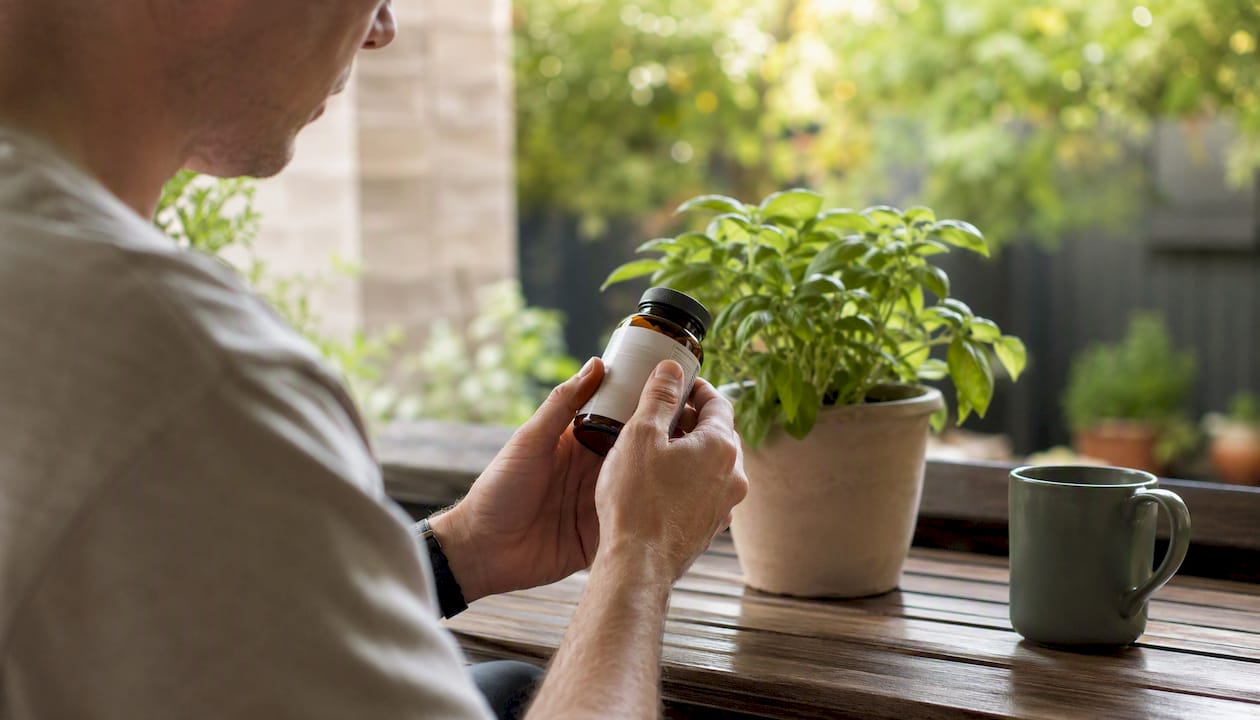
Pro Tip: When reading a supplement label, look for “elemental silicon” listed in milligrams, not just the total weight of the silicon compound. A product listing “500 mg silica” may deliver only a few milligrams of actual elemental silicon, which is far below the doses used in trials.
One more thing worth flagging: crystalline silica dust, the industrial form found in construction sites, is a respiratory hazard that causes silicosis. It has nothing to do with oral supplement forms. The two should never be confused.
How silica is thought to benefit hair strength and thickness
Silicon is present in connective tissue, and a peer-reviewed review confirms it may support collagen formation and glycosaminoglycan synthesis, the structural proteins and polysaccharides that form the scaffolding around hair follicles. The proposed mechanisms are plausible, even if the direct human evidence is limited.
The main proposed pathways:
- Collagen and connective tissue support. Silicon may participate in the cross-linking of collagen fibers in the dermal papilla and surrounding follicle tissue. Stronger connective tissue around the follicle could translate to a more structurally sound hair shaft.
- Keratin matrix contribution. Hair is roughly 95% keratin. Silicon’s proposed role in stabilizing protein structures suggests it could influence the mechanical properties of the shaft itself, though this mechanism is less directly studied than the collagen pathway.
- Tensile strength and elasticity. The most measurable outcome in trials is not hair count but shaft mechanics: how much force a strand can bear before breaking, and how far it stretches before snapping. These are the outcomes that ch-OSA trials actually moved.
- Indirect connective tissue evidence. Epidemiological work has associated higher dietary silicon intake with better bone mineral density in some cohorts, supporting the broader idea that silicon participates in connective tissue health. That is an indirect signal for hair, not direct proof, but it adds biological plausibility.
What trials measured: A 2007 randomized controlled trial in women with fine hair reported improvements in hair tensile strength, elasticity, and cross-sectional diameter after about nine months supplementing with ch-OSA at a dose delivering 10 mg elemental silicon per day compared with placebo; the study included around 48 participants.
None of these mechanisms support the claim that silica stimulates new follicle formation or reverses patterned hair loss. The effect, when present, is structural: stronger, less brittle shafts rather than more of them.
What human trials actually found, and where the evidence falls short
The clinical picture for silica supplements hair research is consistent in one respect: effects are modest, trials are small, and independent large-scale replications do not yet exist.
Key trials at a glance:
| Study | Form / Dose | Duration | Population | Primary Outcome | Key Limitation |
|---|---|---|---|---|---|
| Wickett et al. 2007 | ch-OSA, a dose delivering elemental silicon per day, studied in small trials | 9 months | ~48 women, fine hair | Improved tensile strength, elasticity, diameter (instrument-measured) | Small sample; industry-adjacent funding |
| Barel et al. 2005 | ch-OSA, a dose delivering elemental silicon per day, studied in small trials | 6 to 9 months | Women with brittle hair/nails | Reduced self-rated brittleness; skin roughness improved | Hair outcomes self-reported, not instrument-measured |
| Araújo et al. 2016 | Horsetail extract, at a dose studied in a small trial | 90 days | Women | Improved brightness, reduced breakage | Self-reported; small trial; plant form less bioavailable |
| MMST/M-OSA trial | MMST or M-OSA at doses delivering elemental silicon twice daily, studied in a small trial | 150 days | Small randomized groups | Some skin and hair mineral changes | Very small sample; needs replication |
The 2007 Wickett trial is the strongest entry in this list because it used instrument-measured outcomes rather than self-report. The 2005 Barel trial adds supportive data but relies on participant-rated brittleness, which is subject to placebo effects. The 2016 horsetail study is the weakest of the three: self-reported outcomes, a plant form with lower bioavailability, and a short 90-day window.
Clinical evidence summaries grade silica’s evidence for hair and nail quality as modest. Ch-OSA is identified as the most-studied form, and effects, when present, are generally small. That assessment aligns with what the trial data actually shows.
What the evidence does not show:
- No large, independent, multi-center RCTs exist for silica and hair outcomes.
- No trials have demonstrated silica’s effectiveness for androgenetic alopecia or telogen effluvium specifically.
- Self-reported outcomes in two of the three main trials inflate uncertainty about real-world effect sizes.
The honest read: silica supplements have a plausible mechanism and a small body of supportive human data. They do not have the evidence base of, say, minoxidil or iron repletion in iron-deficient patients.
Which foods are naturally high in silica

Dietary silicon comes primarily from plant foods, and the amounts vary considerably based on soil composition and food processing. Refining grains strips much of their silicon content, which is one reason whole grains consistently outperform their refined counterparts as silicon sources.
Foods with higher silicon content:
- Oats and oat bran: Among the highest silicon concentrations of any commonly eaten grain; a bowl of oatmeal is a practical daily source.
- Barley: High in silicon; also the source of silicon in beer, which has measurable orthosilicic acid content (though alcohol is not a recommended delivery vehicle).
- Green beans: One of the better vegetable sources of bioavailable silicon.
- Root vegetables: Beets and carrots contain silicon, though amounts vary.
- Leafy greens: Spinach and other dark greens contribute modest amounts.
- Brown rice: Retains more silicon than white rice due to less processing.
- Horsetail tea: Historically used as a plant silica source; silicon content varies by preparation and plant quality.
Practical swaps to increase dietary silicon:
- Swap white rice for brown rice or barley at dinner.
- Choose steel-cut or rolled oats over instant oats at breakfast (less processed, more silicon retained).
- Add green beans as a side vegetable two to three times per week.
- Snack on raw carrots instead of processed crackers.
Silicon content in food is genuinely variable. Soil depletion, cooking methods, and processing all affect final amounts. A varied, whole-food diet is a reasonable baseline; it will not deliver the concentrated doses used in clinical trials, but it supports overall mineral intake without any supplement risk.
How to choose a silica supplement: a practical checklist
Not all silica supplements are equivalent, and the gap between a well-formulated ch-OSA product and a generic “silica” capsule can be significant in terms of what your body actually absorbs. Here is what to check before buying.
Checklist:
- Form first. Prefer ch-OSA or MMST over plain silicon dioxide or unspecified “silica.” The label should name the form, not just list “silica” or “silicon dioxide.”
- Elemental silicon dose. Look for the elemental silicon amount in milligrams. The dose used in the strongest human trial was 10 mg elemental Si/day as ch-OSA. Products that only list the compound weight (e.g. “500 mg silica”) without stating elemental silicon are harder to evaluate.
- Third-party testing. Look for certification from USP, NSF International, or ConsumerLab. These organizations test for label accuracy, contaminants, and manufacturing quality. Under U.S. DSHEA rules, supplement manufacturers are not required to prove efficacy before marketing, and they cannot legally claim to treat hair loss. Third-party testing is the consumer’s best check on label accuracy.
- Transparent labeling. The supplement facts panel should list the silicon compound by name, the elemental silicon content, and any other active or inactive ingredients. Proprietary blends that hide individual doses are a red flag.
- Batch transparency. Some manufacturers publish batch-specific test results on their website. This is a higher-tier quality signal worth checking for.
Dosage reference: Human trials used approximately 10 mg elemental silicon per day as ch-OSA. A 2007 trial by Wickett et al. ran for nine months before measurable improvements in tensile strength and diameter appeared. Expect a minimum of six months before drawing conclusions about whether a supplement is working for you.
Pro Tip: Before buying, cross-reference the ingredient form against an evidence-based ingredient database. The Rankofsupplements Ingredient Library lists supplement forms, evidence grades, and quality signals so you can check whether a product’s label matches what the research actually studied.
Safety, side effects, and who should be cautious
At the doses used in human trials (around 10 mg elemental silicon per day), oral silica supplements in the form of ch-OSA or MMST are generally well tolerated in healthy adults. Reported side effects in trials were mild and not significantly different from placebo groups.
Key safety points:
- Crystalline silica dust vs. oral supplements: Crystalline silica dust is a well-documented respiratory hazard that causes silicosis when inhaled. Oral supplement forms are chemically and physically distinct. Do not conflate the two.
- Renal impairment: Silicon is excreted by the kidneys. People with reduced kidney function should consult a clinician before supplementing, as accumulation risk is not well characterized in this population.
- Pregnancy and breastfeeding: Clinical safety data in pregnant or breastfeeding individuals are limited. The precautionary recommendation is to avoid silica supplements during these periods unless a clinician advises otherwise.
- Mineral absorption interactions: High-dose silicon supplementation could theoretically affect absorption of other minerals, though this has not been well studied at typical supplement doses. If you take multiple mineral supplements, mention silica to your clinician or pharmacist.
- Medications: No well-documented drug interactions exist for oral silica at studied doses, but the data are sparse. Anyone on prescription medications should flag any new supplement to their prescriber.
Pro Tip: If you are experiencing significant hair shedding, patchy loss, or a receding hairline, get a clinician evaluation before starting any supplement. Silica addresses structural hair quality, not the underlying causes of hair-loss conditions. A blood panel checking ferritin, thyroid function, and vitamin D is a more useful first step than any supplement.
Other nutrients that support hair health alongside silica
Silica is one piece of a larger nutritional picture for hair. Several other nutrients have stronger or better-characterized evidence for specific hair concerns, and correcting a deficiency in any of them will typically produce more noticeable results than adding silica to an already adequate diet.
Nutrients with established roles in hair health:
- Iron (ferritin): Iron deficiency is one of the most common correctable causes of diffuse hair shedding in women. Restoring ferritin levels to an adequate range often reduces shedding noticeably. This is a confirmed deficiency-correction effect, not a supplement-on-top-of-adequate-diet effect.
- Protein: Hair is protein. Chronically low protein intake leads to weaker, slower-growing hair. Most people eating a varied diet meet protein needs, but restrictive diets can fall short.
- Vitamin D: Deficiency is associated with hair loss in some studies. Correcting a confirmed deficiency is worthwhile; supplementing when levels are already normal has no established benefit for hair.
- Zinc: Deficiency causes hair loss; supplementing beyond adequacy does not improve hair and can interfere with copper absorption at high doses.
- Collagen peptides: Marine collagen for hair has attracted attention as a complementary approach. Collagen peptides provide amino acids (particularly glycine, proline, and hydroxyproline) that support the extracellular matrix around follicles. The evidence for collagen for thinning hair is preliminary but mechanistically coherent, and it pairs logically with silica given their overlapping roles in connective tissue. Marine collagen dosage in most trials runs 2.5 to 10 g per day. For a deeper look at the evidence, the best marine collagen for hair growth options are covered in Rankofsupplements’ women’s hair guide.
- Biotin: Widely marketed for hair, but biotin’s evidence for hair growth in people without a biotin deficiency is weak. Deficiency is rare in people eating a normal diet. High-dose biotin also interferes with certain lab tests, which is a practical concern worth knowing.
When medical therapy is the right call:
Androgenetic alopecia (male or female pattern hair loss) is driven by DHT sensitivity at the follicle level. No dietary supplement, including silica, addresses that mechanism. FDA-approved options like topical minoxidil and oral finasteride (for men) have far stronger evidence. If pattern loss is the concern, a dermatologist or trichologist is the right starting point, not a supplement stack. The best hair loss supplements guide at Rankofsupplements covers where supplements fit into that picture and where they do not.
Low-dose oral minoxidil requires medical supervision: it can cause fluid retention, a faster heart rate, and lowered blood pressure, so clinicians typically monitor blood pressure and ask about heart conditions before prescribing. It is not recommended during pregnancy or breastfeeding. Discuss these risks with a physician before starting.
Finasteride is FDA-indicated for men only. Women who are or may become pregnant must not handle crushed or broken finasteride tablets, due to the risk of harm to a male fetus. It can also cause sexual side effects (reduced libido, erectile dysfunction) in a minority of men, which usually resolve after stopping treatment. Discuss these risks with a physician before starting.
The verdict and your action plan for trying silica
Silica is a reasonable adjunct for people with fine hair, noticeable brittleness, or a diet low in whole grains and vegetables. It is not a solution for patterned hair loss, and it should not be the first thing you reach for if you have significant shedding.
Who benefits most: People with structurally weak or brittle hair who are otherwise healthy and not experiencing patterned loss. The evidence is strongest for improvements in tensile strength and shaft diameter, not hair count.
Who should see a clinician first: Anyone with heavy daily shedding, a receding hairline, patchy loss, or a known medical condition affecting hair. Get a diagnosis before spending months on a supplement.
Numbered action plan:
- Weeks 1 to 8: Improve your diet. Add oats, barley, green beans, and root vegetables. This costs nothing and addresses the most common reason for low silicon intake. Track whether hair feels less brittle after two months.
- Months 2 to 9: Consider a ch-OSA supplement if diet changes feel insufficient. Choose a product with a named monomeric form, a stated elemental silicon dose near 10 mg/day, and third-party testing certification. Start and stay consistent.
- Month 9: Reassess. Hair shaft changes take time because hair grows slowly (roughly 1 cm per month). A nine-month window is realistic for seeing whether tensile strength or brittleness has improved. If shedding has worsened at any point, see a clinician rather than continuing.
Why the timeline is 3 to 9 months: Hair grows in cycles. New growth incorporating any nutritional change takes months to emerge and lengthen enough to measure. The Wickett et al. trial ran nine months before detecting statistically significant changes in shaft mechanics. Expecting results in four to six weeks is unrealistic for any structural hair supplement. For more on realistic supplement timelines, the how long hair supplements take to work guide breaks this down by ingredient.
An evidence-first perspective on silica and hair supplements
The silica-for-hair story is a good example of a supplement category where the mechanism is plausible, the early human data are encouraging, and the marketing has run well ahead of the science. Small trials showing modest improvements in tensile strength get amplified into claims about “thicker, fuller hair” that the studies simply do not support at scale.
What I find genuinely useful about the ch-OSA research is that it measured something real: instrument-verified tensile strength and cross-sectional diameter, not just how participants felt about their hair. That is a higher bar than most supplement trials clear. The problem is that two trials with roughly 48 participants each is not a foundation for strong clinical recommendations. It is a foundation for cautious optimism and a reasonable personal experiment, which is exactly how I would frame it.
The more important point for most readers: if your hair is brittle and breaking, the first question is not “which supplement should I take?” It is “what is causing this?” Low ferritin, crash dieting, thyroid dysfunction, and over-processing all cause brittleness and respond to targeted interventions. Silica as an adjunct makes sense after those bases are covered, not instead of addressing them.
Rankofsupplements can help you choose the right silica supplement
Sorting through silica supplement labels is genuinely confusing when products list compound weights instead of elemental silicon, skip the form name entirely, or carry no third-party certification. The Rankofsupplements Ingredient Library cuts through that by giving you evidence-graded ingredient pages that explain which forms are studied, what doses were used in trials, and what quality signals to look for on a label.
For hair specifically, the site’s hair supplement guides cover where silica fits relative to better-evidenced options like iron, collagen peptides, and vitamin D, so you are not spending months on a supplement that does not match your actual concern. Check the Ingredient Library to compare ch-OSA against other silica forms, then use the hair-thinning guide to build a supplement plan grounded in what the evidence actually supports.
Sources
This article is general information, not a substitute for advice from a qualified doctor. Consult a qualified healthcare professional about your own circumstances before acting on anything here.
FAQ
What does silica do for your hair?
Silica, particularly as ch-OSA, may improve hair shaft tensile strength, elasticity, and cross-sectional diameter based on small human trials. It supports connective tissue and collagen structure around the follicle rather than stimulating new hair growth.
What foods are high in silica for hair growth?
Oats, barley, green beans, beets, carrots, and brown rice are among the better dietary sources of silicon. Whole grains consistently outperform refined versions because processing removes much of the silicon content.
What are the side effects of taking silica supplements?
At studied oral doses (~10 mg elemental Si/day), side effects are generally mild and comparable to placebo in trials. People with kidney disease or those who are pregnant should consult a clinician before supplementing, as safety data for these groups are limited.
Can silica damage your hair?
Oral silica supplements in monomeric forms like ch-OSA are not associated with hair damage at studied doses. The confusion sometimes arises from crystalline silica dust, an industrial respiratory hazard that has no connection to oral supplement forms and is not taken by mouth.
How long does silica take to work for hair?
The strongest human trial ran nine months before detecting statistically significant improvements in hair tensile strength and diameter. Expecting visible changes in less than six months is unrealistic given how slowly hair grows and how long shaft changes take to emerge.