
Biotin supplements deliver clear, documented benefits in one specific situation: when you have a genuine deficiency or a diagnosed metabolic condition that requires them. For healthy adults hoping to grow thicker hair or stronger nails, the NIH Office of Dietary Supplements is direct, there is little scientific evidence to support those cosmetic claims. That gap between marketing and medicine is what this article closes.
Before your next blood draw: If you take high-dose biotin, stop it at least 2 to 3 days beforehand. High biotin levels interfere with immunoassay-based lab tests, including troponin (used to diagnose heart attacks) and thyroid panels, producing false results that can lead to misdiagnosis. Tell your clinician and the lab about any biotin supplement use.
Who does have a real case for supplementation?
- People with biotinidase deficiency or holocarboxylase synthetase deficiency (rare inherited enzyme disorders)
- Patients after bariatric surgery or bowel resection with documented deficiency
- Those on long-term anticonvulsants (valproic acid) or isotretinoin, which deplete biotin
- Children with specific hair disorders such as uncombable hair syndrome or short anagen syndrome
For everyone else, a varied diet almost certainly covers the need.
Key Takeaways
Biotin supplements are supported by evidence only for documented deficiency or specific medical conditions, not for routine cosmetic use in healthy adults.
| Point | Details |
|---|---|
| Deficiency is the threshold | Biotin supplements are clinically justified only when deficiency is confirmed or a specific condition is diagnosed. |
| Lab interference is real | High-dose biotin can falsely skew troponin and thyroid tests; stop supplements 2 to 3 days before any immunoassay blood draw. |
| Diet covers most needs | The AI is 30 μg/day for adults; eggs, liver, salmon, and legumes typically meet this without supplementation. |
| OTC doses far exceed the AI | Most supplements provide 1,000 to 10,000 μg/day; excess is excreted, not stored, and does not enhance outcomes in replete adults. |
| Rankofsupplements | The ingredient library and condition guides compare biotin to evidence-backed alternatives with dose and safety context. |
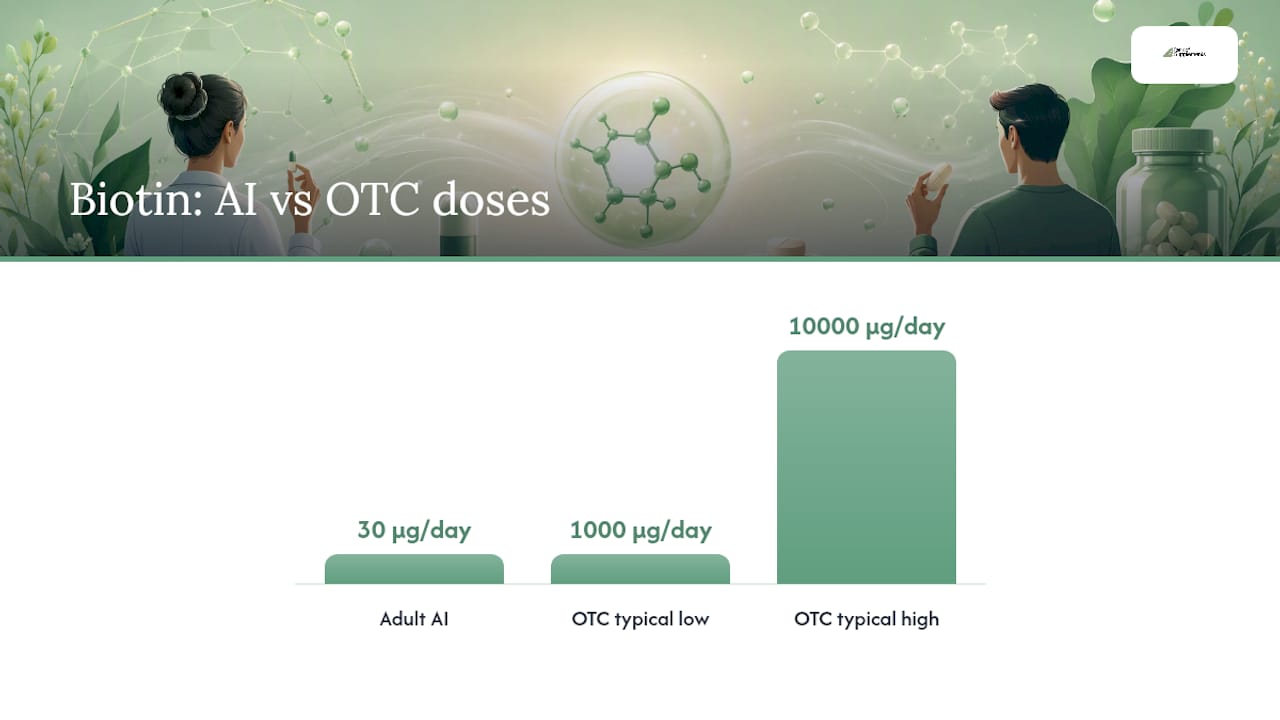
Table of Contents
- What does biotin actually do in your body?
- What are the clinically supported benefits of biotin supplements?
- What do clinical studies actually show about biotin for hair, skin, and nails?
- Does biotin affect blood sugar or metabolism?
- Risks, side effects, and the lab-test interference problem
- How much biotin should you take?
- Which foods give you the most biotin?
- Should you test for biotin deficiency before supplementing?
- The evidence gap is wider than most people realize
- Rankofsupplements helps you cut through the noise
- Sources
- FAQ
What does biotin actually do in your body?
Biotin is vitamin B7, also called vitamin H. It is water-soluble, meaning your body does not store it in meaningful amounts and excretes excess through urine.
Its core job is acting as a cofactor for five carboxylase enzymes. Those enzymes drive three metabolic pathways you depend on constantly:
- Gluconeogenesis (making glucose from non-carbohydrate sources, via pyruvate carboxylase)
- Fatty-acid synthesis (via acetyl-CoA carboxylase)
- Amino-acid catabolism (breaking down leucine and other branched-chain amino acids)
A simple way to picture it: food → carboxylase enzymes (with biotin as the activating cofactor) → usable metabolic products and keratin-related proteins.
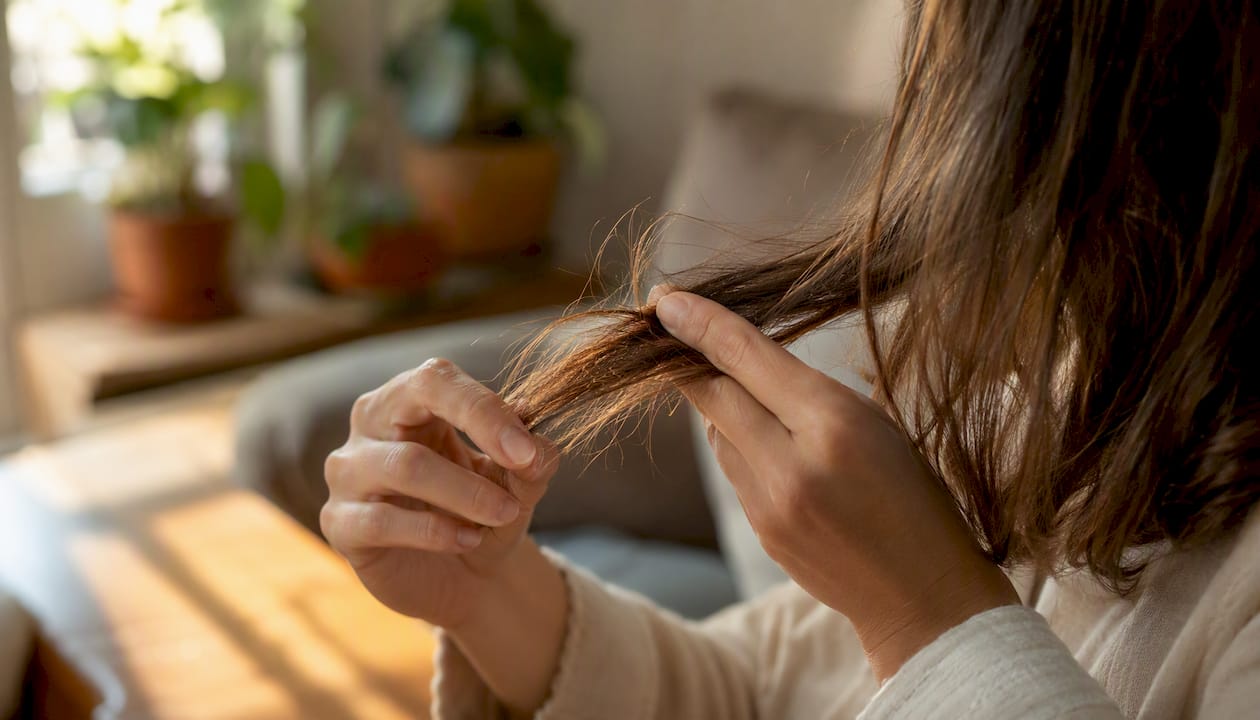
That last part, keratin synthesis, is why biotin became associated with hair and nails. Hair and nails are largely keratin. Biotin participates in the amino-acid metabolism that feeds keratin production. The logical leap from “biotin supports keratin metabolism” to “biotin supplements grow hair” sounds reasonable. The clinical evidence, however, does not confirm it for people who already have adequate biotin status.
What are the clinically supported benefits of biotin supplements?
The evidence supports biotin supplementation in a short, specific list of situations. StatPearls at NCBI is clear that routine supplementation in healthy individuals is not backed by trials.
Supported indications:
- Biotinidase deficiency and holocarboxylase synthetase deficiency, both require lifelong, clinician-supervised biotin therapy
- Uncombable hair syndrome and short anagen syndrome in children, case series show improvement with supplementation
- Acquired deficiency from parenteral nutrition, prolonged bowel disease, or post-surgical malabsorption
- Drug-induced depletion from valproic acid, carbamazepine, or isotretinoin
- Post-bariatric surgery patients with confirmed low biotin status
The Institute of Medicine sets the Adequate Intake (AI) for biotin at 30 μg/day for adults. Overt deficiency is rare in well-nourished populations in the U.S. Most people hit that target through food alone.
What the evidence does NOT support: routine biotin supplementation for hair growth, nail strength, or skin appearance in healthy adults with no documented deficiency. Over-the-counter products marketed for these purposes are not backed by robust clinical trials.
What do clinical studies actually show about biotin for hair, skin, and nails?
The honest answer: the evidence is thin, and most of it comes from the wrong populations to generalize from.
A systematic review published in PMC found that the supportive data for biotin monotherapy improving hair outcomes in healthy adults is limited; most positive findings come from case reports in people with documented deficiency or specific syndromes. A separate systematic review in MDPI reinforces this, documenting mixed and low-quality evidence for cosmetic benefits and flagging the immunoassay interference problem at high doses.
Three limitations appear across almost every study in this space:
- Small sample sizes, most trials enroll fewer than 50 participants
- Polytherapy confounding, biotin is rarely tested alone; co-administered agents make it impossible to isolate its effect
- Subjective outcomes, patient-reported hair thickness is not the same as measured follicle density
Pro Tip: When you read a study claiming biotin improved hair, check two things first: was the population deficient at baseline, and was biotin the only intervention? If the answer to either is “yes” and “no” respectively, the finding tells you almost nothing about what biotin would do for you.
Beauty-industry marketing and social media have driven biotin’s popularity far beyond what the science supports. Dermatologists and oncologists increasingly point to better-supported alternatives, such as topical minoxidil and other evidence-backed options, for people dealing with actual hair loss.
Does biotin affect blood sugar or metabolism?
Biotin’s role in gluconeogenesis and fatty-acid synthesis gives it a plausible mechanistic connection to blood glucose regulation. Small clinical trials have explored this, particularly in people with type 2 diabetes, often using biotin in combination with chromium picolinate.
Key findings from this research:
- Some small pilot trials report modest reductions in fasting blood glucose in people with type 2 diabetes when biotin is combined with chromium
- Evidence for biotin monotherapy improving glycemic markers is weaker and less consistent
- Studies are limited by small sample sizes, heterogeneous populations, and short durations
- No large, definitive RCT has established biotin as an effective standalone intervention for blood sugar control
Clinical note: People managing diabetes with glucose-lowering medications should consult a clinician before adding any biotin supplement. The combination-therapy trials that showed modest glucose effects used specific doses under monitored conditions, not the self-directed use of OTC products.
The mechanistic rationale is real. The clinical proof, at this point, is not.
Risks, side effects, and the lab-test interference problem
Biotin itself has a low direct toxicity profile. Serious side effects from biotin supplementation are rare. The real safety concern is indirect.
The immunoassay interference problem is clinically significant. High-dose biotin competes with the biotin-streptavidin binding used in many immunoassay platforms. The result: falsely elevated or falsely suppressed test values for troponin, TSH, free T4, vitamin D, and other analytes. A systematic review in MDPI documents this interference and its potential for clinically significant false results.
FDA and clinical lab guidance: Biotin at doses commonly found in OTC supplements can interfere with laboratory immunoassays and produce inaccurate results. Patients should inform their healthcare providers and laboratory personnel about biotin supplement use before any blood test. A washout period of at least 2 to 3 days is recommended before immunoassay-based testing.
Known drug interactions and risk contexts:
- Anticonvulsants (valproic acid, carbamazepine, phenytoin) reduce biotin absorption and accelerate its breakdown
- Long-term antibiotic use may reduce gut bacteria that synthesize small amounts of biotin
- Raw egg white consumption over time, avidin in raw egg whites binds biotin and blocks absorption
- Bariatric surgery and bowel resection reduce absorptive capacity
For oncology patients specifically, JCO Oncology Practice cautions clinicians about both the limited evidence for cosmetic use and the lab-interference risk, recommending clinician discussion before any biotin use in cancer care settings.
If you are taking high-dose biotin therapeutically, that requires clinician supervision, not self-management.
How much biotin should you take?
Dosing varies enormously depending on why you are taking it. StatPearls documents the full therapeutic range, which spans from micrograms to milligrams depending on the condition.
A few practical points:
- μg vs. mg: microgram and milligram units differ by a factor of 1,000. Many OTC products list doses in mcg but at levels that equal several milligrams. Read labels carefully.
- Because biotin is water-soluble, UCLA Health notes that excess is excreted rather than stored. Taking 10,000 μg when your body needs 30 μg mostly increases urinary biotin output.
- If a clinician approves a trial for a hair or nail concern, studies in those conditions typically ran for 3 to 4 months before outcomes were assessed. Shorter trials are not meaningful.
Which foods give you the most biotin?
A varied, protein-rich diet covers the 30 μg/day AI for most adults without any supplement. USDA FoodData Central confirms that biotin is distributed across a wide range of common foods.
High biotin content:
- Beef liver, among the richest single sources
- Egg yolk (cooked), high; cooking denatures avidin in the white, which would otherwise block absorption
- Salmon, high, particularly cooked
Moderate biotin content:
- Pork (chops, ham)
- Sunflower seeds and other nuts
- Sweet potato
- Legumes (soybeans, lentils)
- Whole grains
One caution worth knowing: raw egg whites contain avidin, a protein that binds biotin tightly and prevents absorption. Eating large amounts of raw egg whites regularly is one of the few dietary patterns that can actually cause biotin depletion over time. Cooking neutralizes avidin completely.
The Dietary Guidelines for Americans consistently recommend obtaining nutrients from food first, with supplements reserved for documented deficiencies or specific life stages. Registered dietitians make the same point for a practical reason: nutrients in food interact synergistically in ways that isolated supplements cannot replicate.

Should you test for biotin deficiency before supplementing?
Most healthy adults do not need to. But certain risk factors make testing or clinician referral worth pursuing.
Numbered decision checklist:
- GI surgery history (gastric bypass, bowel resection), request biotin status testing at your next follow-up
- Long-term anticonvulsant use, ask your neurologist or prescribing physician whether biotin monitoring is appropriate
- Prolonged parenteral nutrition, biotin should be included in the formulation; confirm with your care team
- Symptoms of deficiency, hair thinning, scaly red rash around the face, conjunctivitis, neurological symptoms (numbness, fatigue, depression), see a clinician before self-treating
- Considering a supplement trial, get a baseline biotin level first if possible, then reassess after 3 months with objective measures (photographic records, nail condition notes, symptom diary)
- On glucose-lowering medications, discuss with your prescriber before adding biotin, given the metabolic interactions in small trials
Pro Tip: Before any blood test, give your clinician a complete list of every supplement you take, including the dose. Specifically flag biotin. If your biotin dose is above 1,000 μg/day, ask whether a 2 to 3 day washout before the draw is appropriate for the tests ordered. This one step prevents a misread troponin or thyroid result from triggering unnecessary follow-up.
For hair concerns specifically, Rankofsupplements’s guide on boosting hair health with supplements walks through how to combine diet, topical treatments, and evidence-backed supplements in a way that the biotin-only approach misses.
The evidence gap is wider than most people realize
The supplement industry has done an effective job of making biotin feel like a well-established hair and skin nutrient. It is not, for healthy adults. The mechanism is real. The marketing extrapolation from mechanism to clinical outcome is where the logic breaks down.
What stands out after reviewing the trial data is how consistently the positive findings cluster around one variable: baseline deficiency. When researchers study people who are actually low in biotin, supplementation helps. When they study people with normal status, it does not. That pattern is not a coincidence. It is how nutritional biochemistry works. Correcting a deficiency restores function. Exceeding adequacy does not enhance it.
The lab-test interference issue is the part most people miss entirely. A supplement marketed as harmless because it is water-soluble can produce a false troponin result that looks like a heart attack. That is not a theoretical risk. The FDA has issued guidance on it. Clinicians in oncology and cardiology are actively flagging it. If you take high-dose biotin and you have any cardiac or thyroid testing coming up, the 2 to 3 day washout is not optional.
Rankofsupplements helps you cut through the noise
Deciding whether a biotin supplement is worth taking, and which formulation to choose if it is, requires more than a label claim. Rankofsupplements reviews biotin products against the actual clinical evidence, checking doses against the ranges used in studies, flagging products with doses high enough to trigger lab interference, and comparing them to better-supported alternatives for hair and nail concerns.
The Rankofsupplements ingredient library covers biotin alongside dozens of other supplement ingredients with the same evidence-first approach. For hair thinning specifically, the evidence-based hair thinning guide compares biotin to options with stronger trial support. If you want a focused look at biotin’s clinical record, the biotin ingredient page covers the lab-test interference issue in detail. And if you are exploring peptide-based alternatives for skin and hair, GHK-Cu peptide research offers a different mechanism worth understanding. Check the full supplement rankings to see how biotin-containing products compare across categories.
Sources
- Biotin (Consumer), NIH ODS
- Biotin for Hair Loss: Teasing Out the Evidence - PMC
- Biotin - StatPearls - NCBI Bookshelf
This article is general information, not a substitute for advice from a qualified doctor. Consult a qualified healthcare professional about your own circumstances before acting on anything here.
FAQ
What happens when you take biotin daily?
For most healthy adults, daily biotin supplements at typical OTC doses are excreted in urine without producing measurable cosmetic or metabolic changes. The exception is people with documented deficiency, where daily supplementation corrects the shortfall and restores normal function.
What are the symptoms of biotin deficiency?
Classic signs include thinning hair, a scaly red rash around the eyes, nose, and mouth, brittle nails, conjunctivitis, and neurological symptoms such as numbness, fatigue, and depression. Overt deficiency is rare in the U.S. in people eating a varied diet.
What is the downside of taking biotin?
The primary risk is immunoassay interference: high-dose biotin can produce falsely elevated or falsely suppressed results on troponin, thyroid, and other immunoassay-based blood tests, potentially leading to misdiagnosis. Direct side effects are rare, but drug interactions with anticonvulsants are clinically relevant.
Should biotin be taken in the morning or at night?
No clinical evidence establishes a meaningful difference between morning and evening dosing for biotin. Because it is water-soluble, timing relative to meals matters more than time of day; taking it with food may reduce the small chance of mild GI discomfort.
Does biotin actually help with hair growth?
For healthy adults with normal biotin status, current systematic reviews find no convincing evidence that biotin supplements improve hair growth. Positive findings in the literature are largely from people with confirmed deficiency or specific hair disorders, not the general population.