Start with clinician-guided lab testing, not a multivitamin. Correct any confirmed deficiency in iron, vitamin D, or thyroid hormones before adding anything else, because supplementing blind rarely fixes a problem you haven’t identified. Among natural options, saw palmetto has the strongest herbal evidence, typically dosed at 320 mg of liposterolic extract daily, while biotin, despite its popularity, shows weak support for anyone who isn’t actually deficient.
Two things to do this week:
- Ask your doctor for a panel covering ferritin, vitamin D, and TSH before buying anything.
- If you’re considering an herbal DHT-modulating option, look at saw palmetto at the 320 mg liposterolic extract dose studied in research reviews.
Quick Fact: The commonly studied saw palmetto dose for hair support is 320 mg daily of liposterolic extract, not the raw powdered form sold in many generic capsules.
Key Takeaways
Correcting a lab-confirmed deficiency, not adding another multivitamin, is the single most reliable way to improve hair health through supplementation.
| Point | Details |
|---|---|
| Test before you supplement | Order labs for ferritin, vitamin D, and thyroid function before buying anything marketed for hair. |
| Saw palmetto has the strongest herbal evidence | The studied dose is 320 mg daily of liposterolic extract, not raw powder. |
| Biotin rarely helps non-deficient people | Skip it unless a blood test confirms an actual biotin shortfall. |
| Watch excess doses of A, selenium, and iron | Overdosing these nutrients can worsen hair loss rather than improve it. |
| Verify quality with RankOfSupplements | Use the ingredient library to check dosages and third-party testing seals like USP Verified before purchasing. |
Table of Contents
- Guide to Natural Hair Supplements 2026: What the Evidence Actually Shows
- What Are the Biggest Safety Risks With Hair Supplements?
- How Do You Choose a Safe, Evidence-Based Hair Supplement?
- How Long Until Hair Supplements Actually Work?
- What Does a Clinician-Guided Supplement Protocol Look Like?
- Does Hair Type or Ethnicity Change How Well Supplements Work?
- Which Lifestyle Habits Make Supplements Work Better?
- What Side Effects Do Natural Hair Supplements Cause Beyond Overdose?
- Do Hair Supplements Interact With Medications?
- Sources
- FAQ
Guide to Natural Hair Supplements 2026: What the Evidence Actually Shows
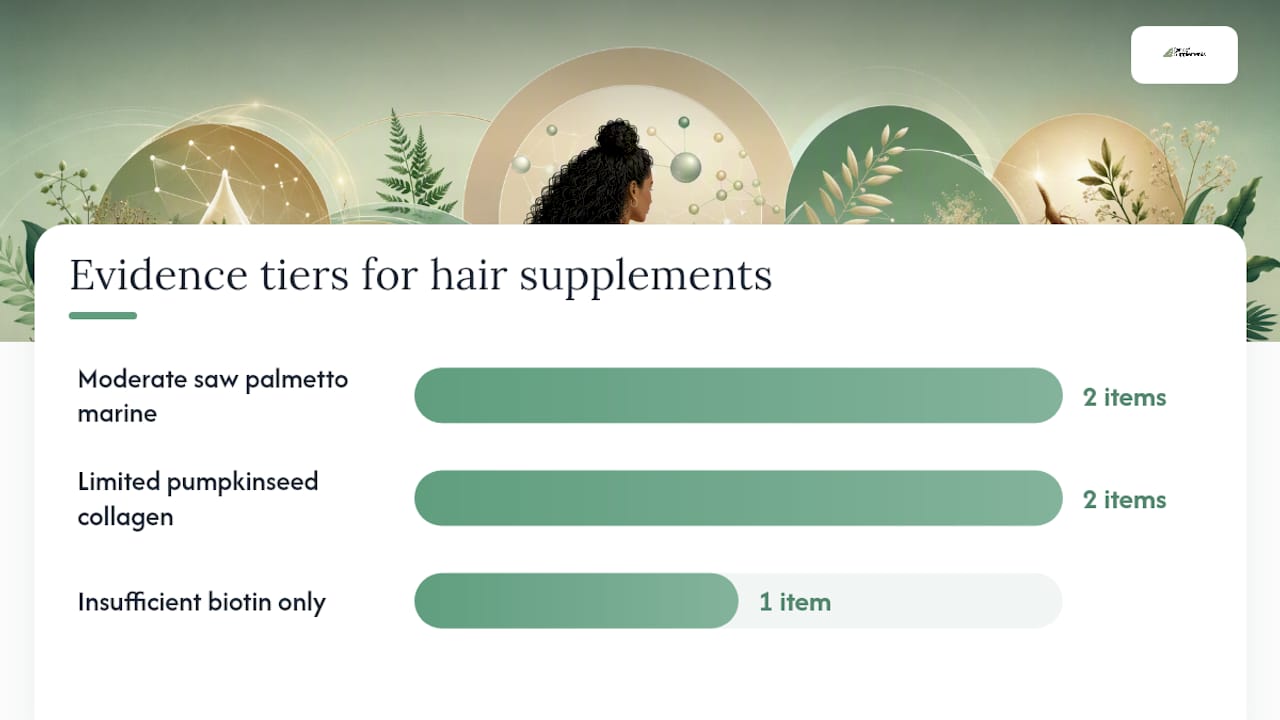
Evidence for hair supplements comes in three tiers: moderate, limited, and insufficient. That distinction gets lost in most marketing copy, where every ingredient sounds equally proven. It isn’t. Some nutrients only help if you’re deficient in them; a few have real biological plausibility even without deficiency; others are along for the ride because they sound good on a label.
Lab confirmation matters because correcting one deficiency while ignoring another often produces disappointing results. Iron deficiency and low vitamin D commonly overlap, and vitamin C improves iron absorption when you’re actively correcting a shortfall, so isolated fixes tend to underperform combined ones.
Here’s how the most-discussed options actually stack up:
- Saw palmetto (moderate evidence): Studied at 320 mg daily of liposterolic extract, it appears to modestly interfere with DHT conversion in scalp tissue, the same pathway targeted by prescription hair-loss drugs.
- Marine protein complexes (moderate evidence): These provide amino acids and micronutrients that support keratin production, the structural protein that makes up the hair shaft.
- Pumpkin seed oil (limited evidence): Thought to have a mild anti-androgen effect, it’s a reasonable adjunct rather than a standalone fix.
- Collagen (limited evidence): Offers amino acid building blocks for keratin, though the direct link to visible hair growth is not well established.
- Biotin (insufficient evidence in non-deficient people): True biotin deficiency is rare, and current clinical reviews find no meaningful benefit for people who already have adequate levels.
Quick Fact: Marine protein complexes and saw palmetto sit in the same “moderate evidence” tier, but they work through different mechanisms, one through protein supply, the other through hormone modulation, so combining them isn’t redundant.
The mechanism gap explains why so many people try biotin first and give up. It’s the most heavily marketed hair ingredient, but unless a blood test shows you’re actually short on it, you’re not treating anything. RankOfSupplements’ ingredient breakdown on saw palmetto and its pumpkin seed oil dosing guide go deeper into dosing specifics for each.
What Are the Biggest Safety Risks With Hair Supplements?
More isn’t better with several of these nutrients, and the failure mode isn’t always obvious. High doses of vitamin A and selenium have been linked to worsened hair shedding rather than improvement, which surprises people who assume “natural” means “safe at any dose.” Iron overload carries its own toxicity risks, particularly for anyone without a confirmed deficiency.

Biotin creates a different kind of problem: it can skew lab test results, producing false readings on thyroid and cardiac assays. Always tell your clinician what you’re taking before bloodwork.
Because supplements face limited federal oversight, purity and label accuracy vary widely between brands. Look for third-party verification through USP Verified, NSF Certified for Sport, or an independent testing review from ConsumerLab before trusting a label’s claims.
Watch for these situations that call for extra caution:
- Pregnancy or breastfeeding, where several “hair” ingredients haven’t been studied for safety.
- Hormone therapy, since saw palmetto and similar compounds interact with androgen pathways.
- Anticoagulant use, where high-dose vitamin E or fish oil can increase bleeding risk.
Pro Tip: Stop high-dose biotin at least 72 hours before scheduled bloodwork, and list every supplement on your intake form, not just prescription medications, so your clinician can catch interactions before they cause a misread result.
How Do You Choose a Safe, Evidence-Based Hair Supplement?
Testing comes before shopping. Ask for labs covering ferritin, vitamin D, and thyroid function, and only supplement what those results actually show is low. Guessing wastes money and occasionally causes harm, particularly with fat-soluble vitamins that accumulate in the body.
Once you know what you need, evaluate any product against this checklist:
- Ingredient transparency, every active ingredient should list its exact amount per serving.
- No proprietary blends, if a label hides dosages behind a blend name, skip it; clinicians and researchers consistently flag this as a sign of underdosing.
- Third-party testing seals, USP Verified, NSF Certified for Sport, or a ConsumerLab review should back any serious product.
- Dosing that matches the evidence, saw palmetto near 320 mg of liposterolic extract, not a fraction of that amount padded with filler.
- No unnecessary megadoses, especially for vitamin A, selenium, and iron, where excess causes the problems it claims to solve.
Red flags to walk away from:
- A “proprietary blend” with no individual ingredient amounts listed.
- Marketing claims promising dramatic regrowth within weeks.
- Missing dosage information on the label or website.
- Endorsements built entirely around a celebrity or influencer with no cited research.
- No mention of third-party testing anywhere on the packaging or site.
For a deeper look at how to vet a label, RankOfSupplements’ guide to checking supplement quality walks through label-reading in more detail, and the best hair loss supplements list for 2026 ranks specific products against these same criteria. Ingredient transparency also gets a good explanation from Onyx Wellness’s piece on supplement transparency, which covers why vague labeling should worry you more than a high price tag.
How Long Until Hair Supplements Actually Work?
Expect 3 to 6 months before you see a real difference, because hair follicles cycle slowly and nutritional corrections need time to show up in new growth. Most people who quit after three or four weeks were never going to see results in that window regardless of what they took.
Track progress with simple, low-effort methods:
- Take a photo under the same lighting every four weeks.
- Note shedding frequency, particularly in the shower or on your pillow.
- Repeat blood tests at the interval your clinician recommends, usually 8 to 12 weeks out.
Quick Fact: Clinicians report that inconsistent use is the most common reason people conclude a protocol “didn’t work” when it was actually never given enough time.
If you notice sudden, rapid shedding or any systemic symptoms like fatigue or heart palpitations, stop and call your clinician rather than waiting out the full window.
What Does a Clinician-Guided Supplement Protocol Look Like?
A responsible protocol starts with data, not products. Here’s a template worth discussing with your provider:
- Order baseline labs: CBC with ferritin, vitamin D (25-OH), TSH with free T4, a basic metabolic panel, and disclose any biotin use before the draw.
- Correct confirmed deficiencies: iron in the 18 to 65 mg elemental range daily if deficient, under clinician guidance given the toxicity risk of unnecessary iron; vitamin D commonly at 1,000 to 4,000 IU daily if low.
- Consider an herbal option if appropriate: saw palmetto at 320 mg of liposterolic extract daily for DHT modulation, layered on top of, not instead of, corrected deficiencies.
- Retest and monitor: recheck ferritin and vitamin D after 8 to 12 weeks, and give the full protocol 3 to 6 months before judging results.
Iron deficiency can be sneakier than it looks. Ferritin sometimes reads within “normal” range even when the body is prioritizing iron for vital functions over hair growth, so a clinician’s interpretation of your symptoms alongside the number matters more than the lab value alone.
Pro Tip: Bring a written list of every supplement, including biotin, to your appointment, and ask directly whether a referral to a dermatologist or trichologist makes sense if your labs come back normal but shedding continues.
Does Hair Type or Ethnicity Change How Well Supplements Work?
Hair texture and ethnicity influence which interventions matter more, though the underlying nutrient science doesn’t change based on curl pattern. Tightly coiled hair, common among many people of African descent, is structurally more prone to breakage and dryness, which can look like thinning even when the follicle itself is healthy. In those cases, moisture retention and reduced mechanical stress from styling often move the needle more than any oral supplement.
Androgenetic alopecia, the pattern hair loss that saw palmetto and prescription DHT blockers target, shows up across ethnicities but with different visual patterns. It tends to present as diffuse thinning in some populations and more defined receding patterns in others, though individual variation is significant regardless of background.
Deficiency prevalence also differs by population in ways that matter for testing priorities. Iron deficiency runs higher among women with heavy menstrual cycles across all backgrounds, while vitamin D insufficiency is more common in people with darker skin tones living in lower-sunlight regions, simply because melanin reduces the skin’s vitamin D synthesis from sunlight. That’s a reason to test rather than assume, not a reason to change which supplements exist in the first place.
The honest takeaway: the biology of hair growth, follicle cycling, keratin production, DHT sensitivity, doesn’t fundamentally change by ethnicity. What changes is which deficiencies you’re statistically more likely to have, and which structural hair care habits compound or offset a supplement’s effects.
Which Lifestyle Habits Make Supplements Work Better?
Supplements don’t operate in isolation. Chronic stress raises cortisol, which can push more follicles into the resting phase prematurely, a pattern known as telogen effluvium, and no amount of saw palmetto counteracts that if the stressor stays constant.
Diet quality matters beyond whatever pill you’re taking. A protein-adequate diet supports the keratin production your body needs regardless of supplementation, and most people can meet baseline micronutrient needs through food alone, with supplements filling gaps rather than replacing meals.
A few habits worth building alongside any protocol:
- Prioritize sleep consistency; growth hormone release tied to deep sleep supports the follicle repair cycle.
- Reduce heat styling and tight hairstyles that add mechanical stress to already-thinning areas.
- Manage stress through whatever actually works for you, since cortisol’s effect on hair cycling is well documented even if the fix is personal.
- Stay hydrated and maintain adequate dietary fat, since fat-soluble vitamins like D and A need dietary fat for absorption.
None of this replaces a lab-confirmed correction if you’re actually deficient. But layering better sleep and lower styling stress onto a targeted supplement plan tends to produce better results than the supplement alone, particularly for people whose hair loss has more than one contributing cause.
What Side Effects Do Natural Hair Supplements Cause Beyond Overdose?
Beyond the toxicity risks from megadosing, several natural hair ingredients cause milder but still worth-knowing side effects. Saw palmetto occasionally causes mild gastrointestinal upset, headache, or dizziness, particularly when taken without food.
Marine protein complexes and collagen supplements derived from fish or shellfish carry an obvious contraindication for anyone with a shellfish allergy, something that rarely appears prominently on packaging. Read the source material closely, not just the front label.
Pumpkin seed oil is generally well tolerated but can cause mild digestive discomfort in some people, especially at higher doses taken on an empty stomach.
Biotin itself is low-risk at standard doses beyond its lab interference problem, but very high doses have occasionally been associated with acneiform skin eruptions in case reports, an odd side effect given it’s marketed for beauty purposes.
Anyone with a hormone-sensitive condition, including certain breast or prostate cancers, should discuss saw palmetto with an oncologist before use, given its action on androgen pathways. The same caution applies to anyone on hormone replacement therapy or hormonal birth control, where interactions haven’t been extensively studied.
Do Hair Supplements Interact With Medications?
A few interactions deserve specific attention before you combine natural hair supplements with prescriptions you’re already taking. Anticoagulants like warfarin interact with several natural compounds, including high-dose vitamin E and fish oil derivatives found in some marine protein complexes, raising bleeding risk.
Saw palmetto’s action on androgen pathways means it can theoretically interact with hormone-based medications, including finasteride and other DHT-targeting prescriptions. Combining them isn’t necessarily dangerous, but it should happen under a clinician’s awareness rather than as a DIY stack.
Finasteride is FDA-indicated for men only. Women who are or may become pregnant must not handle crushed or broken finasteride tablets, due to the risk of harm to a male fetus. It can also cause sexual side effects (reduced libido, erectile dysfunction) in a minority of men, which usually resolve after stopping treatment. Discuss these risks with a physician before starting.
Iron supplements interfere with the absorption of several medications, including certain thyroid hormone replacements and some antibiotics, if taken too close together. Spacing iron doses several hours apart from these medications is a simple fix clinicians commonly recommend.
High-dose biotin’s interference isn’t limited to lab tests. It can complicate monitoring for people on medications requiring regular thyroid or cardiac panel checks, since a skewed result might prompt an unnecessary medication change based on inaccurate data.
The through-line across all of these: disclosure is the fix. None of these interactions are reasons to avoid natural supplements outright, but they are reasons to have the conversation with whoever manages your prescriptions before adding anything new.
The Testing-First Philosophy We Stand Behind
We built this guide around one stance: correct what’s actually deficient before reaching for anything marketed as a hair fix. That’s not a hedge, it’s the position the evidence supports, and it’s why RankOfSupplements’ hair growth supplement guide for women and best hair loss supplements ranking both lead with dosage transparency over trending ingredient lists. Every recommendation here traces back to a source you can hand your clinician, not a marketing claim.
Check Ingredient Quality Before You Buy Anything
Once you know what you actually need, verifying a product’s quality matters as much as picking the right ingredient. The Supplement Ingredient Library at RankOfSupplements breaks down dosages, evidence levels, and safety notes for individual ingredients like saw palmetto and biotin, so you can cross-check a label before buying instead of after.
On the site, you can compare disclosed dosages against what the evidence actually supports, check whether a product carries USP Verified or NSF Certified for Sport status, and read evidence summaries written to match clinical literature rather than marketing copy. Start with the ingredient library to look up any supplement you’re considering before you add it to cart.
Sources
These sources back the dosages and safety points above: the PMC review on hair supplement evidence, Cleveland Clinic’s vitamin overview, ISHRS nutrition guidance, Harvard Health’s review, and the Dermatology and Therapy review.
This article is general information, not a substitute for advice from a qualified doctor. Consult a qualified healthcare professional about your own circumstances before acting on anything here.
- PMC National Library of Medicine article (2026 review excerpt)
- Cleveland Clinic: The best vitamins and supplements for healthier hair
- ISHRS: Nutrition and vitamins guide for hair loss
- Harvard Health: Vitamins, minerals, and hair loss
FAQ
Is Saw Palmetto Actually Effective for Hair Loss?
Moderate evidence supports saw palmetto at 320 mg daily of liposterolic extract, working through mild interference with DHT conversion in the scalp.
Should I Take Biotin for Hair Growth?
Only if a blood test confirms biotin deficiency; otherwise, current evidence doesn’t support meaningful benefit, and high doses can distort lab test results.
How Long Before Hair Supplements Show Results?
Give any nutritional intervention 3 to 6 months, since hair follicle cycles change slowly and shorter trials rarely capture real progress.
What Labs Should I Get Before Starting Supplements?
Ask for ferritin, vitamin D (25-OH), and thyroid function (TSH with free T4) as a baseline before choosing any hair supplement.
How Do I Know a Supplement Is High Quality?
Check for third-party verification through USP Verified, NSF Certified for Sport, or a ConsumerLab review, and avoid products hiding dosages behind proprietary blends. RankOfSupplements’ ingredient library lists disclosed dosages and evidence levels for common hair supplements to help with that comparison.