GutOptim Review 2026An Honest Look at the Label
 |Medically Reviewed by Editorial Team
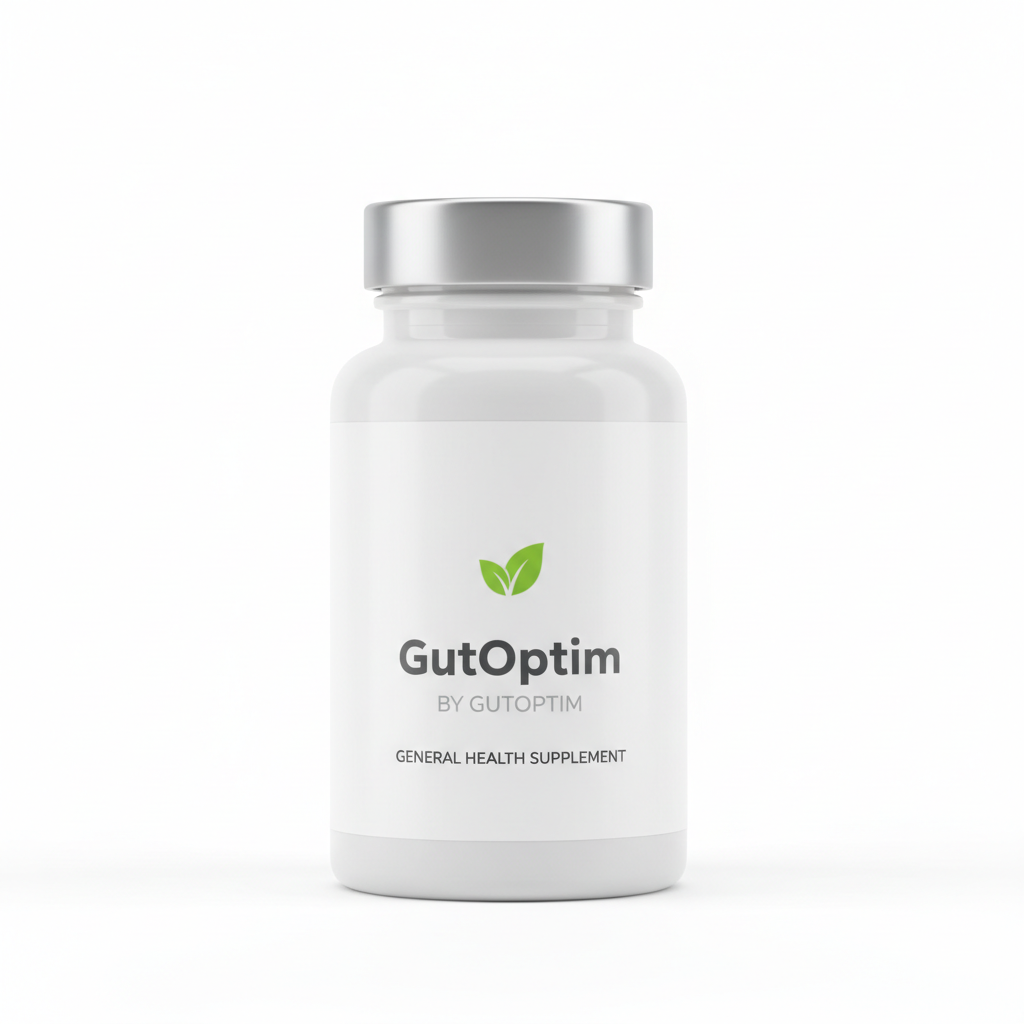
GutOptim is a gut-health capsule sold online for $69 a bottle, or $49 a bottle in a 6-pack. It is marketed with the claim that poor digestion probably means "a parasite that's eating your colons' lining".
90-Day Guarantee
Free Shipping
Lab Tested
Secure Checkout
On this page
Score Breakdown
Pros & Cons
Pros
- 60-day refund, opened bottles accepted
- Free US shipping
Cons
- 1.5 g blend, no individual doses
- No probiotic strain or count
Who Is This For?
Recommended For:
We would not recommend it. People with constipation will get the studied fibre dose far more cheaply from plain psyllium husk or diet changes.
Not Recommended For:
People with difficulty swallowing, under-18s, pregnant or breastfeeding women (the label's own exclusions), people with tree nut allergy (it contains walnut), and anyone taking regular medicines: fibre and clay can reduce how well some drugs are absorbed, so check with a pharmacist.
Summary
What is in it, per 2 capsules: a 1.5 g proprietary blend of psyllium husk, bentonite clay, black walnut hull, oat bran, flaxseed, plum, aloe vera leaf, Lactobacillus acidophilus, apple pectin and glucomannan. No individual amounts, and no probiotic count or strain.
What the evidence says:
- Fibre helps constipation at more than 10 g a day. The whole GutOptim blend is 1.5 g.
- The clay trial GutOptim cites used 9 g a day of a purified clay and found no overall benefit over placebo.
- The site shows an "FDA APPROVED" badge. The FDA does not approve dietary supplements.
The refund is 60 days from delivery, including opened bottles, with the buyer paying return shipping.
Ingredient Breakdown
The label lists ten ingredients in a single 1.5 g blend, in this order: psyllium (husk), bentonite clay, black walnut (hull), oat bran, flaxseed, plum, aloe vera (leaf), Lactobacillus acidophilus, apple pectin and glucomannan.
What the research shows:
- Psyllium and fibre. A meta-analysis of 16 trials in 1,251 people with chronic constipation found 66% responded to fibre vs 41% on control, and concluded that psyllium at doses above 10 g a day for at least 4 weeks appears optimal.
- Bentonite (montmorillonite) clay. In 524 people with IBS, 9 g a day of a purified pharmaceutical clay for 8 weeks was not better than placebo overall, with a benefit only in the constipation subgroup. This is one of GutOptim's own references.
- Glucomannan. A small study of 7 constipated adults at 4.5 g a day for 3 weeks increased bowel movements.
- Lactobacillus acidophilus. Probiotic effects depend on the strain and dose. GutOptim names neither. The NCCIH says probiotics may help IBS symptoms but no definite conclusions can be drawn.
- Black walnut hull, plum, oat bran, flaxseed, apple pectin. We found no trials at the amounts that could fit in this blend.
The parasite claim. The sales page's only source for it is a 2018 VICE magazine article.
Correction. An earlier version of this review said GutOptim contained Bifidobacterium lactis, ginger and fennel, and gave ginger safety warnings. It contains none of them.
What GutOptim does not tell you
GutOptim names its ingredients but publishes no amount for any of them, so there is nothing here to check against the research.
Amounts are taken from the manufacturer’s own supplement facts panel. Where a label states a standardisation, the active fraction is what we compare, because the active is what the trials measured.
Dosage Analysis
Our Dose Check compares the label with the best human studies.
- Whole blend: 1.5 g a day, shared by all ten ingredients.
- Psyllium / fibre: under 1.5 g vs more than 10 g a day. At most 15%.
- Bentonite clay: undisclosed vs 9 g a day of purified clay, which did not beat placebo overall.
- Glucomannan: undisclosed vs 4.5 g a day.
- L. acidophilus: no strain or count, so no trial can be matched.
The label says 2 capsules a day with a meal and plenty of water, and warns that taking it without enough liquid may cause choking. A bottle of 60 lasts a month.
Quality & Testing
Our Transparency Score checks five things a buyer can verify. GutOptim scores 1 out of 5.
- Label with doses: no. One 1.5 g blend, with no amounts and no probiotic count. The FAQ says the label shows "all the ingredients and their dosages"; it does not.
- Identifiable company: no. The label says "Distributed by: GutOptim" at an Aurora, Colorado address. No legal company is named. The sales page credits "a Top Swiss Food Scientist" without a name, and the FAQ names a ClickBank card charge although checkout is Digistore24.
- Refund terms in writing: yes. 60 days from delivery.
- Independent testing shown: no. The site shows "FDA APPROVED" and "GMP CERTIFIED" badges. The FDA states it "does not have the authority to approve dietary supplements", and no certificate or lab is named.
- Study on the finished product: no.
Correction. An earlier version of this review showed a "Lab Tested" badge, said GutOptim was third-party tested and made in the EU, and listed a 90-day guarantee. None of this is on GutOptim's own pages, and we have corrected it.
Value for Money
Prices when we checked in September 2026:
- 1 bottle: $69.
- 3 bottles: $177 ($59 each).
- 6 bottles: $294 ($49 each).
Shipping is free in the US and $15.95 to Canada, the UK, Ireland, Australia and New Zealand. The page says 96% of customers order 6 bottles and that a sell-out means a 6 to 9 month wait; neither can be checked.
Refunds. "You have 60 days from the moment you get your package"; opened or empty bottles are accepted, but "we do not support the return shipping costs". Plain psyllium husk costs a fraction of the price and provides the studied dose.
Side Effects & Safety
- Fibre: flatulence was more common with fibre in the constipation trials. Take it with plenty of water.
- Aloe vera leaf: the NCCIH notes that a non-decolorized aloe leaf extract taken by mouth was linked to gut cancer in rats and mice, and the FDA removed aloe latex from over-the-counter laxatives in 2002. GutOptim's label does not say which form it uses.
- Clay: the FDA has warned about lead in some bentonite clay products (not GutOptim).
The site says all ingredients "have been studied for its ability to be safe in clinical trials". There is no clinical study on GutOptim itself.
Final Verdict
Our Verdict
GutOptim uses a frightening parasite story and an "FDA APPROVED" badge to sell a 1.5 g blend of fibre, clay and herbs with no disclosed doses. Its main ingredient, psyllium, works at more than ten times the amount the whole capsule contains, and its clay reference did not beat placebo. The 60-day refund, including opened bottles, is fairer than most. We do not recommend it. Sources: [van der Schoot et al. 2022, fibre for constipation meta-analysis](https://pubmed.ncbi.nlm.nih.gov/35816465/) · [Ducrotté et al. 2005, montmorillonite in IBS](https://pubmed.ncbi.nlm.nih.gov/15709995/) · [NCCIH, probiotics](https://www.nccih.nih.gov/health/probiotics-usefulness-and-safety) · [NCCIH, aloe vera](https://www.nccih.nih.gov/health/aloe-vera) · [FDA, questions and answers on dietary supplements](https://www.fda.gov/food/information-consumers-using-dietary-supplements/questions-and-answers-dietary-supplements) · GutOptim label, sales page and refund policy, checked 28 September 2026.
Best For:
Compare Similar Products
View all General Health→Other top-scoring picks in the same category, ranked by our independent methodology.
Genesis Revival
7.7/10Genesis Revival is a daily supplement supporting energy, cognitive function, and immune health with a blend of vitamins, minerals, and adaptogens.

Nerve Fresh
7.3/10Nerve Fresh supports nerve health, aiming to reduce discomfort, tingling, and numbness for improved vitality.

TeslaCare
7.3/10TeslaCare is a daily supplement supporting cognitive function, energy, and immunity with essential vitamins, minerals, and adaptogens.

Advanced Mitochondrial Formula
7.2/10An 11-ingredient 'mitochondrial energy' capsule with niacinamide, D-ribose, CoQ10 and PQQ, from Advanced Bionutritionals.
Frequently Asked Questions
Medical Disclaimer
The content on this page is for informational purposes only and is not intended as medical advice, diagnosis, or treatment. Always consult your physician or qualified healthcare provider before starting any new supplement regimen. Individual results may vary.