A nitric oxide booster is a supplement that supplies precursors, primarily L-citrulline, L-arginine, or dietary nitrates, which your body converts into nitric oxide (NO), a signaling molecule that widens blood vessels and improves circulation. The bottom line: people with low baseline NO output, endurance athletes, and those managing mild vascular issues tend to see the clearest benefits, while healthy recreational lifters chasing hypertrophy will likely see modest gains at best.
A few things worth knowing upfront:
- These supplements contain no nitric oxide gas. They supply building blocks for NO synthesis, not the molecule itself.
- The “pump” you feel during a workout is real vasodilation, but it does not equal muscle growth on its own.
- Stimulants in many pre-workout blends often drive the perceived energy boost, not the NO precursors.
Table of Contents
- How your body makes nitric oxide, and where boosters fit in
- What the evidence actually supports
- What ingredients are actually in these products?
- Food-first sources that raise NO naturally
- Study doses and timing: what the research actually used
- Safety, side effects, and drug interactions you need to know
- What NO boosters actually do vs. what the marketing claims
- Key Takeaways
- The evidence-first approach Rankofsupplements takes
- Where to find vetted NO supplement options
- Useful sources
- FAQ
How your body makes nitric oxide, and where boosters fit in
Your body runs two distinct pathways to produce NO, and supplements can support either one.
Pathway 1: NOS-dependent (arginine → NO). Nitric oxide synthase (NOS) enzymes convert L-arginine into NO and citrulline. This is the primary route under normal, well-oxygenated conditions. The catch: oral L-arginine is extensively broken down by arginase enzymes in the gut and liver before it ever reaches circulation, which limits how much actually gets through. L-citrulline sidesteps that problem entirely. It bypasses first-pass catabolism, converts to arginine in the kidneys, and raises plasma arginine more reliably than arginine supplements do directly.
Pathway 2: NOS-independent (nitrate → nitrite → NO). Dietary nitrates from food or supplements are reduced to nitrite by bacteria in your mouth, then further reduced to NO in tissues. This pathway is oxygen-independent and actually favored under hypoxic, acidic conditions, exactly the environment inside a muscle working at high intensity. That makes nitrate-based boosters particularly relevant for repeated sprint efforts or anaerobic training.

Once NO is produced, it activates guanylate cyclase, which raises cyclic GMP (cGMP) levels in smooth muscle cells. cGMP triggers relaxation of the vessel wall, causing vasodilation and the downstream improvements in blood flow that researchers measure in trials.
What the evidence actually supports
The research on NO precursors is genuinely promising in some areas and frustratingly mixed in others. Here is a plain-language breakdown:
- Exercise endurance / time-to-exhaustion: Moderate-to-strong evidence. Multiple trials indicate nitrate supplementation and citrulline may extend time to exhaustion and reduce the oxygen cost of submaximal exercise, particularly in trained individuals.
- Blood pressure (mild-to-moderate hypertension): Moderate evidence. NO-mediated vasodilation plausibly lowers resting blood pressure, though effect sizes vary by population.
- Erectile function: Moderate evidence for mild cases. Clinical research indicates potential efficacy for managing mild-to-moderate erectile dysfunction, where impaired vascular NO signaling is a contributing factor. See the evidence on NO supplements for sexual performance for a deeper look.
- Muscle soreness reduction: Mixed evidence. Some citrulline malate trials report reduced post-exercise soreness, but results are inconsistent across study designs.
- Hypertrophy and strength gains: Limited evidence. Systematic reviews note promising but inconsistent ergogenic effects; NO precursors alone are not a reliable driver of long-term muscle growth.
Notable trial finding: Nitrate-rich foods like beetroot juice can reduce exercise-induced muscle damage and extend time-to-exhaustion in some studies, though results vary by dose and exercise type.
What ingredients are actually in these products?
The NO booster category covers several distinct compounds with meaningfully different pharmacology. Here is how they compare:
| Ingredient | Primary Mechanism | Oral Bioavailability | Best Suited For |
|---|---|---|---|
| L-Citrulline | Converts to arginine in kidneys → NOS pathway | High (bypasses first-pass) | Sustained arginine elevation, gym performance |
| Citrulline Malate | Citrulline + malate (Krebs cycle support) | High | Pre-workout endurance and soreness reduction |
| L-Arginine | Direct NOS substrate | Poor (arginase breakdown) | IV/clinical use; less efficient orally |
| Dietary Nitrates (beetroot, greens) | Nitrate → nitrite → NO (oxygen-independent) | Moderate-to-high | High-intensity, hypoxic, anaerobic efforts |
| Flavonoids/Polyphenols | Protect NO from oxidative degradation | Variable | Synergistic with other precursors; food matrix |
L-citrulline raises plasma arginine more effectively than oral L-arginine because it avoids the gut and liver arginase that degrades arginine before it reaches the bloodstream. For most gym-focused users, citrulline or citrulline malate is the more efficient choice. Nitrates shine specifically during high-intensity, low-oxygen work because the nitrate-to-NO conversion does not depend on oxygen availability.
Flavonoids (found in dark berries, cocoa, and green tea) do not raise NO directly but help extend its half-life by reducing oxidative stress that would otherwise break it down quickly.
Pro Tip: When reading a supplement label, check whether the product lists individual ingredient doses or hides them inside a “proprietary blend.” A blend with no per-ingredient breakdown makes it impossible to know whether you are getting a study-backed dose of citrulline or a token amount padded with stimulants.
Food-first sources that raise NO naturally
Whole foods can meaningfully support NO production, and dietitians generally recommend them as a starting point before reaching for capsules.
- Beetroot and beetroot juice: Among the highest dietary nitrate sources; standardized juice products are used in most athletic trials.
- Arugula and spinach: Leafy greens with high nitrate concentrations per gram, easy to add to daily meals.
- Watermelon: The best natural source of L-citrulline; rind contains higher concentrations than the flesh.
- Meat, nuts, and seeds: Supply L-arginine, though the NOS pathway is less efficient when arginine is delivered orally in food amounts.
The food-matrix advantage is real. Dietitians note that whole foods supply antioxidants that help prolong NO’s half-life, something isolated powders cannot replicate. A daily arugula salad or a glass of beetroot juice before training is a low-risk, evidence-adjacent strategy that costs far less than most supplements.
Beyond diet, a few lifestyle factors directly affect NO output. Regular aerobic exercise upregulates NOS enzyme expression over time. Adequate sleep supports endothelial function. Smoking is one of the most potent inhibitors of NO production, damaging the endothelial cells that produce it. Oral hygiene matters too: the nitrate-to-nitrite conversion in the mouth depends on specific bacterial species, and antibacterial mouthwash can disrupt that pathway.
Study doses and timing: what the research actually used
Vague dosing is where most NO supplements fail the consumer. Here are the ranges used in randomized trials:
| Ingredient | Study Dose | Timing | Notes |
|---|---|---|---|
| Citrulline Malate | ~8 g (2:1 citrulline:malate ratio) | Taken 1 to 2 hours pre-exercise | Common pre-workout dose used in endurance and soreness research |
| L-Citrulline (pure) | 6 g | 1 to 2 hours pre-exercise | Equivalent citrulline content to ~8 g malate form |
| Beetroot Juice / Nitrate | 400 to 500 mg nitrate | Taken 2 to 3 hours pre-event | Allows time for oral bacterial conversion |
| L-Arginine | Doses vary in studies | Timing variable | Poor oral bioavailability limits effectiveness |
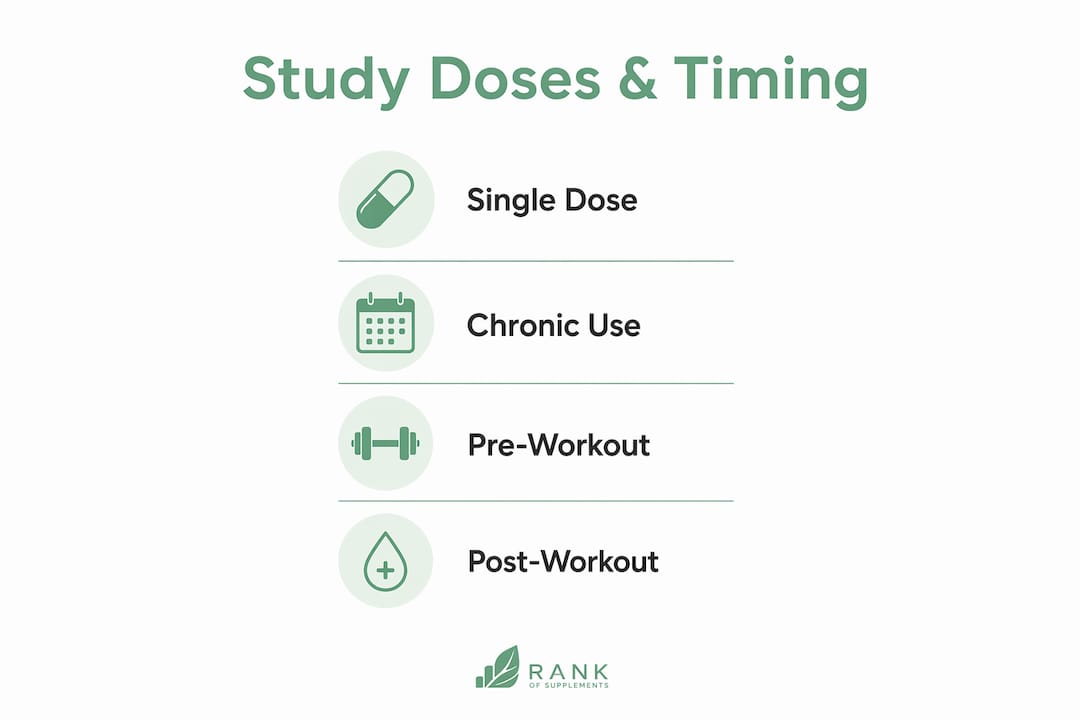
Acute use (single pre-workout dose) targets the pump and short-term endurance effects. Chronic use over several weeks is what produces more durable vascular benefits, including blood pressure effects. Expect at least two to four weeks of consistent use before drawing conclusions about blood pressure or recovery.
One important caveat: most commercially sold “NO boosters” are multi-ingredient pre-workouts that also contain caffeine, beta-alanine, or creatine. Those ingredients independently affect performance, making it genuinely difficult to attribute any benefit to the NO precursor component specifically.
Safety, side effects, and drug interactions you need to know
For most healthy adults, NO precursors at study doses are well tolerated. The risks that do exist are specific and worth knowing.
Common side effects:
- GI discomfort (nausea, cramping, loose stools) at high arginine or citrulline doses, especially on an empty stomach.
- Mild headache from vasodilation, particularly with nitrate-heavy doses.
- Temporary drop in blood pressure, which can cause lightheadedness.
Serious drug interactions:
- PDE5 inhibitors (sildenafil, tadalafil): combining with nitrate-based supplements or high-dose NO precursors can cause severe, potentially dangerous hypotension. This is a well-documented contraindication.
- Nitrate medications (isosorbide mononitrate, nitroglycerin): additive vasodilation creates the same hypotension risk.
- Antihypertensive drugs: NO precursors add to blood-pressure-lowering effects; people on these medications should consult a clinician before supplementing.
Who should not use NO boosters without medical clearance:
- Anyone taking nitrate medications or PDE5 inhibitors.
- People with unstable cardiovascular disease or recent cardiac events.
- Pregnant individuals with hypertension or preeclampsia risk.
- Those with known kidney disease (arginine metabolism affects renal function).
This article is general information, not medical advice. Confirm current supplement interactions with a pharmacist or physician before starting, especially if you take any prescription medications.
What NO boosters actually do vs. what the marketing claims
A few persistent misconceptions are worth clearing up directly.
Misconception 1: “NO boosters give you energy.” They do not, at least not through NO. The perceived energy spike in most pre-workout products comes from caffeine or other stimulants. Many products labeled as NO boosters contain stimulants that produce energy spikes entirely unrelated to vasodilation. The actual NO-precursor effect is slower and subtler: better blood flow, not a buzz.
Misconception 2: “The pump means you’re building muscle.” The pump is real vasodilation and increased intramuscular blood flow. It can increase training volume by delaying fatigue, which indirectly supports hypertrophy over time. But the pump itself does not trigger muscle protein synthesis. Conflating the two is one of the most common marketing sleights of hand in the supplement industry.
Misconception 3: “More arginine = more NO.” Not orally. Because arginase in the gut and liver degrades most of it before it reaches circulation, taking more arginine does not proportionally raise NO. Citrulline is the more effective oral route.
“Users often mistake NO boosters for stimulants; the real mechanism is signaling to widen blood vessels, which benefits those with low baseline NO or specific exercise demands.”, Men’s Health
Key Takeaways
Nitric oxide boosters work best for people with a specific physiological need, low baseline NO, endurance demands, or vascular health goals, and citrulline at study doses is the most reliable oral ingredient for most users.
| Point | Details |
|---|---|
| Citrulline beats arginine orally | L-citrulline raises plasma arginine more effectively because it bypasses first-pass gut/liver breakdown. |
| Use study doses | Citrulline malate ~8 g (2:1 ratio), beetroot nitrate 400 to 500 mg; under-dosing is the most common reason products underperform. |
| Food-first is a real option | Beetroot, arugula, and watermelon supply nitrates and citrulline with antioxidants that extend NO’s half-life. |
| Drug interactions are serious | Never combine nitrate supplements or high-dose NO precursors with PDE5 inhibitors or nitrate medications. |
| Rankofsupplements for vetted picks | Use Rankofsupplements to find single-ingredient products at study-backed doses and avoid stimulant-confounded blends. |
The evidence-first approach Rankofsupplements takes
The supplement market for NO products is genuinely noisy. Most products are multi-ingredient pre-workouts where the NO-precursor dose is buried inside a proprietary blend alongside caffeine, beta-alanine, and a half-dozen other compounds. That makes it nearly impossible for a consumer to know whether any benefit came from the NO component or the 300 mg of caffeine.
At Rankofsupplements, the editorial approach starts with a simple filter: does the product list individual ingredient doses, and do those doses match what randomized trials actually used? A product with 2 g of citrulline in a blend is not the same as one delivering 8 g of citrulline malate. The difference matters, and most review sites gloss over it.
The preference here is for single-ingredient or minimally combined products where you can actually verify the dose. Food-first strategies get credit too, because the evidence for beetroot juice at 400 to 500 mg nitrate is as solid as most supplement trials. Readers should use Rankofsupplements as a starting point for matching products to study doses, not as a source of hype.
Where to find vetted NO supplement options
If you want to skip the label-reading guesswork, Rankofsupplements has done the ingredient-level work for you. The supplement ingredient library covers citrulline, arginine, and dietary nitrates with per-ingredient dosing guidance drawn from clinical literature, so you can quickly check whether a product you are considering actually delivers a study-backed amount.
For condition-specific guidance, the supplements by health goal hub organizes options by vascular health, blood pressure, and exercise performance, making it straightforward to find products relevant to your situation. If you want to see how a multi-ingredient pre-workout with NO claims gets evaluated for dosing transparency, the Nutrigo Lab Strength review is a practical example of that process in action. Start with the ingredient library, identify the compound that fits your goal, and look for a product that lists its dose openly.
Useful sources
- Oregon State University Extension: Say NO to Disease, Accessible overview of nitric oxide’s role in cardiovascular and immune health.
- PMC: NO Precursors and Strength Performance Review, Systematic review of citrulline, arginine, and nitrate supplementation for strength and hypertrophy outcomes.
- PMC: Nitric Oxide Benefits Overview, Clinical review covering vasodilation, blood pressure, exercise endurance, and erectile function evidence.
- OPSS: Nitric Oxide Supplements, Military-focused consumer guide covering food sources, safety, and supplement claims.
- Stronger by Science: NO Supplements for Strength and Hypertrophy, Evidence-based breakdown of dosing, ingredient pharmacokinetics, and realistic expectations.
- Health.com: Science-Backed Benefits of Nitric Oxide, Consumer-friendly summary of NO’s physiological roles and supplement basics.
- PMC: Citrulline and Cardiovascular Function, Focused review on citrulline’s role in arginine and NO metabolism.
FAQ
What is a nitric oxide booster, exactly?
A nitric oxide booster is a supplement containing precursors like L-citrulline, L-arginine, or dietary nitrates that your body converts into nitric oxide, a molecule that relaxes blood vessels and improves circulation. These products contain no NO gas, they supply the raw materials for your body to make it.
Which ingredient works best: citrulline or arginine?
L-citrulline is more effective orally because it bypasses the gut and liver enzymes that break down arginine before it reaches the bloodstream, raising plasma arginine and NO signaling more reliably.
What dose of citrulline malate do studies use?
Most randomized trials use approximately 8 g of citrulline malate (2:1 citrulline-to-malate ratio) taken 1 to 2 hours before exercise; products delivering less than that are unlikely to replicate study results.
Are there serious drug interactions with NO supplements?
Yes. Combining nitrate-based supplements or high-dose NO precursors with PDE5 inhibitors (sildenafil, tadalafil) or prescription nitrate medications can cause severe hypotension; anyone on antihypertensives should consult a clinician before use.
Can food replace NO supplements?
For many people, yes. Beetroot juice standardized to 400 to 500 mg nitrate and arugula or spinach deliver meaningful dietary nitrates, while watermelon supplies L-citrulline, often at doses comparable to entry-level supplements.