A well-designed wellness supplement intake workflow does one thing above all else: it puts the right supplement in your body at the right time, consistently, without you having to think about it every morning. The core structure is simple. Split your supplements into two daily windows, morning and evening, match each one to the correct food environment (fat-containing meal or empty stomach), space conflicting minerals like calcium and iron by a sufficient time interval to prevent absorption competition, and use a pill organizer or reminder app to remove the guesswork. That foundation covers the majority of what makes a supplement routine actually work.
Here is what an effective daily supplement intake process looks like at a glance:
- Morning window: B vitamins, vitamin C, and iron (take with breakfast or a small snack)
- Evening window: Magnesium glycinate (take with dinner or before bed to support sleep)
- With a fat-containing meal: Vitamins D, E, K, A, CoQ10, and fish oil
- Spaced at least 2 hours apart: Calcium and iron (they compete for the same absorption pathway)
- Organizational tools: A weekly pill organizer, a phone reminder, or a dedicated tracking app
Consistency beats perfect timing every time. A routine you actually follow at 7:00 AM daily outperforms a theoretically optimized schedule you abandon by Wednesday.
Table of Contents
- How supplement types determine your optimal timing
- How to build a personalized daily supplement routine
- Common pitfalls, interactions, and safety considerations
- How to monitor and adjust your supplement routine over time
- Best practices for storing supplements to maintain potency
- Key Takeaways
- FAQ
- Recommended
How supplement types determine your optimal timing
Not all supplements absorb the same way, and ignoring that fact is the single most common reason people spend money on products that deliver half their potential benefit.
Fat-soluble vs. water-soluble vitamins
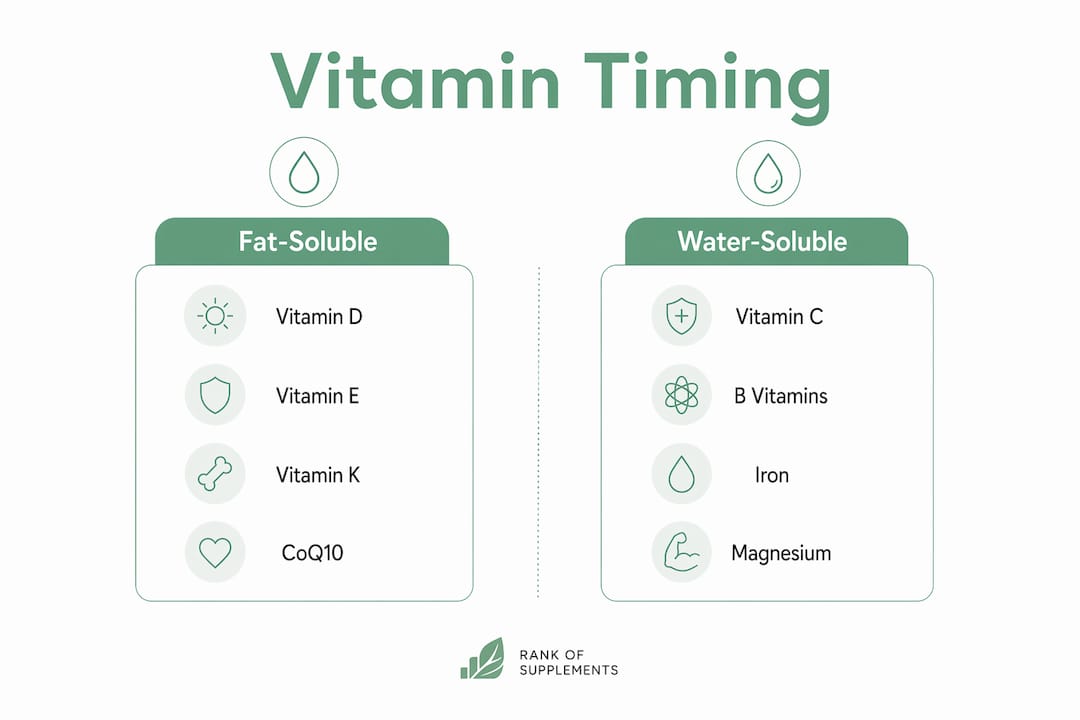
Fat-soluble vitamins (D, E, K, A) and fat-adjacent compounds like CoQ10 and fish oil require dietary fat to be absorbed properly. Take them with a meal that contains at least some fat, such as eggs, avocado, or olive oil. Water-soluble vitamins, including the entire B complex and vitamin C, dissolve without fat and absorb well on an empty stomach or with a light meal. Because the body excretes excess water-soluble vitamins through urine, morning intake makes sense: you get the energy and metabolic support when you need it most.

Minerals and their timing conflicts
Minerals are where timing errors cause the most real-world problems. Calcium and iron share the same intestinal transport proteins, so taking them together means each one blocks the other’s absorption. Space them by a sufficient time interval. Pairing iron with vitamin C, on the other hand, actively improves absorption, so a morning iron supplement alongside a vitamin C capsule or a glass of orange juice is a practical win. Zinc and copper compete similarly and should not be taken in the same dose if you are supplementing both.
Quick-reference timing table
| Supplement | Best timing | Food requirement |
|---|---|---|
| Vitamin D | Morning or midday | With a fat-containing meal |
| Vitamin K2 | Morning or midday | With a fat-containing meal |
| Fish oil / Omega-3 | Morning or evening | With a fat-containing meal |
| CoQ10 | Morning | With a fat-containing meal |
| Vitamin C | Morning | Empty stomach or light meal |
| B-complex | Morning | Empty stomach or light meal |
| Iron | Morning | With vitamin C; away from calcium |
| Calcium | Midday or evening | With food; spaced away from iron |
| Magnesium glycinate | Evening | With dinner or before bed |
| Zinc | Evening | With food; away from copper |
Pro Tip: If you take vitamin D and vitamin K2 together, they work synergistically. D3 drives calcium into the bloodstream; K2 directs it into bones rather than arteries. Pairing them in the same fat-containing meal is one of the most practical combinations in a daily supplement schedule.
How to build a personalized daily supplement routine
Building a routine that sticks takes about 20 minutes of upfront planning and almost no effort after that. Follow these steps in order.
-
List every supplement you currently take. Write down the name, dose, and whether the label says “take with food,” “take on an empty stomach,” or gives no instruction. If the label says nothing, check whether it is fat-soluble or water-soluble using the table above.
-
Identify your anchor meals. Most people have two reliable eating moments: breakfast and dinner. Those become your two dosing windows. A lunch window is worth adding only if you have a supplement (like calcium) that genuinely needs to be separated from a morning mineral.
-
Sort supplements into windows. Morning window gets energizing, water-soluble supplements and anything that pairs with iron. Evening window gets magnesium and any fat-soluble vitamins you did not fit at breakfast. Fat-soluble vitamins can go in either window as long as fat is present in the meal.
-
Set up a physical organizer. A weekly pill organizer with AM and PM compartments removes the daily decision entirely. Fill it on Sunday night. Done. You will never wonder “did I take that already?” again.
-
Add a digital reminder. A phone alarm at your breakfast and dinner times takes 30 seconds to set and dramatically reduces missed doses. Apps like StackIQ go further by scanning your supplements, detecting ingredient overlaps, and flagging potential supplement-medication considerations automatically.
-
Start simple, then layer. If you are new to a structured supplement intake process, begin with two or three core supplements before adding more. Complexity added too fast is the fastest route to abandoning the routine entirely.
Pro Tip: Anchor your supplements to meals you already eat rather than trying to create new eating occasions around them. The meal is the trigger; the supplement is the habit that rides along.
Common pitfalls, interactions, and safety considerations
Most supplement routines fail not because of bad products but because of avoidable mistakes in how they are taken. Here are the ones worth knowing before you finalize your plan.
-
Stacking competing minerals simultaneously. Taking calcium, iron, and zinc at the same time is one of the most frequent errors. Each competes for absorption, and the result is that none of them absorb at full capacity.
-
Taking fat-soluble vitamins without fat. Vitamin D taken with a glass of water and nothing else absorbs poorly. The fat in your meal is not optional for these compounds.
-
Exceeding safe upper intake levels. When you take multiple supplements that share an ingredient (zinc is a common one), the combined dose can exceed the tolerable upper intake level without you realizing it. Ingredient-level tracking across your full stack prevents this.
-
Ignoring supplement-medication interactions. St. John’s Wort affects the metabolism of many prescription drugs. High-dose vitamin K can interfere with blood thinners. Fish oil at high doses may affect bleeding time. If you take any prescription medication, review your supplement list with a pharmacist or physician before starting.
-
Inconsistent timing. Taking supplements at random times each day, or skipping days, reduces the cumulative benefit of compounds that require steady tissue saturation, like creatine, magnesium, and vitamin D.
-
Assuming “natural” means safe at any dose. Fat-soluble vitamins accumulate in tissue. Vitamin A toxicity from supplements is well-documented, and it does not require dramatically high doses over a long period.
For a deeper look at supplement mistakes to avoid, Rankofsupplements covers the most common errors with practical fixes.
How to monitor and adjust your supplement routine over time
Getting the routine built is step one. Knowing whether it is actually working is step two, and most people skip it entirely.

Tracking methods that give you real feedback
Combining subjective and objective tracking yields the most meaningful picture of supplement effectiveness. Subjective tracking means noting how you feel: energy levels, sleep quality, mood, digestion. Objective tracking means measuring something you can count: blood panel results, workout performance, resting heart rate, or body composition. Neither alone tells the full story. A blood test showing improved vitamin D levels is useful; knowing you also sleep better and feel less fatigued makes the data meaningful.
A simple wellness journal works well for subjective tracking. Log a few sentences each morning and evening for the first 30 days of a new supplement or routine change. You will spot patterns that a number alone would miss.
Using apps and tools
Apps like StackIQ handle the analytical side: they scan supplement labels, calculate total ingredient intake across your full stack, flag overlaps that could push you past safe limits, and send reminders. For anyone managing more than four or five supplements, that kind of automated ingredient-level oversight is genuinely useful rather than optional.
Running a personal supplement experiment
| Phase | Duration | What you do |
|---|---|---|
| Baseline | 1 to 2 weeks | Log symptoms and metrics before any change |
| Active supplementation | 4 to 8 weeks | Take the new supplement consistently; keep logging |
| Washout | ~7 days | Stop the supplement; observe what changes |
| Reassessment | 1 week | Compare baseline to active and washout data |
A washout phase of around 7 days before introducing a new supplement gives you a cleaner read on what that supplement is actually doing. Without it, you are guessing. With it, you have evidence.
Best practices for storing supplements to maintain potency
Storage is the part of a supplement routine that gets almost no attention, yet it directly affects whether the product you paid for still works by the time you take it.
Heat, light, and humidity are the three main enemies of supplement potency. Most capsules, tablets, and powders degrade faster when stored above 77°F or in humid environments. That rules out the bathroom medicine cabinet (steam from showers raises humidity) and the cabinet above the stove (heat spikes every time you cook).
A cool, dry, dark location is the standard recommendation. A kitchen cabinet away from the stove, a bedroom dresser drawer, or a dedicated supplement shelf in a pantry all work well. Some supplements, particularly probiotics and certain fish oils, require refrigeration after opening. Check the label; do not assume.
Keep supplements in their original containers. The packaging is designed to limit light and moisture exposure. Transferring capsules to a decorative jar on the counter looks organized but accelerates degradation. If you use a weekly pill organizer, fill only one week at a time rather than loading a month’s worth in advance.
Check expiration dates when you buy and again when you refill. Expired supplements are not necessarily dangerous, but their potency is no longer guaranteed. Vitamin C and B vitamins tend to degrade faster than fat-soluble vitamins, so pay closer attention to expiration on those.
Key Takeaways
A structured wellness supplement intake workflow built around two daily dosing windows, correct food pairing, and consistent tracking produces better results than any single “perfect” supplement taken inconsistently.
| Point | Details |
|---|---|
| Two dosing windows | Morning for energizing supplements, evening for magnesium; add a midday window only when spacing requires it. |
| Space competing minerals | Calcium and iron need to be spaced apart to avoid blocking each other’s absorption. |
| Fat-soluble vitamins need fat | Vitamins D, E, K, A, CoQ10, and fish oil must be taken with a fat-containing meal to absorb properly. |
| Track both ways | Combine subjective notes (energy, sleep) with objective data (blood panels) for a complete picture of effectiveness. |
| Store correctly | Keep supplements in a cool, dry, dark location; avoid bathrooms and cabinets near heat sources. |
FAQ
In what order should you take supplements?
Take energizing, water-soluble supplements (B vitamins, vitamin C, iron) in the morning and calming supplements (magnesium glycinate) in the evening. Space calcium and iron by at least 2 hours since they compete for absorption.
How do you create a supplement routine that actually sticks?
Anchor each supplement to a meal you already eat, set two phone reminders (morning and evening), and use a weekly pill organizer. Starting simple with two or three core supplements before adding more prevents the routine from becoming overwhelming.
What is the process of supplementation, and how long before you see results?
Supplementation is the consistent daily intake of specific nutrients to address gaps or support health goals. Results vary by compound: vitamin D and magnesium levels can shift within a few weeks, while collagen and creatine typically require 4 to 8 weeks of consistent use before measurable changes appear.
How do you avoid dangerous supplement interactions?
Never take calcium and iron at the same time, and check total ingredient amounts across your full stack to avoid exceeding safe upper limits for nutrients like zinc. If you take prescription medications, review your supplement list with a pharmacist before adding anything new.
What apps help manage a supplement intake schedule?
StackIQ scans supplement labels, detects ingredient overlaps across your full stack, and sends reminders. For clinical settings, integrated platforms like Fullscript (available through healthcare providers) combine professional recommendations with automated adherence tracking.
Recommended
Related article: Common Supplement Mistakes That Hurt Your Health covers the timing and stacking errors most people make without realizing it.
Top list: Browse Rankofsupplements’ supplement reviews and rankings to find science-backed options matched to specific health goals.
Specific product: The Rankofsupplements ingredient library gives you detailed breakdowns of what each supplement ingredient actually does, so you can build a stack based on evidence rather than marketing.
Guide: Supplement Timing Step by Step: Your 2026 Science Guide goes deeper on scheduling windows and the science behind absorption timing.