
TL;DR:
- A beginner supplement workflow involves introducing supplements one at a time with measurable goals to evaluate their effectiveness. It emphasizes establishing solid foundational habits like sleep, diet, and activity before adding supplements, and recommends trial periods of 8 to 12 weeks for accurate results. Consistent logging and strict evaluation help prevent supplement overload and support disciplined decision-making.
A beginner supplement workflow is a structured, step-by-step process for introducing dietary supplements safely, one at a time, aligned with a single measurable health or fitness goal. Most beginners skip this structure entirely and end up with a cabinet full of products they cannot evaluate. The NIH Office of Dietary Supplements recommends a food-first approach before adding any supplement, and research consistently shows that single-supplement trials of 8–12 weeks produce the clearest, most actionable results. Rankofsupplements built its entire review framework around this principle: systematic, evidence-based supplementation beats guesswork every time.
What foundations should you establish before starting supplements?
Supplements do not fix a broken foundation. No supplement stack compensates for poor sleep, inadequate protein intake, or a sedentary lifestyle. These habits are the highest-leverage variables in your health, and they must be stable before you add anything else.
Fix the basics first
Start with three non-negotiables: consistent sleep of 7–9 hours per night, a diet that meets your protein target (roughly 0.7–1g per pound of bodyweight for active adults), and at least 150 minutes of moderate activity per week. These are the federal Dietary Guidelines benchmarks. Supplements layer on top of these habits. They do not replace them.
Once your lifestyle is stable, identify actual nutrient gaps. The most common deficiencies in American adults are vitamin D, omega-3 fatty acids, and magnesium. A basic blood panel from your doctor confirms vitamin D status. Omega-3 intake is easy to estimate by counting weekly servings of fatty fish. Magnesium deficiency often shows up as poor sleep, muscle cramps, or low energy.
Pro Tip: Before buying anything, spend two weeks logging your food in Cronometer or a similar free app. You will likely find one or two clear gaps that a single targeted supplement can address.
Common foundational supplements at a glance
| Supplement | Primary role | Common deficiency signs |
|---|---|---|
| Vitamin D3 | Bone health, immune function, mood | Fatigue, low mood, frequent illness |
| Omega-3 (EPA/DHA) | Inflammation, heart and brain health | Joint stiffness, poor focus |
| Magnesium glycinate | Sleep quality, muscle function, stress | Cramps, poor sleep, anxiety |
| Multivitamin | Broad micronutrient coverage | General fatigue, dietary gaps |
Foundational stacks typically include 2–3 well-researched supplements targeting specific deficiencies or lifestyle gaps. That number is intentional. More is not better at this stage.
How to add supplements systematically with a beginner supplement workflow
The core principle of any effective supplement routine for beginners is one goal, one supplement, one trial period. This sounds simple. Most people ignore it.
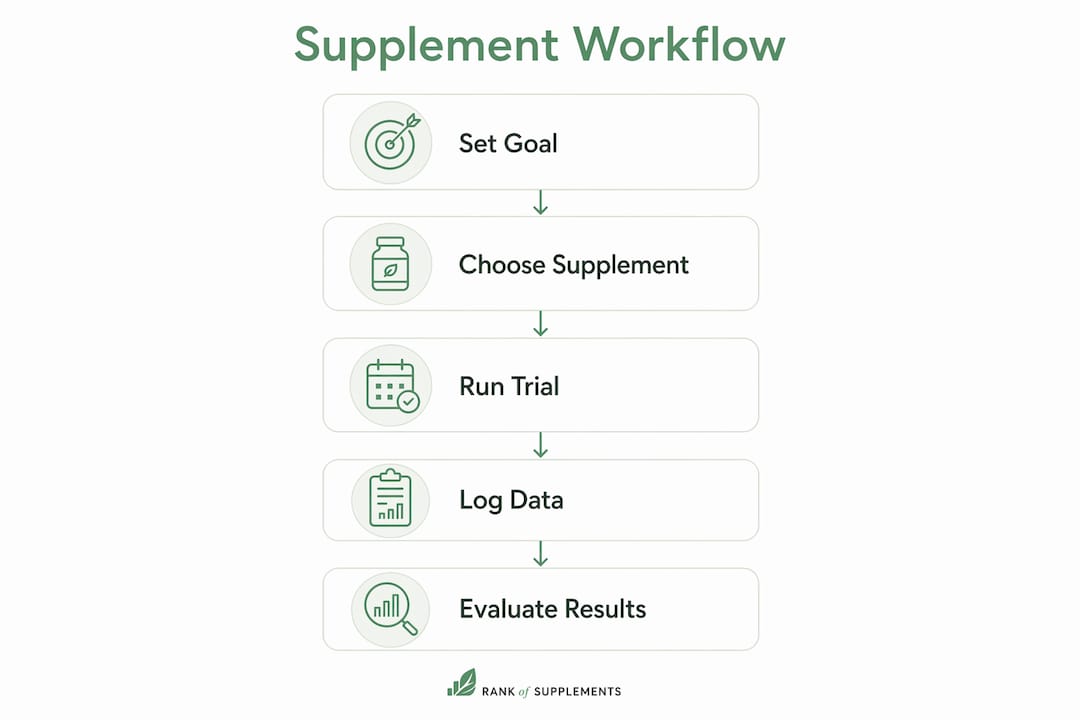
Step 1: Define one measurable goal

Pick a single, specific outcome before you open any product. “Better energy” is not a goal. “Falling asleep within 20 minutes on at least 5 nights per week” is a goal. “Adding 10 pounds to my squat in 12 weeks” is a goal. A clear outcome measure prevents endless tinkering and gives you a real basis for deciding whether a supplement works.
Step 2: Choose one supplement and run a full trial
Add one supplement at a time and commit to a trial period of 8–12 weeks. Shorter periods are not enough for most supplements to show meaningful effects. Creatine, for example, takes 3–4 weeks to fully saturate muscle tissue. Magnesium’s sleep benefits often take 4–6 weeks to stabilize.
Step 3: Log everything from day one
Track four data points for every supplement you add: start date, dose, timing, and your target outcome score. A phone note works. A paper table works. The format does not matter. Tracking doses and side effects in a simple log prevents supplement creep and keeps your routine honest.
Step 4: Apply a decision rule at the end of the trial
At week 8–12, compare your outcome against the threshold you set in Step 1. Three options exist: keep the supplement because it hit your target, adjust the dose or timing and run another cycle, or remove it entirely and reset. This decision framework is what separates a disciplined supplement routine from random consumption.
Pro Tip: Set a calendar reminder on the day you start a new supplement. Label it “Evaluate [supplement name]” and set it for 10 weeks out. Without a hard deadline, trials drift indefinitely.
Workflow summary
| Step | Action | Key rule |
|---|---|---|
| 1. Set goal | Define one measurable outcome | Specific and time-bound |
| 2. Choose supplement | Pick one product targeting that goal | Single ingredient only |
| 3. Start log | Record dose, timing, and baseline | Day one, not day seven |
| 4. Run trial | Maintain consistent use for 8–12 weeks | No other new additions |
| 5. Evaluate | Compare outcome to your preset threshold | Keep, adjust, or remove |
How do you monitor and troubleshoot your supplement routine?
Monitoring is where most beginners lose discipline. The easy supplement workflow falls apart when people add a second supplement before evaluating the first, or when side effects appear and they try to manage them with another product.
Recognize and respond to side effects correctly
If side effects appear, stop the supplement immediately. Return to your baseline for 7–14 days to clear your system, then reassess. Do not add a second supplement to counteract the first. That approach makes it impossible to identify the actual cause. The correct workflow is always: stop, clear, evaluate.
“Covering side effects with additional supplements prevents accurate identification of issues. The only reliable fix is to stop the suspected product, wait for your system to reset, and then decide whether to reintroduce it at a lower dose or remove it entirely.”
Avoid supplement creep
Supplement creep is what happens when you add products gradually without removing any. After six months, you are taking eight supplements and have no idea which ones are doing anything. Starting multiple supplements simultaneously creates the same problem from day one. The fix is a written log with a strict rule: nothing new enters the rotation until the current trial is complete.
Common mistakes that lead to creep include:
- Adding a new product because of a sale or social media recommendation mid-trial
- Keeping supplements “just in case” without a documented reason
- Using proprietary blends that combine multiple ingredients, making individual evaluation impossible
- Skipping the evaluation step and defaulting to “I’ll keep taking it”
Build supplement habits around fixed daily cues
Consistency matters more than perfect timing for most supplements. Attach each supplement to an existing daily habit. Take vitamin D with breakfast. Take magnesium 30 minutes before bed. Take creatine with your post-workout meal. Fixed cues reduce the cognitive load of remembering and prevent missed doses from distorting your trial data. For managing fatigue and lifestyle factors alongside supplementation, pairing clinical guidance with your log produces the clearest picture.
Pro Tip: If you use caffeine as part of a pre-workout supplement workflow, cycle it with 5–7 day resets every 8–12 weeks. Tolerance builds fast, and resets restore the acute performance benefit without requiring higher doses.
What supplements should beginners take based on their goals?
The right first supplements depend entirely on your goal. There is no universal starter kit. The table below maps common beginner goals to evidence-backed starting points.
Goal-based starter stacks
| Goal | Primary supplement | Supporting addition | Notes |
|---|---|---|---|
| General health | Vitamin D3 (2,000 IU) | Omega-3 (1–2g EPA/DHA) | Address the two most common deficiencies first |
| Sleep quality | Magnesium glycinate (300–400mg) | None initially | Take 30–60 min before bed; run full 8-week trial |
| Strength and performance | Creatine monohydrate (3–5g daily) | None initially | No loading phase needed; timing is flexible |
| Pre-workout energy | Caffeine (3–6mg/kg body weight) | L-citrulline (6–8g) | Add beta-alanine (3.2g) only after caffeine trial |
| Muscle recovery | Protein powder (to meet daily target) | Creatine monohydrate | Food-first; powder fills gaps, not meals |
The performance-focused pre-workout stack
A clinically supported pre-workout supplement workflow for beginners includes creatine monohydrate at 5g daily, beta-alanine at 3.2g, L-citrulline at 6–8g, and caffeine at 3–6mg per kilogram of body weight. Single-ingredient products in these categories cost around $0.30–$0.58 per training day. That is significantly cheaper than proprietary blends, which often hide exact dosages behind “proprietary blend” labels.
Creatine monohydrate provides the largest, most well-documented performance gains for beginners. Studies show it increases strength by approximately 8% and power output by 14%. Daily dosing of 3–5g saturates muscle tissue regardless of timing, which makes it the lowest-effort, highest-return supplement for anyone starting a fitness-focused routine.
The “start low, titrate slow” principle applies to every supplement on this list. Begin at the lower end of the clinical dose range. Assess tolerance for two weeks before moving to the full dose. This approach catches sensitivity issues early and keeps your log clean.
- Start with one supplement from the table above that matches your primary goal
- Confirm you are hitting your protein and sleep targets before adding performance supplements
- Avoid proprietary blends until you know how each individual ingredient affects you
- Check the supplement ingredient library at Rankofsupplements to verify ingredient quality and dosing standards before purchasing
Key Takeaways
A beginner supplement workflow works because it isolates variables, sets measurable goals, and builds the discipline to evaluate each supplement honestly before adding the next.
| Point | Details |
|---|---|
| Fix foundations first | Stabilize sleep, diet, and activity before adding any supplement. |
| One supplement at a time | Run an 8–12 week trial on a single product before introducing another. |
| Log from day one | Track dose, timing, and your target outcome to prevent supplement creep. |
| Set a decision threshold | Define a measurable success criterion before starting each trial. |
| Stop and reset for side effects | Clear your system for 7–14 days before reintroducing or removing a product. |
Why discipline beats enthusiasm every time
I have watched hundreds of beginners make the same mistake. They read about creatine, magnesium, vitamin D, omega-3s, and a pre-workout stack in the same week, order everything at once, and start taking all of it on Monday. By week three, they feel slightly better, slightly worse, and completely unable to explain why. That is not supplementation. That is expensive confusion.
The supplement industry profits from enthusiasm. It sells stacks, bundles, and “complete systems” because they move more product. A disciplined workflow, where you add one thing, wait, measure, and decide, is the opposite of what most marketing encourages. That tension is real, and beginners need to recognize it.
What I have found actually works is treating each supplement like a small experiment. You have a hypothesis: “Magnesium glycinate will reduce the time it takes me to fall asleep.” You run the experiment for 10 weeks. You measure the outcome against your baseline. You make a decision. This is not complicated. It just requires patience that most people do not expect to need when they start.
The other thing worth saying plainly: supplements are not a shortcut. The people who get the most from them are the ones who already sleep well, train consistently, and eat enough protein. Supplements add a margin of improvement on top of a solid foundation. They do not create the foundation. If you are new to this, building your supplement routine for fitness on a stable lifestyle base is the single best decision you can make before spending a dollar on any product.
— matteo
How Rankofsupplements helps you build a smarter supplement routine
Rankofsupplements exists for exactly this situation. You know you want to supplement, but you do not want to waste money on products that do not work or ingredients you cannot verify.
The supplement ingredient library at Rankofsupplements gives you transparent, science-backed profiles for every major ingredient, including clinical dose ranges, timing guidance, and quality indicators. The 2026 supplement reviews and rankings are updated regularly to reflect current evidence, so you are never working from outdated information. Whether you are building a foundational stack or evaluating a specific product like Nutrigo Lab Strength for performance goals, Rankofsupplements gives you the data to decide with confidence.
Recommended
- Related article: Common supplement mistakes that hurt your health
- Top list: Top supplement stacks for 2026: what actually works
- Product review: Nutrigo Lab Strength review
- Guide: Supplement decision workflow: your 2026 choosing guide
FAQ
What is a beginner supplement workflow?
A beginner supplement workflow is a structured method for introducing supplements one at a time, each with a defined trial period and measurable outcome, so you can evaluate what works before adding anything else.
How many supplements should a beginner start with?
Start with one supplement targeting your most pressing deficiency or goal. Foundational stacks of 2–3 well-researched products are appropriate once you have confirmed tolerance and benefit from each individually.
How long should you trial a new supplement?
A fair trial requires 8–12 weeks. Shorter periods do not give most supplements enough time to produce measurable effects, particularly for creatine, magnesium, and vitamin D.
What should you do if a supplement causes side effects?
Stop the supplement immediately and return to your baseline for 7–14 days. Do not add another product to manage the side effects. Once your system clears, reassess whether to reintroduce at a lower dose or remove it entirely.
Is creatine a good first supplement for beginners?
Creatine monohydrate is the most well-documented performance supplement for beginners. At 3–5g daily, it increases strength by approximately 8% and power output by 14%, with no precise timing requirement.