
TL;DR:
- Combining two or more supplements targeting fat loss creates a more effective stack than using alone.
- Building a safe stack involves introducing one supplement at a time, with proper dosing and testing over weeks.
Weight loss supplement stacking is the practice of combining two or more complementary supplements to target fat loss through different biological mechanisms at once. Done correctly, a well-designed stack produces results that no single supplement can match alone. Done wrong, it wastes money and creates unnecessary side effects. This guide gives you a practical, evidence-based weight loss supplement stacking guide built on clinical dosing, smart timing, and a stepwise approach that keeps you safe while you build toward real results.
What supplements form the foundation of an effective weight loss stack?
The foundation of any fat loss stack rests on three compounds: protein powder, caffeine, and a dietary fiber source such as glucomannan or psyllium husk. Each one targets a different mechanism. Protein preserves lean muscle during a caloric deficit, which keeps your metabolic rate from dropping. Caffeine raises thermogenesis and increases fat oxidation. Fiber slows gastric emptying, which controls appetite and reduces total calorie intake at meals.

Experts recommend this foundational three-compound stack as the starting point for anyone building a weight loss regimen with supplements. The appetite effects typically appear within 2 to 4 weeks. Body composition changes become measurable at the 8 to 12 week mark.
Pro Tip: Start your fiber supplement 15 to 20 minutes before your largest meal of the day. This timing gives glucomannan or psyllium time to expand in your stomach before food arrives, which meaningfully reduces how much you eat.
The table below summarizes the three foundational supplements, their standard doses, and their primary effects.
| Supplement | Standard dose | Primary effect | Timeline |
|---|---|---|---|
| Protein powder | 20 to 40 g per serving | Muscle preservation, satiety | 2 to 4 weeks |
| Caffeine | 200 to 300 mg per dose | Thermogenesis, fat oxidation | 1 to 2 weeks |
| Psyllium or glucomannan | 5 to 10 g before meals | Appetite control, blood sugar | 2 to 4 weeks |
These three compounds work through distinct pathways, which is exactly what makes them effective together. Combining supplements that hit the same receptor or pathway adds risk without adding benefit. The foundational stack avoids that problem entirely.
Monthly costs for this core group typically run $30, $50. That makes it one of the most cost-effective fat loss strategies available before you consider any advanced additions.
How to build and customize your supplement stack safely for weight loss
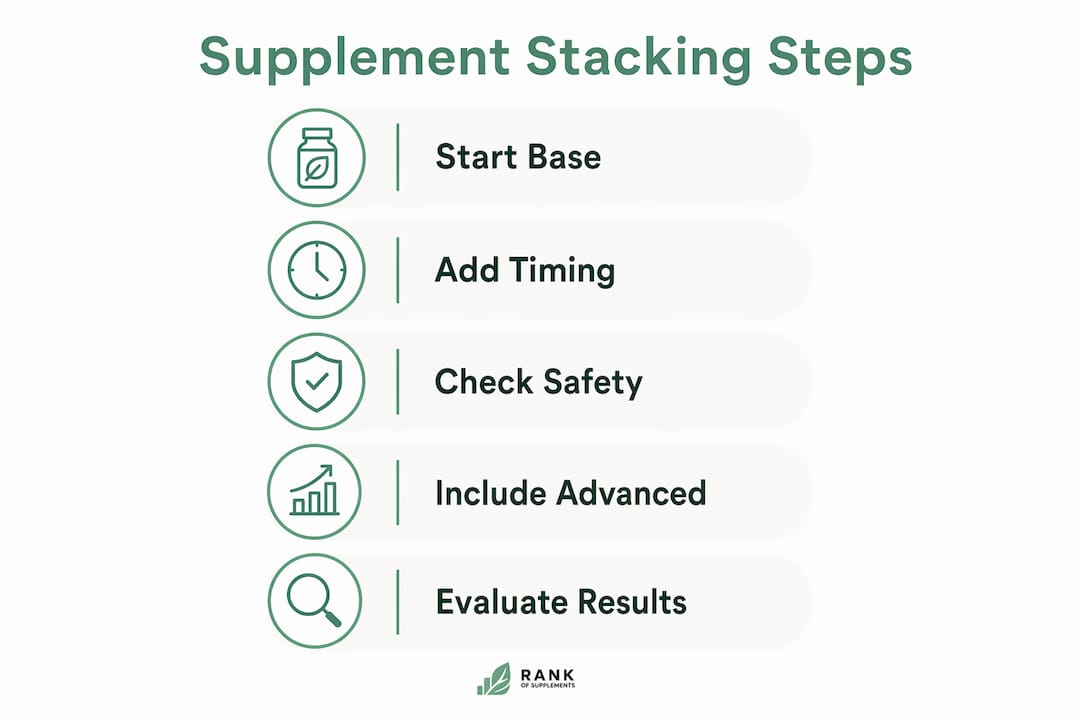
Building a safe and effective stack requires a stepwise approach. Adding multiple supplements at once makes it impossible to know which one is working, which one is causing a side effect, or which one you can drop without losing results. The right method is slower but far more reliable.
The experimental stacking method works like this: introduce one supplement, run it consistently for 4 to 8 weeks, assess your response, then add the next compound. This process isolates effects and gives you real data about your own body.
Follow this sequence when building your stack:
- Start with the foundational three. Run protein, caffeine, and fiber together for at least four weeks before adding anything else.
- Introduce one new supplement at a time. Never add two new compounds in the same week.
- Start at 50% of the recommended dose. Starting at half dose during the first week helps you assess tolerance before committing to the full amount.
- Track weekly. Log energy, appetite, sleep quality, and any side effects in a simple notes app or journal.
- Cycle your stimulants. Cycling caffeine with one week off per month maintains its effectiveness and prevents tolerance buildup.
- Audit for overlap every 30 days. Check every product label for shared ingredients. Two products containing caffeine, for example, can push your daily intake into a range that causes anxiety, elevated heart rate, and poor sleep.
Timing matters as much as dosing. Caffeine and green tea extract work best in the morning or before training. Fiber supplements belong before meals. Magnesium, which pairs well with vitamin D for foundational wellness support, works best taken in the evening because it supports sleep quality.
Pro Tip: Before buying any new supplement, photograph every label in your current stack and search each ingredient list for overlaps. One shared stimulant across two products is easy to miss and easy to fix before it becomes a problem.
Third-party testing certification from organizations like NSF, USP, or ConsumerLab is not optional. The supplement industry operates under minimal regulatory oversight, which means purity and potency vary widely between brands. Certification confirms what the label says is actually in the bottle.
What advanced supplements can enhance fat loss and how to incorporate them?
Once your foundational stack is running smoothly for 8 to 12 weeks, you can layer in advanced compounds that target specific metabolic pathways. These supplements have clinical evidence behind them, but they work best when your baseline habits and foundational stack are already in place.
The five most evidence-supported advanced additions for fat loss are:
- Berberine (500 mg, three times daily). Berberine activates AMPK, an enzyme that regulates glucose and fat metabolism. It improves insulin sensitivity, which directly affects how your body stores and supports metabolism. Read the full breakdown of berberine’s metabolic effects before adding it to your stack.
- Green tea extract or EGCG (400 to 600 mg per dose). EGCG combined with caffeine enhances fat oxidation before meals and pairs well with berberine for insulin and metabolic benefits. Use it consistently for 8 to 12 weeks to see meaningful results.
- Chromium (200 to 400 mcg daily). Chromium supports insulin function and reduces carbohydrate cravings. Its effects are modest but useful for people who struggle with blood sugar swings between meals.
- L-carnitine (1,000 to 2,000 mg before training). Carnitine shuttles fatty acids into mitochondria for energy production. Its metabolic effect is most pronounced during aerobic exercise, which makes pre-workout timing critical.
- Conjugated linoleic acid or CLA (3 to 6 g daily with meals). CLA modestly reduces body fat while supporting lean mass. Its effects are slow and subtle, typically requiring 12 weeks of consistent use.
The table below maps each advanced supplement to its mechanism and the best time to add it to your stack.
| Supplement | Mechanism | Best timing | Add after |
|---|---|---|---|
| Berberine | AMPK activation, insulin sensitivity | With meals | Week 8 to 12 of foundational stack |
| EGCG (green tea extract) | Fat oxidation, thermogenesis | Before meals or training | Week 8 |
| Chromium | Insulin support, craving reduction | With meals | Week 10 |
| L-carnitine | Fatty acid transport to mitochondria | Pre-workout | Week 8 |
| CLA | Lean mass support, fat reduction | With meals | Week 12 |
Bioavailability varies significantly by the chemical form of a supplement. Magnesium glycinate, for example, absorbs at roughly 80% compared to 4% for magnesium oxide. The same principle applies across the category. Always check the form listed on the label, not just the ingredient name. A supplement that looks identical on the front of the package can deliver dramatically different results depending on the form used inside.
A well-designed stack uses 3 to 5 complementary compounds targeting one goal through different mechanisms. Adding more compounds beyond that threshold does not accelerate results. It increases cost, raises the risk of interactions, and makes troubleshooting nearly impossible.
Common mistakes and how to troubleshoot your weight loss supplement stack
The most common stacking mistake is adding too many products too fast. Readers who build a 7-supplement stack in their first month have no way to know what is working. When results stall or side effects appear, there is no clear path to fixing the problem.
The most frequent errors in supplement stacking include:
- Overlapping stimulants. Pre-workout formulas, fat burners, and standalone caffeine capsules often contain the same stimulants. Stacking them unknowingly pushes daily caffeine well above 400 mg, which causes anxiety, disrupted sleep, and elevated blood pressure.
- Skipping cycling protocols. Continuous caffeine use without breaks reduces its effectiveness over time. One week off per month restores sensitivity.
- Treating supplements as a substitute for lifestyle. Supplements cannot replace sleep, adequate protein intake, and physical activity. They enhance a working system. They cannot build one from scratch.
- Ignoring timing. Taking fiber with your morning coffee instead of before meals, or taking carnitine at night instead of before training, reduces effectiveness without changing the dose.
- Buying uncertified products. Without NSF, USP, or ConsumerLab certification, you cannot confirm that what is on the label is in the bottle.
“More supplements do not equal better results. Quality and targeted mechanisms outperform quantity in effective stacking. A stack of three well-chosen compounds beats a stack of eight poorly matched ones every time.”
If your stack is not producing results after 12 weeks of consistent use, the right move is to simplify, not add more. Drop back to the foundational three. Run them cleanly for four weeks. Then reintroduce one advanced compound at a time with fresh tracking. This reset approach identifies the weak link faster than any other method.
Pro Tip: If you take any prescription medication, consult a pharmacist or physician before adding berberine or chromium to your stack. Both compounds affect blood sugar and insulin, which can interact with diabetes medications and certain cardiovascular drugs.
Signs that your stack needs a reset include persistent fatigue, disrupted sleep, digestive discomfort that does not resolve after two weeks, or a complete plateau in results after 10 to 12 weeks. These are signals to simplify, not signals to add another product. You can find a detailed breakdown of common stacking mistakes that hurt results at Rankofsupplements.
Key Takeaways
A successful weight loss supplement stack requires a foundational three-compound base, a stepwise addition process, and consistent cycling to maintain efficacy and safety over time.
| Point | Details |
|---|---|
| Start with three compounds | Protein, caffeine, and fiber form the evidence-backed foundation before any advanced additions. |
| Add one supplement at a time | Wait 4 to 8 weeks between additions to isolate effects and catch side effects early. |
| Cycle stimulants monthly | One week off caffeine per month prevents tolerance and keeps thermogenic effects strong. |
| Verify third-party certification | NSF, USP, or ConsumerLab certification confirms purity and potency in an unregulated market. |
| Simplify before adding more | A plateau is a signal to reset to the foundational stack, not to add another compound. |
What I’ve learned from years of watching people stack supplements wrong
Most people who come to supplement stacking already have a solid diet and training program in place. They are looking for a real edge, not a miracle. That is exactly the right mindset. The problem is that enthusiasm tends to outrun patience, and patience is the actual variable that determines whether a stack works.
I have seen readers build 8-supplement stacks in their first month and then report that “nothing is working.” The honest answer is that they have no idea what is working because they never gave any single compound a fair trial. The experimental approach, adding one supplement, running it for 4 to 8 weeks, then adding the next, feels slow. It is also the only method that gives you real information about your own physiology.
The other pattern I see constantly is people treating supplements as a replacement for the basics. No stack built on poor sleep, inadequate protein, and a sedentary lifestyle will produce meaningful fat loss. Supplements are a multiplier. They amplify a working system. They do not create one.
My honest recommendation: run the foundational three for 90 days before touching anything advanced. Track your results weekly. If you see progress, you have proof that the system works. Then you can add berberine or EGCG with confidence, knowing your baseline is solid. That approach produces better long-term results than any aggressive multi-compound stack I have ever seen.
The top supplement stacks for 2026 that Rankofsupplements covers all follow this same logic: fewer, better-chosen compounds, run consistently, with clear tracking. That is not a limitation. That is the method.
matteo
Rankofsupplements resources for your stacking strategy
Choosing the right compounds for your fat loss stack is easier when you have ingredient-level research at your fingertips.
Rankofsupplements maintains a full supplement ingredient library covering dosing, mechanisms, bioavailability, and safety data for every major fat loss compound, including berberine, EGCG, carnitine, and CLA. For product-level decisions, the weight management guide ranks supplements by evidence quality and third-party testing status, so you can select products that actually match their labels. If you want a vetted fat burner to anchor your stack, the Fat Burn Active review covers a product built around the same foundational principles this article outlines. For fiber supplementation specifically, the Fibre Select review gives you a detailed look at one of the better-tested options on the market.
FAQ
What is supplement stacking for weight loss?
Supplement stacking for weight loss means combining two or more complementary supplements that target fat loss through different biological mechanisms. A well-designed stack produces results that no single supplement achieves alone.
How many supplements should I stack for fat loss?
A well-designed stack uses 3 to 5 compounds targeting one goal through different mechanisms. Adding more compounds beyond that threshold increases risk without improving results.
How long does a weight loss supplement stack take to work?
Appetite effects from fiber and protein typically appear within 2 to 4 weeks. Body composition changes become measurable at the 8 to 12 week mark with consistent supplement use and a caloric deficit.
Is it safe to stack caffeine with other fat loss supplements?
Caffeine stacks safely with EGCG, protein, and fiber when you stay within 200 to 300 mg per dose and audit all product labels for overlapping stimulants. Cycling one week off per month maintains effectiveness and reduces tolerance.
Do I need to cycle supplements in a weight loss stack?
Stimulants like caffeine require cycling to stay effective. Non-stimulant compounds like berberine, fiber, and protein do not require cycling but benefit from periodic reassessment to confirm they are still producing results.
Recommended
- Related article: Beginner’s guide to supplement stacks that work
- Top list: Best supplements for weight management
- Product review: Fat Burn Active review
- Buying guide: Supplement buying guide 2026