
TL;DR:
- A supplement stack combines specific supplements to support targeted health or fitness goals, and building one correctly ensures meaningful results.
- Beginners often make mistakes like following trends or adding too many supplements at once, which hampers progress.
A supplement stack is a purposeful combination of supplements chosen to support a specific health or fitness goal, and building one correctly from the start separates real results from wasted money. Most beginners make the mistake of grabbing whatever is trending rather than designing a stack around their own body and goals. This beginner’s guide to supplement stacks walks you through every step: setting measurable goals, establishing foundational habits, introducing supplements one at a time, and avoiding the timing and overlap errors that trip up most newcomers. The approach here is evidence-based, practical, and built for real-world use in 2026.
What is a beginner’s guide to supplement stacks?
Supplement stacking, in the fitness and nutrition industry, refers to the practice of combining multiple dietary supplements to work together toward a defined outcome. The term “stack” comes from bodybuilding culture, but the concept applies equally to energy, recovery, gut health, and general wellness goals. Think of it less like a shopping list and more like an engineering problem: every ingredient you add should have a reason to be there.

The core principle is synergy. Some supplements work better together than alone. Vitamin D and magnesium, for example, support each other’s absorption and function. Creatine and protein work through different pathways but both contribute to muscle recovery. Understanding these relationships is what separates a thoughtful stack from a random pile of capsules.
Goal-driven stacking improves cost-effectiveness and results. That means the most effective stacks are built around specific, measurable goals rather than following general trends. A beginner who defines their goal clearly will spend less and see more.
How do you identify the right goals for your supplement stack?
Your goal is the blueprint for your entire stack. Without a clear goal, you end up buying supplements that overlap, conflict, or simply do nothing useful for your situation.
Common beginner goals fall into four categories:
- Energy and focus: Feeling fatigued during workouts or throughout the day. Supplements like B-complex vitamins, iron (if deficient), and adaptogenic herbs like ashwagandha target this directly.
- Muscle gain and strength: Building lean mass through resistance training. Protein powder, creatine monohydrate, and vitamin D form the core of this stack.
- Recovery and sleep: Reducing soreness and improving rest quality. Magnesium glycinate, omega-3 fatty acids, and tart cherry extract are common choices here.
- General wellness: Filling nutritional gaps without a specific performance goal. A high-quality multivitamin, vitamin D3, and omega-3s cover the basics.
The difference between a measurable goal and a vague intention matters. “I want more energy” is vague. “I want to reduce afternoon fatigue so I can train at 5 PM without feeling depleted” is measurable. The second version tells you exactly which supplements to research and which to skip.
Your lifestyle and diet also shape your stack. A person eating fatty fish three times a week needs less omega-3 supplementation than someone who avoids seafood entirely. A vegan athlete will almost certainly need B12, iron, and zinc that an omnivore may not. Aligning supplements with your diet prevents redundancy and keeps your stack lean.
Pro Tip: Write your goal in one sentence before buying anything. If you cannot state what a supplement is supposed to do for your specific goal, do not buy it.
What foundational habits and supplements should beginners start with?
Supplements fill nutritional gaps but cannot replace whole foods or compensate for poor lifestyle habits. Sleep, protein intake, and consistent physical activity must come first. A person sleeping five hours a night will not fix fatigue with a supplement stack. These habits are the foundation; supplements are the finishing layer.
Once your lifestyle habits are consistent, four foundational supplements cover the most common nutritional gaps for beginners:
| Supplement | Primary benefit | Best timing |
|---|---|---|
| Multivitamin | Covers broad micronutrient gaps | With breakfast |
| Vitamin D3 | Bone health, immune function, mood | With a fat-containing meal |
| Omega-3 (fish oil) | Reduces inflammation, supports heart and brain | With a fat-containing meal |
| Magnesium glycinate | Muscle relaxation, sleep quality | Evening, before bed |
Timing matters more than most beginners realize. Fat-soluble vitamins like vitamins A, D, E, and K, along with omega-3s, absorb best when taken with dietary fat. Iron, on the other hand, absorbs best on an empty stomach and away from calcium, coffee, and tea. Taking iron with your morning coffee cuts its absorption significantly.
The NIH’s food-first principle applies directly here: food provides fiber, phytonutrients, and cofactors that supplements cannot replicate. Supplements work best when they fill specific gaps that diet alone cannot close, not when they substitute for meals or replace a poor diet.
Pro Tip: Start with just a multivitamin and vitamin D3 for the first two weeks. This gives your body time to adjust and gives you a clean baseline before adding anything else.
How do you safely build and expand your supplement stack step by step?
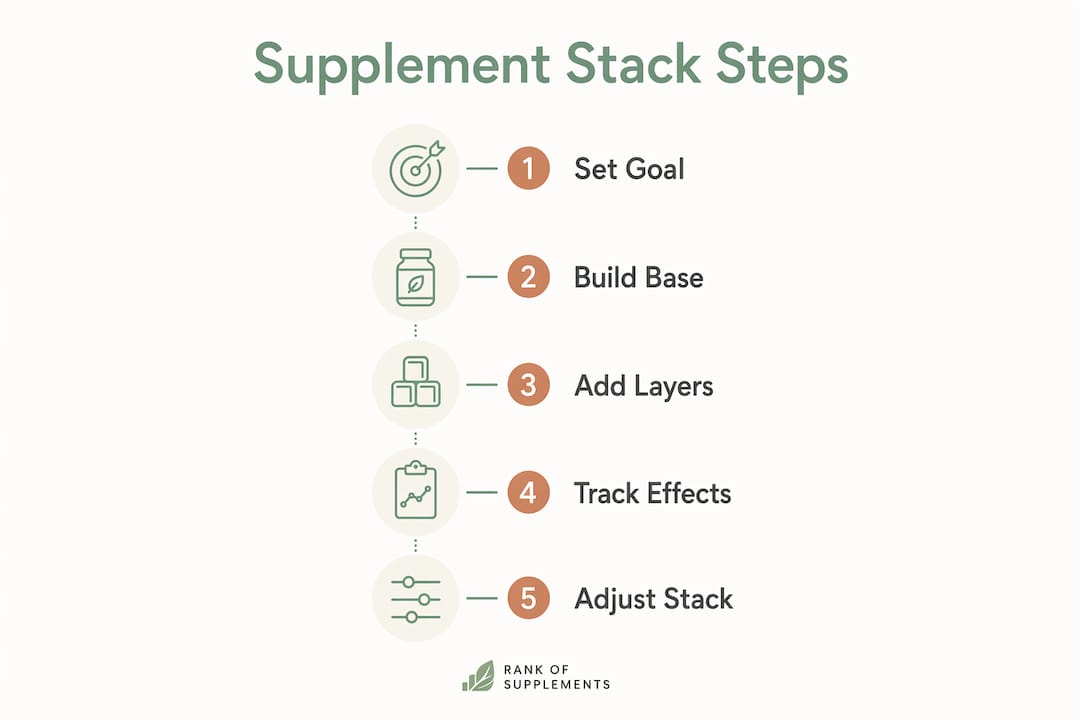
The single most important rule for beginners is to introduce one supplement at a time, waiting 2–4 weeks or up to 8–12 weeks before adding another. This waiting period lets you isolate which supplement is causing any effect, positive or negative. If you add five supplements at once and feel nauseous, you have no idea which one is responsible.
Follow this step-by-step process:
- Establish your baseline. Spend two weeks tracking your energy, sleep, digestion, and workout performance without any new supplements. This gives you a real comparison point.
- Add your first supplement. Choose the one most directly tied to your primary goal. Take it consistently at the correct time of day for 2–4 weeks.
- Log your response. Keep a written log noting energy levels, sleep quality, digestion, mood, and any side effects. A simple notes app works fine.
- Evaluate before adding more. After your waiting period, decide whether the supplement is working, neutral, or causing problems. Adjust or remove before adding the next one.
- Add the second supplement. Repeat the same process. Continue until your stack reaches your target size.
- Cap your stack size. Experts recommend limiting stacks to approximately 2–4 products initially. Smaller stacks are easier to manage and more effective.
Timing supplements to their function is non-negotiable. B-complex vitamins belong in the morning because they support energy metabolism. Magnesium belongs in the evening because it promotes relaxation and sleep. Taking an energizing supplement at night is a common beginner error that disrupts sleep without the person realizing why.
If you take prescription medications, including blood thinners, thyroid drugs, or immunosuppressants, consult a pharmacist before starting any supplement. Drug-supplement interactions are real and sometimes dangerous. Most pharmacies offer this consultation for free.
Pro Tip: Use a free app like a spreadsheet or notes document to log your supplement timing, dose, and daily observations. After 30 days, patterns become obvious that you would never notice day to day.
How do you choose goal-specific supplements and combine them effectively?
Once your foundational stack is stable, you can add goal-specific layers. The key rule here is to avoid proprietary blends. Pre-made “stack” products often hide ingredient dosages behind proprietary blend labels and include fillers that add cost without benefit. Building your own stack with individually labeled supplements lets you control every dose and adjust as needed.
Here are four common goal-based frameworks:
- Muscle gain stack: Creatine monohydrate (3–5 grams daily), whey or plant protein (to meet daily protein targets), and vitamin D3 (if deficient). Creatine is one of the most researched supplements in sports nutrition and works best when taken consistently, not just on training days.
- Recovery stack: Magnesium glycinate (300–400 mg in the evening), omega-3 fatty acids (1–3 grams of EPA/DHA daily), and tart cherry extract (shown in research to reduce exercise-induced muscle soreness).
- Energy and focus stack: B-complex vitamin (morning), iron (if blood work confirms deficiency), and ashwagandha (shown to reduce cortisol and improve perceived energy in stressed adults).
- Gut health stack: A high-quality probiotic (10–50 billion CFU, multiple strains), prebiotic fiber, and digestive enzymes if you experience bloating or poor nutrient absorption.
Layering strategy matters as much as ingredient selection. Add your muscle gain layer only after your foundational stack is running smoothly. Do not combine a recovery stack and an energy stack at the same time if you are just starting out. Each layer adds complexity, and complexity makes troubleshooting harder.
Transparent labels are the clearest sign of a quality product. Every ingredient should list its exact dose in milligrams or grams. If a label says “proprietary blend” without individual amounts, skip it. You can research specific ingredients in depth using the Rankofsupplements ingredient library before committing to a purchase.
What are the most common mistakes beginners make when stacking supplements?
Most beginner errors fall into three categories: adding too much too fast, ignoring nutrient overlap, and getting timing wrong. Each one is avoidable with a little planning.
Common mistakes to watch for:
- Starting with too many supplements at once. Adding five or more products simultaneously makes it impossible to identify what is working or causing side effects.
- Doubling up on nutrients without realizing it. A multivitamin plus a separate vitamin D supplement plus a fortified protein powder can push your vitamin A or zinc intake well above safe upper limits. Hidden overlap in multiple supplements can covertly exceed daily upper limits, particularly for fat-soluble vitamins and some minerals, risking toxicity.
- Ignoring timing rules. Taking iron with calcium blocks absorption. Taking magnesium in the morning instead of evening wastes its sleep-supporting effect.
- Skipping label audits. Add up the total daily dose of every nutrient across all your supplements. Compare that total to the NIH’s Tolerable Upper Intake Levels (ULs) for each nutrient.
- Ignoring drug interactions. St. John’s Wort, high-dose vitamin E, and fish oil all interact with common medications. Never assume “natural” means safe when combined with prescriptions.
“The most dangerous supplement stack is not the one with the most exotic ingredients. It is the one where the person has no idea what total dose they are actually taking each day, because they never added it all up.”
When something feels off, reduce your stack to the foundational layer and reintroduce supplements one at a time. This troubleshooting approach is the same method used to build the stack in the first place. You can find a detailed breakdown of frequent stacking errors and how to fix them on Rankofsupplements.
Key Takeaways
Building a safe and effective supplement stack requires clear goals, foundational lifestyle habits, and a disciplined one-at-a-time introduction process that makes results measurable and problems easy to catch.
| Point | Details |
|---|---|
| Define your goal first | A specific, measurable goal determines every supplement choice and prevents unnecessary spending. |
| Establish lifestyle habits before stacking | Sleep, protein intake, and activity must be consistent before supplements provide meaningful benefit. |
| Introduce one supplement at a time | Wait 2–4 weeks between additions to isolate effects and catch side effects early. |
| Match timing to function | Take energizing supplements in the morning and calming supplements like magnesium in the evening. |
| Audit for nutrient overlap | Add up total daily doses across all products and compare against NIH upper intake levels to avoid toxicity. |
Why I think most beginners overcomplicate this from day one
The engineering mindset is the right one for supplement stacking. You define the problem, add one variable at a time, measure the outcome, and adjust. That is exactly how experienced nutrition researchers approach it, and it is the opposite of what most beginners do.
What I have seen repeatedly is that beginners treat a supplement stack like a grocery run. They grab everything that sounds relevant and start taking it all on day one. Three weeks later, they feel either nothing or something vague they cannot explain, and they have no idea whether their stack is working. The log is the most underused tool in this entire process. Keeping even a simple daily note about energy, sleep, and digestion turns a guessing game into actual data.
Simplicity is not a beginner limitation. It is the correct strategy. A two-product stack you understand completely outperforms a six-product stack you are confused about. The goal is measurable progress, not an impressive-looking supplement shelf.
I also want to be direct about professional consultation. Most people skip it because they assume it is only for people with serious health conditions. That assumption is wrong. If you take any prescription medication, a five-minute conversation with a pharmacist before starting supplements is the single highest-value step you can take. It costs nothing and can prevent real harm.
The long-term view matters most. Supplements are not a shortcut. They are a precision tool for filling specific gaps in an already solid lifestyle. Build the foundation first, add layers deliberately, and give each change enough time to show results. That patience is what separates people who actually benefit from supplements from those who cycle through products every few months and never see consistent gains.
— matteo
Rankofsupplements: your resource for smarter supplement choices
Finding reliable information about specific supplement ingredients is harder than it should be. Most product pages are written to sell, not to inform.
Rankofsupplements publishes science-backed reviews and rankings built around real health goals, not marketing claims. The supplement ingredient library covers hundreds of individual ingredients with evidence summaries, dosing guidance, and safety notes. Before you add any new product to your stack, it is worth checking what the research actually says. You can also browse supplements by health goal to find products matched to your specific needs, whether that is muscle gain, recovery, energy, or general wellness.
Recommended
- Top supplement stacks for 2026: a breakdown of the stacks with the strongest evidence this year
- Best supplement reviews and rankings 2026: top-rated products across major health categories
- Fat Burn Active review: a detailed look at one of the most reviewed fat-management products on the platform
- Beginner’s guide to supplements for weight loss: a practical guide for those whose primary goal is body composition
FAQ
What are supplement stacks for beginners?
A supplement stack is a combination of two or more supplements chosen to work together toward a specific health or fitness goal. Beginners should start with 2–4 foundational products and add more only after evaluating each one individually.
How do I know which supplements to stack together?
Start by identifying one clear, measurable goal, then choose supplements with evidence supporting that goal. Avoid combining supplements that provide the same nutrient, since overlap can push daily intake above safe upper limits.
When is the best time to take supplements in a stack?
Timing depends on each supplement’s function. B-complex vitamins and other energizing supplements work best in the morning, while magnesium and other calming supplements are most effective in the evening to support sleep.
Are pre-made supplement stacks worth buying?
Pre-made stacks often use proprietary blends that hide individual ingredient doses and may include fillers. Building your own stack with individually labeled supplements gives you full control over dosing and makes it easier to adjust.
Do I need to consult a doctor before starting a supplement stack?
Anyone taking prescription medications, including blood thinners, thyroid drugs, or immunosuppressants, should consult a pharmacist before adding supplements. Many drug-supplement interactions are serious and not widely known.