TL;DR:
- Mass gainers are high-calorie supplements designed for people who struggle to meet their daily energy needs through food alone. They deliver between 500 to over 1,200 calories per serving and are most beneficial for hardgainers, athletes, and busy individuals. Proper timing, serving size adjustment, and ingredient quality are essential for effective muscle gain without excess fat.
Mass gainers are high-calorie supplements that combine protein and carbohydrates to help you build a caloric surplus when whole foods alone fall short. They are not general protein shakes. They are purpose-built tools for people who need to eat more than their appetite or schedule allows. If you have ever struggled to gain weight despite eating consistently, understanding why use mass gainers could be the missing piece in your nutrition plan.
What are mass gainers and how do they differ from protein powder?
Mass gainers and protein powders solve different problems. A standard protein powder delivers 20 to 30g of protein per serving with minimal carbohydrates and roughly 120 to 150 calories. A mass gainer delivers 500 to 1,200+ calories per serving, with 40 to 55g of protein and 80 to 250g of carbohydrates. That difference is not cosmetic. It changes what the product actually does for your body.
The carbohydrate-to-protein ratio in mass gainers typically runs 2:1 to 5:1. Carbohydrates in this context serve two functions: they replenish muscle glycogen after training, and they push total caloric intake high enough to support tissue growth. Protein alone cannot do that. Your body needs a genuine energy surplus to build new muscle, and carbohydrates are the most efficient way to deliver that energy in a shake format.
Protein sources in quality mass gainers include whey concentrate, whey isolate, casein, and sometimes egg albumin. The blend matters because fast-digesting proteins like whey spike muscle protein synthesis quickly, while slower proteins like casein sustain amino acid delivery over hours. Carbohydrate sources vary widely, from oats and sweet potato powder to maltodextrin and waxy maize starch. The source affects digestion speed, blood sugar response, and overall product quality.
Key differences at a glance
| Feature | Mass gainer | Protein powder |
|---|---|---|
| Calories per serving | 500 to 1,200+ | 120 to 150 |
| Protein per serving | 40 to 55g | 20 to 30g |
| Carbohydrates per serving | 80 to 250g | 2 to 5g |
| Primary purpose | Caloric surplus for weight gain | Protein top-up for muscle repair |
| Best for | Hardgainers, high-volume athletes | Most active people |
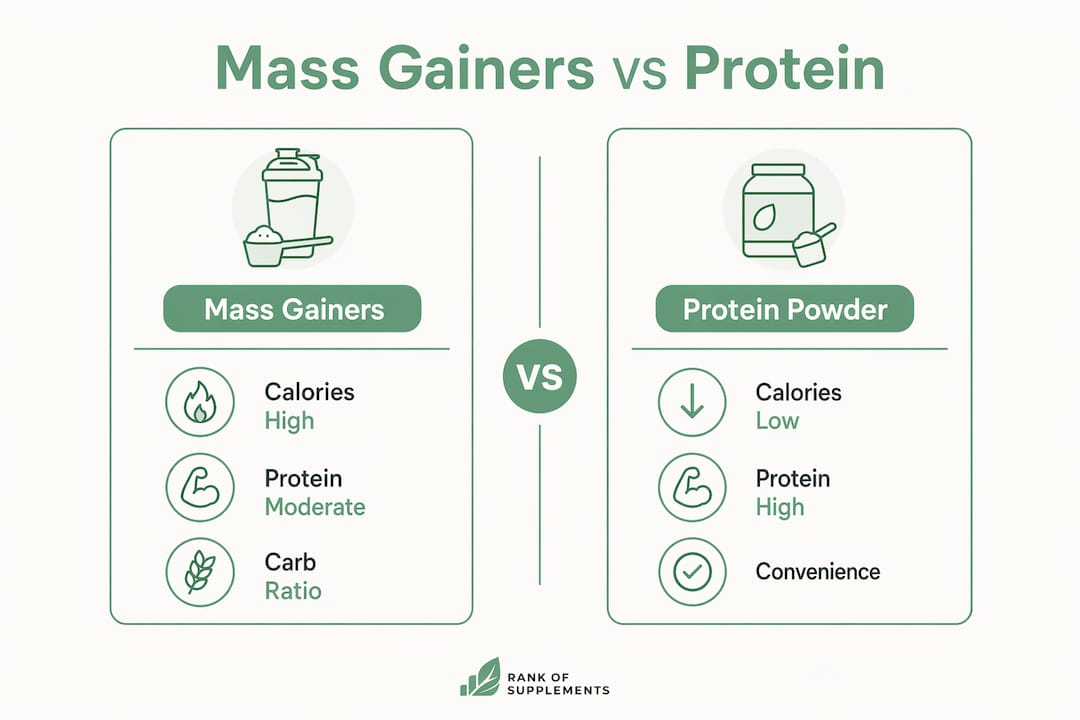
The practical takeaway: if you already eat enough calories and just need more protein, a standard protein powder is the right choice. If you consistently fall short of your daily calorie target, a mass gainer closes that gap faster than any other supplement format.
Who benefits most from using mass gainers?
The primary users of mass gainers are hardgainers. A hardgainer is someone whose metabolism runs fast enough, or whose appetite is small enough, that gaining weight through food alone requires an almost unrealistic volume of eating. Getting 600 to 800+ calories from a single shake is genuinely difficult to replicate with whole foods in the same time window. That convenience is the core value proposition.
Beyond hardgainers, athletes with intense training schedules benefit significantly. A competitive powerlifter, a college football player, or a construction worker who also trains five days a week burns calories at a rate that most meal plans cannot keep up with. Athletes with elevated calorie needs due to intense training or physical jobs use mass gainers to consistently meet daily energy requirements without meal fatigue. Eating six full meals a day is exhausting. A shake solves that.
People with busy schedules also belong in this group. When you are working long hours and training hard, preparing calorie-dense whole food meals three to four times a day becomes a real barrier. A mass gainer shake takes three minutes to prepare and delivers the caloric equivalent of a full meal.
Who does not need a mass gainer:
- People who already hit their daily calorie targets through food
- Those focused on fat loss or body recomposition
- Casual gym-goers who train two to three times per week at moderate intensity
- Anyone whose primary goal is simply more protein, not more total calories
Pro Tip: Track your total daily calorie intake for one week before buying a mass gainer. If you are consistently 500+ calories below your maintenance level, a mass gainer is a practical fix. If you are already at maintenance, adding a mass gainer will likely cause fat gain, not muscle gain.
How to use mass gainers effectively for muscle growth
Timing and dosing are the two variables most people get wrong. The most effective window for a mass gainer is post-workout, when muscle glycogen is depleted and your body is primed to absorb both carbohydrates and protein. A post-workout shake with 500 to 700 calories supports muscle repair and glycogen replenishment simultaneously, which is more efficient than eating a meal an hour later.

Morning is the second best window, particularly for people who train fasted or who struggle to eat a large breakfast. Drinking a mass gainer shake before or with a light morning meal adds calories without requiring a full cooking session. Between-meal use works well for people who need to spread their caloric intake across five or six windows per day.
Serving size adjustment is critical. Most commercial products list a full serving as three to four scoops, which can deliver 1,000+ calories in one sitting. Splitting large servings into two smaller portions improves digestion and prevents the bloated, heavy feeling that drives many people to quit. Half a serving twice a day is often more sustainable than one full serving once.
Four steps to get results without excess fat gain
- Calculate your caloric surplus target. Aim for 250 to 500 calories above your daily maintenance level. Use a mass gainer to fill only the gap between what you eat from food and that target. Do not stack a full gainer serving on top of an already sufficient diet.
- Pair every mass gainer phase with resistance training. Muscle synthesis depends on training stimulus, not calories alone. Without progressive overload in the gym, surplus calories store as fat regardless of their source.
- Choose products with enzyme blends. Multi-enzyme complexes and mixed protein sources improve absorption and reduce digestive discomfort from large calorie loads. Look for products that list digestive enzymes like amylase, protease, and lipase on the label.
- Track total intake weekly. Adjust your serving size up or down based on weekly weight changes. A gain of 0.5 to 1 lb per week suggests you are in the right surplus range. Faster gains usually mean excess fat accumulation.
Pro Tip: Mix your mass gainer with whole milk instead of water to add an extra 150 calories and 8g of protein without any additional prep. It also improves the texture significantly.
Commercial mass gainers vs. homemade shakes: which is better?
Most commercial mass gainers rely heavily on maltodextrin as their primary carbohydrate source. Maltodextrin is a fast-digesting, high-glycemic starch derived from corn or wheat. It is cheap, mixes easily, and delivers calories efficiently. The problem is that many commercial formulas consist mainly of maltodextrin with added protein, which means you are paying a premium for a product that is mostly processed starch. Low-quality versions also include artificial flavors, excessive added sugars, and fillers that add calories without nutritional value.
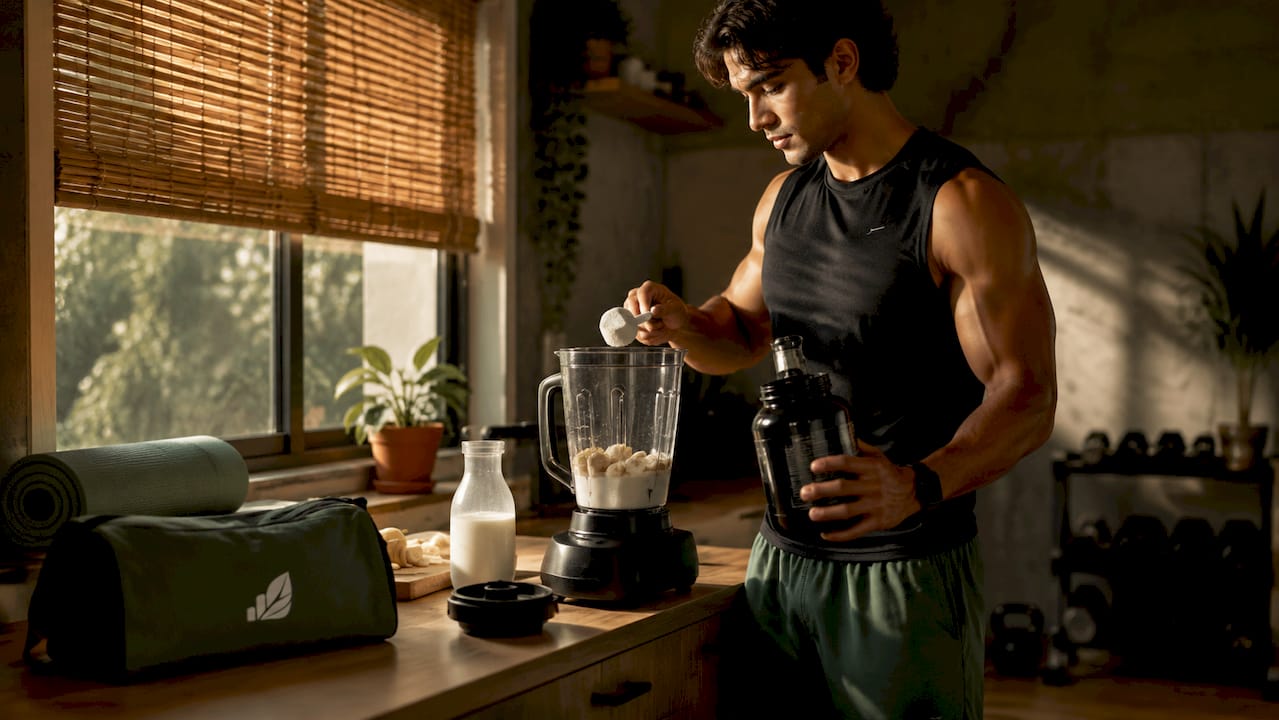
A homemade mass gainer shake built from whey protein, rolled oats, a banana, whole milk, and a tablespoon of peanut butter can reach 700 to 900 calories with whole-food carbohydrates, higher fiber, and better micronutrient density. The cost per serving is typically lower, and you control every ingredient. For people who want to understand exactly what they are consuming, the DIY route is worth the extra two minutes of blending.
That said, commercial products have a real advantage in convenience and portability. You cannot blend oats and bananas at the gym. A pre-portioned commercial gainer in a shaker bottle is a practical solution for people who are always on the move. The key is choosing a product with quality ingredients rather than the cheapest option on the shelf.
Commercial vs. homemade: a direct comparison
| Factor | Commercial mass gainer | Homemade shake |
|---|---|---|
| Convenience | High (pre-measured, portable) | Low (requires prep and blending) |
| Ingredient quality | Varies widely | Fully controlled |
| Fiber content | Low (maltodextrin-heavy) | Higher (oats, banana) |
| Cost per serving | Higher | Lower |
| Digestive tolerance | Variable | Generally better |
| Customization | Limited | Complete |
For quality guidance on specific commercial products, Rankofsupplements publishes evidence-based supplement reviews that break down ingredient lists and flag products with excessive fillers. Checking those reviews before buying saves money and avoids low-quality formulas. You can also explore muscle recovery supplement rankings to find products that pair well with a mass gainer protocol.
Key Takeaways
Mass gainers are a calorie-delivery tool for people who cannot meet their daily energy needs through food alone, and they only produce muscle growth when paired with consistent resistance training.
| Point | Details |
|---|---|
| Mass gainers vs. protein powder | Mass gainers provide 500 to 1,200+ calories per serving; protein powders deliver 120 to 150 calories focused on protein only. |
| Who needs them most | Hardgainers, high-volume athletes, and people with demanding schedules who cannot eat enough whole food calories. |
| Timing for best results | Post-workout is the most effective window; split large servings to avoid digestive discomfort. |
| Fat gain risk | Excess calories store as fat if intake exceeds your surplus target; always track total daily intake. |
| Commercial vs. homemade | Homemade shakes offer better ingredient control and lower cost; commercial products win on convenience and portability. |
The honest truth about mass gainers most people skip over
I have seen a lot of people buy mass gainers expecting them to do the heavy lifting. They add a 1,000-calorie shake to an already sufficient diet, skip tracking their food, and then wonder why they are gaining fat instead of muscle. The supplement is not the problem. The misuse is.
Mass gainers are not muscle growth catalysts by themselves. They are calorie and protein delivery tools. That distinction matters more than most fitness content admits. If your training is not producing a strong enough stimulus for muscle protein synthesis, no amount of extra calories will build muscle. They will just add body fat.
What I have found genuinely useful about mass gainers is their role in removing friction. When eating enough becomes the bottleneck, not training hard enough, a mass gainer solves a real problem. For hardgainers who have tried eating more and hit a wall of appetite fatigue, a 700-calorie shake is a practical lifeline. The careful tracking of total intake is what separates people who gain lean mass from people who just gain weight.
My advice: treat mass gainers as a gap-filler, not a foundation. Build your diet around whole foods first. Use a mass gainer to close the calorie gap when food volume becomes impractical. And always, always prioritize ingredient quality. A product loaded with cheap maltodextrin and artificial sweeteners is not doing you any favors beyond raw calories. You can get those calories from better sources.
matteo
What Rankofsupplements recommends for your mass gainer research
Choosing the right mass gainer means understanding what is actually in the product, not just the calorie count on the label.
Rankofsupplements gives you the tools to make that call with confidence. The supplement ingredient library breaks down every common mass gainer component, from maltodextrin to protein blends, so you know exactly what you are buying. For product-level guidance, the supplements by health goal section connects muscle growth goals to specific, vetted products. Whether you are looking for a commercial gainer with clean ingredients or trying to understand how to build your own protocol, Rankofsupplements provides the evidence-based analysis to back your decision.
Recommended
- Related article: Benefits of protein supplements: your 2026 fitness guide
- Top list: Best supplement reviews and rankings 2026
- Specific product: Nutrigo Lab Strength review
- Guide: How to cycle supplements for bodybuilding in 2026
FAQ
What is the main reason to use a mass gainer?
Mass gainers exist to help people who cannot eat enough calories through whole foods alone. They deliver 500 to 1,200+ calories per serving, making it practical to hit a daily caloric surplus for muscle growth.
Are mass gainers better than protein powder for building muscle?
Neither is universally better. Protein powder suits people who meet their calorie needs but need more protein. Mass gainers suit people who fall short of their total daily calorie target and need both calories and protein in one serving.
When is the best time to take a mass gainer?
Post-workout is the most effective timing because muscle glycogen is depleted and the body is primed to absorb carbohydrates and protein. Morning use is a strong second option for people who train fasted or struggle with appetite early in the day.
Can mass gainers cause fat gain?
Yes, if you consume more calories than your surplus target requires. Excess calories store as fat regardless of their source. Tracking total daily intake and adjusting serving size weekly prevents unwanted fat accumulation.
Is a homemade mass gainer shake as effective as a commercial product?
A homemade shake using whey protein, oats, banana, milk, and nut butter can match or exceed commercial products in calorie density and nutritional quality. DIY shakes offer better ingredient control, higher fiber, and lower cost per serving than most commercial formulas.