
Up to 20% of acute liver injuries stem from herbal and dietary supplements, yet most people assume these products are inherently safe. This misconception puts your health and fitness goals at serious risk. Whether you’re pursuing weight loss, muscle building, or overall wellness, understanding supplement safety is non-negotiable. Supplements face minimal regulatory oversight compared to prescription drugs, and adulteration with harmful substances is alarmingly common. This article reveals the hidden dangers lurking in your supplement cabinet and provides practical strategies to protect yourself while pursuing your health objectives.
Table of Contents
Key takeaways
Point Details
Liver injury risk Supplements cause up to 20% of acute liver injuries, with fitness products being common culprits
Regulatory gaps Supplements lack pre-market FDA approval and quality controls vary widely across manufacturers
Adulteration prevalence Nearly 38% of weight-loss supplements contain undisclosed synthetic drugs like sibutramine
Proactive monitoring Using FDA databases, choosing reputable brands, and consulting healthcare providers protects your wellness journey
Understanding the hidden risks of dietary supplements
You probably view supplements as natural, gentle health boosters. The reality is far more concerning. Herbal and dietary supplements cause up to 20% of acute liver injuries, a statistic that shocks most health-conscious consumers. These aren’t rare incidents affecting a handful of unlucky users. Supplement-induced liver damage has become so prevalent that HDS-induced liver injuries rank as the fifth most common cause of liver disease-associated death.
Fitness and bodybuilding supplements pose particularly high risks. Products marketed for muscle gain, metabolic, and performance enhancement often contain ingredients that stress your liver beyond its capacity. Many users dismiss early warning signs like fatigue or digestive discomfort as normal side effects, allowing damage to progress unchecked.
“The incidence of supplement-related liver injury is significantly underreported because many cases go unrecognized or unreported by both consumers and healthcare providers.”
Consider these sobering facts about supplement-related harm:
-
Liver injury symptoms may not appear until damage is already severe
-
Young, otherwise healthy individuals pursuing fitness goals are frequently affected
-
Some supplements marketed as “natural” contain synthetic compounds more potent than prescription drugs
-
Recovery from supplement-induced liver injury can take months or result in permanent damage
The fat burn active category illustrates this challenge perfectly. While many fat burners contain legitimate ingredients, the market’s lack of oversight allows dangerous formulations to reach consumers. You need to approach every supplement with informed skepticism, regardless of marketing claims about natural origins or safety.
Regulatory challenges and quality control gaps
The supplement industry operates under fundamentally different rules than pharmaceuticals. Dietary supplements are not subject to the same clinical study and FDA approval requirements as drugs, meaning manufacturers can sell products without proving safety or efficacy beforehand. This regulatory framework creates a marketplace where quality varies dramatically between brands.
The FDA focuses primarily on labeling accuracy and post-market surveillance. They can’t test every supplement before it reaches store shelves. Instead, they rely on adverse event reports and periodic inspections to identify problems. By the time a dangerous product gets pulled from the market, thousands of consumers may have already used it.
“Questions remain about how well these products are regulated, and quality assurance practices vary widely across manufacturers and countries.”
Global supply chains complicate matters further. Your supplement bottle might contain ingredients sourced from multiple countries, each with different quality standards. Regulations and quality controls differ widely depending on where ingredients originate and where final products are manufactured.
Key regulatory limitations you should understand:
-
Manufacturers self-certify compliance with Good Manufacturing Practices
-
Third-party testing is voluntary, not mandatory
-
Label claims about benefits rarely require scientific proof
-
Contamination and adulteration often go undetected until serious adverse events occur
These gaps don’t mean all supplements are dangerous. Reputable manufacturers invest heavily in quality control and transparency. The challenge is distinguishing responsible companies from those cutting corners. Products in categories like immune support range from meticulously tested formulations to questionable blends with zero quality verification.
The prevalence and dangers of supplement adulteration
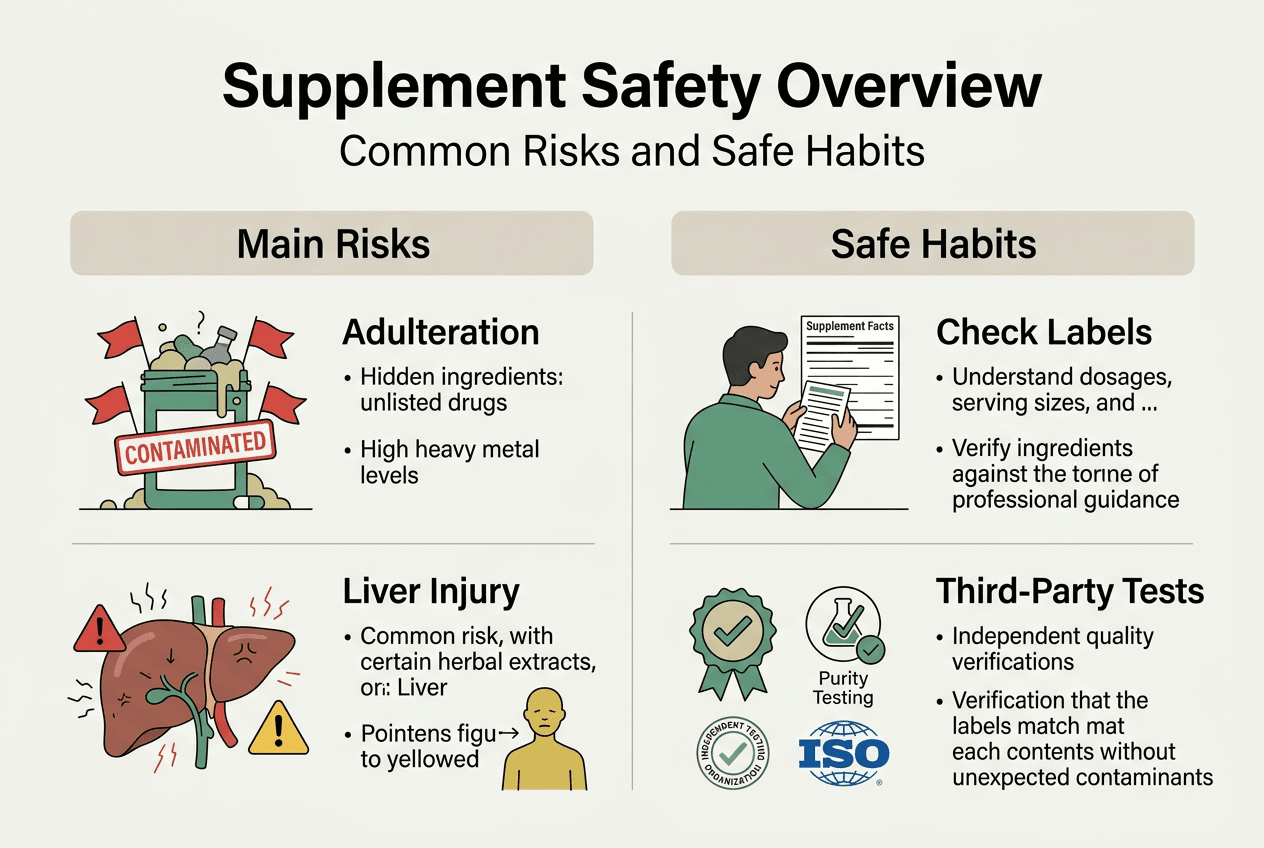
Adulteration represents one of the most insidious threats in the supplement industry. Manufacturers sometimes add undisclosed synthetic drugs to boost perceived effectiveness, creating products that deliver results but carry serious health risks. The overall pooled median estimate of adulteration was 37.5% in weight-loss products, meaning more than one in three weight-loss supplements contain hidden pharmaceutical ingredients.

Sibutramine is the most common adulterant found in weight-loss supplements. This drug was withdrawn from the market in 2010 due to cardiovascular risks including heart attacks and strokes. Yet it continues appearing in supplements marketed as natural weight-loss solutions. Users experience rapid weight loss and attribute it to herbal ingredients, unaware they’re consuming a banned pharmaceutical.
Sports supplements face similar contamination issues. Adulteration with anabolic steroids poses doping and health risks for athletes, potentially ending careers through failed drug tests. Even recreational fitness enthusiasts face health consequences from unknowingly consuming steroids, including hormonal imbalances and liver damage.
Supplement Category Common Adulterants Health Risks
Weight-loss products Sibutramine, phenolphthalein Cardiovascular events, cancer risk
Sports performance Anabolic steroids, stimulants Hormonal disruption, positive doping tests
Sexual enhancement Sildenafil, tadalafil Drug interactions, cardiovascular stress
Bodybuilding Undisclosed steroids, SARMs Liver damage, endocrine dysfunction
Pro Tip: Adulteration rates vary by geographic region and change over time as regulators crack down on specific compounds. A supplement that tested clean last year might contain different adulterants today if manufacturers reformulated to evade detection.
Geographic patterns reveal where adulteration risks concentrate:
-
Asian markets show higher adulteration rates in traditional medicine products
-
Online retailers face less oversight than brick-and-mortar stores
-
Products marketed with exaggerated claims often contain undisclosed drugs
-
Lower-priced supplements may use adulteration to compete with premium brands
The flexomore joint support category demonstrates how even wellness-focused supplements require scrutiny. While joint health products typically face lower adulteration rates than weight-loss or sports supplements, contamination and quality issues still occur. No supplement category is immune to these problems.
How to monitor supplement safety effectively
Protecting yourself requires active engagement with safety information and smart product selection. The FDA’s Human Foods Complaint System collects adverse event reports, though reports reflect reported information, not definitive causation. Still, checking this database before starting a new supplement can reveal patterns of concerning reactions.
Follow these steps to evaluate supplement safety:
-
Search the FDA’s recall database for the specific product and brand you’re considering
-
Look for third-party testing certifications from organizations like NSF International or USP
-
Research the manufacturer’s history, including any past violations or warning letters
-
Read the complete ingredient list and research each component individually
-
Check professional medical databases for interaction warnings with your current medications
-
Monitor your own response carefully during the first weeks of use
Reputable brands distinguish themselves through transparency. They provide certificates of analysis showing exactly what’s in each batch. They list manufacturing facilities and quality control processes. They don’t make exaggerated claims about miraculous results. When evaluating products like nutrigo lab strength, look for these markers of quality and accountability.
Pro Tip: Athletes and competitive fitness enthusiasts face unique risks from inadvertent doping through adulterated supplements. If you compete in tested sports, work with a sports medicine physician to vet every supplement before use, and choose products certified by organizations like Informed-Sport or NSF Certified for Sport.
Healthcare collaboration strengthens your safety monitoring:
-
Share your complete supplement list with your doctor at every visit
-
Report any unusual symptoms immediately, even if they seem minor
-
Get baseline liver function tests before starting hepatotoxic supplements
-
Schedule follow-up testing to catch early signs of organ stress
Staying informed requires ongoing effort. Subscribe to FDA safety alerts, follow reputable health organizations on social media, and regularly review updated research on supplements you use. Products like matcha extreme may seem straightforward, but even common ingredients can interact with medications or cause problems in certain individuals. Vigilance protects your health while you pursue your wellness goals.
Explore trusted supplements with expert reviews
Navigating the supplement landscape safely requires reliable guidance from experts who prioritize evidence over marketing hype. RankOfSupplements provides comprehensive, science-backed reviews that help you identify products meeting rigorous safety and efficacy standards. We analyze ingredients, examine third-party testing, and evaluate manufacturer transparency so you can make informed choices aligned with your health objectives.
Our platform offers detailed insights across supplement categories, from muscle building to immune support. Explore nutrigo lab strength reviews for performance supplements backed by research, or check our immune support rankings to find products with verified quality standards. For those pursuing weight management, our fat burn active analysis separates legitimate formulations from risky products. Let expert guidance protect your wellness journey.
Why monitor supplement safety FAQ
Are dietary supplements regulated like drugs?
No, supplements are not subject to the same clinical study and FDA approval requirements as drugs. Manufacturers can market supplements without proving safety or effectiveness beforehand. The FDA monitors labeling and can take action against dangerous products after they reach consumers, but pre-market approval isn’t required. This fundamental difference means you bear more responsibility for researching supplement safety compared to prescription medications.
What are common health risks associated with supplements?
Liver damage represents the most serious widespread risk, with up to 20% of acute liver injuries attributed to herbal and dietary supplements. Adulteration with undisclosed pharmaceutical ingredients causes additional problems including cardiovascular events, hormonal disruption, and organ stress. Some supplements interact dangerously with prescription medications, while others contain allergens or contaminants not listed on labels. Individual reactions vary based on your health status, genetics, and other factors.
How can I ensure the supplements I take are safe?
Choose products from manufacturers with transparent quality control processes and third-party testing certifications. Consult your healthcare provider before starting new supplements, especially if you take medications or have existing health conditions. The FDA’s HFCS collects adverse event reports that can alert you to potential problems, though these reports don’t prove causation. Monitor your own response carefully and report any concerning symptoms to your doctor immediately. Regular blood work can catch early signs of organ stress before serious damage occurs.
Why is monitoring supplement safety important for athletes?
Athletes face career-ending consequences from positive doping tests caused by contaminated supplements. Adulteration with anabolic steroids poses doping risks that can result in competition bans and reputational damage. Even trace amounts of prohibited substances can trigger failed tests. Athletes must use only supplements certified by sport-specific testing organizations and should work closely with sports medicine professionals to vet every product. The stakes are simply too high to rely on label claims alone.
What should I do if I experience a supplement adverse effect?
Stop taking the supplement immediately and contact your healthcare provider to assess symptoms and determine necessary treatment. Document everything including the product name, batch number, when you started taking it, and what symptoms you experienced. File a report to FDA HFCS to help track safety patterns, even though individual reports don’t establish causation. Your report contributes to the database that alerts other consumers and may trigger regulatory action if patterns emerge. Save the product container for potential testing if your doctor recommends it.