
Many fitness enthusiasts believe that simply taking more supplements will deliver better results, but this common misconception leads to wasted money and minimal gains. Supplement stacking is not about quantity; it’s about strategic combination. When done correctly, stacking specific supplements creates synergistic effects that amplify muscle growth, strength, and recovery far beyond what individual products can achieve. This guide breaks down the science-backed principles of effective supplement stacking, helping you understand which combinations work, optimal timing strategies, and how to build a personalized stack that matches your training goals and physiological needs.
Table of Contents
-
Understanding Supplement Stacking: Fundamentals And Benefits
-
The Tiered Model Of Supplement Stacking: Foundation, Amplifiers, Conditionals, And Adjuncts
-
Scientific Evidence On Supplement Timing, Dosage, And Intervention Duration
-
Choosing Supplements For Your Stack: Evidence-Based Recommendations For Fitness Enthusiasts
-
Enhance Your Supplement Stacking With Expert-Selected Products
Key takeaways
Point Details
Stacking combines supplements strategically Pairing multiple supplements creates synergistic effects that exceed individual benefits for muscle growth and performance.
Protein and amino acids form the base Essential amino acids and quality protein serve as the foundation tier in any effective supplement stack.
Creatine amplifies strength gains This well-researched amplifier enhances muscle thickness, power output, and overall training capacity.
Timing matters for maximum results Consuming supplements close to workout sessions and maintaining consistency beyond 12 weeks optimizes outcomes.
Personalize based on training phase Your stack should adapt to current goals, caloric intake, stress levels, and individual response patterns.
Understanding supplement stacking: fundamentals and benefits
Supplement stacking refers to the deliberate combination of multiple dietary supplements designed to produce synergistic effects that surpass what each product delivers individually. Rather than randomly mixing products, effective stacking follows evidence-based principles that target specific physiological pathways involved in muscle protein synthesis, energy production, and recovery processes.
The primary goals of strategic stacking include enhancing muscle hypertrophy, increasing strength output, and accelerating recovery between training sessions. Recent research demonstrates that multi-ingredient protein supplements improve muscle outcomes when combined with resistance training, producing measurable gains in fat-free mass and muscle thickness. These benefits become particularly pronounced in populations previously underrepresented in supplement research, including women who showed significant improvements in both hypertrophy and strength metrics.
Key principles that separate effective stacking from random supplement use:
-
Synergistic targeting of complementary biological pathways
-
Strategic timing around exercise sessions to maximize nutrient delivery
-
Adequate intervention duration, typically exceeding 12 weeks for optimal results
-
Dosage optimization based on body weight and training intensity
-
Individual customization accounting for diet quality and training phase
Timing represents a critical variable often overlooked by beginners. Consuming your stack within the window surrounding your workout, rather than at random times throughout the day, significantly influences outcomes. This proximity effect ensures nutrients arrive when muscle tissue is most receptive to uptake and protein synthesis rates peak.
“The strategic combination of protein, creatine, and supporting nutrients creates an anabolic environment that individual supplements cannot replicate, particularly when timed to coincide with resistance training sessions.”
Effective stacking also accounts for individual variability. Your genetics, training history, current diet quality, and recovery capacity all influence how your body responds to specific supplement combinations. Products like Nutrigo Lab Strength exemplify formulations designed with stacking principles in mind, combining multiple active ingredients that work through different mechanisms to support performance goals.
The evidence supporting supplement stacking continues to grow stronger. Studies consistently show that properly designed multi-ingredient protocols produce superior results compared to single-supplement approaches, particularly when maintained for adequate durations and aligned with progressive resistance training programs.
The tiered model of supplement stacking: foundation, amplifiers, conditionals, and adjuncts
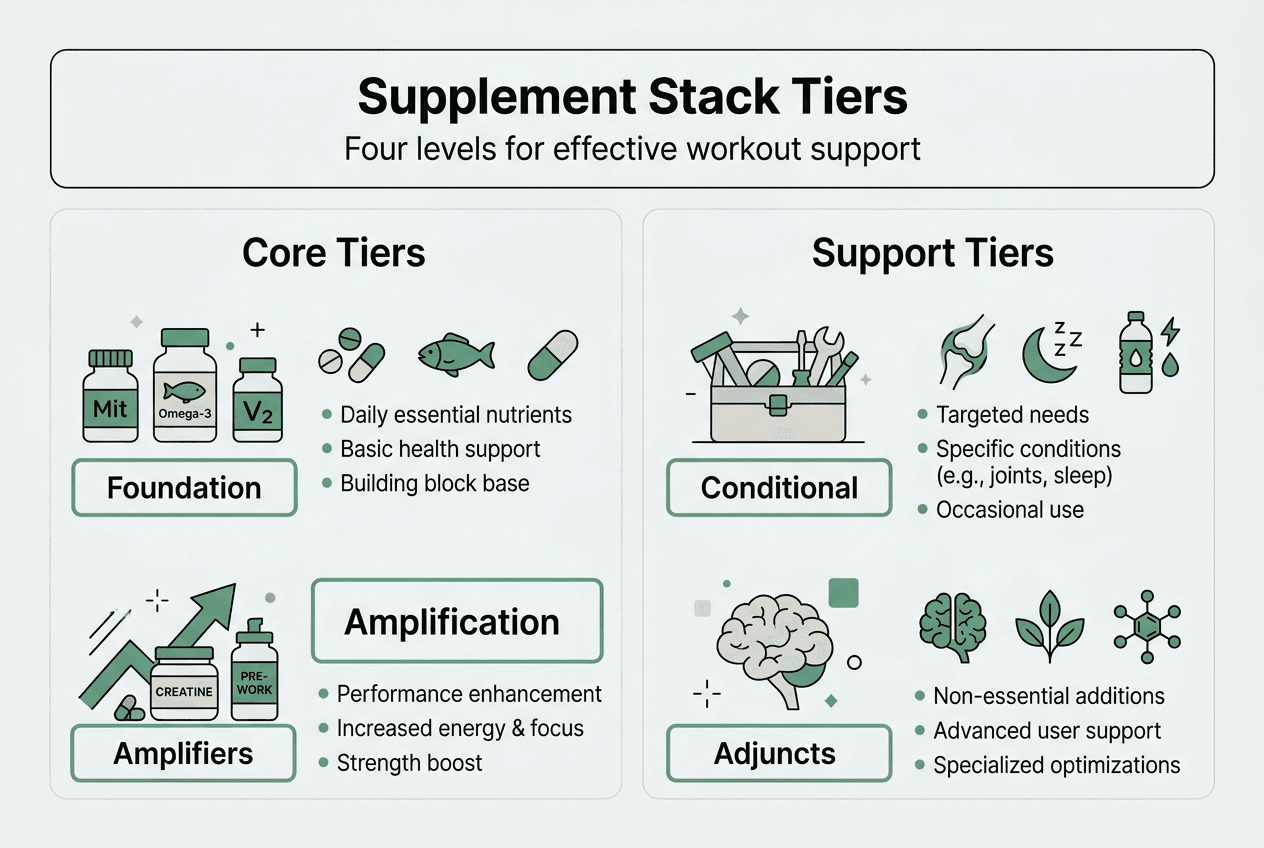
Understanding how to categorize supplements into functional tiers transforms random mixing into strategic stacking. This four-tier framework provides a systematic approach to building effective combinations based on scientific evidence and physiological mechanisms.
The foundation tier consists of protein and essential amino acids (EAAs), which provide the raw materials for muscle protein synthesis. Without adequate amino acid availability, no amount of additional supplementation will maximize muscle growth. This tier should be prioritized first, ensuring you meet or slightly exceed 2.0 grams of protein per kilogram of body weight daily through combined food and supplement sources.

Amplifiers represent the second tier, with creatine monohydrate standing as the most extensively researched and effective option. Creatine and performance improvements are well documented, enhancing phosphocreatine stores that fuel high-intensity muscle contractions. Typical dosing ranges from 3 to 5 grams daily, with loading phases optional but not necessary for long-term users.
Conditional supplements form the third tier, offering benefits under specific circumstances rather than universal application. Beta-hydroxy-beta-methylbutyrate (HMB) exemplifies this category, showing particular value during caloric deficits, periods of high training stress, or for individuals new to resistance training. Outside these contexts, HMB provides minimal additional benefit beyond foundation and amplifier tiers.
Adjuncts occupy the fourth tier, supporting overall health, recovery capacity, and training tolerance rather than directly stimulating muscle growth. Omega-3 fatty acids, citrulline malate, and collagen peptides fall into this category. While not essential for muscle building, these compounds can enhance joint health, reduce inflammation, and improve workout performance in ways that indirectly support your training consistency.
Tier Primary Benefits Typical Dosage Optimal Timing Example Supplements
Foundation Muscle protein synthesis 1.6-2.2 g/kg body weight Around workouts Whey protein, EAAs, casein
Amplifiers Strength and power output 3-5 g daily Any consistent time Creatine monohydrate
Conditionals Context-specific gains 3 g daily (HMB) Pre-workout HMB, beta-alanine
Adjuncts Recovery and health Varies by compound With meals or workouts Omega-3s, citrulline, collagen
Pro Tip: Build your stack from the foundation upward. Only add conditionals and adjuncts after you have consistently used foundation and amplifier supplements for at least 8 weeks and can objectively assess whether additional compounds provide measurable benefits for your specific situation.
The tiered approach prevents the common mistake of prioritizing exotic or heavily marketed supplements while neglecting basics. Your results depend primarily on foundation and amplifier tiers, which deliver the most substantial and consistent benefits across diverse populations and training protocols. Immune support supplements may fit into your adjunct tier if training volume compromises your immune function, but they should never replace core muscle-building compounds.
Stacking efficacy ultimately depends on training intensity, overall diet quality, sleep adequacy, and individual factors like training age and genetic response patterns. The tiered model of supplement stacking provides structure, but personalization within this framework determines your actual results. Track your progress metrics objectively and adjust your stack based on measured outcomes rather than subjective feelings or marketing claims.
Scientific evidence on supplement timing, dosage, and intervention duration
The effectiveness of your supplement stack depends heavily on when you consume it, how much you take, and how long you maintain consistent use. Recent research clarifies these variables with precision that eliminates guesswork.
Timing your supplement intake to align with exercise sessions produces superior results compared to random consumption throughout the day. Fat-free mass gains were more pronounced with supplement timing near exercise and interventions exceeding 12 weeks. This proximity effect occurs because resistance training creates a window of heightened muscle sensitivity to nutrients, particularly amino acids and glucose. Consuming your stack during this period maximizes uptake and utilization.
Effective timing windows for supplement consumption:
-
30 to 60 minutes pre-workout for compounds requiring absorption time
-
During training for intra-workout carbohydrates and amino acids
-
Immediately post-workout for fast-digesting proteins and creatine
-
Before bed for slow-release proteins like casein
Dosage thresholds reveal diminishing returns beyond certain intake levels. Protein consumption above 2.0 grams per kilogram of body weight daily shows plateaued effects on muscle protein synthesis in most individuals. Exceeding this threshold rarely produces additional hypertrophy, though it may support satiety during fat loss phases. Similarly, creatine doses beyond 5 grams daily provide no additional performance benefits once muscle stores saturate, typically after 4 to 6 weeks of consistent use.
Intervention duration represents perhaps the most underestimated variable in supplement stacking. Many users expect dramatic results within 4 to 6 weeks, but significant body composition changes typically require 12 to 16 weeks of consistent supplementation combined with progressive training. Muscle tissue accumulates slowly, and the full benefits of compounds like creatine and beta-alanine emerge only after tissue saturation occurs.
“Meaningful gains in fat-free mass and muscle thickness require sustained supplementation protocols extending beyond 12 weeks, with optimal results appearing between 16 and 24 weeks when combined with structured resistance training.”
Consistency matters more than perfection. Missing occasional doses has minimal impact on long-term results, but frequent gaps in supplementation prevent tissue saturation and limit effectiveness. Products like Fibre Select demonstrate how supporting digestive health can improve nutrient absorption and consistency, indirectly enhancing your primary supplement stack’s effectiveness.
The interaction between timing, dosage, and duration creates a framework for optimizing your stack. Consuming appropriate doses at strategic times, maintained consistently for adequate periods, produces the synergistic effects that define successful supplement stacking. Shortcuts in any variable compromise results, while attention to all three maximizes your return on investment.
Choosing supplements for your stack: evidence-based recommendations for fitness enthusiasts
Building an effective supplement stack requires matching specific compounds to your training phase, nutritional status, and individual response patterns. This personalized approach prevents wasted spending on ineffective products while maximizing results from evidence-based selections.
Supplement Primary Benefits Ideal Users Optimal Timing
Whey Protein Fast amino acid delivery, muscle protein synthesis All trainees, especially those with insufficient dietary protein Post-workout, between meals
Creatine Monohydrate Increased strength, power, muscle thickness Strength and power athletes, bodybuilders Any consistent daily time
HMB Muscle preservation during deficits Caloric restriction, high stress, training beginners Pre-workout
Beta-Alanine Enhanced muscular endurance, delayed fatigue High-rep training, endurance athletes Pre-workout, daily loading
Omega-3 Fatty acids Reduced inflammation, joint health All trainees, particularly those with joint issues With meals containing fat
Collagen Peptides Connective tissue support, joint recovery Older trainees, those with joint concerns Post-workout or before bed
Key factors to consider when selecting stack components:
-
Current training phase (bulking, cutting, maintenance, or specialization)
-
Total daily caloric intake and macronutrient distribution
-
Age and training experience level
-
Existing health conditions or joint issues
-
Budget constraints and cost per serving
-
Individual response to specific compounds based on tracking data
Creatine monohydrate deserves special emphasis due to its robust evidence base. Research confirms that creatine supplementation improves muscle thickness and power output across diverse populations. This compound works through multiple mechanisms, including enhanced phosphocreatine stores, increased training volume capacity, and improved cellular hydration. Few supplements match creatine’s combination of safety, affordability, and effectiveness.
HMB occupies a unique position as a conditional supplement that shines under specific circumstances. During caloric deficits, periods of extremely high training volume, or when returning from injury, HMB helps preserve muscle mass by reducing protein breakdown. However, well-fed individuals in caloric surplus or maintenance typically gain minimal additional benefit from HMB beyond what foundation and amplifier tiers already provide.
Pro Tip: Track your individual response to each supplement you add by maintaining detailed training logs that record strength progression, body composition measurements, and subjective recovery markers. Add only one new supplement at a time, waiting 4 to 6 weeks before introducing another compound so you can isolate which additions actually improve your results.
Supplement synergy explains why certain combinations outperform individual products. Creatine and beta-alanine work through different energy systems, with creatine supporting immediate power output while beta-alanine buffers hydrogen ions during higher-rep sets. Combining both addresses multiple fatigue mechanisms, extending your effective working capacity across varied rep ranges.
Quality matters as much as selection. Third-party testing, transparent labeling, and established manufacturing standards separate effective products from underdosed or contaminated options. Platforms like Nutrigo Lab Strength reviews help identify formulations that meet quality standards while delivering appropriate doses of active ingredients.
Your stack should evolve as your training focus shifts. Prioritize compounds that address your current limiting factors rather than maintaining a static protocol year-round. This adaptive approach maximizes relevance and cost-effectiveness while preventing tolerance or diminishing returns from prolonged use of certain supplements.
Enhance your supplement stacking with expert-selected products
Now that you understand the science and strategy behind effective supplement stacking, the next step involves selecting high-quality products that deliver on their promises. The supplement industry contains countless options, but only a fraction meet the standards for purity, potency, and evidence-based formulation that serious athletes demand.
RankOfSupplements.com specializes in identifying supplements that align with stacking principles discussed throughout this guide. Our detailed Nutrigo Lab Strength reviews analyze formulations designed specifically for strength athletes, examining ingredient quality, dosing accuracy, and real-world effectiveness. For those focused on supporting overall health while pursuing performance goals, our curated selection of immune support supplements helps maintain training consistency by reducing illness-related disruptions. If your current phase emphasizes fat loss while preserving muscle, explore our comprehensive Fat Burn Active review to understand how thermogenic compounds fit into a cutting-phase stack. These resources provide the transparency and scientific backing you need to make informed decisions that support your specific goals.
Frequently asked questions about supplement stacking
What makes supplement stacking more effective than taking single supplements?
Stacking creates synergistic effects by targeting multiple physiological pathways simultaneously. Creatine enhances immediate power output while protein provides amino acids for muscle repair, and combining both produces greater gains than either alone. This complementary action addresses different limiting factors in muscle growth and performance.
When should I take my supplement stack for best results?
Consume your stack within 30 to 60 minutes before or immediately after resistance training sessions. This timing window maximizes nutrient uptake when muscle tissue is most receptive. Creatine can be taken at any consistent daily time, but protein and amino acids show superior effects when aligned with workouts.
Is supplement stacking safe for beginners?
Yes, when starting with foundation tier supplements like protein and creatine monohydrate. These compounds have extensive safety records and benefit trainees at all experience levels. Avoid exotic or heavily stimulant-based stacks until you have established consistent training habits and can assess your individual tolerance.
How long before I see results from my supplement stack?
Noticeable strength improvements may appear within 2 to 4 weeks, particularly from creatine supplementation. Measurable muscle growth typically requires 8 to 12 weeks of consistent use combined with progressive resistance training. Maximum benefits emerge after 16 to 24 weeks as tissue saturation occurs and training adaptations accumulate.
Can I stack supplements while cutting body fat?
Absolutely. Maintaining your protein and creatine intake during caloric deficits helps preserve muscle mass while losing fat. Consider adding HMB to your stack during aggressive cuts, as it specifically reduces muscle protein breakdown under caloric restriction. Adjust total doses based on your reduced body weight as fat loss progresses.