
TL;DR:
- Keratin supplements supply amino acids to support hair strength and blunt damage from inside. Scientific evidence shows modest but measurable benefits after 90 days of daily use at 1,000 mg. They improve hair strength and shine but do not accelerate growth or cure genetic hair loss.
Keratin supplementation is defined as the oral intake of hydrolyzed keratin peptides designed to supply your body with the amino acids needed to build and maintain strong hair and nails. Keratin itself is a structural protein that makes up roughly 90% of each hair strand. When your diet or health status leaves keratin synthesis short, hair becomes brittle, dull, and prone to breakage. Oral keratin supplements, particularly those delivering cysteine-rich hydrolysates, aim to correct that deficit from the inside out. Rankofsupplements reviews the clinical evidence behind these products so you can make a genuinely informed decision before spending money on them.
What does scientific research say about keratin supplementation benefits?
Clinical evidence for keratin supplements is real, but it is more modest than most marketing suggests. A 90-day, placebo-controlled study with 60 women experiencing hair loss found that 1,000 mg per day of keratin hydrolysate significantly improved hair density and the proportion of hairs in the anagen, or active growth, phase. That result matters because a higher anagen ratio means more hairs are actively growing rather than resting or shedding.
The same category of trials measured two additional outcomes worth knowing. Keratin supplementation improved hair tensile strength by 5.9% and increased hair shine by approximately 47% compared to placebo after three months. Tensile strength is a direct measure of how much force a strand can withstand before snapping. A 5.9% gain is not dramatic, but it is statistically significant and translates to noticeably less breakage during brushing or styling.
Key findings from current clinical evidence:
- Hair density: Measurable increases after 90 days at 1,000 mg per day
- Anagen phase ratio: Improved, meaning more hairs actively growing
- Tensile strength: Roughly 5.9% gain over placebo
- Shine: Approximately 47% improvement in brightness measures
- Timeline: Minimum 90 days of consistent daily use before visual changes appear; results vary and may be absent in some people
The honest caveat is that study populations are small and results vary between individuals. Some people see clear improvements; others see none. The evidence supports cautious optimism, not certainty.
How does keratin supplementation work inside the body?
Hair fiber is built from tightly coiled keratin proteins held together by disulfide bonds. Those bonds form between cysteine molecules, an amino acid that gives hair its structural rigidity and elasticity. When cysteine supply is low, bond formation is incomplete, and hair becomes weak and porous.
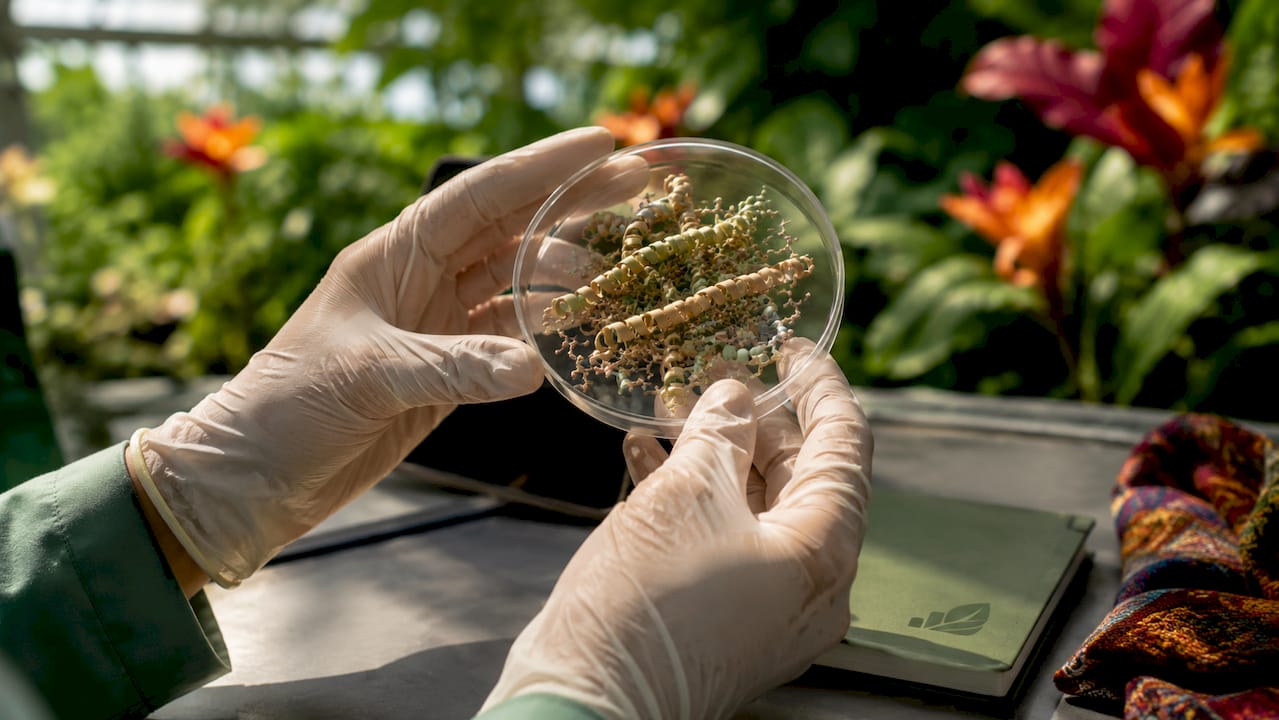
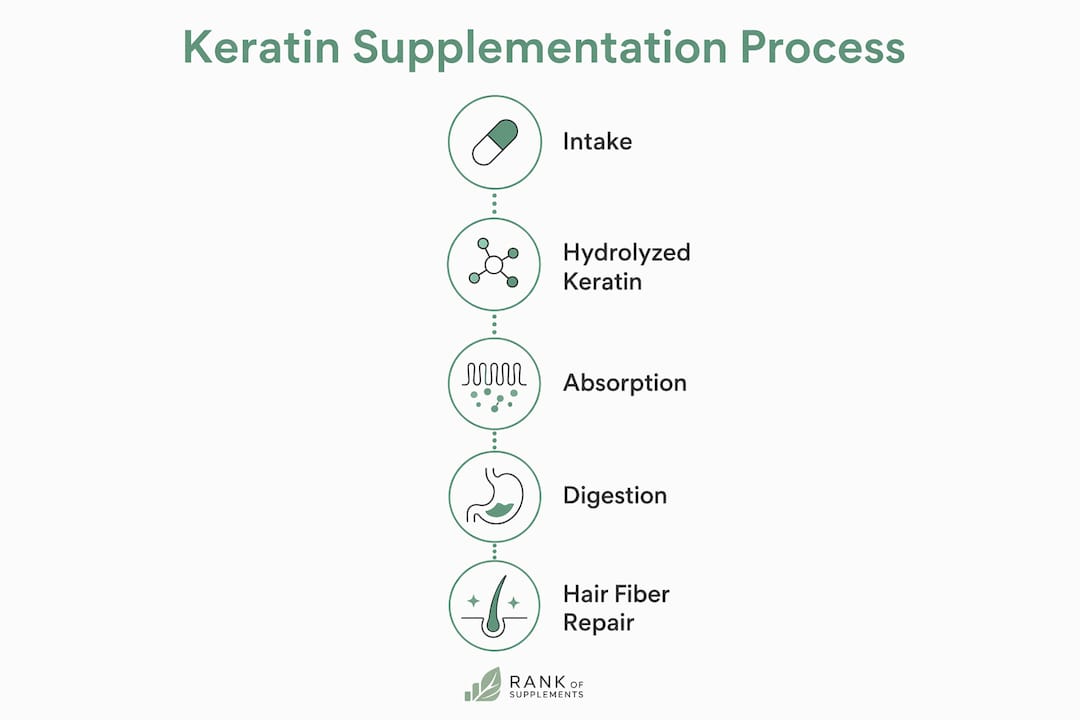
Oral keratin supplements deliver hydrolyzed keratin peptides with molecular weights between 500 and 3,000 Daltons. That size range is small enough for the digestive tract to absorb. Intact keratin, by contrast, is far too large to pass through the intestinal wall and has no supplement value when swallowed whole. This is why the word “hydrolyzed” on a label is not just marketing language. It is a functional requirement.
| Form of keratin | Molecular size | Orally absorbed? | Primary use |
|---|---|---|---|
| Intact keratin | Very large (>100,000 Da) | No | Topical treatments only |
| Hydrolyzed keratin | 500 to 3,000 Da | Yes | Oral supplements |
| Keratin peptides | Small fragments | Yes | Bioavailable supplement form |
Once absorbed, the body digests keratin into amino acids before using them. Because keratin hydrolysate is cysteine-rich, it delivers a more concentrated source of that specific amino acid than most everyday dietary proteins. The body then uses those amino acids to synthesize new keratin in the hair follicle. Research also suggests that keratin metabolites act as signaling molecules that support dermal fibroblast activity, which is the cellular process underlying skin and hair tissue repair. That broader nutricosmetic effect is still being studied, but it points to benefits that extend beyond simple amino acid supply.
Pro Tip: Check the supplement label for a stated molecular weight range. Products listing 500 to 3,000 Daltons for their hydrolyzed keratin are more likely to deliver genuine bioavailability than those that simply say “keratin” without further detail.
What are the realistic expectations and limitations of keratin supplementation?
Keratin supplements do not speed up hair growth. Dermatologists are consistent on this point: the value of keratin supplementation lies in strengthening existing hair fibers and reducing breakage, not in pushing follicles to produce hair faster or reversing genetic hair loss conditions like androgenetic alopecia. If you are expecting thicker coverage from a receding hairline, no oral keratin product will deliver that.
What you can realistically expect, given consistent use and a quality product:
- Reduced breakage: Stronger disulfide bonds mean strands snap less during daily handling
- Improved appearance: Shine and smoothness improvements are among the most consistently reported outcomes
- Less shedding from mechanical damage: Combing and heat styling cause less loss when strands are structurally stronger
- No change in growth rate: Hair grows at a genetically set pace; keratin does not alter that
- No cure for medical hair loss: Conditions driven by hormones, autoimmunity, or nutritional deficiency require targeted medical treatment
Individual response varies considerably. Hair grows roughly half an inch per month, so even if a supplement is working at the follicle level, you will not see the result at the ends of your hair for weeks. That biological lag is why consistent use for at least 2 to 3 months is the minimum evaluation period.
A common misconception is that oral keratin supplements and salon keratin treatments do the same thing. They do not. Salon treatments coat or restructure hair cuticles temporarily from the outside. Oral supplements work systemically to support protein synthesis from within. Both can improve hair appearance, but through entirely different mechanisms and with different durations of effect.
Pro Tip: Track your results with photos taken in consistent lighting every 30 days. Hair changes are gradual enough that memory alone is unreliable. Side-by-side photos give you an honest read on whether the supplement is working for you.
How to choose and use keratin supplements effectively
Choosing a quality keratin supplement requires reading labels more carefully than most products demand. Follow these steps to make a sound selection:
-
Confirm the keratin is hydrolyzed. The label must say “hydrolyzed keratin” or “keratin hydrolysate.” Products listing plain “keratin” without that qualifier are likely using a form your body cannot absorb.
-
Check the molecular weight. High-quality keratin supplements specify peptide molecular weight and purity. Look for a stated range of 500 to 3,000 Daltons. This detail signals that the manufacturer understands bioavailability.
-
Match the dosage to clinical evidence. The best-supported dose in current trials is 1,000 mg per day. Some products use lower amounts, which may reduce efficacy. Higher doses have not shown proportionally greater benefits in published research.
-
Commit to at least 90 days. Hair biology does not respond quickly. Evaluating a keratin supplement after two weeks tells you nothing meaningful. Plan for a full three-month trial before drawing conclusions. For more context on realistic timelines, Rankofsupplements covers how long supplements take to show results in detail.
-
Pair with complementary nutrients. Keratin synthesis depends on more than keratin peptides alone. Biotin supports the enzymatic processes involved in protein production. Zinc, iron, and vitamin C each play roles in follicle health. A well-rounded diet is not optional. Keratin supplementation cannot replace proper nutrition and overall hair care.
-
Check for allergens. Most hydrolyzed keratin is derived from sheep wool or poultry feathers. Allergy risk is low but real for people sensitive to those sources. Mild digestive upset is the most commonly reported side effect. If you have known wool sensitivities, check the source material before purchasing.
-
Do not confuse supplements with topical products. Keratin shampoos, conditioners, and serums work on the hair surface. They do not deliver the systemic amino acid support that oral supplements provide. The two approaches can complement each other, but they are not interchangeable.
For a broader look at building a hair health supplement routine, the Rankofsupplements guide on boosting hair health covers the full picture beyond keratin alone.
Key takeaways
Keratin supplementation strengthens existing hair by supplying cysteine-rich peptides that support disulfide bond formation, with measurable improvements in tensile strength and shine after 90 days of consistent use at 1,000 mg per day.
| Point | Details |
|---|---|
| Hydrolyzed form is required | Only hydrolyzed keratin (500 to 3,000 Da) is absorbed orally; intact keratin has no supplement value. |
| Clinical dose is 1,000 mg per day | This is the amount supported by placebo-controlled trials showing density and strength improvements. |
| Minimum 90-day trial needed | Hair biology is slow; evaluate results only after three full months of daily use. |
| Strengthens hair, does not grow it | Keratin supplements reduce breakage and improve shine but do not accelerate follicle growth rate. |
| Supplements and salon treatments differ | Oral supplements work systemically; topical treatments coat the cuticle temporarily from the outside. |
What I actually think about keratin supplements for hair health
The supplement market loves to oversell keratin. Walk into any beauty store and you will find products promising salon-quality hair from a capsule. The clinical reality is quieter and more honest than that.
What the evidence actually shows is that hydrolyzed keratin at the right dose and duration does produce real, measurable changes in hair strength and appearance. A 5.9% gain in tensile strength and a 47% improvement in shine are not trivial numbers. For someone dealing with brittle, breakage-prone hair, those outcomes can genuinely change how their hair looks and behaves day to day.
Where I think people go wrong is in treating keratin supplements as a standalone fix. Hair health is downstream of overall nutrition, sleep, stress management, and hormonal balance. A keratin supplement layered on top of a poor diet and chronic stress is unlikely to produce the results you are hoping for. The supplement is a support tool, not a solution.
My practical advice: if your hair is breaking excessively and your diet is otherwise solid, a quality hydrolyzed keratin supplement at 1,000 mg per day is worth a three-month trial. Take photos. Be patient. And if you see no change after 90 days, the supplement is not working for you. Not every intervention works for every person, and that is fine. The goal is evidence-based decisions, not wishful thinking.
For women specifically dealing with thinning, the Rankofsupplements hair thinning supplement guide is worth reading alongside any keratin research. Thinning and breakage are different problems that often need different solutions.
matteo
Keratin supplement research, ranked and reviewed
Sorting through keratin supplement products is genuinely difficult. Labels are inconsistent, dosages vary widely, and marketing claims frequently outpace the science behind them.
Rankofsupplements exists to cut through that noise. The supplement ingredient library breaks down keratin alongside dozens of other hair, skin, and nail ingredients with plain-language explanations of what the evidence actually supports. For readers ready to compare specific products, the conditions and health goals hub organizes top-ranked supplements by category, including hair health, so you can find options matched to your specific concern. Every ranking on the site is built on published research, not sponsored placements.
Recommended
- Related article: How to Boost Hair Health with Supplements
- Top list: Best Supplements for Hair Thinning and Loss
- Product review: Hair Growth Supplements for Women: 2026 Guide
- Guide: How Long Does It Take for Hair Supplements to Work?
FAQ
What is keratin supplementation, exactly?
Keratin supplementation is the oral intake of hydrolyzed keratin peptides that supply cysteine-rich amino acids to support hair and nail protein synthesis. Only hydrolyzed forms with molecular weights between 500 and 3,000 Daltons are absorbed by the body.
How long does keratin supplementation take to work?
Research advises a minimum of 90 days of daily use before evaluating results. Hair grows slowly, so structural improvements at the follicle level take weeks to become visible at the hair shaft.
Does keratin supplementation help with hair growth?
Keratin supplements strengthen existing hair and reduce breakage but do not accelerate follicle growth rate. They are not a treatment for genetic hair loss conditions like androgenetic alopecia.
What is the recommended keratin supplement dosage?
The dose supported by placebo-controlled clinical trials is 1,000 mg per day of hydrolyzed keratin. Lower doses may reduce efficacy; higher doses have not shown proportionally greater benefits in published research.
Are keratin supplements the same as salon keratin treatments?
No. Oral supplements work systemically to support protein synthesis from within the body. Salon treatments coat or temporarily restructure the hair cuticle from the outside. Both can improve hair appearance, but through completely different mechanisms.