
TL;DR:
- Vitamins are essential for muscle repair, inflammation control, and regeneration after exercise. Supplementation of vitamins like D, C, B3, B6, magnesium, and zinc can accelerate recovery if dosed and timed properly based on individual needs. Testing and targeting deficiencies are more effective than taking broad multivitamins or high doses that may hinder adaptation.
Vitamins are defined as essential micronutrients that directly control muscle repair, inflammation, and regeneration after exercise. The role of vitamins in muscle recovery goes far beyond basic nutrition. Specific vitamins, including Vitamin D, Vitamin C, B3 (nicotinamide), B6 (pyridoxine), magnesium, and zinc, each target distinct biological processes that determine how fast and how completely your muscles rebuild. A 2026 clinical trial found that B3 and B6 supplementation boosted muscle stem cell markers by 29%, 67% and muscle regeneration by 37% after high-intensity eccentric exercise. That kind of evidence changes how serious athletes should think about their micronutrient strategy.
What vitamins have the strongest evidence for muscle recovery?
The science on vitamins for muscle healing is no longer vague. Several specific nutrients have clinical backing that separates them from general wellness claims.
Vitamin D: the foundation of muscle function
Vitamin D inadequacy affects 56% of athletes, with risk ratios rising to 1.85 in winter and spring and 1.19 for indoor sport participants. That prevalence matters because Vitamin D supports muscle inflammatory response, protein synthesis, and skeletal muscle function. Without adequate levels, recovery slows and injury risk climbs. Athletes who train indoors year-round, such as gymnasts, wrestlers, and powerlifters, face the highest exposure to this deficiency.

Vitamin C: antioxidant power with a catch
Vitamin C reduces muscle soreness and oxidative stress after hard training sessions. The catch is that excessive Vitamin C doses may blunt training adaptations, which means more is not always better. Moderate intake from food and low-dose supplements hits the sweet spot. Think citrus fruits, bell peppers, and kiwi as your primary sources before reaching for a high-dose pill.
B3 and B6: the muscle stem cell duo
This pairing is the most underappreciated finding in recent sports nutrition research. Daily supplementation with 714 mg of Vitamin B3 and 19 mg of Vitamin B6 for 9 days post-exercise enhanced muscle stem cell markers by 29%, 67% and muscle regeneration by 37%. Muscle stem cells, also called satellite cells, are the repair crew your body deploys after damage. Activating them faster means shorter recovery windows and more consistent training blocks.
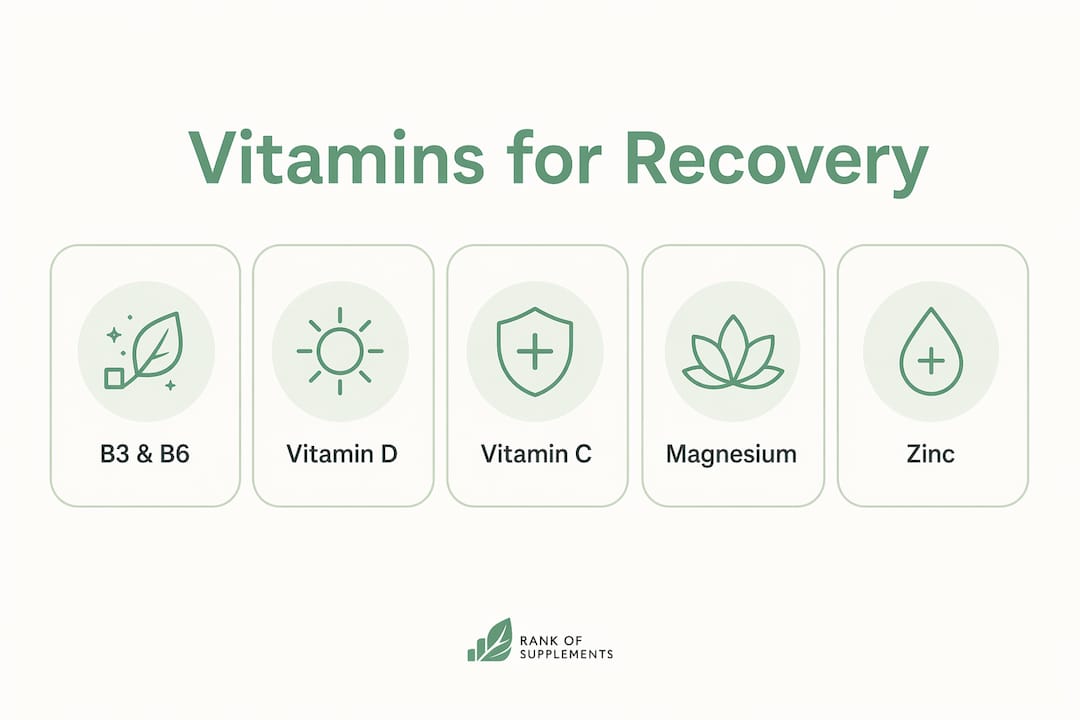
Magnesium and zinc: the unsung minerals
Magnesium supports over 300 enzyme reactions including muscle contraction and protein synthesis, yet many adults consume only about half the recommended daily intake. Magnesium glycinate absorbs best and also supports muscle relaxation and sleep quality, both of which directly affect recovery speed. Zinc, lost heavily in sweat, supports testosterone, immune function, and protein synthesis. A daily dose of 15 to 30 mg of zinc is effective, but staying under 40 mg prevents copper interference.
| Vitamin/Mineral | Primary Recovery Role | Best Food Sources |
|---|---|---|
| Vitamin D | Muscle function, protein synthesis, inflammation | Fatty fish, egg yolks, fortified dairy |
| Vitamin C | Oxidative stress reduction, soreness relief | Bell peppers, citrus, kiwi |
| B3 (Nicotinamide) | Muscle stem cell activation | Chicken, tuna, peanuts |
| B6 (Pyridoxine) | Stem cell proliferation, protein metabolism | Salmon, bananas, chickpeas |
| Magnesium | Enzyme reactions, muscle relaxation, sleep | Pumpkin seeds, spinach, dark chocolate |
| Zinc | Protein synthesis, immune support, testosterone | Oysters, beef, pumpkin seeds |
Pro Tip: Get a baseline blood panel for Vitamin D, B12, and zinc before adding any supplement. Supplementing nutrients you already have in adequate supply offers no recovery benefit and wastes money.
How do vitamins biologically support muscle repair?
Understanding the mechanisms behind vitamins for muscle healing helps you make smarter decisions about what to take and when. Recovery is not a single event. It is a cascade of biological processes that vitamins regulate at each stage.
Muscle stem cell activation
B vitamins, specifically B3 and B6, directly stimulate satellite cell proliferation. Satellite cells sit dormant along muscle fibers until exercise causes damage. The right nutritional signal wakes them up and sends them to the repair site. The 2026 trial showing 29%, 67% improvements in stem cell markers confirms that this is not a theoretical benefit. It is measurable and reproducible.
Oxidative stress and the adaptation paradox
Antioxidant vitamins like C and E neutralize free radicals generated during exercise. Free radicals cause some of the soreness and cellular damage you feel after hard training. However, athletes require some oxidative stress to trigger muscle adaptation. Wiping out all oxidative signaling with high-dose antioxidants can actually slow the adaptation process. The goal is balance, not elimination.
“Antioxidant supplementation must be calibrated to the athlete’s training phase. High-dose Vitamin C and E taken chronically during a strength-building block may reduce the very stress signals that drive muscle growth.”
This is why the antioxidant supplement strategy for a competitive athlete looks different from one for a recreational gym-goer. Training phase, intensity, and goals all change the calculus.
Inflammation regulation through Vitamin D
Vitamin D acts as an immunomodulator, meaning it regulates rather than simply suppresses inflammation. Controlled inflammation after exercise is necessary for repair. Vitamin D helps keep that process on schedule, preventing both under-response and the kind of chronic low-grade inflammation that stalls recovery over weeks and months.
The gut-muscle axis and Vitamin B5
One of the most compelling 2026 findings involves pantothenic acid, or Vitamin B5. Gut-derived B5 metabolites regulate macrophages, the immune cells that clear damaged tissue and signal the start of repair. A healthy gut microbiome produces and distributes these metabolites efficiently. Athletes with poor gut health may be undermining their recovery at this foundational level without realizing it. Supporting gut health is now a legitimate part of a complete muscle recovery strategy.
Pro Tip: Fermented foods like kefir, kimchi, and Greek yogurt support the gut microbiome that produces B5 metabolites. Adding one serving daily costs nothing extra and may accelerate the immune cleanup phase after hard training.
What are the risks and limits of vitamin supplementation for recovery?
Vitamins are not universally safe at any dose. The importance of vitamins in recovery comes with a clear caveat: more is not more.
High-dose antioxidants can backfire
Chronic high-dose Vitamin C and E supplementation may blunt adaptive responses by neutralizing necessary oxidative stress signaling. This is most relevant during strength and hypertrophy training phases, where the oxidative signal drives muscle protein synthesis. Athletes in heavy training blocks should keep Vitamin C below 500 mg per day from supplements unless a confirmed deficiency exists.
Multivitamins are mostly wasted money
Most athletes waste money on multivitamins when only targeted supplementation based on lab-confirmed deficiencies yields performance or recovery benefit. A generic multivitamin delivers nutrients you may already have in abundance while providing subtherapeutic doses of the ones you actually need. The math rarely works in your favor.
Here is what targeted supplementation looks like in practice:
- Test first: Run a panel for Vitamin D (25-OH), B12, ferritin/iron, and zinc before buying anything.
- Supplement the gap: If Vitamin D comes back below 30 ng/mL, supplement with 2,000 to 4,000 IU daily and retest in 8 to 12 weeks.
- Avoid stacking antioxidants: Do not combine high-dose Vitamin C, Vitamin E, and other antioxidants during peak training phases.
- Watch zinc limits: Stay at or below 40 mg daily to prevent copper depletion, which causes its own set of problems.
- Cycle B vitamin protocols: The B3/B6 protocol studied in clinical trials was applied for 9 days post-exercise, not indefinitely. Targeted short-course use may be more effective than daily chronic dosing.
Timing matters more than most athletes realize
Taking fat-soluble vitamins like Vitamin D and Vitamin K with a meal containing dietary fat significantly improves absorption. Water-soluble B vitamins absorb well at any time but taking them with food reduces the nausea some athletes experience with higher doses. Magnesium taken at night supports sleep quality, which is when the majority of muscle repair occurs.
How can athletes build a vitamin-enhanced recovery strategy?
Knowing which vitamins matter is only half the equation. How you integrate them into your daily routine determines whether you actually see results.
Start with food, not supplements
A food-first approach covers the majority of your micronutrient needs without the risk of excess. Fatty fish like salmon and mackerel deliver Vitamin D and B6 in one meal. Dark leafy greens provide magnesium and folate. Lean meats and legumes cover B3 and zinc. Athletes who eat a varied, whole-food diet are often surprised by how few gaps their blood work reveals.
Build your supplement stack from test results
Supplementation should always be individualized and based on evidence from testing, not generalized assumptions about deficiencies. This is the single most important principle in modern sports nutrition. A small, targeted lab panel costs far less than months of unnecessary supplements and gives you a precise roadmap.
Follow this sequence:
- Run baseline labs covering Vitamin D, B12, iron/ferritin, and zinc at the start of your training season.
- Identify confirmed gaps and match each deficiency to a specific, well-dosed supplement rather than a multivitamin.
- Add targeted B3/B6 post-exercise during high-volume training blocks where muscle damage is highest and recovery demand peaks.
- Reassess every 12 weeks to confirm levels are normalizing and adjust dosages accordingly.
- Integrate hydration as a non-negotiable partner. Vitamins and minerals absorb and transport through water. Hydration and recovery are inseparable in practice.
Pair vitamins with protein and rest
Vitamins do not rebuild muscle on their own. They work alongside adequate protein intake (1.6 to 2.2 g per kg of body weight daily) and quality sleep. Magnesium supports deep sleep stages, which is when growth hormone peaks and muscle protein synthesis runs at its highest rate. A vitamin strategy that ignores sleep and protein is like tuning an engine while running on empty.
Pro Tip: If you train twice a day or compete in back-to-back events, consider a short-course B3/B6 protocol in the 9 days following your hardest training block. The clinical evidence supports this timing specifically, not daily year-round use.
Key takeaways
Vitamins accelerate muscle recovery by activating stem cells, regulating inflammation, and protecting against oxidative damage, but only when used in the right doses at the right times.
| Point | Details |
|---|---|
| B3 and B6 activate stem cells | 714 mg B3 and 19 mg B6 for 9 days post-exercise boosted muscle regeneration by 37%. |
| Vitamin D deficiency is widespread | 56% of athletes have inadequate Vitamin D, directly impairing muscle function and recovery. |
| Antioxidants require careful dosing | High-dose Vitamin C and E taken chronically may blunt the oxidative signals that drive adaptation. |
| Test before you supplement | Targeted supplementation based on confirmed deficiencies outperforms generic multivitamins every time. |
| Gut health drives B5 availability | Vitamin B5 from gut microbiome activity regulates macrophages that clear damaged muscle tissue. |
What I’ve learned watching athletes supplement wrong for years
Athletes consistently make the same mistake: they treat vitamins like performance drugs rather than repair tools. I have watched countless gym-goers stack Vitamin C, E, and a multivitamin on top of a protein shake, convinced they are covering all their bases. They are not. They are often spending money to slow their own progress.
The B3/B6 research genuinely surprised me when it came out. The idea that two B vitamins, dosed precisely and timed to the post-exercise window, could measurably accelerate satellite cell activity is a significant finding. It shifts the conversation from “take a daily multi” to “match your micronutrient protocol to your training phase.” That is a more sophisticated and more effective approach.
The gut-muscle axis research on Vitamin B5 is the area I find most underappreciated right now. Most athletes have no idea their gut microbiome is producing immune-regulating metabolites that directly affect how fast their muscles repair. Fixing gut health is not glamorous, but the evidence increasingly points to it as a meaningful lever for recovery.
My honest recommendation is to get tested, fix confirmed deficiencies, and resist the urge to supplement broadly. The vitamins for bodybuilding guide at Rankofsupplements takes the same evidence-first approach, and it is worth reading before you build your next supplement stack. The athletes who recover fastest are not the ones taking the most supplements. They are the ones taking the right ones.
matteo
Rankofsupplements can help you find the right vitamins
Choosing the right vitamins for recovery does not have to be a guessing game. Rankofsupplements reviews and ranks supplements based on clinical evidence, not marketing claims.
The supplement ingredient library at Rankofsupplements breaks down every major vitamin and mineral by mechanism, dosage, and evidence quality. You can look up Vitamin D3, B3, B6, magnesium, and zinc individually to see exactly what the research supports. For athletes ready to go beyond vitamins, the supplements by health goal section matches specific recovery needs to evidence-backed products. Use it to build a stack that reflects your actual lab results, not generic assumptions.
FAQ
What is the most important vitamin for muscle recovery?
Vitamin D is the most critical vitamin for muscle recovery due to its role in protein synthesis, inflammation regulation, and skeletal muscle function. Deficiency affects 56% of athletes and directly impairs recovery speed.
How do B vitamins aid muscle repair?
B3 (nicotinamide) and B6 (pyridoxine) activate muscle satellite cells, the repair cells that rebuild damaged muscle fibers. Clinical evidence shows a 9-day post-exercise protocol increases muscle regeneration by 37%.
Can too many antioxidant vitamins hurt performance?
Yes. Chronically high doses of Vitamin C and Vitamin E can blunt the oxidative stress signals your body needs to adapt to training. Moderate doses from food and low-dose supplements are preferable during active training phases.
Should athletes take a daily multivitamin?
Multivitamins offer little benefit for athletes who are not deficient in specific nutrients. Targeted supplementation based on confirmed lab deficiencies is more effective and avoids unnecessary excess intake.
What role does gut health play in muscle recovery?
Gut-derived Vitamin B5 metabolites regulate macrophages that clear damaged muscle tissue and signal the start of repair. Supporting gut health through diet directly influences how efficiently this immune-driven recovery process runs.
Recommended
- Related article: Top vitamins for fitness, an evidence-based overview of the vitamins athletes rely on most.
- Top list: Best supplement reviews and rankings 2026, the top-rated muscle recovery supplements ranked by clinical evidence.
- Specific product: Vitamin D3 benefits and dosage, a detailed look at the most deficient vitamin in athletes and how to supplement it correctly.
- Guide: Supplements by health goal, browse evidence-backed supplements organized by specific recovery and performance goals.