Wegovy (semaglutide) is the strongest prescription weight-loss medication available today; for OTC supplements, Transparent Labs Recomp leads on ingredient transparency and clinical dosing. Neither works without a calorie deficit, and neither should be started without reviewing your health history first.
Here is what the evidence actually supports:
- Prescription drugs (Wegovy, Qsymia, Contrave, Phentermine, Orlistat) produce multi-kilogram average weight loss in large randomized controlled trials, a magnitude that no OTC supplement currently matches. All require a clinician’s sign-off and carry specific contraindications.
- OTC fat burners built around caffeine, green tea extract (EGCG), and glucomannan show modest, measurable effects in meta-analyses, think adjunct support, not a standalone solution.
- Stimulant-containing supplements (anything with caffeine, yohimbine, or synephrine) are not appropriate for people with hypertension, cardiac arrhythmia, anxiety disorders, or those who are pregnant.
- Third-party testing (NSF International, USP, or a certificate of analysis from the brand) is the single most practical safeguard against adulterated products.
Your immediate next steps: confirm no contraindications with your clinician before starting any stimulant product, check for an NSF or USP seal, and verify that every active ingredient lists a specific milligram amount, not a “proprietary blend” total.
Statistic: Capsaicinoids can slightly increase energy expenditure, representing a real but modest effect that compounds meaningfully only when combined with a consistent calorie deficit.
Pro Tip: If a supplement’s label shows a “proprietary blend” with a single combined weight for multiple ingredients, you cannot verify whether any single active is at a clinically relevant dose. Walk away.
Table of Contents
- Top weight-loss pills at a glance: prescription vs OTC
- How we selected and ranked these options
- Prescription weight-loss medications: what each one actually does
- OTC fat burner supplements: ingredient evidence and product notes
- What the science actually shows about weight-loss pills
- Safety, regulation, and how to reduce your risk
- How to decide: prescription vs OTC, and which product to choose
- Key Takeaways
- The evidence gap most people ignore
- What Rankofsupplements offers beyond this article
- FAQ
Top weight-loss pills at a glance: prescription vs OTC
The table below covers every option profiled in this article. Efficacy figures reflect clinical trial data where available; OTC supplement effects are based on ingredient-level meta-analyses.
| Option | Type | Main Active(s) | Typical Efficacy | Major Side Effects | Availability | Typical US Cost | 3rd-Party Testing | Best For |
|---|---|---|---|---|---|---|---|---|
| Rankofsupplements Ingredient Library | Resource | N/A | Evidence-based ingredient guidance | N/A | Free online | Free | Transparent methodology | Buyers who want vetted, ingredient-level evidence before purchasing |
| Wegovy (semaglutide) | Prescription | Semaglutide (GLP-1 agonist) | Large randomized controlled trials show that Wegovy (semaglutide) produces the largest average weight-loss results among prescription options, with multi-kilogram average loss versus placebo over 68 weeks. | Nausea, vomiting, pancreatitis risk, thyroid C-cell tumor warning | Rx only | ~$1,300+/month without insurance | FDA-approved drug | BMI ≥30 (or ≥27 with comorbidity); cardiometabolic risk |
| Qsymia | Prescription | Phentermine + topiramate | Strong trial efficacy vs placebo | Cognitive effects, teratogenicity, elevated HR | Rx only (REMS program) | ~$150/month | FDA-approved drug | Patients tolerating stimulants; not for pregnancy |
| Contrave | Prescription | Naltrexone + bupropion | Moderate weight loss vs placebo | Seizure risk, psychiatric effects, nausea | Rx only | ~$200, $400/month | FDA-approved drug | Appetite/reward-driven eating; no seizure history |
| Phentermine | Prescription | Phentermine (sympathomimetic) | Short-term weight loss support | Elevated BP/HR, insomnia, dependence risk | Rx only | ~$30, $60/month generic | FDA-approved drug | Short-term use; no cardiovascular disease |
| Orlistat (Alli/Xenical) | Prescription + OTC | Lipase inhibitor | Modest fat absorption reduction | GI distress (oily stools, urgency) | OTC (Alli 60 mg) / Rx (Xenical 120 mg) | ~$50/month OTC | FDA-approved drug | Non-stimulant seekers; low-fat diet required |
| Transparent Labs Recomp | OTC supplement | Caffeine, EGCG, forskolin, others | Modest thermogenic support | Stimulant side effects (stim version) | OTC | ~$50/bottle | Transparent label, no proprietary blends | Users wanting clear dosing; stim-free variant available |
| Jacked Factory Burn XT | OTC supplement | Caffeine, EGCG, acetyl-L-carnitine | Modest thermogenic support | Jitters, elevated HR | OTC | ~$30, $40/bottle | Transparent label | Men seeking stimulant thermogenic |
| Legion Phoenix Fat Burner | OTC supplement | Synephrine-free, non-stim blend | Modest metabolic support | Generally mild | OTC | ~$40, $50/bottle | Transparent label | Stimulant-sensitive users |
| 1st Phorm 1-DB Overdrive | OTC supplement | Stimulant blend + metabolic support | Modest thermogenic support | Stimulant side effects | OTC | ~$60/bottle | Brand transparency varies | Stimulant-tolerant users |
| PhenQ | OTC supplement | α-Lacys Reset, caffeine, capsimax | Multi-mechanism thermogenic claims | Stimulant side effects | OTC | ~$70/bottle | Limited independent testing | Multi-ingredient OTC seekers |
| Lemme Burn | OTC supplement | Proprietary blend | Limited published evidence | Varies | OTC | ~$30, $40/bottle | Verify COA before buying | Trend-brand evaluators; scrutinize label |
| Juvenon Dream Away the Fat | OTC supplement | Varies by formula | Limited published evidence | Varies | OTC | ~$30, $50/bottle | Verify COA before buying | Consumers comparing advertised claims to evidence |
| 1st Phorm L-Carnitine | OTC supplement | L-Carnitine | Modest fat oxidation support | Generally mild | OTC | ~$30, $40/bottle | Brand transparency varies | Users adding carnitine support to existing protocol |
| Foundayo | Prescription | Not publicly detailed | Clinician-determined | Clinician-determined | Rx only | Clinician-determined | FDA-regulated drug | Patients whose clinician determines appropriateness |
Note: Costs are approximate US retail or cash-pay estimates. Insurance coverage and prior authorization requirements vary significantly for all prescription options.
How we selected and ranked these options
Every product in this article had to clear four gates before inclusion.
Gate 1: US market availability. Prescription drugs must hold FDA approval for weight management. OTC supplements must be commercially available in the United States.
Gate 2: Evidence quality. The hierarchy used here runs from randomized controlled trials and meta-analyses at the top, down through cohort studies, single small trials, and then manufacturer claims at the bottom. Prescription drugs with FDA approval for obesity automatically meet a high evidence bar. OTC supplements are graded at the ingredient level, not the brand level, because the brand rarely changes the underlying science.
Gate 3: Ingredient transparency. Products using proprietary blends, a single combined weight for multiple actives, are flagged or downgraded. Dietitian-reviewed lists explicitly cite transparent labeling and clinical dosing as primary selection criteria, and Rankofsupplements applies the same standard.
Gate 4: Third-party testing or regulatory oversight. Prescription drugs carry FDA pre-market review. For OTC supplements, NSF International or USP certification, or a verifiable certificate of analysis, is the practical equivalent.
Cost and accessibility were scored as secondary factors: a product that is clinically strong but costs $1,300/month without insurance needs that context stated clearly.
“Supplements are rarely studied for its ability to help people lose weight and keep it off, and some have been found to be harmful.”, Mayo Clinic
Prescription weight-loss medications: what each one actually does
Wegovy (semaglutide)
Semaglutide is a GLP-1 receptor agonist injected once weekly. It works by slowing gastric emptying, reducing appetite signaling in the brain, and improving insulin sensitivity. Large RCTs show multi-kilogram average weight loss versus placebo over 68 weeks, making it the most effective prescription option currently available for obesity management. Common side effects are GI-focused: nausea, vomiting, and diarrhea, especially during dose escalation. There is a boxed warning for thyroid C-cell tumors based on rodent data; it is contraindicated in patients with a personal or family history of medullary thyroid carcinoma or MEN2. A weekly oral pill formulation (Wegovy pill) has entered the market, though the injectable remains the primary approved form for weight management.
Qualifies if: BMI ≥30, or BMI ≥27 with at least one weight-related comorbidity (type 2 diabetes, hypertension, dyslipidemia).
Clinician questions to ask: Does my cardiac history affect dosing? What is the titration schedule? Does my insurance cover it, and is prior authorization required?
Qsymia (phentermine/topiramate)
Qsymia combines a stimulant appetite suppressant (phentermine) with an anticonvulsant (topiramate extended-release). Trial data show strong weight-loss efficacy versus placebo, but the combination carries a teratogenicity risk serious enough to require a Risk Evaluation and Mitigation Strategy (REMS) program, monthly pregnancy testing for women of childbearing potential. Cognitive side effects (word-finding difficulty, memory issues) are common with topiramate. Stimulant-related effects include elevated heart rate and blood pressure.
Contraindicated in: pregnancy, hyperthyroidism, glaucoma, MAO inhibitor use within 14 days.
Contrave (naltrexone/bupropion)
Contrave targets two separate pathways: naltrexone blocks opioid receptors involved in reward, and bupropion acts on dopamine and norepinephrine to reduce appetite. The combination is particularly relevant when food cravings and reward-driven eating are prominent. The most serious safety concern is seizure risk, bupropion lowers the seizure threshold, so Contrave is contraindicated in patients with a seizure disorder, bulimia, or anorexia. It also carries a black-box warning for neuropsychiatric effects.
Clinician questions to ask: Do any of my current medications interact with bupropion? Do I have any history of seizures or eating disorders?
Phentermine
Phentermine is one of the oldest prescription weight-loss drugs still in use. It suppresses appetite by releasing norepinephrine in the hypothalamus. Approved only for short-term use (typically up to 12 weeks), it produces meaningful initial weight loss but is not intended as a long-term strategy. Side effects include elevated blood pressure, heart rate, insomnia, and dry mouth. It is contraindicated in cardiovascular disease, hyperthyroidism, glaucoma, and agitated states.
Generic phentermine runs roughly $30, $60/month, making it one of the more accessible prescription options on cost alone.
Orlistat (Alli/Xenical)
Orlistat works differently from every other option on this list: it inhibits pancreatic lipase, blocking roughly one-third of dietary fat from being absorbed. The OTC version (Alli, 60 mg three times daily with meals) is the only FDA-approved OTC weight-loss drug in the US. The prescription version (Xenical) is 120 mg. Weight-loss effects are modest compared to GLP-1 agonists, but the non-stimulant mechanism makes it relevant for people who cannot tolerate stimulants. The trade-off is GI side effects, oily stools, fecal urgency, and flatulence, which are directly tied to fat intake. Eating a low-fat diet while taking orlistat is not optional; it is how you avoid the worst side effects.

Foundayo
Foundayo appears in prescription-focused weight-loss roundups. Specific mechanism and clinical data are not publicly detailed at the ingredient level in the same way as the options above. If your clinician mentions it, ask for the prescribing information and review the FDA label directly before starting.
“All prescription weight-loss medications require a clinician’s evaluation of your full medical history, current medications, and cardiovascular risk before prescribing.”, Rankofsupplements editorial guidance, consistent with NIH/ODS guidance
OTC fat burner supplements: ingredient evidence and product notes
The honest framing here: OTC fat burners are adjuncts. A systematic review and meta-analysis comparing thermogenic supplements to diet and exercise found that supplements were generally less effective than lifestyle intervention alone for weight and cardiometabolic outcomes. That does not make them useless, it means they work best when layered on top of a calorie deficit, not instead of one.
Transparent Labs Recomp (and Stim-Free variant)
Transparent Labs Recomp is the OTC pick that consistently earns placement in dietitian-reviewed roundups for one specific reason: every active ingredient is listed with its exact milligram amount. No proprietary blends. The stimulant version contains caffeine and EGCG at doses that align with the ranges studied in meta-analyses. The Stim-Free variant swaps out caffeine for non-stimulant metabolic support, making it the practical choice for anyone sensitive to stimulants or stacking it with pre-workout products already containing caffeine. Rankofsupplements rates it as the top OTC pick for transparent labeling and clinical-dose alignment.
Jacked Factory Burn XT
Burn XT leads with caffeine anhydrous, EGCG, and acetyl-L-carnitine HCl, all at disclosed doses. It is positioned toward men seeking a stimulant thermogenic and retails in the $30, $40 range, making it one of the more accessible clearly labeled options. The stimulant load is meaningful, users sensitive to caffeine should start at half a serving.
Legion Phoenix Fat Burner (without stimulants)
Legion’s stim-free Phoenix is built for people who want metabolic support without caffeine or synephrine. Ingredient dosing is disclosed. For anyone who already consumes significant caffeine from coffee or pre-workout, a stim-free formula avoids the cumulative stimulant load that WebMD flags as a cardiovascular concern.
1st Phorm 1-DB Overdrive and Thyro-Drive
1st Phorm offers a multi-product approach: 1-DB Overdrive is the stimulant thermogenic, Thyro-Drive targets thyroid metabolic support, and the L-Carnitine product adds fat oxidation support. The portfolio is popular in performance-adjacent communities. Transparency varies across the product lines, check each label individually rather than assuming the same standard across the range.
1st Phorm L-Carnitine specifically: L-carnitine facilitates fatty acid transport into mitochondria. Evidence for weight loss as a standalone is modest, but it is generally well-tolerated and adds a non-stimulant layer to a stack.
PhenQ
PhenQ markets a multi-mechanism approach combining caffeine, capsimax (capsicum extract), and its proprietary α-Lacys Reset blend. The multi-ingredient pitch is appealing, but the proprietary blend means you cannot verify individual active doses. It has strong market presence and appears in many top-10 lists, but independent third-party testing data are limited compared to Transparent Labs or Legion.
Lemme Burn and Juvenon Dream Away the Fat
Both products appear in SERP-consensus lists. Lemme Burn is a trend brand; Juvenon Dream Away the Fat is a branded OTC pick. Neither has the ingredient transparency or independent testing documentation of the top-tier options. Before buying either, request a certificate of analysis and verify that every active ingredient has a disclosed milligram amount.
Key ingredient evidence at a glance
| Ingredient | Best Evidence | Typical Effective Dose | Evidence Grade |
|---|---|---|---|
| Caffeine | Multiple meta-analyses; modest thermogenic and fat oxidation effects | Moderate | |
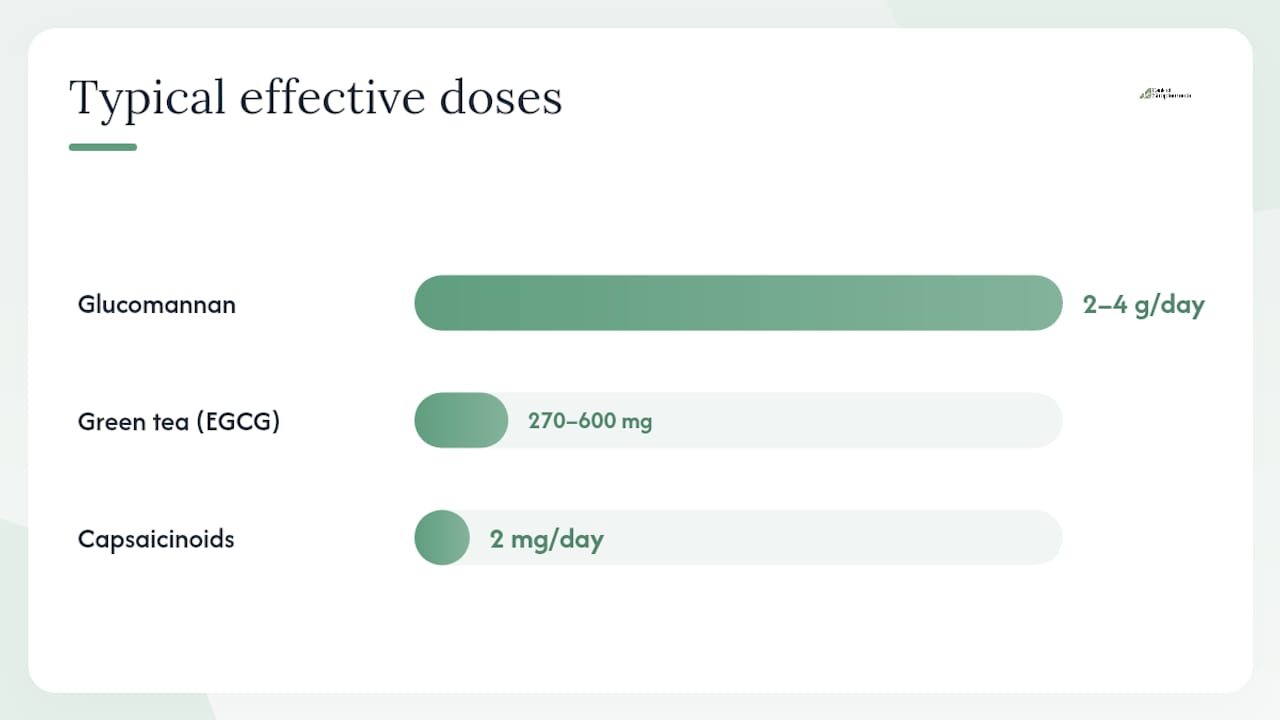
| Green tea extract (EGCG) | PMC narrative review; modest metabolic benefit | 270 to 600 mg EGCG/day | Moderate |
| Capsaicinoids | Meta-analyses; ~58 kcal/day energy expenditure increase | 2 mg/day capsaicin equivalent | Moderate |
| Glucomannan (soluble fiber) | RCTs; satiety and modest weight effects | 2 to 4 g/day before meals | Moderate |
| L-Carnitine | Mixed RCTs; modest fat oxidation support | Limited, Moderate | |
| Yohimbine | Small trials; fat mobilization in fasted state | Limited | |
| Protein powder | Strong evidence for satiety and lean mass preservation | Per total daily protein target | Strong (for satiety) |
| Soluble fiber | Strong evidence for satiety; modest weight effects | Strong (for satiety) | |
| Magnesium | Supports metabolic function; not a direct fat burner | Limited (for weight) |
Pro Tip: Yohimbine is one of the few OTC ingredients with evidence for fat mobilization, but it has a narrow therapeutic window. It can cause anxiety, elevated blood pressure, and panic attacks, especially in doses above 20 mg/day or when combined with other stimulants. Check the supplement stacking guide before adding it to a stack.
What the science actually shows about weight-loss pills
The gap between prescription drugs and OTC supplements is large, and it is worth being direct about it.
GLP-1 receptor agonists like semaglutide demonstrate multi-kilogram average weight loss versus placebo in large, multi-month RCTs. That is a different category of evidence from most supplement trials, which tend to be shorter, smaller, and less rigorous.
For OTC ingredients, the PMC narrative review covering caffeine, EGCG, choline, glucomannan, and capsaicinoids finds some metabolic benefit and generally acceptable safety at recommended doses, but notes that longer trials are needed. The systematic review comparing thermogenic supplements to diet and exercise found that pooled effect sizes for supplements crossed zero for some outcomes and were consistently smaller than the effects from lifestyle intervention.
“The evidence that dietary supplements help with weight loss is generally weak. Most supplements have not been studied in well-designed clinical trials.”, NIH Office of Dietary Supplements
Evidence grades by category:
- Strong:, Prescription GLP-1 agonists (semaglutide), FDA-approved drugs (orlistat, phentermine, Qsymia, Contrave), large RCTs, regulatory review
The practical translation: if you need to lose a meaningful amount of weight and qualify medically, the prescription route produces results that OTC supplements cannot match. If you are already at a calorie deficit and want modest additional metabolic support, evidence-backed OTC ingredients can contribute, but the effect size is measured in tens of calories per day, not pounds per week.
Safety, regulation, and how to reduce your risk
The regulatory gap between drugs and supplements
FDA-approved prescription weight-loss drugs go through pre-market clinical trials, safety reviews, and post-market surveillance. Dietary supplements do not require pre-market approval. The FDA acts after a problem is reported, which means adulterated products can reach consumers before enforcement catches up. Weight-loss supplements have historically been one of the most frequently adulterated supplement categories, with undeclared prescription drugs and stimulants found in products sold as “natural.”
Major safety concerns
- Cardiovascular: Stimulant-containing supplements (caffeine, yohimbine, synephrine) can elevate heart rate and blood pressure. People with hypertension, arrhythmia, or coronary artery disease should avoid them entirely.
- Liver injury: Certain herbal ingredients (green tea extract in very high doses, usnic acid, kava) have been associated with hepatotoxicity. Stick to evidence-supported dose ranges.
- Drug interactions: Yohimbine interacts with antidepressants (MAOIs, SSRIs). Orlistat reduces absorption of fat-soluble vitamins and some medications. Contrave/bupropion interacts with a wide range of psychiatric medications.
- Pregnancy: Qsymia is teratogenic (Category X). Phentermine, Contrave, and most stimulant supplements are contraindicated in pregnancy. Orlistat is generally avoided during pregnancy. No OTC fat burner supplement has established safety in pregnancy.
- Psychiatric effects: Bupropion (in Contrave) carries a black-box warning for suicidal ideation. Stimulant supplements can worsen anxiety disorders.
“Supplements marketed for thermogenesis can raise heart rate and blood pressure. Common side effects like jitters and insomnia are often misread as the supplement ‘working’, they are adverse reactions tied to stimulant load.”, WebMD
Practical steps to reduce risk
- Look for NSF International or USP certification on the label.
- Request a certificate of analysis (COA) from the brand, reputable companies publish these.
- Verify every active ingredient has a specific milligram amount, not a proprietary blend total.
- Start at the lowest suggested dose and assess tolerance before increasing.
- Stop immediately and contact your clinician if you experience chest pain, palpitations, severe headache, or signs of liver stress (jaundice, dark urine, upper-right abdominal pain).
- Report adverse events to FDA MedWatch (1-800-FDA-1088).
For a deeper look at how stimulant-based products specifically affect women, the Rankofsupplements guide on thermogenics for women covers gender-specific safety and efficacy considerations.
How to decide: prescription vs OTC, and which product to choose
Step-by-step decision framework
-
Run a baseline health check. Blood pressure, resting heart rate, fasting glucose, and a medication review with your clinician or pharmacist. This takes 20 minutes and eliminates most contraindication risks before you spend a dollar.
-
Determine whether you qualify for prescription therapy. If your BMI is ≥30, or ≥27 with a weight-related comorbidity, you likely qualify for at least one FDA-approved medication. The prescription route produces larger, more consistent results than any OTC supplement.
-
If prescription therapy is not appropriate or accessible, choose a transparent OTC product. Look for disclosed milligram amounts for every active, third-party testing, and ingredients with at least moderate-grade evidence (caffeine, EGCG, glucomannan). The best weight loss supplements list on Rankofsupplements applies these criteria across the full category.
-
Match stimulant tolerance to product type. If you are sensitive to caffeine or already consuming it from other sources, choose a stim-free option (Transparent Labs Recomp Stim-Free, Legion Phoenix without stimulants).
-
Monitor for 8 to 12 weeks. Weight trajectory, side effects, and energy levels should all be tracked. If you see no measurable progress after 12 weeks on an OTC supplement with a consistent calorie deficit, the supplement is not the variable to change, the diet is.
Red flags that should stop a purchase
- “Proprietary blend” with no individual ingredient amounts
- Claims of “reliable” weight loss or “supports metabolism overnight”
- Celebrity endorsements with no clinical citations
- No third-party testing documentation available
- Ingredients with known interaction risks and no safety guidance on the label
Clinician questions to bring
- Does this interact with any of my current medications?
- Do I have any cardiovascular or metabolic conditions that contraindicate stimulants?
- Am I pregnant, planning pregnancy, or breastfeeding?
- What is a realistic weight-loss timeline given my starting point?
For appetite suppression specifically, the best appetite suppressant supplements list covers options ranked by evidence and transparency, useful if hunger management is your primary challenge.
Key Takeaways
Prescription GLP-1 agonists like Wegovy produce the largest average weight-loss results in large RCTs, a magnitude no OTC fat burner supplement currently matches, but all prescription options require clinician evaluation, and OTC supplements work only as adjuncts to a calorie deficit.
| Point | Details |
|---|---|
| Prescription drugs lead on efficacy | Wegovy (semaglutide) shows the largest average weight-loss results in randomized controlled trials; Qsymia also shows strong trial efficacy. OTC supplements show only modest, adjunct-level effects. |
| Transparency is the top OTC filter | Choose supplements with disclosed milligram amounts for every active; avoid proprietary blends where individual doses are hidden. |
| Third-party testing reduces adulteration risk | NSF International or USP certification, or a verifiable COA, is the most practical safeguard against undeclared stimulants or drugs. |
| Stimulants carry real cardiovascular risk | Caffeine, yohimbine, and synephrine can elevate heart rate and blood pressure; contraindicated in cardiovascular disease, pregnancy, and anxiety disorders. |
| Rankofsupplements for vetted research | The Rankofsupplements Ingredient Library provides ingredient-level evidence, dosing guidance, and transparent reviews to help you evaluate any product before buying. |
The evidence gap most people ignore
The conversation around weight-loss pills tends to collapse into two camps: people who dismiss supplements entirely and people who treat them as near-pharmaceutical. Both miss the more useful framing.
The real issue is that the evidence for OTC fat burners is ingredient-specific, not brand-specific. A product with 200 mg of caffeine anhydrous and 400 mg of EGCG at disclosed doses is a different object from a product with a “thermogenic matrix” of unknown composition. The former has a body of meta-analytic evidence behind it. The latter has a marketing budget. Most consumers cannot tell them apart from the front of the label, which is exactly why ingredient transparency is the non-negotiable filter.
What also gets underweighted: the stimulant side effects that people interpret as the supplement “working”, the jitters, the elevated heart rate, the feeling of heat, are not fat burning. They are your sympathetic nervous system responding to a stimulant load. Some of that response does increase energy expenditure slightly. But the subjective intensity of those sensations has almost no correlation with actual fat oxidation. A product that makes you feel wired is not necessarily burning more fat than one that does not.
The prescription side has its own blind spot. GLP-1 agonists are genuinely impressive in RCTs, but the dropout rates from side effects and the cost barrier without insurance mean that trial-level results do not always translate to real-world outcomes. The best prescription drug is the one a patient can actually stay on.
Rankofsupplements applies ingredient-level scrutiny to every product it reviews, which is why the methodology section here mirrors the same framework: evidence grade, dose transparency, third-party testing, and realistic effect-size expectations. That approach does not make for exciting marketing copy, but it does make for decisions you will not regret.
What Rankofsupplements offers beyond this article
Choosing between a prescription medication and an OTC supplement is one decision. Knowing whether the specific product you are considering uses clinically relevant doses of its active ingredients is another, and that is where most buyers get stuck.
Rankofsupplements built its Supplement Ingredient Library specifically for this: ingredient-by-ingredient breakdowns covering mechanism, evidence grade, effective dose ranges, and safety flags. Before you buy any fat burner, run the active ingredients through the library, if a product lists 50 mg of EGCG when the evidence supports 270 to 600 mg, you will know immediately.
For a curated shortlist, the best weight loss supplements ranking applies the same transparency and evidence criteria used in this article across the full category. Affiliate links are present on the site; they are disclosed, and they do not influence which products rank. Discuss any supplement or prescription option with your clinician before starting.
FAQ
Is there a weight-loss pill that actually works?
Yes, with important caveats. FDA-approved prescription medications (semaglutide, orlistat, Qsymia, Contrave, phentermine) have clinical trial evidence supporting meaningful weight loss, though all require a clinician’s prescription and monitoring. OTC supplements containing caffeine, EGCG, and glucomannan show modest, measurable effects in meta-analyses but work only as adjuncts to a calorie deficit, not as standalone solutions.
What is the most effective weight loss pill available?
Among currently approved options, Wegovy (semaglutide) produces the largest average weight-loss results in randomized controlled trials compared to placebo. It requires a prescription, clinician supervision, and qualifies patients based on BMI and comorbidities; cost without insurance is substantial.
What is the top over-the-counter weight loss pill?
Orlistat (sold as Alli at 60 mg) is the only FDA-approved OTC weight-loss drug in the US. Among OTC fat burner supplements, Transparent Labs Recomp earns the top position in evidence-based roundups for ingredient transparency and clinical dosing, with a stim-free variant for sensitive users.
Which drug is best for burning fat?
“Best” depends on your medical profile. Wegovy (semaglutide) produces the largest average weight-loss results in randomized controlled trials. Qsymia shows strong trial results but carries teratogenicity risk. Phentermine is the most accessible short-term option on cost. The right choice requires a clinician’s evaluation of your cardiovascular history, current medications, and weight-loss goals.
This article is general information, not medical advice. Confirm current prescribing guidelines, contraindications, and your personal health history with a licensed clinician or pharmacist before starting any weight-loss medication or supplement.