
TL;DR:
The supplement industry is rapidly evolving with AI personalization and stricter regulations.
Emerging ingredients like adaptogens and postbiotics are gaining scientific backing and popularity.
Prioritize safety, transparency, and personalized approaches to maximize supplement effectiveness.
The supplement industry is moving faster than most people realize. What worked for your wellness routine two years ago may already be outdated, and the products hitting shelves in 2026 look nothing like the protein powders and basic multivitamins of the past decade. New delivery formats, AI-driven personalization, and a surge in science-backed ingredients are reshaping what it means to supplement smartly. If you’re still relying on old-school advice or grabbing whatever’s on sale at the pharmacy, you’re likely leaving real performance and wellness gains on the table. This guide breaks down exactly what’s changing, why it matters, and how you can use these shifts to your advantage.
Table of Contents
-
Critical considerations: Safety, regulation, and effectiveness
-
Our perspective: The real story behind supplement trends in 2026
Key Takeaways
Point Details
Transparency drives choice Today’s supplement shoppers prioritize products with clear labels and clean ingredients.
Innovation leads the market Emerging ingredients like adaptogens and postbiotics are reshaping what’s available in 2026.
Personalization is key Smart tech and custom blends let users create highly tailored supplement regimens for their needs.
Safety above all Verifying products with third-party testing and certification is essential for supplement safety.
Actionable steps matter Real wellness gains come from applying trends thoughtfully, not chasing every new product.
What’s driving the evolution of dietary supplements?
With the stage set, let’s explore the driving forces that are making 2026 a landmark year for dietary supplements.
Three major forces are converging right now: technology, regulatory reform, and a more educated consumer base. Together, they’re pushing the supplement industry toward a level of transparency and precision that simply didn’t exist five years ago. Understanding these forces helps you make smarter buying decisions instead of just reacting to marketing.
Technology is changing everything. Personalized nutrition apps now analyze your biometrics, sleep patterns, and dietary logs to generate supplement recommendations tailored to your biology. This isn’t sci-fi anymore. Wearables sync with supplement platforms to adjust your intake in real time. The result is a shift from one-size-fits-all products to targeted formulations that actually match your goals.
Regulation is tightening, and that’s a good thing. New requirements in 2026 demand greater ingredient transparency from manufacturers. Labels must now disclose sourcing, dosage rationale, and any proprietary blends in more detail. This is forcing low-quality brands out of the market and rewarding companies that invest in real science. When you’re using supplement rankings to compare products, you’ll notice that top-rated options increasingly reflect these stricter standards.
Consumer demand is the loudest driver of all. People are no longer willing to trust vague claims. Consumer preferences are shifting toward transparency and clean ingredients, according to the 2026 Nutrition Business Journal Report. This demand is forcing brands to reformulate products, remove artificial fillers, and back every claim with published research.
Here’s a quick look at where the market stands right now:
Market factor 2024 status 2026 projection
Global supplement market size $177 billion $210 billion
Consumers demanding clean labels 54% 71%
Products with third-party certification 38% 59%
AI-driven personalization adoption 12% 31%
According to the industry report on supplements, the market is expanding rapidly with quality as the new competitive edge.
The main drivers shaping the 2026 supplement landscape include:
-
Advances in nutrigenomics (how genes affect nutrient metabolism)
-
At-home microbiome and blood testing kits
-
Stricter FDA and international labeling requirements
-
Social media accountability and peer-reviewed content sharing
-
Growing demand for vegan, allergen-free, and sustainably sourced products
“The brands winning in 2026 are not the loudest marketers. They’re the ones with the cleanest labels, the most transparent sourcing, and the strongest clinical backing.”
This shift rewards you as a consumer. The more you understand these forces, the better equipped you are to cut through the noise and find products that actually deliver.
Emerging ingredients and formulations to watch
Now that you know what’s fueling change, let’s dig into the breakthrough ingredients and formulations setting the stage in 2026.
The ingredient landscape has exploded. Brands are moving beyond basic vitamins and minerals into functional compounds that target specific biological pathways. Some of these have decades of research behind them. Others are newer but backed by promising early data. Knowing the difference is key.
Adaptogens and postbiotics are emerging as top-performing supplement categories in 2026, according to the Dietary Supplements Market Analysis. Adaptogens like ashwagandha, rhodiola, and lion’s mane mushroom help the body manage stress and support cognitive function. Postbiotics, the bioactive compounds produced when probiotics digest fiber, are gaining serious traction for gut health and immune support.

Plant-based extracts are also surging. Ingredients like plant-based nutrients found in greens blends and moringa supplements are being studied for their antioxidant density and anti-inflammatory properties. These aren’t just trendy. They’re backed by a growing body of peer-reviewed research.
Delivery formats are evolving just as fast as the ingredients themselves:
Format Traditional use 2026 innovation
Capsules Standard dosing Timed-release and liposomal tech
Powders Protein and pre-workout Nano-emulsified for faster absorption
Gummies Kids’ vitamins Functional adult formulas with adaptogens
Functional drinks Energy boosters Nootropic and recovery blends
Patches Niche use Transdermal micronutrient delivery
The top ingredients worth tracking in 2026:
-
Ashwagandha KSM-66 for stress resilience and testosterone support
-
Postbiotic tributyrin for gut lining repair and immune modulation
-
Lion’s mane mushroom for neuroplasticity and focus
-
Berberine as a natural metabolic regulator gaining clinical attention
-
Spermidine for cellular renewal and longevity pathways
-
Magnesium glycinate for sleep quality and muscle recovery
You can verify specific ingredient facts through the NIH Office of Dietary Supplements, which maintains updated research summaries for most major compounds.
Pro Tip: When evaluating a new ingredient, search for at least two randomized controlled trials (RCTs) with human subjects before adding it to your stack. Animal studies and in vitro data are interesting starting points, but human trials are what actually matter for your results.
Personalized nutrition and smart supplement solutions
As you consider new ingredients, personalization takes the spotlight. Here’s how this trend is changing the game.
Personalized nutrition means tailoring your supplement intake to your unique biology, lifestyle, and goals rather than following a generic protocol. In 2026, this concept has moved from niche biohacking circles into mainstream wellness. And the technology making it possible is more accessible than ever.
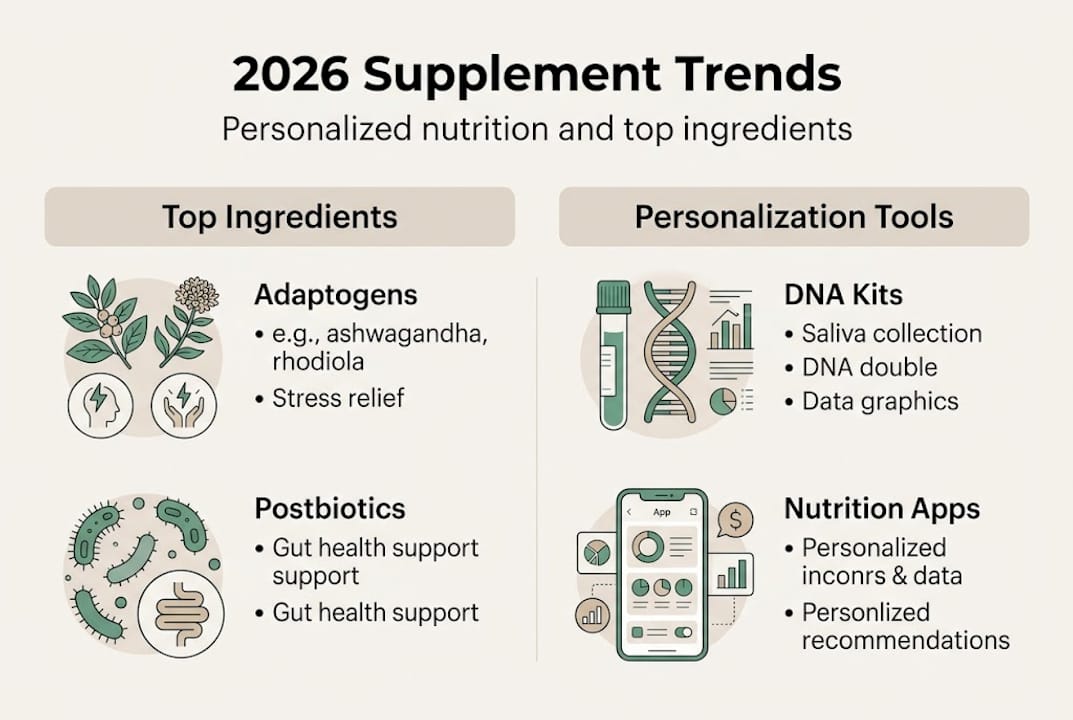
AI platforms now process data from blood panels, DNA tests, gut microbiome analyses, and wearable devices to generate supplement recommendations specific to you. Some platforms even adjust recommendations monthly based on how your biomarkers change. This is a fundamentally different approach from buying a bottle because it was featured in a magazine.
Personalized nutrition platforms are expected to grow 15% annually through 2027, reflecting how quickly consumers are adopting this model. That growth rate outpaces almost every other segment in the health and wellness industry.
At-home testing has become the entry point for most people. Kits that analyze your omega-3 index, vitamin D levels, or gut bacteria composition cost a fraction of what clinical testing did just three years ago. Once you have your data, platforms match you with specific products and supplement dosage tips that align with your actual deficiencies rather than assumed ones.
For a deeper look at how this works, what is personalized nutrition is well explained by Healthline’s editorial team with practical examples.
The advantages of smart, personalized supplements for daily wellness include:
-
Eliminates guesswork by grounding choices in real biomarker data
-
Reduces risk of over-supplementing nutrients you already get from food
-
Increases cost efficiency by targeting only what your body actually needs
-
Improves adherence because the routine feels relevant and purposeful
-
Allows for dynamic adjustments as your health goals evolve
-
Supports better outcomes in areas like energy, sleep, and body composition
The shift toward personalization also means that generic “best supplement” lists are becoming less useful. What works brilliantly for one person may be redundant or even counterproductive for another. The smarter move is to know your numbers first, then build your stack around them.
Critical considerations: Safety, regulation, and effectiveness
Personalization adds potential, but evaluating safety and quality remains the bedrock for smart choices.
The 2026 supplement market is more innovative than ever, but innovation also creates new risks. More products means more opportunity for low-quality or even unsafe formulations to slip through. Knowing how to evaluate what you’re buying protects both your health and your wallet.
Third-party testing and regulatory certifications will be major purchase drivers in 2026, according to the American Council for Supplement Quality. This reflects a broader cultural shift: consumers are no longer taking brand claims at face value.
Here’s how to verify supplement safety and quality step by step:
-
Check for third-party certification from organizations like NSF International, USP, or Informed Sport. These certifications confirm that what’s on the label is actually in the bottle.
-
Review the ingredient list for proprietary blends that hide individual dosages. Transparent labels list exact amounts for every active ingredient.
-
Search for clinical evidence supporting the specific form and dose used in the product, not just the ingredient category in general.
-
Confirm manufacturing standards by looking for GMP (Good Manufacturing Practice) certification on the brand’s website or label.
-
Cross-reference with regulatory databases like the FDA supplement rules page to check for any warning letters or recalls associated with the brand.
-
Use trusted ranking platforms for evaluating supplement rankings to see how products perform against verified criteria.
For specialized health goals, such as protecting vision as you age, checking eye health supplements against these same criteria is just as important as it is for fitness-focused products.
“A supplement without third-party testing is essentially a promise with no accountability. In 2026, that’s no longer good enough.”
Pro Tip: Red flags to watch for include vague claims like “supports total wellness,” missing contact information on the brand’s website, no third-party seal, and prices that seem too good for the quality being promised. If a product checks multiple red flag boxes, move on.
The bottom line is that safety and effectiveness are not opposites of innovation. The best products in 2026 manage to be both cutting-edge and rigorously tested. That combination is what you should be holding out for.
How to apply 2026 supplement trends for your personal goals
With safety and quality squared away, it’s time to translate these insights into action for your own wellness goals.
Knowing about trends is only useful if you can actually apply them. The good news is that putting 2026’s supplement science to work doesn’t require a complete overhaul of your routine. It requires a smarter, more intentional approach.
Customizing supplement routines leads to higher adherence and better results, according to the Journal of Nutritional Science. That finding alone should motivate you to stop following generic stacks and start building one that fits your actual life.
Here’s how to get started:
-
Audit your current stack and identify any products without solid clinical backing or third-party certification
-
Get baseline testing through an at-home kit or your doctor to understand your actual nutrient status before adding anything new
-
Prioritize one goal at a time, whether that’s better sleep, improved recovery, or metabolic support, rather than trying to address everything at once
-
Research the specific form of each ingredient, not just the ingredient itself (for example, magnesium glycinate absorbs differently than magnesium oxide)
-
Track your results over a minimum of 8 to 12 weeks before deciding whether a product is working for you
-
Revisit your stack quarterly as your goals and biomarkers change
For practical guidance on adding supplements effectively, Verywell Fit offers a solid framework for building a routine without overcomplicating it.
If you’re working toward body composition goals specifically, reading a detailed lean bliss review can show you how to evaluate a weight management product against the criteria we’ve outlined here.
Pro Tip: Before making any significant changes to your supplement routine, especially if you take prescription medications or have a chronic health condition, consult with a registered dietitian or your primary care physician. Interactions between supplements and medications are more common than most people expect, and a professional can help you avoid them.
The goal isn’t to take more supplements. It’s to take the right ones, at the right doses, for the right reasons. That mindset shift is what separates people who see real results from those who just spend money on bottles that collect dust.
Our perspective: The real story behind supplement trends in 2026
Before you rush to adopt every hot new supplement trend, let’s consider what really matters.
We’ve reviewed hundreds of supplements across every major category, and the pattern we see repeatedly is this: the loudest trends rarely deliver the most consistent results. Fads move fast in this industry. A new ingredient gets one promising study, social media amplifies it into a miracle cure, and suddenly everyone is buying it before the second study even exists.
The uncomfortable truth is that most people don’t need the newest, most exotic ingredient on the market. They need the fundamentals done well. Consistent sleep, adequate protein, vitamin D if you’re deficient, and omega-3s if your diet lacks fatty fish. These aren’t exciting, but they’re what the evidence actually supports for the majority of people.
That said, 2026 does bring genuinely meaningful advances. Postbiotics and liposomal delivery formats represent real improvements in how your body absorbs and uses nutrients. Personalized testing removes guesswork that used to cost people both money and results. These are worth paying attention to.
The skill we encourage you to develop is understanding supplement evaluations critically. Ask who funded the study. Ask whether the dose in the product matches the dose used in the research. Ask whether the benefit shown in a lab setting translates to real-world outcomes. These questions will save you more money and frustration than any trend guide ever could.
Chase quality, not novelty. That’s the real story of 2026.
Discover top-rated supplements for 2026
Ready to take the next step with supplements? Here’s how we can help.
At RankOfSupplements.com, we apply the same critical lens you’ve read about throughout this article to every product we review. Our rankings are built on ingredient transparency, clinical evidence, third-party testing, and real-world user outcomes. We don’t promote products because they’re trending. We rank them because they perform.
Whether you’re focused on vision support and want to explore top eye health supplements, looking to build strength with a product like the Nutrigo Lab Strength review, or supporting your digestive health with something like the fibre select review, our platform gives you the evidence-backed context to shop with confidence. You’ve done the learning. Now let us help you find the products that actually deliver on it.
Frequently asked questions
What are the most popular dietary supplement categories in 2026?
Adaptogens and postbiotics are emerging as top categories in 2026, alongside personalized multi-nutrient blends that are tailored to individual biomarker profiles.
How can I be sure a supplement is safe and effective in 2026?
Look for third-party testing and certifications from recognized bodies like NSF or USP, and verify that the product’s ingredient dosages match those used in published clinical research.
Are personalized supplement plans worth it?
Yes, especially when guided by actual biomarker data. Customizing supplement routines has been shown to improve both adherence and measurable health outcomes compared to generic protocols.
Where can I find unbiased reviews of new supplements?
Platforms that use transparent ranking criteria, cite peer-reviewed research, and disclose their review methodology are your best resource for unbiased supplement information in a market flooded with sponsored content.