
TL;DR:
- Vitamins do not directly build muscle but remove physiological barriers that limit training and recovery.
- Supplementing only when deficient supports bodybuilders’ performance without risking toxicity or wasted money.
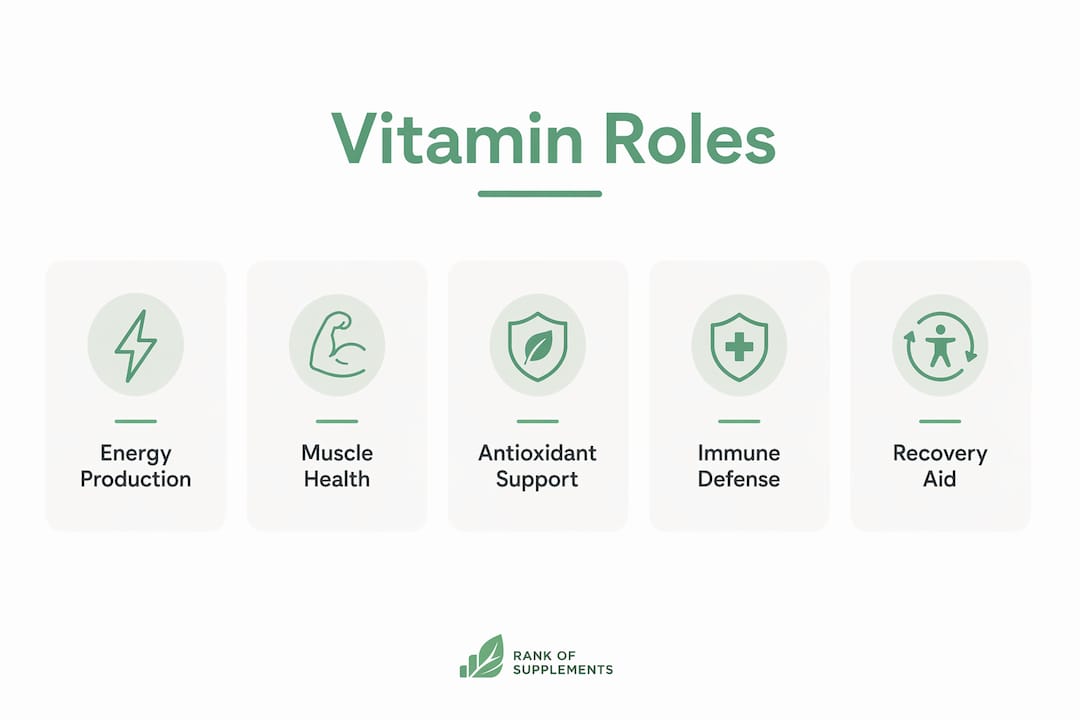
Vitamins are defined as essential micronutrients that regulate energy metabolism, muscle repair, immune function, and muscle contraction in bodybuilders and serious fitness enthusiasts. The role of vitamins in bodybuilding is not to build muscle directly. Vitamins remove physiological bottlenecks that limit how well your training, protein intake, and recovery actually work. Vitamin D, B-complex vitamins, and antioxidants are the most studied in sports nutrition. Research confirms that supplementation works best when it corrects a confirmed deficiency, not when it stacks on top of an already adequate diet. Getting this distinction right saves you money and protects your training adaptations.
What is the role of vitamins in bodybuilding?
Vitamins do not trigger muscle protein synthesis the way leucine or testosterone do. They act as cofactors and regulators, meaning your body cannot complete critical processes without them. When a vitamin is missing or low, performance and recovery suffer. When levels are adequate, adding more rarely helps and can sometimes hurt.
Vitamin D and muscle function
Vitamin D supports muscle health by binding directly to receptors on muscle cells, aiding calcium transport, and improving muscle strength and balance. This mechanism is most pronounced in people who are deficient or in older adults. For a bodybuilder training indoors through winter, low vitamin D is a real limiting factor for force production and contraction speed.

B-complex vitamins and energy metabolism
B vitamins are the workhorses of energy production. Vitamins B1 (thiamine), B2 (riboflavin), B3 (niacin), B6 (pyridoxine), and B12 (cobalamin) all participate in converting carbohydrates, fats, and proteins into usable ATP. B12 is also required for red blood cell synthesis, which directly affects oxygen delivery to working muscles. Vegetarian and vegan bodybuilders face higher B12 deficiency risk because B12 is found almost exclusively in animal products.
Vitamin C, vitamin E, and the antioxidant question
Vitamins C and E neutralize free radicals generated during intense training. That sounds straightforwardly good, but the picture is more complicated. Some oxidative stress from exercise is a required signal for mitochondrial biogenesis and muscle protein synthesis. Blunting that signal with high-dose antioxidants can reduce the training adaptation you are working for. Use antioxidant vitamins to support general health, not to suppress every post-workout inflammatory signal.
Other vitamins worth knowing
Vitamin A supports protein synthesis and immune defense, both relevant to bodybuilders in caloric deficit. Vitamin K2 directs calcium into bones rather than soft tissue, which matters when you are supplementing calcium alongside vitamin D. Magnesium is technically a mineral, not a vitamin, but it works alongside B vitamins in over 300 enzymatic reactions including muscle relaxation and inflammation regulation.
Pro Tip: If you train indoors year-round, check your vitamin D and B12 levels before buying any other supplement. Fixing those two deficiencies delivers more measurable benefit than most performance stacks.
| Vitamin | Primary role in muscle health | Best dietary source |
|---|---|---|
| Vitamin D | Muscle contraction, calcium absorption, strength | Fatty fish, fortified milk, sunlight |
| Vitamin B12 | Red blood cell synthesis, nerve function | Meat, eggs, dairy |
| Vitamin B3 (niacin) | Energy metabolism, muscle regeneration | Chicken, tuna, peanuts |
| Vitamin B6 | Protein metabolism, muscle repair | Salmon, potatoes, bananas |
| Vitamin C | Collagen synthesis, immune support | Citrus, bell peppers, kiwi |
| Vitamin E | Cell membrane protection | Almonds, sunflower seeds, spinach |
| Vitamin A | Protein synthesis, immune defense | Liver, sweet potato, carrots |
What does research say about vitamin supplementation and bodybuilding?
The clinical picture on vitamins for muscle growth is more nuanced than most supplement marketing suggests. The strongest evidence supports correcting deficiencies. The weakest evidence supports loading vitamins on top of an already adequate diet.
56% of athletes have vitamin D insufficiency, particularly in indoor sports and during winter and spring. That statistic means more than half of the bodybuilders training in a gym right now are likely operating below optimal vitamin D status without knowing it.
A meta-analysis of 28 studies with 1,675 participants found that vitamin D plus exercise improves serum levels significantly but shows limited effect on body composition or strength except minor gains in knee extension and handgrip strength. The takeaway is clear: vitamin D supplementation is not a shortcut to bigger lifts, but it does support the foundation that makes training effective.
“Vitamin supplementation in athletes should be individualized, targeting confirmed deficiencies rather than general use, with dietary optimization as the primary approach.”, Vitamin Supplementation in Sports: A Decade of Evidence-Based Insights
One of the more striking recent findings involves B vitamins specifically for recovery. A 2026 randomized controlled trial with 39 men showed that daily supplementation with vitamins B3 and B6 post muscle-damaging exercise produced 29%, 67% increases in muscle stem-cell activity and regeneration markers after 9 days. That is a meaningful signal for bodybuilders who train at high intensity and need faster turnaround between sessions.
The antioxidant story runs in the opposite direction. Excessive antioxidant supplementation can impair beneficial training adaptations related to mitochondrial biogenesis and muscle protein synthesis. High-dose vitamin C and E supplements taken around training may reduce the very cellular signals that drive muscle growth. This does not mean avoiding antioxidants entirely. It means avoiding megadoses timed around your workouts.
Pro Tip: Time your B3 and B6 supplementation for the post-workout window on your hardest training days. The evidence for muscle regeneration markers comes specifically from post-exercise dosing, not general daily use.
A vitamin D3 supplementation study using 2,000 IU daily found it increases serum 25(OH)D but does not significantly change VO2max or jump performance in healthy adults over 8 weeks. Healthy adults with already sufficient levels gain little performance benefit. The benefit is concentrated in those who are deficient.
How to approach vitamin intake for bodybuilding safely
The right starting point is testing, not buying. A simple blood panel covering serum 25(OH)D for vitamin D and serum B12 gives you the two most common deficiency points in athletes. Without that baseline, you are guessing.
- Get tested first. Order a blood panel for serum 25(OH)D, B12, and a complete blood count. Most primary care physicians will run these on request. Knowing your actual levels removes all the guesswork from your supplement decisions.
- Fix your diet before your supplement stack. Fatty fish like salmon and mackerel deliver vitamin D and B12 together. Leafy greens provide B vitamins, vitamin K, and vitamin C. Eggs cover B12, vitamin A, and vitamin D. Whole foods deliver these nutrients alongside co-factors that improve absorption in ways isolated supplements cannot replicate.
- Supplement to correct, not to exceed. If your vitamin D is below optimal, a maintenance dose of 1,000 to 2,000 IU daily is a reasonable starting point for most adults. If you are correcting a significant deficiency, a physician may recommend a higher short-term dose. Do not self-prescribe high doses of fat-soluble vitamins like A, D, E, and K because they accumulate in tissue and can reach toxic levels.
- Account for your training environment and season. Indoor athletes and those in northern latitudes face the highest vitamin D deficiency risk. If you train in a gym year-round and live above 35 degrees latitude, your skin produces almost no vitamin D from october through march. Plan your supplementation around that window.
- Monitor and adjust. Vitamin effects are dose-dependent and tied to ongoing supplementation. Stopping intake causes serum levels to drop and may reverse any benefits gained. Retest every 3 to 6 months if you are actively correcting a deficiency.
Pro Tip: Get 15 to 20 minutes of midday sun exposure on your arms and legs during summer months. This single habit can maintain adequate vitamin D levels without any supplementation cost during the high-UV season.
Supplements vs. whole foods: which wins for vitamin intake?
Whole foods deliver vitamins in a matrix of co-nutrients that improve bioavailability. Vitamin C in an orange comes with bioflavonoids that enhance absorption. Vitamin D in salmon comes with omega-3 fatty acids that support the same anti-inflammatory pathways. An isolated supplement delivers the vitamin alone, which is sometimes enough and sometimes not.
| Factor | Whole foods | Supplements |
|---|---|---|
| Bioavailability | High, enhanced by co-nutrients | Variable, often lower without co-factors |
| Overdose risk | Very low for most vitamins | Real risk with fat-soluble vitamins A, D, E, K |
| Cost | Moderate, part of normal food budget | Adds ongoing cost, especially for quality products |
| Convenience | Requires meal planning and preparation | Easy to dose consistently |
| Best use case | Primary source for all vitamins | Correcting confirmed deficiencies or dietary gaps |
| Antioxidant timing | No timing concerns | High-dose C and E around workouts may blunt adaptation |
Supplements make sense in specific situations. Vegan bodybuilders need B12 supplementation because no plant food provides it reliably. Athletes in northern climates need vitamin D supplementation through winter. Bodybuilders in aggressive caloric deficits may struggle to hit micronutrient targets from food alone. Outside those situations, a well-planned diet covers most vitamin needs without any supplementation.
The importance of vitamins in fitness is real, but the delivery method matters less than the adequacy of intake. A bodybuilder eating salmon, eggs, leafy greens, and colorful vegetables daily is likely covering most bases. The one who eats processed food and trains indoors year-round is not.
One caution worth repeating: fat-soluble vitamins accumulate. Vitamin A toxicity from supplement overuse causes liver damage and bone pain. Vitamin D toxicity from megadosing causes hypercalcemia. These are not theoretical risks. They are documented outcomes from people who assumed more was always better. Pair your antioxidant supplement choices with an understanding of upper tolerable limits.
Key takeaways
Vitamins support bodybuilding performance by correcting physiological deficiencies that limit energy production, muscle repair, and contraction, not by directly building muscle tissue.
| Point | Details |
|---|---|
| Test before supplementing | Get serum 25(OH)D and B12 levels checked before adding any vitamin supplement to your routine. |
| Vitamin D corrects a bottleneck | Deficiency impairs muscle contraction and strength; supplementation helps most when levels are actually low. |
| B3 and B6 aid post-workout repair | Research shows 29%, 67% increases in muscle regeneration markers when taken after muscle-damaging exercise. |
| High-dose antioxidants can backfire | Excess vitamin C and E around training may reduce mitochondrial and muscle protein synthesis signals. |
| Whole foods come first | Dietary sources deliver vitamins with co-nutrients that improve absorption and carry no overdose risk. |
What I have learned from watching bodybuilders get vitamins wrong
The most common mistake I see is treating vitamins like performance enhancers rather than deficiency correctors. A bodybuilder who is already replete in vitamin D will not gain strength from adding 5,000 IU daily. They will just spend money and potentially push their calcium levels in a direction that causes problems. The misconception that more vitamins build more muscle is one of the most persistent and expensive beliefs in sports nutrition.
What actually works is treating vitamins as limiting factors. If something is low, fix it and watch performance improve. If everything is adequate, focus your supplement budget on protein, creatine, and sleep quality. Those three deliver far more return than a cabinet full of vitamin bottles.
The seasonal vitamin D pattern is something I find most bodybuilders completely ignore. You can be perfectly sufficient in august and clinically deficient by january if you train indoors and live in a northern state. The fix is simple: supplement from october through april, retest in spring, and adjust. That cycle costs almost nothing and removes a real physiological drag on your winter training.
The emerging research on B3 and B6 for muscle repair after exercise is genuinely interesting and underreported. Most bodybuilders have never heard of using niacin and pyridoxine specifically in the post-workout window for stem-cell activation. That is a targeted, evidence-backed application that fits the deficiency-correction framework perfectly. It is not about flooding your system. It is about giving specific cellular processes what they need at the right time.
My overall position: vitamins are the foundation, not the ceiling. Get the foundation solid through testing and diet, use supplements surgically where gaps exist, and spend the rest of your energy on training quality and recovery.
matteo
Rankofsupplements can help you choose the right vitamins
Choosing the right vitamin supplements for your training goals requires more than reading a label. Rankofsupplements provides science-backed reviews and rankings built specifically for bodybuilders and serious fitness enthusiasts who want evidence, not marketing claims.
The Supplement Ingredient Library at Rankofsupplements breaks down every major vitamin and micronutrient with clinical context, so you understand exactly what you are taking and why. For bodybuilders ready to build a complete supplement routine, the top-rated supplement reviews cover the formulations that actually deliver results. You can also use the supplement routine guide to structure your vitamin intake around your training cycle safely and effectively.
FAQ
What vitamins are most important for bodybuilders?
Vitamin D, B12, B3, and B6 are the most critical for bodybuilders. Vitamin D supports muscle contraction and strength, while B12 enables red blood cell synthesis, and B3 plus B6 enhance post-exercise muscle regeneration.
Does vitamin D supplementation improve strength?
Vitamin D supplementation improves strength primarily in people who are deficient. A meta-analysis of 28 studies found minor gains in knee extension and handgrip strength, but no significant body composition changes in already-sufficient adults.
Can too many vitamins hurt your training?
Yes. Excessive antioxidant vitamins like high-dose C and E can impair mitochondrial biogenesis and muscle protein synthesis signals, reducing the adaptation benefit of your training sessions.
Should vegan bodybuilders supplement differently?
Vegan bodybuilders must supplement B12 because no reliable plant source provides it. They also face higher vitamin D deficiency risk and should monitor iron and zinc levels, which affect energy and immune function in strength training.
How often should bodybuilders test their vitamin levels?
Test serum 25(OH)D and B12 at least once per year, or every 3 to 6 months if you are actively correcting a deficiency. Retesting confirms whether your current dose is working before you continue spending on supplements.
Recommended reading:
- Top Vitamins for Fitness: Your Evidence-Based Guide, the companion article to this one, covering specific dosing and timing protocols
- Best Immune Support Supplements 2026, the top-ranked immune and micronutrient supplements for athletes
- Nutrigo Lab Strength Review, a specific product built for bodybuilders that includes key vitamin cofactors
- How to Cycle Supplements for Bodybuilding in 2026, a practical guide to avoiding over-supplementation and structuring your vitamin intake across training phases