
You’ve probably heard that taking supplements at precisely the right time can make or break your results. The truth is, total daily intake matters far more than exact timing for most supplements. While strategic timing can enhance effects by 10-20%, consistency and meeting your daily nutritional needs deliver the foundation for real progress. This guide cuts through the confusion to reveal when supplement timing genuinely matters and when you can relax about the clock, helping you optimize your routine without unnecessary stress.
Table of Contents
-
Understanding Supplement Timing: Why It Matters And Common Misconceptions
-
Supplement Timing For Different Types Of Supplements And Goals
-
Personalizing Your Supplement Timing Strategy: Practical Tips And Common Pitfalls
Key takeaways
Point Details
Timing enhances effects modestly Strategic supplement timing can improve results by 10-20% compared to total daily intake
Post-workout protein accelerates recovery Protein and carbohydrates immediately after exercise speed muscle repair and reduce fatigue
Individual factors determine optimal timing Exercise type, personal metabolism, and specific goals influence ideal supplement schedules
Consistency outweighs precision Regular daily intake of supplements matters more than hitting exact timing windows
Fat-soluble vitamins need dietary fat Taking vitamins A, D, E, and K with meals containing fats maximizes absorption
Understanding supplement timing: why it matters and common misconceptions
Supplement timing refers to when you consume your supplements relative to meals, workouts, or specific times of day to maximize their effectiveness. Many fitness enthusiasts believe strict timing windows are critical for results, creating anxiety about taking protein within 30 minutes post-workout or consuming creatine at exactly the right moment. This belief stems from early sports nutrition research that emphasized narrow anabolic windows.
However, current evidence reveals a different picture. Total daily intake is far more important than precise timing for most supplements. Your body doesn’t operate on such rigid schedules. Meeting your daily protein, vitamin, and mineral requirements consistently delivers far greater benefits than obsessing over exact timing.
That said, timing isn’t completely irrelevant. Research suggests optimizing when you take certain supplements can enhance their effects by approximately 10-20%. This modest improvement matters most to competitive athletes and dedicated fitness enthusiasts pursuing peak performance. For general wellness and moderate fitness goals, consistency trumps timing every time.
The importance of timing varies dramatically by supplement type and individual goal. Some supplements like caffeine show clear performance benefits when timed strategically before exercise. Others like creatine benefit slightly from post-workout timing but work effectively whenever you take them daily. Understanding these nuances helps you focus energy on timing strategies that actually move the needle while avoiding unnecessary complexity.
Pro Tip: Start by ensuring you meet total daily supplement requirements before worrying about precise timing. Once your baseline intake is solid, experiment with strategic timing for specific performance goals.
Key factors influencing supplement timing effectiveness:
-
Your individual metabolism and digestion speed
-
Type and intensity of physical activity
-
Specific health or performance goals
-
Supplement formulation and bioavailability
-
Meal composition and nutrient interactions
Exploring exercise supplements synergy reveals how combining supplements strategically can amplify benefits beyond timing alone. The synergistic effects between nutrients often matter more than when you consume individual supplements.
“Timing represents one variable in a complex equation. Total intake, quality, consistency, training stimulus, sleep, and stress management all contribute more significantly to results than hitting precise supplement windows.”
Timing supplements for exercise recovery and performance
The strongest evidence for supplement timing benefits centers on exercise recovery and performance enhancement. Protein and carbohydrate supplementation immediately after exercise significantly expedited muscle recovery, glycogen recovery, and decreased tiredness compared to delayed supplementation. This immediate post-workout window capitalizes on your body’s heightened nutrient sensitivity following training stress.
Your muscles are primed to absorb nutrients rapidly after exercise. Consuming 20-40 grams of protein plus 30-60 grams of carbohydrates within 30-60 minutes post-workout accelerates muscle protein synthesis and replenishes glycogen stores. This timing advantage becomes more pronounced after intense or prolonged training sessions that deplete muscle glycogen and create significant muscle damage.

However, the impact of supplementation timing on recovery differs depending on the individual and exercise type. Strength training, endurance exercise, and high-intensity interval training create different metabolic demands and recovery needs. Powerlifters benefit most from immediate protein intake to support muscle repair, while endurance athletes prioritize rapid carbohydrate replenishment to restore glycogen.
Pre-workout nutrition timing also influences performance. Consuming a balanced meal containing carbohydrates and moderate protein 2-4 hours before training provides sustained energy without digestive discomfort. This timing allows digestion to progress while ensuring nutrients are available during your workout.
Exercise-specific timing considerations:
-
Strength training: Prioritize protein within 1-2 hours post-workout for optimal muscle protein synthesis
-
Endurance exercise: Focus on carbohydrate timing immediately post-exercise to restore glycogen rapidly
-
High-intensity interval training: Combine protein and carbohydrates post-workout to address both muscle damage and glycogen depletion
-
Morning fasted training: Consider branched-chain amino acids before exercise to minimize muscle breakdown
Pro Tip: If you train early morning or can’t eat immediately post-workout, consuming a protein-rich meal within 2-3 hours still delivers substantial recovery benefits. The anabolic window is wider than once believed.
Supplements with exercise-specific timing nuances include caffeine, beta-alanine, citrulline, and sodium bicarbonate. Caffeine peaks in your bloodstream 30-60 minutes after consumption, making pre-workout timing critical for performance benefits. Beta-alanine works through chronic supplementation but may enhance performance slightly more when timed around training.
Supplement Optimal Exercise Timing Primary Benefit Timing Sensitivity
Whey Protein 0-2 hours post-workout Muscle protein synthesis Moderate
Carbohydrates 0-1 hour post-workout Glycogen replenishment High for endurance
Caffeine 30-60 min pre-workout Power output, focus High
Creatine Post-workout with carbs Strength, power Low
Beta-Alanine Pre or post-workout Buffering capacity Low
Products like Nutrigo Lab Strength combine multiple performance-enhancing ingredients formulated for pre-workout timing. Understanding how exercise supplements synergy works helps you stack supplements effectively around training for maximum benefit.
Supplement timing for different types of supplements and goals
Beyond exercise timing, different supplement classes have unique timing considerations that influence absorption and effectiveness. Understanding these nuances helps you create a practical supplementation schedule aligned with your wellness goals.
Protein supplements work effectively throughout the day, but timing around workouts and before bed offers specific advantages. Post-workout protein accelerates recovery as discussed earlier. Consuming 20-30 grams of slow-digesting casein protein before bed supports overnight muscle protein synthesis, particularly beneficial for muscle building goals.
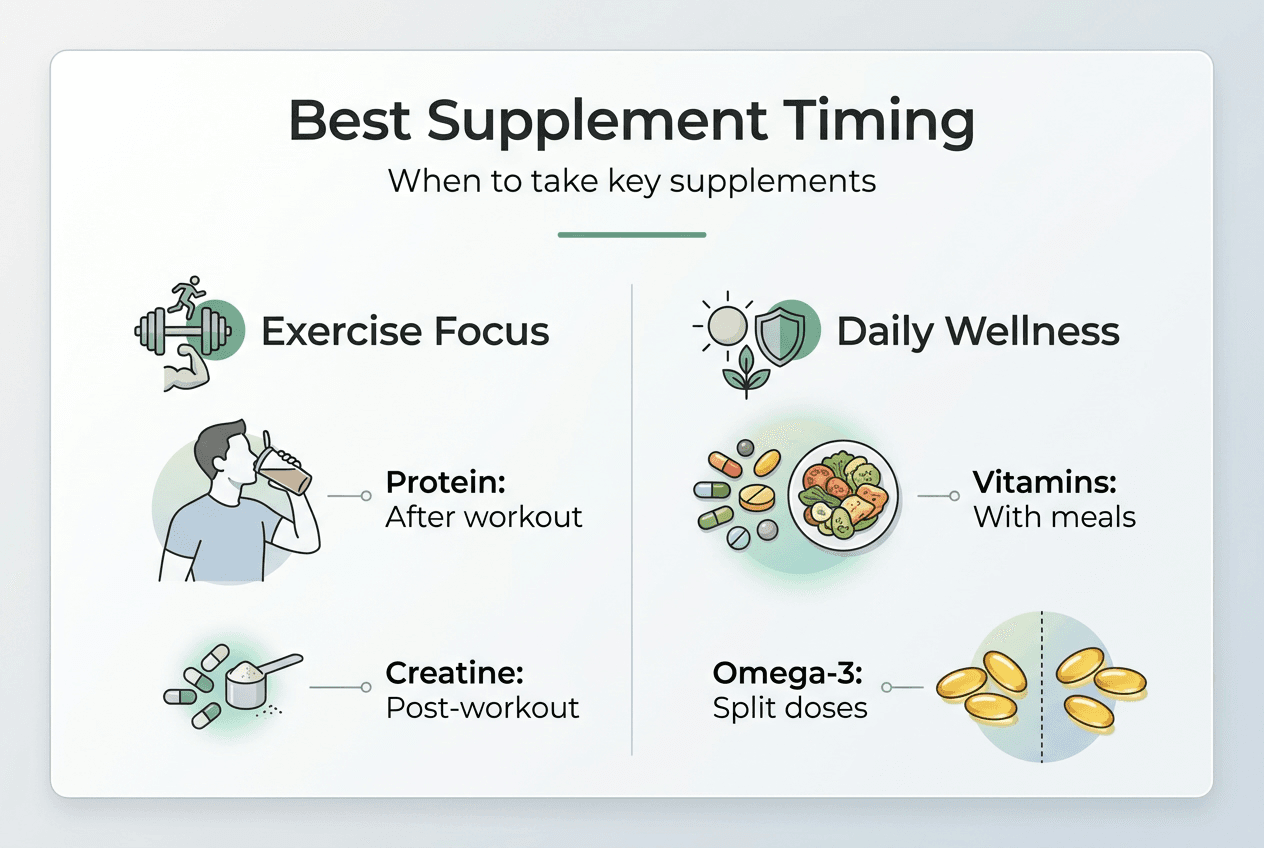
Creatine absorption increases 25-50% when taken with carbohydrates with small timing differences post-workout superior to pre-workout. However, creatine’s primary mechanism involves saturating muscle stores through consistent daily intake. Taking 3-5 grams daily matters far more than precise timing. The modest timing advantage from post-workout consumption with carbs provides a slight edge but isn’t essential.
Fat-soluble vitamins including A, D, E, and K require dietary fat for optimal absorption. Fat-soluble vitamins are better absorbed with dietary fat meals, while water-soluble vitamins can be taken anytime with consistency. Taking your multivitamin or vitamin D supplement with breakfast or dinner that includes healthy fats ensures better bioavailability.
Water-soluble vitamins like B-complex and vitamin C don’t require specific meal timing. Your body absorbs these vitamins efficiently and excretes excess amounts. Taking them consistently at the same time daily, whether morning or evening, supports steady nutrient levels.
Caffeine timing significantly impacts its performance benefits. Consuming caffeine 30-60 minutes before exercise improves power output, endurance, and mental focus. For general energy and alertness, morning or early afternoon timing prevents sleep disruption. Avoid caffeine within 6 hours of bedtime to maintain sleep quality.
Omega-3 fatty acids from fish oil absorb better with meals containing fats. Splitting your daily dose between morning and evening meals with healthy fats maximizes absorption while minimizing fishy aftertaste or digestive discomfort.
Supplement Type Best Timing Reasoning Critical Factor
Protein Post-workout or before bed Muscle recovery and synthesis Total daily intake
Creatine Post-workout with carbs Enhanced absorption Daily consistency
Fat-soluble vitamins With fatty meals Requires fat for absorption Meal composition
Water-soluble vitamins Anytime consistently No special requirements Daily consistency
Caffeine 30-60 min pre-exercise Peak blood levels Avoid evening
Omega-3 With meals containing fat Better absorption Split dosing
Pro Tip: Match supplement timing with your existing meal and exercise schedule rather than creating complicated routines. Consistency with a simple plan beats perfect timing you can’t maintain.
For immune support and general wellness, supplements like vitamin C, zinc, and elderberry work through consistent daily intake rather than strategic timing. Explore immune support supplements to find options that fit your routine. Similarly, eye health supplements containing lutein and zeaxanthin benefit from being taken with meals but don’t require precise timing.
The key insight across supplement types is that timing offers incremental improvements on top of consistent, adequate daily intake. Focus first on meeting your nutritional needs reliably, then optimize timing for specific performance or absorption advantages.
Personalizing your supplement timing strategy: practical tips and common pitfalls
Translating supplement timing research into your daily routine requires personalization based on your unique needs, schedule, and goals. Generic timing protocols ignore individual variation that significantly impacts supplement effectiveness.
Supplement timing impact varies by individual and sport-specific demands, supporting personalized strategies over generic protocols. Your metabolism, training intensity, body composition goals, and even genetics influence how your body responds to supplement timing.
Steps to customize your supplement timing strategy:
-
Track your training schedule and identify consistent workout times to anchor supplement timing
-
Monitor how you feel and perform with different timing approaches over 2-4 weeks
-
Adjust timing based on digestive comfort, energy levels, and recovery quality
-
Prioritize timing for supplements with strongest evidence like post-workout protein and pre-workout caffeine
-
Simplify timing for supplements where consistency matters more than precision
-
Align supplement schedule with existing meals and routines for better adherence
Common pitfalls to avoid when implementing supplement timing strategies include overcomplicating your routine to the point where you can’t maintain consistency. A simple plan you follow daily beats a perfect plan you abandon after two weeks. Many people also fall into the trap of obsessing over timing while neglecting total daily intake, which remains the primary driver of results.
Another frequent mistake involves rigidly following timing protocols without considering individual responses. If taking pre-workout caffeine causes jitters or sleep problems, the theoretical performance benefit doesn’t justify the negative effects. Listen to your body and adjust accordingly.
Pro Tip: Start with timing just 2-3 key supplements around your workouts, then expand only if you can maintain consistency. Most people benefit more from reliably taking supplements daily than from perfectly timing five different products.
Ignoring the interaction between supplement timing and meal timing creates missed opportunities. Taking iron supplements with calcium-rich foods reduces iron absorption, while vitamin C enhances it. Understanding these interactions helps you space supplements appropriately throughout the day.
Avoid the pitfall of expecting dramatic results from timing optimization alone. The 10-20% potential improvement from strategic timing requires solid fundamentals in place first. Training consistency, adequate sleep, stress management, and total nutritional intake matter far more than supplement timing.
“Personalized supplementation acknowledges that individual variation in metabolism, training status, and goals means no single timing protocol works optimally for everyone. Experiment systematically to discover what enhances your specific performance and wellness outcomes.”
For those pursuing body composition goals, products like Fat Burn Active may benefit from specific timing relative to meals and exercise. Similarly, fiber supplements work best when timed to support digestion and satiety throughout the day.
The most successful supplement timing strategies balance evidence-based principles with practical sustainability. You need a plan you can actually follow consistently while traveling, during busy work periods, and throughout different life phases. Flexibility within a structured framework delivers better long-term results than rigid perfection.
Explore top-rated supplements to enhance your routine
Now that you understand how to optimize supplement timing for your goals, choosing high-quality products becomes the next step. We’ve carefully reviewed and ranked supplements across categories to help you make informed decisions that complement your timing strategies.
Our 2026 supplement rankings highlight products that deliver genuine results backed by scientific evidence and user experiences. Whether you’re focused on post-workout recovery, immune support, or overall wellness, we’ve identified top performers in each category. Explore our detailed Nutrigo Lab Strength review for pre-workout performance enhancement, browse immune support supplements for year-round wellness, or check out Fat Burn Active for body composition goals. Each review provides transparent analysis to help you select supplements that align with your timing strategy and deliver real value.
Frequently asked questions
What is the best time to take protein supplements?
The best time is immediately after exercise when your muscles are primed for nutrient absorption and protein synthesis rates are elevated. However, total daily protein intake matters far more than precise timing. Consuming adequate protein throughout the day, including a serving before bed, supports muscle recovery and growth effectively. If you miss the post-workout window, eating protein within 2-3 hours still delivers substantial benefits.
Does creatine need to be taken at a specific time?
Creatine timing impacts absorption modestly, with post-workout consumption alongside carbohydrates slightly enhancing uptake by 25-50%. However, creatine works primarily by saturating muscle stores through consistent daily intake of 3-5 grams. Taking it at the same time daily matters far more than hitting a specific window. Whether you consume creatine morning, pre-workout, or post-workout, maintaining daily consistency delivers the performance and strength benefits.
How should I time vitamins for best absorption?
Take fat-soluble vitamins including A, D, E, and K with meals containing dietary fats to maximize absorption, as these vitamins require fat for proper uptake. Water-soluble vitamins like B-complex and vitamin C can be taken anytime since they absorb efficiently without special requirements. The most important factor is taking vitamins consistently at the same time daily to maintain steady nutrient levels and build a sustainable habit.
Can caffeine improve my workout if timed correctly?
Consuming caffeine 30-60 minutes before exercise significantly improves power output, endurance performance, and mental focus as blood caffeine levels peak during this window. Optimal doses range around 3-6 mg per kilogram of body weight for performance benefits, though individual tolerance varies. Timing matters critically for caffeine since taking it too early reduces exercise benefits, while consuming it too late can disrupt sleep quality and recovery.