
Navigating the supplement market feels overwhelming when countless products promise dramatic weight loss or rapid muscle gains. Without rigorous research, you risk wasting money on ineffective formulas or compromising your health with unsafe ingredients. This guide equips you with a systematic, evidence-based approach to evaluate supplements confidently, ensuring your choices align with your fitness and wellness goals while prioritizing safety and efficacy.
Table of Contents
-
Prerequisites: What You Need Before Starting Your Supplement Research
-
Step 1: Identify Your Goals And Relevant Supplement Categories
-
Discover Trusted Reviews And Rankings For Effective Supplements
Key takeaways
Point Details
Evidence-based research protects your health Verify supplement claims through peer-reviewed studies and third-party certifications to avoid unsafe or ineffective products.
Define clear goals first Identify specific objectives like fat loss or muscle gain to focus your research on relevant supplement categories.
Prioritize quality and transparency Check for third-party testing, full ingredient disclosure, and documented safety data before purchasing any supplement.
Monitor effects and consult professionals Track adverse symptoms, discuss supplement plans with healthcare providers, and cycle products to maintain safety and effectiveness.
Avoid common research mistakes Never trust proprietary blends, always verify certifications, and cross-check marketing claims against credible scientific evidence.
Introduction to supplement research
The supplement industry targets health-conscious consumers with bold promises, yet over 90 different ingredients populate weight-loss formulas with limited proven efficacy and documented safety concerns. This market saturation creates serious challenges for anyone seeking genuine results.
Conflicting claims flood social media and marketing channels, making it nearly impossible to separate science from hype. Many products contain undisclosed ingredients or inaccurate dosages that compromise both safety and effectiveness. Without a structured approach, you’re vulnerable to misinformation that wastes money and potentially harms your health.
A systematic, evidence-based framework transforms this chaos into clarity. Research skills empower you to identify supplements backed by legitimate science rather than empty marketing rhetoric. This approach protects your wellness investment while maximizing your chances of achieving meaningful results.
Before diving into product comparisons, you need foundational tools and knowledge:
-
Access to credible scientific databases and reputable supplement databases for verification
-
Basic understanding of nutrition principles relevant to your fitness goals
-
Awareness of your personal health status and potential medication interactions
-
Critical thinking skills to analyze research beyond surface-level claims
The NIH weight-loss supplements fact sheet serves as an essential starting point for understanding ingredient profiles and safety considerations. Building this foundation prevents costly mistakes and sets you up for informed decision-making throughout your supplement journey.
Prerequisites: what you need before starting your supplement research
Effective supplement research requires more than casual internet browsing. You need specific knowledge foundations and analytical tools to evaluate products accurately and safely.
Start by understanding basic nutrition principles that govern your body’s response to supplementation. Know how macronutrients support muscle growth, how metabolic processes influence fat loss, and how micronutrients contribute to overall wellness. This knowledge helps you recognize realistic claims versus physiological impossibilities.

Access to credible information sources separates quality research from guesswork. Scientific databases like PubMed, Examine.com, and government health resources provide peer-reviewed evidence. Platforms offering detailed supplement reviews with transparent ingredient analysis save you hours of scattered searching.
Your personal health profile significantly impacts supplement safety and effectiveness:
-
Current medications that might interact with supplement ingredients
-
Existing health conditions requiring medical clearance before supplementation
-
Allergies or sensitivities to common supplement components
-
Baseline fitness metrics to track actual progress versus placebo effects
Critical analysis skills matter more than you might expect. Marketing teams craft persuasive narratives around weak evidence or cherry-picked studies. You must evaluate study design, sample sizes, funding sources, and whether results actually support advertised claims. This skepticism protects you from expensive disappointments.
Pro Tip: Create a simple spreadsheet to track supplements you’re researching. Include columns for ingredient doses, scientific evidence strength, third-party certifications, and personal notes. This organized approach prevents confusion when comparing multiple products and helps you spot patterns in quality markers.
With these prerequisites in place, you’re ready to define specific goals that will focus your research efforts on supplements actually relevant to your needs.
Step 1: identify your goals and relevant supplement categories
Vague intentions like “get healthier” lead to random supplement purchases that rarely deliver results. Specific, measurable goals direct your research toward products with proven mechanisms aligned to your objectives.
Define your primary target with precision. “Lose fat” becomes “reduce body fat percentage by 3% over 12 weeks while maintaining muscle mass.” “Build muscle” transforms into “increase lean muscle mass by 4 pounds over 8 weeks with strength training support.” This specificity helps you evaluate whether supplement claims match your actual needs.
Each goal category corresponds to distinct supplement types:
-
Fat loss goals align with thermogenic compounds, metabolic enhancers, and appetite regulators
-
Muscle gain objectives pair with protein supplements, creatine, and amino acid formulas
-
General wellness targets connect to multivitamins, adaptogens, and foundational nutrients
-
Recovery and performance goals match with electrolyte blends, BCAAs, and anti-inflammatory compounds
Some supplements offer overlapping benefits but involve trade-offs worth considering. Caffeine-based thermogenics might accelerate fat loss but could disrupt sleep quality essential for muscle recovery. High-dose protein supports muscle synthesis yet may be unnecessary if your diet already provides adequate amounts. Understanding these nuances prevents wasted spending on redundant products.
Focused research beats broad exploration every time. Once you’ve identified your primary goal, limit initial research to 2-3 supplement categories directly supporting that objective. Explore supplements for fat loss if body composition is your priority, or investigate protein and creatine options when muscle building takes precedence.
Pro Tip: Rank your goals by priority if you have multiple objectives. Address your top priority first with targeted supplementation, then add complementary products only after establishing a solid baseline. This sequential approach prevents overwhelming yourself with too many variables and makes it easier to identify what actually works.
Clear goals transform overwhelming product catalogs into manageable research tasks. Next, you’ll learn how to separate quality supplements from potentially dangerous imposters.
Step 2: assess supplement quality and safety
Product quality varies dramatically across the supplement market, with some manufacturers cutting corners that compromise both safety and effectiveness. Learning to identify quality markers protects your health and investment.
Third-party testing certifications provide independent verification that products contain what labels claim without harmful contaminants. Look for these trusted seals:
-
NSF International certification verifies ingredient accuracy and screens for banned substances
-
USP (United States Pharmacopeia) testing confirms potency, purity, and dissolution standards
-
Informed-Sport certification specifically targets athletes by testing for prohibited performance enhancers
-
ConsumerLab.com approval indicates independent laboratory analysis of product quality
Ingredient transparency separates reputable manufacturers from those hiding behind proprietary formulas. Quality supplements list every ingredient with exact milligram amounts, allowing you to compare doses against research-supported ranges. Proprietary blends that obscure individual ingredient quantities make it impossible to verify effectiveness or safety. Avoid these products regardless of marketing promises.
Safety research requires digging beyond product websites into medical literature. Search ingredient names combined with terms like “adverse effects,” “contraindications,” and “drug interactions.” Pay special attention to documented issues with liver function, cardiovascular effects, or hormonal disruption. Platforms offering information on trusted supplement certifications streamline this verification process.
Red flags that should immediately disqualify a supplement:
-
No third-party testing or certification from recognized organizations
-
Proprietary blends hiding ingredient amounts
-
Unrealistic claims like “lose 30 pounds in 30 days”
-
Missing contact information or unclear manufacturing location
-
Overwhelmingly positive reviews with identical phrasing suggesting fake testimonials
Pro Tip: Check the FDA’s dietary supplement recalls and safety alerts page monthly. Even certified products occasionally face recalls due to contamination or mislabeling. Staying informed about these issues protects you from products that passed initial screening but later revealed problems.
Quality supplements invest in transparency because they have nothing to hide. If a manufacturer resists disclosure or makes verification difficult, that resistance tells you everything you need to know about their priorities.
Once you’ve confirmed a supplement meets quality and safety standards, evaluating the scientific evidence behind its promised benefits becomes your next critical task.
Step 3: evaluate scientific evidence and outcomes
Scientific research separates supplements that deliver measurable results from expensive placebos. Learning to interpret study quality and realistic outcomes prevents disappointment and wasted money.
Understand the biochemical mechanisms behind supplement claims. Protein synthesis for muscle growth requires adequate amino acid availability, which quality protein supplements provide. Thermogenesis for fat loss involves increased metabolic rate and energy expenditure, which certain compounds can modulate. Recognizing these pathways helps you evaluate whether advertised mechanisms actually exist in human physiology.
Dosage matters enormously for supplement effectiveness. Clinical trials establish effective ranges, and products containing significantly less than studied amounts rarely produce results. For example, protein intake of 1.6 to 2.2 g/kg daily supports muscle gain without compromising lean mass. Taking half this amount won’t deliver comparable benefits regardless of product quality.
Realistic expectations prevent frustration and help you stay consistent long enough to see actual results:
-
Creatine typically increases strength by 10-15% over 8-12 weeks when combined with resistance training
-
Protein supplementation supports 2-5 pounds of muscle gain over 2-3 months with adequate training stimulus
-
Thermogenic supplements might enhance fat loss by an additional 1-1.3 kg over 8-12 weeks beyond diet and exercise alone
-
Most supplements require 4-6 weeks of consistent use before measurable changes appear
Supplement Type Primary Mechanism Typical Dose Range Expected Timeline Measurable Outcome
Creatine Monohydrate Enhanced ATP production 5g daily 4-8 weeks 10-15% strength increase
Whey Protein Protein synthesis support 20-40g per serving 8-12 weeks 2-5 lbs muscle gain
Thermogenic Blends Increased metabolic rate Varies by formula 8-12 weeks 1-1.3 kg additional fat loss
BCAAs Reduced muscle breakdown 5-10g around training 6-10 weeks Improved recovery markers
Study design quality significantly impacts whether you should trust research findings. Look for randomized controlled trials with adequate sample sizes (at least 30 participants per group). Check whether studies were conducted on populations similar to you (trained athletes versus sedentary individuals show different responses). Identify funding sources, as manufacturer-sponsored research sometimes shows bias toward positive results.
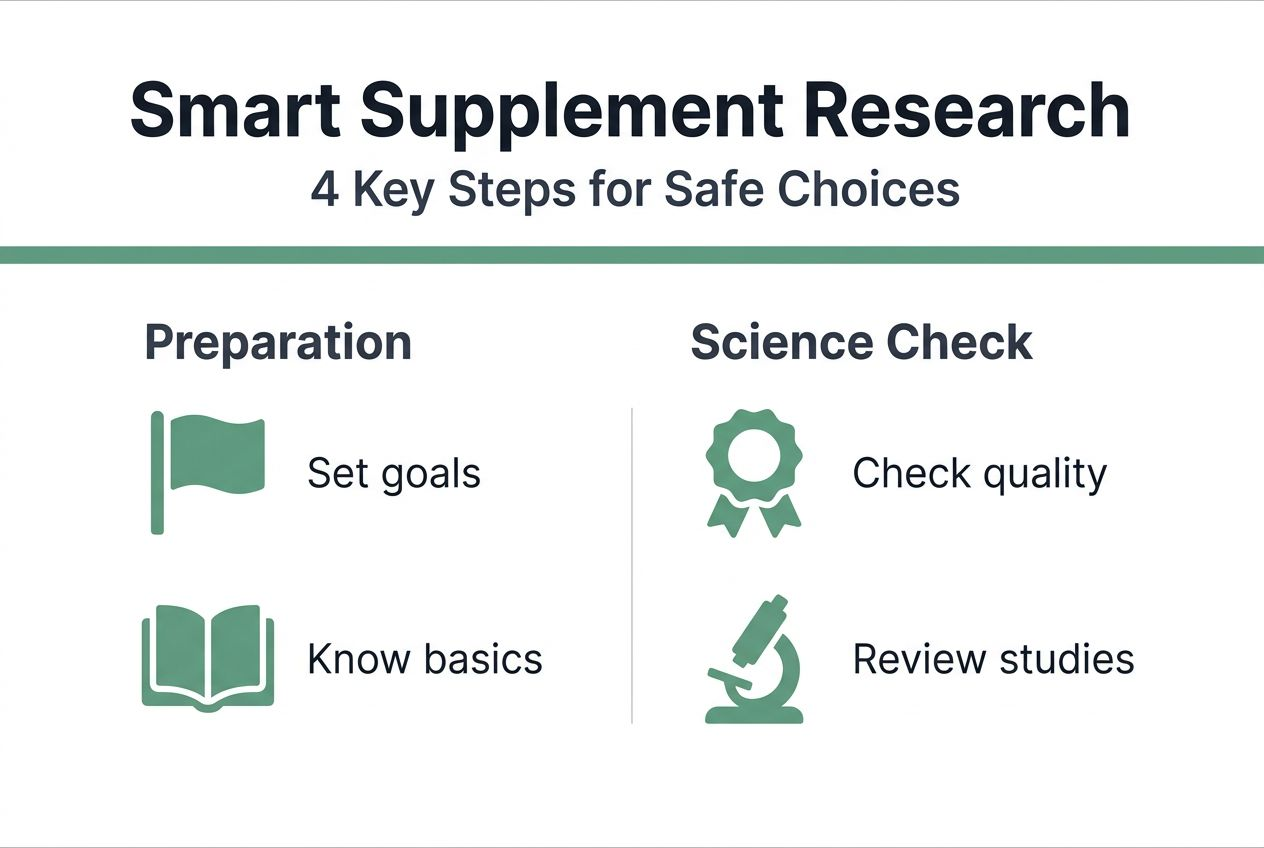
Review research available on clinical data on supplement efficacy to see how quality studies structure their methodologies and report findings. This exposure trains your eye to spot weak evidence and questionable conclusions.
Even supplements backed by solid research require ongoing safety monitoring and professional guidance to optimize results while protecting your health.
Step 4: monitor safety and consult professionals
Starting a supplement regimen represents only the beginning of responsible use. Continuous monitoring and professional input ensure you maintain safety while maximizing benefits.
Track your body’s responses from day one. Note any digestive discomfort, changes in energy levels, sleep quality, mood shifts, or unusual physical symptoms. Many adverse effects appear subtly at first, and early detection prevents more serious complications. Keep a simple log noting supplement timing, doses, and any observations about how you feel.
Healthcare provider consultation becomes essential when:
-
You take prescription medications that might interact with supplement ingredients
-
You manage chronic health conditions like diabetes, hypertension, or hormonal imbalances
-
You’re pregnant, nursing, or planning pregnancy
-
You experience any unexpected symptoms after starting supplementation
Your doctor can order baseline blood work before supplementation and follow-up tests to verify safety. Liver enzymes, kidney function, and hormone levels provide objective data about how your body handles supplement metabolites. This testing catches problems before they become serious.
Supplements can cause gastrointestinal discomfort and nutrient interactions, making professional guidance valuable for risk reduction. Many people underestimate interaction potential, especially when combining multiple supplements or mixing them with medications.
Cycling prevents tolerance buildup that diminishes supplement effectiveness over time. Most stimulant-based products and some hormonal support supplements benefit from periodic breaks. Typical cycling involves 8-12 weeks of use followed by 2-4 weeks off, though specific protocols vary by product type. Platforms offering expert supplement guidance often include cycling recommendations based on ingredient profiles.
Pro Tip: Schedule quarterly check-ins with your healthcare provider specifically to review your supplement regimen. Bring your products or detailed ingredient lists to these appointments. This proactive approach catches potential issues early and demonstrates your commitment to responsible supplementation.
Your body provides constant feedback about supplement effects. Learning to listen to subtle signals like energy patterns, recovery speed, and mood changes helps you optimize your regimen before problems develop.
Immediate action steps if adverse effects occur:
-
Stop the suspect supplement immediately and monitor symptom changes
-
Document exactly what you experienced and when symptoms started
-
Contact your healthcare provider if symptoms persist beyond 24-48 hours or worsen
-
Report serious adverse events to the FDA’s Safety Reporting Portal
For minor issues like mild stomach upset, adjusting timing (taking with food) or reducing dosage often resolves problems. Never push through significant discomfort hoping it will pass. Visit supplement safety warnings for updated information on reported issues and recall notices.
Even careful research sometimes leads to mistakes. Understanding common pitfalls helps you avoid them entirely.
Troubleshooting common mistakes and pitfalls
Research errors cost money and potentially compromise your health. Recognizing these frequent mistakes helps you sidestep them before they cause problems.
Proprietary blends represent the supplement industry’s biggest deception. These formulas list multiple ingredients under a single total weight without revealing individual amounts. You might see “Proprietary Thermogenic Blend (500mg)” containing five ingredients, but you can’t verify if effective doses of any single component exist. Approximately 45% of supplement users remain unaware that third-party certifications matter, leading to unsafe or ineffective purchases.
Common mistakes to avoid:
-
Trusting testimonials over peer-reviewed research evidence
-
Assuming “natural” automatically means safe (many toxic substances occur naturally)
-
Buying based on price alone without verifying quality markers
-
Ignoring potential medication interactions
-
Expecting immediate results that clinical research doesn’t support
Marketing claims frequently distort or exaggerate limited evidence. A single preliminary study on rats becomes “scientifically proven” in advertising copy. Before-and-after photos might show results from extreme diet and exercise changes, not supplement effects alone. Learning to spot these manipulations protects you from deceptive products.
Verification steps that catch misleading claims:
-
Search the ingredient name plus “clinical trials” in Google Scholar or PubMed
-
Check if studies used doses matching the product’s formula
-
Verify whether research subjects resembled your demographics and fitness level
-
Look for replication studies confirming initial findings
-
Read the full study when possible, not just abstracts or manufacturer summaries
Explore discussions of common supplement research mistakes to see real examples of how marketing diverges from science. These case studies illustrate exactly what to watch for during your own evaluation process.
Pro Tip: If a claim sounds too good to be true, it almost certainly is. Supplements enhance results from proper diet and training but never replace these fundamentals. Any product promising dramatic transformations without lifestyle changes should trigger immediate skepticism.
Cross-referencing multiple credible sources reveals consensus about what actually works:
-
Check government health databases for safety information
-
Review independent testing organization reports
-
Examine systematic reviews and meta-analyses that synthesize multiple studies
-
Consult registered dietitians or sports nutritionists for professional perspectives
Redundant verification takes extra time upfront but saves you from expensive mistakes and potential health consequences. Once you understand research best practices and common pitfalls, setting realistic expectations for outcomes helps you evaluate supplement effectiveness accurately.
Expected results and outcome benchmarks
Realistic expectations prevent premature disappointment and help you assess whether supplements deliver promised benefits. Understanding typical timelines and measurable changes keeps you on track.
Most supplements require consistent use for 8-12 weeks before visible results emerge. Your body needs time to accumulate active ingredients, adapt metabolically, and respond to biochemical changes. Expecting transformation after two weeks sets you up for frustration and premature product abandonment.
Measurable benchmarks for common supplement goals:
Goal Category Typical Timeline Expected Change How to Measure
Muscle Gain 8-12 weeks 2-5 lbs lean mass increase Body composition scan, progress photos
Strength Increase 4-8 weeks 10-15% lift capacity improvement Training log rep/weight progression
Fat Loss 8-12 weeks 1-1.3 kg additional reduction Body fat percentage testing
Recovery Speed 6-8 weeks Reduced soreness duration Subjective recovery ratings
Energy Levels 2-4 weeks Improved workout performance Training intensity/duration tracking
Strength gains with creatine supplementation typically manifest as 10-15% increased lifting capacity over 8-12 weeks. You might add 15-20 pounds to your squat or bench press max. These improvements compound with proper training programming and adequate recovery.
Muscle mass increases require patience and consistency. Quality protein supplementation combined with resistance training supports 2-5 pounds of lean tissue gain over 8-12 weeks. This pace seems slow but represents sustainable growth without excess fat accumulation.
Fat loss aided by thermogenic supplements adds approximately 1-1.3 kg to what diet and exercise alone achieve over 8-12 weeks. This modest enhancement becomes significant over longer periods and helps break through plateaus. Remember that supplements enhance results but never replace caloric management and physical activity.
Tracking methods that provide objective progress data:
-
Weekly strength and repetition logs showing progressive overload
-
Monthly body composition assessments via DEXA scan or bioelectrical impedance
-
Circumference measurements of arms, chest, waist, and thighs
-
Progress photos taken under consistent lighting and angles
-
Subjective energy and recovery ratings on a 1-10 scale
Progress rarely follows a straight line. Expect fluctuations week to week due to water retention, sleep quality, stress levels, and hormonal cycles. Focus on 4-week trends rather than daily or weekly variations to assess true supplement impact.
When results fall short of expectations despite consistent use and proper dosing, reassess your foundational habits first. Inadequate sleep, suboptimal nutrition, or insufficient training stimulus limit supplement effectiveness regardless of product quality. Supplements optimize what’s already working, they don’t compensate for broken fundamentals.
Now that you understand the complete research process from goal setting through outcome evaluation, you’re ready to apply these skills with additional resources that streamline your supplement selection journey.
Discover trusted reviews and rankings for effective supplements
Researching supplements from scratch takes countless hours sorting through marketing claims and scientific literature. Streamlining this process with curated, expert-reviewed resources accelerates your path to informed decisions.
Explore comprehensive rankings organized by specific fitness and wellness objectives. Whether you’re targeting muscle growth, fat loss, or overall health optimization, structured reviews eliminate guesswork by highlighting products that meet rigorous quality standards. Transparent ingredient analysis reveals exactly what you’re putting in your body and whether dosages match research-supported ranges.
Third-party certification verification appears directly in product profiles, saving you the step of checking multiple testing organization databases. User feedback aggregated from verified purchasers adds real-world perspective beyond clinical trial data. These combined insights help you identify supplements with proven track records.
Check detailed analysis of popular options like Nutrigo Lab Strength reviews for muscle building support, or explore Flexomore supplement rankings for joint health and recovery. Specialized formulas like Erisil Plus product details demonstrate how targeted research addresses specific wellness needs.
Pro Tip: Bookmark supplement reviews you’re considering and revisit them quarterly. Research evolves constantly, with new studies validating or questioning previous findings. Updated rankings incorporate this emerging evidence, ensuring your decisions reflect current scientific consensus.
Combine these curated resources with professional medical guidance for optimal results. Your healthcare provider’s input about your unique health profile plus expert supplement analysis creates a complete decision-making framework. This dual approach maximizes safety while giving you confidence in your choices.
Frequently asked questions
How long does it typically take to see results from supplements?
Most supplements require 8-12 weeks of consistent use before producing visible results. Your body needs time to accumulate active compounds and trigger physiological adaptations. Strength increases with creatine might appear within 4-6 weeks, while muscle mass gains typically manifest over 10-12 weeks.
What are the most reliable third-party certifications to look for?
NSF International, USP (United States Pharmacopeia), and Informed-Sport represent the gold standard for supplement testing. These organizations conduct independent laboratory analysis verifying ingredient accuracy, purity, and absence of contaminants. ConsumerLab.com provides additional testing and quality verification for numerous supplement categories.
How can I avoid falling for misleading supplement marketing claims?
Cross-reference all claims against peer-reviewed studies found in databases like PubMed or Google Scholar. Avoid products using proprietary blends that hide ingredient amounts. Consult healthcare professionals when evaluating dramatic promises, and remember that legitimate supplements enhance proper diet and training rather than replacing them.
Are there risks in combining multiple supplements?
Combining supplements increases the risk of adverse interactions, excessive nutrient intake, and unexpected side effects. Some ingredients compete for absorption or amplify each other’s effects beyond safe levels. Always inform your healthcare provider about every supplement you take, and introduce new products one at a time to isolate any reactions.
Should I cycle my supplements or take them continuously?
Many supplements benefit from cycling to prevent tolerance and maintain effectiveness. Stimulant-based products and certain hormonal support formulas typically require 8-12 weeks of use followed by 2-4 weeks off. Protein supplements and most vitamins don’t require cycling. Check specific ingredient research to determine appropriate protocols for your regimen.