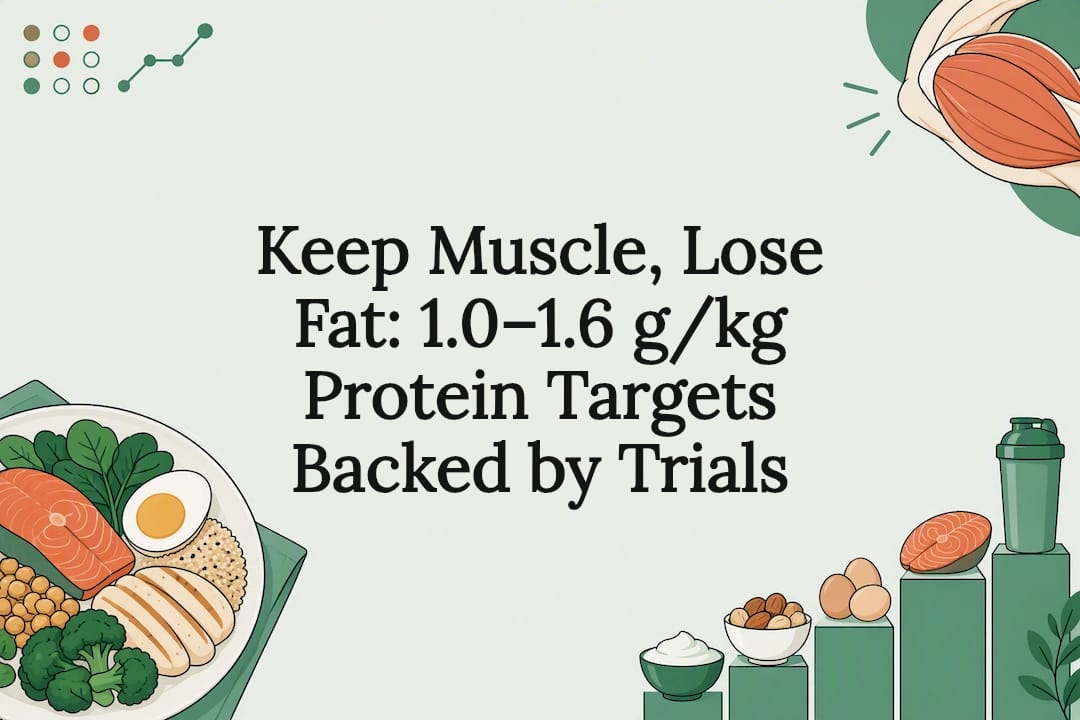
Increasing protein intake while eating fewer calories overall raises satiety, modestly increases the number of calories your body burns digesting food, and protects the muscle you’d otherwise lose along with fat. That combination is what makes higher-protein diets outperform standard-protein diets in most trials. The practical version: aim for roughly 1.0 to 1.6 grams per kilogram of reference body weight daily, split into doses of 20 to 30 grams per meal. Everything below explains why those numbers work and how to hit them without overhauling your entire diet.
TL;DR:
- Consuming 1.0 to 1.6 grams of protein per kilogram of reference weight daily can modestly improve weight loss outcomes, especially when spread across three to four meals.
- Protein’s higher thermic effect, burning 20 to 30% of its calories during digestion, contributes extra calorie expenditure compared to fats and carbs.
- Adequate protein intake helps preserve muscle mass during calorie restriction, preventing the drop in resting metabolic rate and reducing weight regain risk.
- Most clinical evidence indicates safe consumption for healthy adults, but individuals with kidney disease or metabolic disorders should consult a healthcare professional before increasing intake.
- Achieving the target is easiest with nutrient-dense foods like chicken, eggs, Greek yogurt, and legumes, while supplements serve as practical options for convenience or specific needs.
Table of Contents
- How protein supports weight loss at the cellular level
- What the clinical research actually shows
- How much protein you actually need and how to calculate it
- Building meals and snacks around your protein target
- Is a high-protein diet safe for everyone?
- A simple three-step plan and one sample day
- Where the evidence still leaves room for judgment
- When a protein supplement actually earns its place
- Sources
- FAQ
How protein supports weight loss at the cellular level
Protein’s edge over carbohydrate and fat starts with something called the thermic effect of food, or diet-induced thermogenesis. Every time you eat, your body spends energy digesting, absorbing, and processing that food. Protein costs more to process than the other two macronutrients by a wide margin.
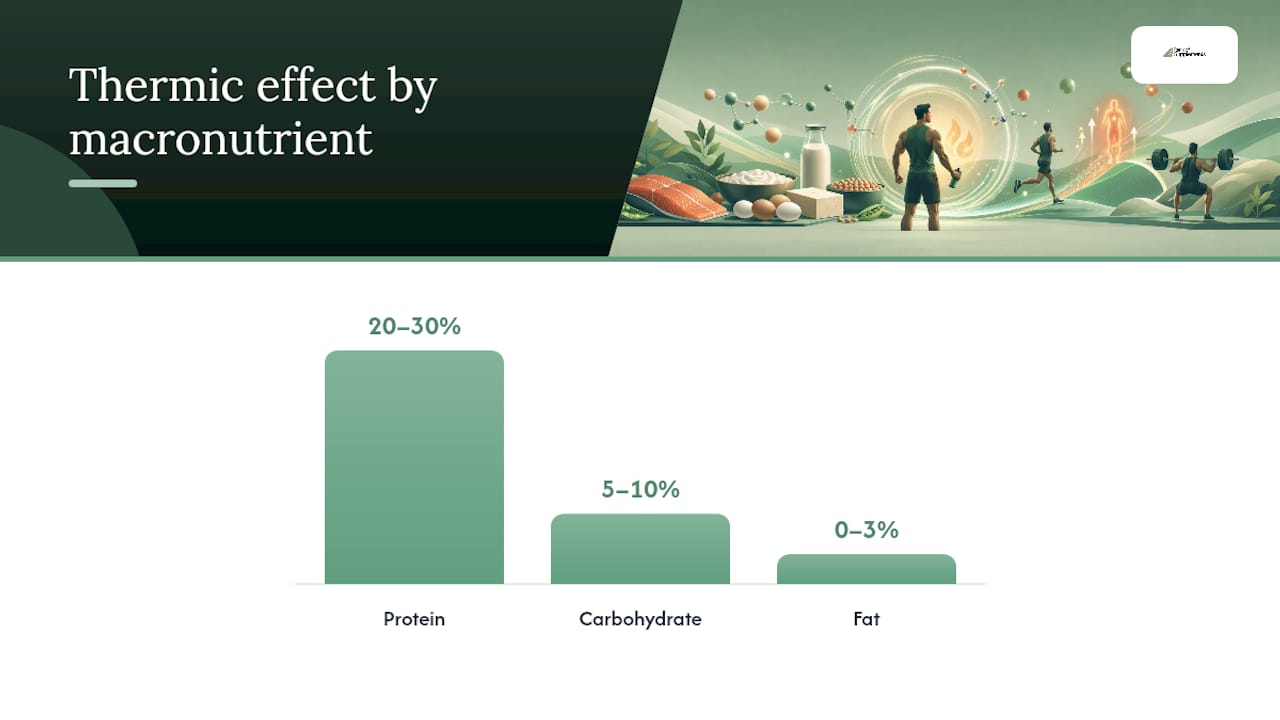
Digesting protein burns off roughly 20 to 30% of its calories as heat, compared to 5 to 10% for carbohydrates and just 0 to 3% for fat. Eat a meal that’s mostly protein, and your body may spend a substantial portion of its calories just processing it. Swap in a fat heavy meal of the same size, and you’d lose almost none of it to digestion.
That gap compounds daily. Someone eating a higher amount of protein daily, compared to a lower amount, could burn an appreciable extra number of calories just from the thermic effect, depending on total intake.
Beyond the calorie math, protein changes your hormones in ways that make dieting less miserable. Digesting protein triggers the release of GLP-1, PYY, and CCK, which are gut hormones that signal fullness to your brain, while simultaneously suppressing ghrelin, the hormone that drives hunger. This is why a high-protein breakfast tends to curb cravings later in the day more effectively than a carb-heavy one of equal calories, even though the acute satiety response can vary somewhat from person to person and study to study.
Protein also feeds into gluconeogenesis, your body’s process of manufacturing glucose from non-carbohydrate sources, and supports ketogenesis during periods of carbohydrate restriction. Both processes help stabilize blood sugar and energy availability, which indirectly keeps hunger in check.
The mechanism that matters most for long-term success, though, is muscle preservation. When you cut calories, your body pulls energy from wherever it can, including muscle tissue, unless you give it enough protein and a reason (via resistance training) to keep that tissue around. Muscle is metabolically active. Lose it, and your resting energy expenditure, the calories you burn just existing, drops with it. That’s the mechanism behind the frustrating experience of regaining weight faster after a diet ends: less muscle means a lower calorie ceiling before you gain fat back.
Here’s the short version of why this matters more than most dieters realize:
- Protein burns more calories to digest than any other macronutrient (20 to 30% versus 5 to 10% for carbs).
- It suppresses ghrelin and raises GLP-1, PYY, and CCK, lowering hunger between meals.
- It preserves lean mass during a calorie deficit, which protects your resting metabolic rate.
- Acute satiety effects are well documented, though long-term appetite adaptation varies by individual.
What the clinical research actually shows
A meta-analysis pooling 37 separate studies found that people on higher-protein diets lost a mean of 1.6 kg more than control groups, with a 95% confidence interval of 1.2 to 2.0 kg. That’s not a dramatic transformation. It’s a real, modest, reproducible edge, and in a field full of overhyped claims, modest and reproducible is worth more than dramatic and inconsistent.
The confidence interval matters here. A range of 1.2 to 2.0 kg means the true effect across the population studied almost certainly falls somewhere within that band, not that everyone loses exactly 1.6 kg.
Longer trials tell a more useful story than short ones. Studies running 6 to 12 months consistently show that higher protein intake preserves lean mass better than standard-protein diets, and some evidence suggests it lowers the risk of regaining weight after the diet ends. That’s the finding dieters actually care about, since a stalled six-week experiment tells you little about maintaining results a year out.
A systematic review and meta-analysis examining protein’s role in body weight management confirmed the same directional finding: diets higher in protein produced modest but consistent weight reductions compared to lower protein, carbohydrate-heavy approaches, with some evidence that people carrying excess weight benefit more than lean individuals do.
Not everyone responds identically. Registry data tracking real-world weight-loss participants found that higher protein intake correlated with leaner body composition and lower BMI, but the benefit was strongest in less active people and appeared to plateau above roughly 1.6 g/kg. People with prediabetes or certain metabolic profiles may see outsized benefits from higher protein intake compared to metabolically healthy individuals, which suggests some room for personalizing targets rather than treating one number as universal.
On safety, the evidence is reassuring for healthy adults. Across the trials reviewed, higher-protein diets have not shown consistent adverse effects on bone density or kidney function in people without preexisting kidney disease. That doesn’t mean protein is risk-free for everyone, a point worth returning to before you push your intake toward the upper end of any range.
How much protein you actually need and how to calculate it
Most successful trials used somewhere between 1.0 and 1.6 grams of protein per kilogram of body weight daily. For people actively losing significant weight, some clinical guidance pushes that higher, recommending 1.2 to 2.0 g/kg reference weight to protect lean tissue during aggressive deficits.
The phrase “reference weight” is doing important work in that sentence. If you calculate your protein target off your actual body weight and you’re carrying significant excess fat, you’ll end up with a number that’s needlessly high, since fat tissue doesn’t require the same protein support that muscle does. The fix is to use an adjusted or reference weight instead of your current weight.
- Estimate your reference weight. If you’re at a healthy weight, use your actual weight. If you’re carrying substantial excess fat, use an adjusted figure that accounts for lean mass rather than total mass, a method Mayo Clinic Health System recommends specifically to avoid over-prescribing protein.
- Multiply by your target range. Use 1.0 to 1.6 g/kg for general fat loss, or 1.2 to 2.0 g/kg if you’re in a significant deficit or doing heavy resistance training.
- Divide across three to four meals. Aim for 20 to 30 grams per meal rather than loading most of your protein into dinner.
That per-meal number isn’t arbitrary. Research on muscle protein synthesis (the process your body uses to repair and build muscle tissue) shows that doses of roughly 25 to 30 grams per meal trigger a stronger synthesis response than the same daily total skewed toward one or two large meals.
Pro Tip: If you eat mostly plant proteins, aim for the higher end of your meal-level target, since plant sources often carry less leucine, the amino acid most responsible for triggering muscle protein synthesis.
There’s also a ceiling worth knowing about. Benefits tend to plateau above roughly 1.6 g/kg, meaning that pushing your intake to 2.5 or 3.0 g/kg “just in case” mostly adds calories without adding proportional benefit.
Building meals and snacks around your protein target
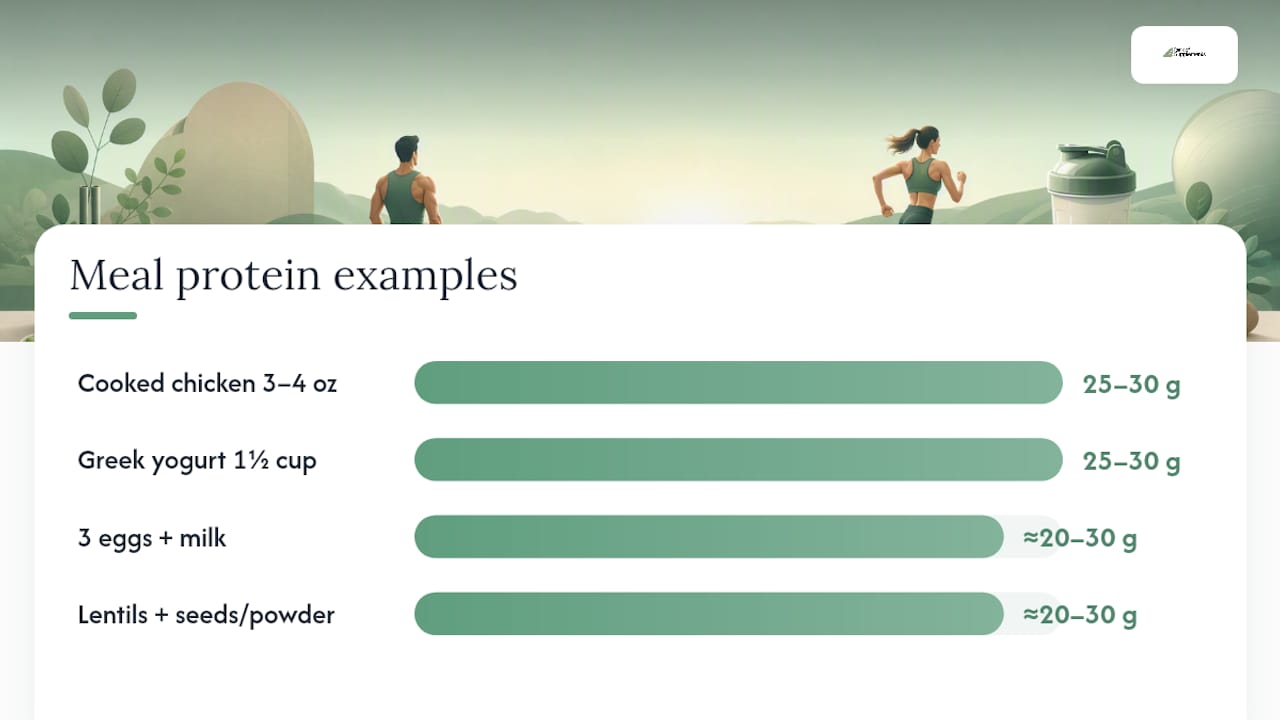
Hitting 20 to 30 grams per meal is easier when you know which foods get you there without a lot of math. A 3 to 4 ounce serving of cooked chicken breast delivers around 25 to 30 grams. A cup and a half of plain Greek yogurt covers similar ground. Three eggs plus a cup of milk gets you close too, and a cup of cooked lentils paired with a handful of pumpkin seeds or a scoop of protein powder closes the gap for a plant-based meal.
Animal and plant proteins aren’t interchangeable gram for gram. Animal sources tend to be richer in leucine and carry a more complete amino acid profile, which is part of why plant-based eaters often need to eat somewhat more total protein, or deliberately combine sources like legumes and grains, to get an equivalent muscle protein synthesis response. That’s not a knock against plant-based eating. It’s just a planning detail that matters if you’re vegetarian or vegan and tracking toward a specific target.
Small swaps add up faster than most people expect:
- Swap a bagel for two eggs plus one egg white and you gain roughly 12 grams of protein for similar calories.
- Add a scoop of unflavored whey or plant protein to oatmeal instead of just sugar and milk.
- Replace a granola bar with a stick of string cheese and a handful of almonds.
- Choose Greek yogurt over regular yogurt for roughly double the protein per cup.
If you enjoy cooking, a plant-forward dish like this 25g plant protein bowl shows how to hit meal-level targets without relying on meat or a shake.
Protein powders and meal replacements earn their place when whole food isn’t practical, not as a replacement for real meals across the board. If you go that route, check for third-party testing and confirm the actual protein grams per serving on the label rather than trusting front-of-package marketing. Our guide on the benefits of protein supplements covers how to evaluate quality in more depth.
Is a high-protein diet safe for everyone?
For healthy adults, the safety data is reassuring. Higher protein diets used in clinical trials have not produced consistent negative effects on bone density or kidney function in people with normal kidney function. That’s an important clarification: normal kidney function is the qualifier, not a blanket clearance for anyone.
Certain groups need a more cautious, individualized approach:
- People with chronic kidney disease should not increase protein intake without direct guidance from a nephrologist or physician, since impaired kidneys process protein waste products less efficiently.
- Pregnant and lactating individuals have distinct protein needs that shift by trimester and should be set with an obstetric provider or registered dietitian, not a general weight-loss target.
- People with certain inherited metabolic disorders may need to avoid high protein intake entirely.
- Older adults often benefit from higher per-kg targets to counter age-related muscle loss, but should have that adjusted with clinical input, especially alongside other health conditions.
- Post-bariatric surgery patients typically need elevated protein targets and regular monitoring, since absorption and appetite both change substantially after surgery.
Anyone using GLP-1 medications or other anti-obesity drugs should coordinate protein targets with their prescriber or a registered dietitian, since these medications sharply reduce appetite and can make it harder to hit protein goals through food alone.
A simple three-step plan and one sample day
Turning all of this into daily habit comes down to three moves, repeated consistently.
- Calculate your target using reference weight, not necessarily your current scale weight, and land somewhere in the 1.0 to 1.6 g/kg range (or 1.2 to 2.0 g/kg if you’re in a larger deficit).
- Spread that total across three to four meals at roughly 20 to 30 grams each instead of front or back loading your day.
- Add resistance training two to four times weekly and track your intake for at least the first few weeks, since most people underestimate their actual protein consumption until they measure it.
A sample day for someone targeting around 120 grams of protein might look like this: breakfast of three eggs and a cup of cottage cheese (around 35 grams), a lunch of grilled chicken over greens with a cup and a half of black beans (around 40 grams), an afternoon snack of Greek yogurt with berries (around 20 grams), and a dinner of salmon with roasted vegetables (around 30 grams). That totals roughly 125 grams, distributed in a pattern that supports muscle protein synthesis throughout the day rather than concentrating it at dinner.
If your appetite is low, lean on liquid options like a shake or smoothie between meals rather than forcing down more solid food. If you’re vegetarian, plan combinations like rice and lentils or hummus and whole grain pita rather than relying on any single plant source. If budget is tight, eggs, canned tuna, cottage cheese, and dried lentils remain some of the cheapest protein sources per gram available. For more ways to combine protein strategy with broader lifestyle changes, see our practical weight loss tips.
Pro Tip: Track your protein intake for just three days using any food logging app before assuming you’re already hitting your target. Most people overestimate by 20 to 30 grams a day.
Where the evidence still leaves room for judgment
The site builds its reviews around published trial data, checking whether a product’s actual dosing matches what clinical research used, rather than what the label implies. Written by matteo, drawing on the clinical literature summarized above. For a plan tailored to your specific health history, a registered dietitian remains the better resource than any protein supplement guide.
— matteo
When a protein supplement actually earns its place
Whole food should do most of the work here, but supplements solve a specific, narrow problem: convenience when you’re traveling, appetite suppression that makes eating enough real food difficult, or protein needs elevated enough by intense training that food alone becomes a lot to chew through, literally.
If you’re weighing whether a shake or bar belongs in your routine, the same rules from this article apply: check the actual grams per serving against the label claim, and look for third-party testing rather than taking a brand’s word for it. This platform exists to provide independent rankings that flag when a popular product is underdosed compared to the clinical research behind its ingredients, rather than ranking by commercial considerations. Our weight loss supplements rankings screen products against those same standards, and our breakdown of protein supplement benefits walks through how to pick a quality option if food alone isn’t closing the gap. Start there if you want a shortlist that’s already been checked against the dosing this article describes.
Sources
The clinical picture here rests on a handful of solid sources. The meta-analysis of 37 studies on protein and weight loss remains the best single estimate of average effect size. The PMC review of mechanisms explains the thermogenesis and hormone pathways in more technical depth. For dosing during significant weight loss, the review on optimal protein during major weight loss lays out the clinical reasoning behind higher per-kg targets, and the systematic review on dietary protein and body weight rounds out the picture with subgroup findings.
This article is general information, not a substitute for advice from a qualified doctor. Consult a qualified healthcare professional about your own circumstances before acting on anything here.
- Clinical Evidence and Mechanisms of High-Protein Diet-Induced Weight Loss
- Meta-analysis (37 studies) on dietary protein and weight loss
FAQ
Does protein really help you lose weight, or is it overhyped?
Higher protein intake produces a modest, measurable weight-loss advantage over standard-protein diets, with pooled trial data showing about 1.6 kg more weight loss on average. It’s not a shortcut around a calorie deficit, but it makes that deficit easier to sustain and protects muscle along the way.
How much protein per day is ideal for fat loss?
Most trials use 1.0 to 1.6 grams per kilogram of reference body weight daily, with some clinical guidance recommending up to 2.0 g/kg for people in significant calorie deficits. Calculate this off an adjusted weight rather than actual weight if you’re carrying substantial excess fat.
Is it better to eat protein at every meal or just once a day?
Spreading protein across three to four meals at 20 to 30 grams each produces a stronger muscle protein synthesis response than concentrating it into one large meal. This distribution pattern also tends to support steadier satiety throughout the day.
Can too much protein hurt your kidneys or bones?
In healthy adults with normal kidney function, higher-protein diets used in clinical trials have not shown consistent harm to bone density or kidney function. People with existing kidney disease or certain metabolic conditions should get an individualized protein target from a physician before increasing intake.
Do protein shakes work as well as whole food for weight loss?
Protein shakes can help close a daily gap when whole food isn’t practical, but they aren’t inherently superior to food sources. Choose one with verified protein content per serving and third-party testing if you decide to add one to your routine.