Dietary fiber is one of the most underused tools in a bodybuilder’s nutrition plan. It stabilizes blood sugar so your energy doesn’t crater mid-session, controls appetite during a cut without sacrificing muscle, and keeps your gut healthy enough to actually absorb the protein and carbs you’re eating. The role of fiber in a bodybuilding diet goes well beyond preventing constipation. Done right, it directly supports body composition.
Here’s what fiber does for you in practical terms:
- Appetite control: Soluble fiber triggers satiety hormones GLP-1 and PYY, reducing hunger between meals without adding significant calories
- Blood sugar stability: Slows digestion so glucose enters the bloodstream gradually, preventing the energy spikes and crashes that wreck training consistency
- Gut microbiome support: Feeds beneficial bacteria, which produce short-chain fatty acids (SCFAs) that reduce inflammation and support insulin sensitivity
- Nutrient absorption: A healthy gut lining absorbs protein, creatine, and micronutrients more efficiently
- Fat loss support: High-fiber foods add volume to meals with fewer calories, making a caloric deficit far more sustainable
The catch: most bodybuilders aren’t hitting even the general population’s recommended intake. Getting this right is simpler than most people think.
Table of Contents
- What soluble, insoluble, and resistant starch fiber actually do
- How fiber shapes your muscle gain and fat loss
- How fiber protects your digestion under a high-protein diet
- How to hit your fiber targets without wrecking your gut
- What experts say about fiber periodization and energy stability
- Key Takeaways
- FAQ
- Recommended from Rankofsupplements
What soluble, insoluble, and resistant starch fiber actually do
Not all fiber works the same way, and treating it as one thing is where most lifters go wrong. There are three categories worth knowing.
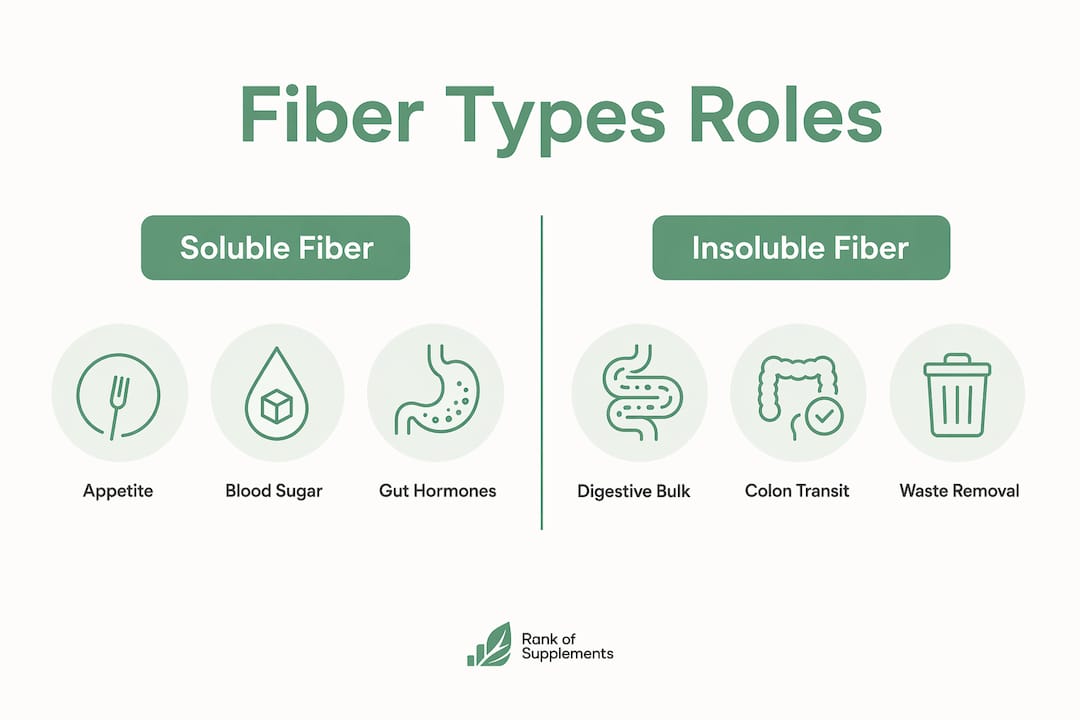
Soluble fiber dissolves in water and forms a gel in your digestive tract. That gel slows gastric emptying, which is exactly why it stabilizes blood sugar and keeps you full longer. It’s also the type most associated with lowering LDL cholesterol. Good sources include oats, barley, apples, beans, and psyllium husk.
Insoluble fiber doesn’t dissolve. It adds bulk to stool and speeds transit through the colon, which is what prevents the constipation that plagues high-protein diets. Whole wheat, bran, and most vegetables are your main sources here.
Resistant starch behaves differently from both. It bypasses digestion in the small intestine and gets fermented by gut bacteria in the colon, producing SCFAs like butyrate that support insulin sensitivity and reduce gut inflammation. Cooked and cooled rice, green bananas, and legumes are the richest sources.
The key insight from recent sports nutrition research is that fiber type diversity matters as much as total grams. Eating only oats every day hits your soluble fiber numbers but leaves insoluble and resistant starch gaps. A varied plant-food base covers all three categories without requiring you to track each type separately.

Pro Tip: Add a serving of cooked and cooled rice or potato to your meal prep. The cooling process converts some digestible starch into resistant starch, giving you a free gut-health upgrade with zero extra effort.
How fiber shapes your muscle gain and fat loss
Fiber doesn’t build muscle directly. What it does is create the metabolic conditions where muscle building and fat loss happen more efficiently.
On the fat loss side, the mechanism is straightforward. Viscous soluble fibers increase GLP-1 and PYY, the hormones that signal fullness to your brain. You eat less without feeling deprived, which is the single hardest part of a sustained cut. High-fiber foods also deliver more food volume per calorie, so a 400-calorie meal with lentils and vegetables feels physically larger than 400 calories of white rice and chicken breast alone.
For muscle gain, the connection runs through blood glucose management. Stable blood sugar means consistent energy availability during training and a steadier anabolic environment post-workout. Erratic glucose swings, common on low-fiber, high-glycemic diets, create cortisol spikes that work against muscle retention. The SCFA production from resistant starch fermentation adds another layer: butyrate and propionate improve insulin sensitivity, which means the carbs and protein you eat post-training get shuttled toward muscle repair more effectively.
A meta-analysis found that intakes of 25 to 29 g of fiber per day were associated with a 17 to 31% reduced risk of coronary heart disease and better body composition outcomes. That’s a meaningful range, and it’s achievable through food alone for most lifters.
| Fiber Mechanism | Effect on Body Composition | Primary Fiber Type |
|---|---|---|
| Slows gastric emptying | Sustained energy, reduced calorie intake | Soluble |
| Increases GLP-1 and PYY | Appetite suppression during cuts | Soluble |
| SCFA production (butyrate) | Improved insulin sensitivity, less inflammation | Resistant starch |
| Stool bulking | Prevents constipation on high-protein diets | Insoluble |
| Gut microbiome diversity | Better nutrient absorption, metabolic health | All types |
How fiber protects your digestion under a high-protein diet
High-protein diets create a specific digestive challenge. Protein fermentation in the colon produces ammonia and other byproducts that, at high concentrations, can irritate the gut lining and shift the microbiome toward less favorable bacteria. Adequate fiber intake directly counteracts this.
When rugby players in one study met both carbohydrate and fiber recommendations, gut microbiota diversity actually increased as protein intake rose. Fiber essentially buffers the negative effects of high protein on the microbiome. For a bodybuilder eating 180 to 220g of protein daily, that’s not a minor point.
The practical digestive benefits for lifters come down to a few key areas:
- Constipation prevention: Insoluble fiber keeps transit time regular, which matters when you’re eating 4 to 6 meals a day and your gut is processing a constant load
- Bloating management: The right balance of fiber types reduces gas and discomfort; the problem usually comes from too much fiber too fast, not fiber itself
- Gut barrier integrity: SCFAs from fermented fiber maintain the intestinal lining, reducing the low-grade inflammation that can impair recovery
- Microbiome stability: Diverse fiber sources feed diverse bacterial species, which collectively improve nutrient absorption and immune function
- Regularity under stress: Training stress, travel, and competition prep all disrupt gut motility; consistent fiber intake provides a stabilizing baseline
The mistake most bodybuilders make is cutting fiber aggressively during a cut to reduce food volume and calories. That’s the exact moment gut health needs the most support, because caloric restriction already stresses the microbiome. A better approach is keeping fiber consistent and adjusting other macros first. For digestion and gut health supplements that complement a fiber-rich diet, Rankofsupplements has an evidence-based guide worth reviewing.

How to hit your fiber targets without wrecking your gut
The biggest practical barrier isn’t knowing you need fiber. It’s adding it without spending the next three days bloated and uncomfortable.
Research from Sports Medicine recommends that athletes consuming less than 20g of fiber daily consider a gradual ramp phase, increasing intake by roughly 5g per week over six weeks until reaching approximately 30g per day (including around 2g of beta-glucan). That pace gives your gut microbiome time to adapt. Jumping from 15g to 40g overnight is a reliable way to gas yourself out of the gym.
Hydration is non-negotiable during this ramp. Fiber absorbs water, and without adequate fluid intake, insoluble fiber can actually worsen constipation rather than prevent it. Aim for at least 3 liters of water daily when you’re actively increasing fiber.
High-fiber foods that fit bodybuilding meal plans:
- Lentils: 15g fiber per cooked cup, plus 18g protein. One of the most efficient dual-purpose foods in the sport
- Black beans: 15g fiber per cup, easy to add to rice bowls and wraps
- Oats: 4g per half-cup dry, plus beta-glucan for blood sugar management
- Broccoli: 5g per cup cooked, low calorie, high micronutrient density
- Chia seeds: 10g per ounce, easy to add to shakes or yogurt
- Avocado: 10g per fruit, mostly soluble fiber with healthy fats
- Sweet potato: 4g per medium potato, good pre-workout carb source
Timing matters. Keep high-fiber meals away from intense training sessions. High-fiber intake before or during high-intensity training can cause gut symptoms that tank performance. Save your biggest fiber meals for post-workout recovery windows or rest days. A pre-workout meal should be relatively low in fiber, around 5g or less, to minimize GI distress.
Pro Tip: If you’re using a fiber supplement like psyllium husk, take it with at least 8 oz of water and at least 90 minutes before training. Fiber supplements taken too close to a session can slow gastric emptying at exactly the wrong time.
Surveys of competitive bodybuilders show average fiber intake below general public health recommendations for men and women. Closing that gap through food first, supplements second, is the sustainable path. The role of vitamins in bodybuilding follows a similar logic: food-first, targeted supplementation where gaps exist.
What experts say about fiber periodization and energy stability
The most sophisticated application of fiber in bodybuilding isn’t about hitting a daily number. It’s about adjusting fiber strategically across your training cycle.
Sports nutrition researchers have formalized the concept of fiber periodization: higher fiber intake during the off-season and hypertrophy phases to support gut health, microbiome diversity, and metabolic function, with a deliberate reduction in the final days before competition to minimize fecal weight and gut bloat. That acute pre-competition reduction is a legitimate short-term tool. The problem is when bodybuilders extend it for weeks or months, which degrades microbiome health and impairs the very nutrient absorption they’re trying to optimize.
The energy stabilization angle is equally underappreciated. Fiber’s most overlooked function is slowing gastric emptying to create predictable, steady nutrient delivery post-training. When digestion is erratic, so is the anabolic window. Consistent fiber intake across training days creates a more repeatable physiological environment, which compounds over weeks and months of training.
One important hormonal note: a controlled feeding study published in PubMed found that a low-fat, high-fiber diet was associated with lower plasma testosterone compared to a high-fat, low-fiber diet. The difference was statistically significant for SHBG-bound testosterone. This doesn’t mean fiber tanks your testosterone. It means the fat-to-fiber ratio in your diet matters, and bodybuilders eating very high fiber with very low fat may want to monitor their fat intake. Adequate dietary fat, around 25 to 35% of total calories, appears to counterbalance any SHBG-related effects.
The practical takeaway from practitioners: don’t chase maximum fiber. Find the intake level that keeps your digestion consistent, your energy stable, and your gut comfortable through training. That number is individual, but for most male bodybuilders it sits somewhere between 30 to 38g per day during the off-season.
Key Takeaways
Dietary fiber is a foundational but frequently neglected variable in bodybuilding nutrition, with direct effects on appetite, energy, gut health, and body composition.
| Point | Details |
|---|---|
| Fiber types each serve a distinct role | Soluble controls appetite and blood sugar; insoluble prevents constipation; resistant starch produces gut-protective SCFAs. |
| Most bodybuilders fall short | Surveys show competitive bodybuilders average below general public health recommendations for men and women. |
| Ramp fiber gradually | Increase intake by roughly 5g per week to avoid bloating and allow microbiome adaptation. |
| Periodize fiber around competition | Use higher fiber off-season for gut health; reduce acutely pre-competition to minimize bloat, but avoid chronic restriction. |
| Time fiber away from hard sessions | Keep pre-workout meals to roughly 5g of fiber or less to prevent GI distress during training. |
FAQ
Why do bodybuilders need fiber?
Fiber regulates appetite, stabilizes blood sugar, and supports the gut microbiome, all of which directly affect training consistency, nutrient absorption, and body composition. High-protein bodybuilding diets especially benefit from adequate fiber to prevent constipation and protect gut barrier function.
Does fiber help with muscle building?
Fiber doesn’t build muscle directly, but it creates the metabolic conditions that support it: stable energy for training, better insulin sensitivity from SCFA production, and improved absorption of the protein and carbs that drive muscle repair.
How much fiber do bodybuilders need a day?
Sports nutrition researchers recommend a daily fiber intake of 25 to 29g for athletes, including some beta-glucan, aligned with general guidelines. Many bodybuilders fall short of these recommendations, particularly during cutting phases.
Does too much fiber lower testosterone?
A controlled study found that a high-fiber, low-fat diet was associated with lower SHBG-bound testosterone compared to a high-fat, low-fiber diet. Maintaining adequate dietary fat intake (25 to 35% of total calories) alongside fiber appears to mitigate this effect.
When should you reduce fiber intake?
Reduce fiber in the days before competition to minimize gut bloat and fecal weight. Also keep fiber low in pre-workout meals to avoid GI distress during high-intensity training. Chronic fiber restriction outside these windows is counterproductive.
Recommended from Rankofsupplements
Related article: Vitamins for Muscle Recovery: What Athletes Need to Know, covers how micronutrients and dietary choices compound to improve training outcomes.
Top list: Best Supplements for Digestion & Gut Health, evidence-ranked options for bodybuilders dealing with high-protein digestive challenges.
Product: Fibre Select Review, a fiber supplement option for lifters who struggle to hit daily targets through food alone.
Guide: Supplement Ingredient Library, deep-dive resource on fiber types, digestive enzymes, and other ingredients that support bodybuilding nutrition.