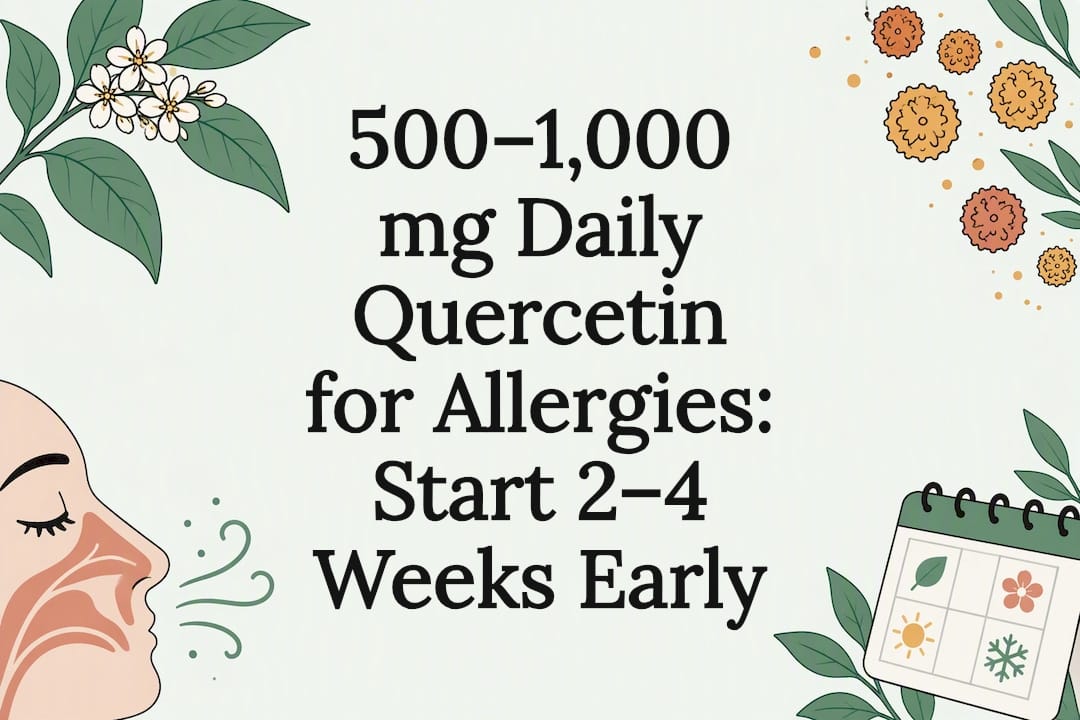
Quercetin can meaningfully ease certain allergy symptoms, particularly ocular itching, sneezing, and mild rhinitis, when used as an adjunct to standard treatment rather than a replacement for it. The evidence base is real but modest: mostly small trials and mechanistic research, not large-scale proof. Anyone on prescription medications or managing kidney or thyroid disease should talk to a clinician before starting, since quercetin interacts with several common drug classes.
TL;DR:
- Formulations that enhance absorption, like phytosome or fenugreek-bound quercetin, can deliver higher bioavailability at lower doses compared to standard capsules.
- Starting quercetin two to four weeks before allergy season and maintaining consistent daily dosing helps achieve full benefits over four to eight weeks.
- Evidence for symptom relief is stronger for eye and sneezing symptoms, with nasal congestion showing less consistent improvement.
- Individuals on blood thinners, blood pressure medications, or with thyroid or kidney issues should consult a doctor prior to use due to potential drug interactions.
- Larger, standardized trials are needed before quercetin can be considered an established treatment, and it works best as an adjunct, not a replacement for conventional therapy.
Table of Contents
- How Quercetin Works Against Allergy Symptoms
- What Human Trials Actually Show About Quercetin And Allergies
- Quercetin Dosage For Allergies: How Much And When To Start
- Quercetin Formulations: Why Absorption Changes Everything
- Is Quercetin Safe? Side Effects And Drug Interactions To Know
- A Step-By-Step Plan For Trying Quercetin Safely
- How Rankofsupplements Researches Ingredients Like Quercetin
- When Quercetin Makes Sense And When It Doesn’t
- Find Vetted Quercetin Formulations Without Guessing At Labels
- Sources
- FAQ
How Quercetin Works Against Allergy Symptoms
Quercetin’s main trick is stopping the allergic cascade before it fully starts. Mast cells are the immune cells that release histamine when they detect an allergen, and quercetin appears to stabilize their membranes, which reduces how readily they degranulate and dump histamine into surrounding tissue. Less degranulation means less of the itching, swelling, and mucus production that make allergy season miserable.
That mast cell effect isn’t the whole story. Research on quercetin’s anti-allergic immune response documents a broader set of actions on the allergic pathway:
- Inhibits release of histamine and leukotrienes, two of the main chemical messengers behind itching, congestion, and airway tightening
- Reduces pro-inflammatory cytokines including IL-4, IL-5, and IL-6, which drive the allergic inflammatory response
- Helps shift the Th1/Th2 immune balance away from the Th2-dominant state associated with allergic disease
- Provides antioxidant activity that may calm inflammation in mucosal tissue lining the eyes, nose, and airways
The Th1/Th2 balance matters more than it sounds. Allergic conditions tend to involve an overactive Th2 response, the branch of the immune system that drives IgE antibody production and eosinophil activity. Nudging that balance back toward Th1 is one reason researchers think quercetin might help across multiple allergy types rather than just one symptom.
Quercetin’s antioxidant role is not just a side note. A systematic review of allergic rhinitis research found reductions in oxidative stress markers like malondialdehyde alongside symptom improvement, suggesting the antioxidant and anti-inflammatory effects work together rather than independently.
Connect this back to actual symptoms and the logic holds up. Ocular itching happens largely because histamine binds to receptors in the conjunctiva, so blocking histamine release upstream should, in theory, reduce that itch before it starts. Sneezing follows a similar path: nerve endings in the nasal mucosa respond to histamine and inflammatory mediators, and quercetin’s suppression of those mediators is the proposed reason some users report fewer sneezing fits within the first couple of weeks.

None of this means quercetin acts like a pharmaceutical antihistamine. Its effects are milder and slower, and the mechanistic case is stronger than the clinical case, which is exactly what the next section digs into.
What Human Trials Actually Show About Quercetin And Allergies
Here’s the honest picture: quercetin has real supporting evidence in humans, but it is not the deep, standalone body of research many product pages imply. Clinical trials showing symptom improvements with quercetin-containing formulations report better symptom scores and reduced ocular symptoms, along with improved quality-of-life measures, but a lot of that data comes from multi-ingredient products rather than quercetin alone.
That distinction changes how you should read the research. A trial testing a blend of quercetin, vitamin C, and bromelain can show a real symptom improvement without proving quercetin caused most of it. A review noting this pattern flagged that multi-ingredient trials confound attribution of effects to quercetin specifically, since vitamin C and bromelain both have their own anti-inflammatory and antihistamine-adjacent properties.
One notable exception involves phospholipid-bound quercetin. A small randomized report on quercetin phytosome supplementation in allergic asthma and rhinitis patients found better symptom scores and less rescue medication use compared with standard therapy alone, cited within the broader anti-allergic immune response review. That’s a meaningful signal, but it’s still a small trial, not a large confirmatory study.
Systematic reviews of quercetin for allergic rhinitis conclude the ingredient shows genuine promise, with documented reductions in oxidative stress markers and improved symptoms in adjunctive use, but researchers consistently call for larger, standardized trials before treating quercetin as an established therapy.
That caveat isn’t boilerplate caution. It reflects a real gap: most quercetin allergy trials run small sample sizes over short timeframes, and formulation differences between studies make it hard to compare dose-response directly.
Putting the evidence together, here’s what a fair reading supports:
- Ocular itching and general eye discomfort show some of the most consistent improvement across small trials
- Sneezing frequency tends to decrease modestly with regular quercetin use
- General rhinitis symptom scores improve in several studies, though effect sizes vary
- Nasal congestion shows the least consistent benefit compared with antihistamine-class drugs
- Quality-of-life scores improve in some trials, likely reflecting the combined effect of fewer symptoms and less rescue medication use
The confidence level here should be described honestly: moderate for eye and sneezing symptoms, lower for congestion, and generally supported more by small trials and mechanistic reasoning than by large randomized confirmations. That’s a meaningfully different claim than “quercetin cures allergies,” and it’s the claim the actual research supports.
Quercetin Dosage For Allergies: How Much And When To Start
Clinical sources commonly report adult dosing often split into two daily doses, with total daily amounts varying depending on formulation and individual tolerance. That split matters because quercetin has a short half-life in the body, and dividing the dose helps maintain steadier blood levels throughout the day rather than one large spike and decline.
Timing before allergy season is where a lot of people get it wrong. Quercetin isn’t a rescue medication like an antihistamine you take when symptoms hit. It works more gradually, stabilizing mast cells over time, which means starting it after your eyes are already itching and your nose is already running is starting too late.
- Start two to four weeks before your typical allergy season begins, based on your personal symptom history or local pollen calendars.
- Take a consistent daily dose, split morning and evening if using 1,000 milligrams total, rather than one large dose.
- Track symptoms weekly using a simple 1 to 10 scale for itching, sneezing, and congestion so you can judge whether it’s working.
- Expect early signals within one to two weeks, with fuller effect building over four to eight weeks of consistent use.
- Continue through the season rather than stopping once symptoms improve, since mast cell stabilization is a maintenance effect, not a one-time fix.
Several trials pair quercetin with vitamin C and bromelain, and there’s a reasonable rationale behind that combination. Vitamin C has its own mild antihistamine-like properties and supports the antioxidant load quercetin is already working on, while bromelain, an enzyme derived from pineapple stems, is thought to improve quercetin absorption and adds its own anti-inflammatory activity. That said, remember the earlier caveat: trials using these combinations make it harder to credit quercetin alone for the results, so temper your expectations accordingly.
Pediatric use, pregnancy, and breastfeeding are areas where the safety data simply isn’t robust enough to give a confident dosing recommendation. If you’re pregnant, nursing, or considering quercetin for a child’s allergies, that’s a conversation for a pediatrician or OB, not a decision to make from a supplement label.
Pro Tip: Set a calendar reminder tied to your region’s typical pollen forecast, not the calendar date, since allergy seasons shift earlier some years. Starting quercetin based on last year’s ragweed bloom date beats guessing from the month alone.

Quercetin Formulations: Why Absorption Changes Everything
Standard, unformulated quercetin has a frustrating problem: your body doesn’t absorb much of it. Quercetin is poorly water-soluble, which limits how much reaches your bloodstream after a typical oral dose, and that low bioavailability is one reason some people take 1,000 milligrams a day and notice little difference.
Formulation technology exists specifically to fix this. Clinical pharmacokinetic research on enhanced-quercetin formulations shows that phytosome preparations, which bind quercetin to lecithin (a phospholipid), and fenugreek galactomannan-enhanced formulations both produce markedly higher serum quercetin levels compared with standard quercetin at the same milligram dose.
What this means practically:
- A phytosome or fenugreek-enhanced product may deliver meaningfully more active quercetin into your bloodstream than a standard capsule at the identical label dose
- Label milligram amounts aren’t directly comparable across formulations, so a 500 milligram standard dose and a 500 milligram phytosome dose are not equivalent in the body
- Products should ideally disclose the specific enhancement technology used, rather than a vague “proprietary absorption blend” claim, so you know what you’re actually buying
- Phytosome and enhanced formulations typically cost more per capsule, which is a real tradeoff against the higher absorption they offer
The bioavailability gap explains why formulation matters more than raw dose for the practical effect you’ll actually feel. An enhanced formulation at a lower milligram count may outperform a much higher dose of standard quercetin. If a label just says “quercetin 500 mg” with no mention of phytosome, lecithin, or galactomannan technology, you’re likely looking at the lower-absorption version, and that’s worth factoring into your expectations before you judge whether it’s “working.”
Is Quercetin Safe? Side Effects And Drug Interactions To Know
Short-term quercetin use in healthy adults has a reassuring safety record: NIH’s Office of Dietary Supplements notes no serious adverse events in clinical trials at commonly studied doses. That’s a meaningfully different statement than “proven safe long-term at any dose,” and the distinction matters for anyone considering months or years of continuous use, where the evidence gets thinner.
Drug interactions are the real safety conversation here, not rare side effects. Quercetin can affect how your liver metabolizes certain medications, and the interaction list includes several drug classes people commonly take alongside allergy management:
- Anticoagulants and blood thinners, where quercetin may alter bleeding risk
- Certain antibiotics, where absorption or metabolism can shift
- Blood pressure medications, since quercetin has mild effects on vascular tone
- Statins, due to shared liver metabolism pathways
- Fexofenadine, an ironic overlap since it’s a common allergy antihistamine itself, with reported interaction effects on absorption
A pharmacist’s caution worth repeating: adding a high-dose natural supplement to a stable medication regimen without oversight can shift drug levels in ways that aren’t obvious until something goes wrong, whether that’s reduced medication effectiveness or an unexpected side effect from higher-than-intended drug exposure.
Special populations need an extra layer of caution. People with kidney disease should be careful because quercetin is processed renally, and impaired kidney function changes clearance. Thyroid dysfunction is another flag, since some research suggests quercetin can interfere with thyroid hormone synthesis at higher doses. Pregnancy and breastfeeding fall into the same “insufficient data, skip it or ask first” category mentioned earlier.
Practical monitoring looks like this: if you’re on any interacting medication, ask your prescriber whether baseline labs make sense before starting, and watch for unusual bruising, changes in blood pressure readings, or any new symptom that could signal a medication level has shifted. If anything feels off, stop the supplement and call your prescriber rather than waiting it out. For a broader look at how supplement labels can mislead on safety claims, this guide to weight loss supplement red flags covers label-reading habits that apply well beyond weight loss products.
A Step-By-Step Plan For Trying Quercetin Safely
Before buying anything, confirm you’re actually dealing with allergies rather than a chronic sinus issue or another condition that mimics allergy symptoms, since quercetin only makes sense as an add-on to a confirmed allergic diagnosis. Review your current medications, prescription and over-the-counter, against the interaction list above, and if anything overlaps, get clinician sign-off before starting.
- Establish a baseline. Score your typical symptoms (itching, sneezing, congestion) on a simple scale for a few days before starting, so you have something real to compare against.
- Choose a formulation deliberately. Decide between standard quercetin and an enhanced phytosome or fenugreek-based product based on your budget and how much absorption matters to your specific situation.
- Start conservatively. Begin at the lower end of the dosing range, around 500 milligrams daily, and increase toward 1,000 milligrams if tolerated and needed.
- Track outcomes weekly. Log symptom scores, how often you reach for rescue antihistamines, and any side effects, rather than relying on a vague sense of “feeling better.”
- Judge results at four to eight weeks. This is a fair window for mast cell stabilization to show a measurable effect, not a few days.
- Know your exit criteria. If there’s no meaningful improvement by eight weeks, or if symptoms worsen, stop and escalate to your prescriber or an allergist rather than continuing indefinitely on faith.
Pro Tip: Keep your symptom log in the same app or notebook you’d use for any medication tracking. Reviewing four weeks of consistent data with your doctor is far more useful than trying to remember “it felt better sometimes.”
How Rankofsupplements Researches Ingredients Like Quercetin
Every ingredient breakdown on Rankofsupplements works from the same evidence-first approach used above: clinical trial data first, mechanistic plausibility second, and marketing claims held to the standard of both.
- Product rankings score formulations against trial-matched dosing, not just label claims
- The ingredient library, including entries on curcumin bioavailability and green tea extract safety, gives readers a way to cross-check other supplement labels the same way this article checked quercetin
- Reviews get updated as new trial data emerges, rather than staying static once published
When Quercetin Makes Sense And When It Doesn’t
Quercetin earns a place in an allergy plan when someone has mild to moderate seasonal symptoms and wants an adjunct that lowers their reliance on daily antihistamines, not a replacement for them. It’s a reasonable trial for someone whose eyes itch every spring and who’s willing to start a few weeks early and track results honestly.
It’s the wrong tool for moderate to severe allergic rhinitis, uncontrolled asthma, or any situation where established treatments like intranasal corticosteroids or prescription antihistamines are already the appropriate first-line therapy. Quercetin’s evidence base doesn’t support swapping out proven pharmacology for a supplement, and anyone tempted to do that, particularly with asthma involved, should talk to an allergist first. The interaction risks covered earlier aren’t theoretical either; if you’re on blood thinners, blood pressure medication, or statins, that clinician conversation comes before the first capsule, not after.
— matteo
Find Vetted Quercetin Formulations Without Guessing At Labels
This platform exists to help identify formulations, doses, and brands that align with clinical research, rather than relying on products labeled “clinically studied” without dose details. Reviews assess label claims in relation to dosing used in trials and note when products appear underdosed compared to published research.
The immune support supplements category breaks down formulation type, third-party testing status, and how each product’s quercetin dose compares with what clinical trials actually used, so you’re not left converting milligrams between phytosome and standard versions on your own. If you’re building a broader wellness routine alongside allergy management, the general health supplements guide covers the same evidence-first scoring for other categories.
Talk to your doctor first if you’re on any interacting medication, then use those pages to compare formulations before you buy, not after.
This article is general information, not a substitute for advice from a qualified doctor. Consult a qualified healthcare professional about your own circumstances before acting on anything here.
Sources
- Quercetin and Its Anti-Allergic Immune Response (PMC review, 2016)
- Clinical trials showing symptom improvements with quercetin-containing formulations
- Dietary Supplements in the Time of COVID-19 - Consumer (NIH ODS)
- Clinical pharmacokinetic studies on enhanced-quercetin formulations
FAQ
Does Taking Quercetin Help With Allergies?
Yes, for many people it helps as an adjunct, particularly for ocular itching, sneezing, and mild rhinitis symptoms, based on small trials and mechanistic research on mast cell stabilization. It works best alongside existing allergy management, not as a standalone replacement for it.
Can Quercetin Replace Zyrtec Or Other Antihistamines?
No, quercetin shouldn’t replace prescription or over-the-counter antihistamines for moderate to severe symptoms, since its effect is milder and builds gradually rather than blocking histamine receptors immediately the way antihistamines do. It fits better as a supplement alongside those treatments, used to potentially reduce how often you need rescue medication.
What Natural Remedies Help With Allergies Besides Quercetin?
Vitamin C and bromelain are commonly paired with quercetin in trials, and both have their own mild anti-inflammatory properties that may add to symptom relief. Saline nasal rinses and local honey are popular home remedies, though the evidence behind local honey specifically is much weaker than the mechanistic case for quercetin.
How Fast Does Quercetin Work For Allergy Symptoms?
Some people notice early changes within one to two weeks, but the fuller effect typically builds over four to eight weeks of consistent daily use, since quercetin works by gradually stabilizing mast cells rather than blocking an active histamine reaction. Starting two to four weeks before your allergy season begins gives it time to build that effect before symptoms peak.
What’s The Right Quercetin Dosage For Allergies?
Clinical sources commonly cite 500 to 1,000 milligrams daily, often split into two 500 milligram doses, based on clinical trial data on quercetin formulations. The right amount depends partly on formulation, since phytosome and fenugreek-enhanced versions absorb better at the same milligram dose than standard quercetin.