
Most fitness enthusiasts assume plant-based supplements are a compromise. You get the clean conscience but sacrifice the results. That assumption is increasingly hard to defend. Plant-based proteins can support muscle protein synthesis and athletic performance when properly formulated, and the science backing this up has grown substantially in recent years. This guide breaks down what plant-based supplements actually are, how they compare to animal-based options, and exactly how to use them for muscle building, weight loss, and long-term health.
Table of Contents
Key Takeaways
Point Details
Comparable muscle gains Plant-based blends match animal proteins for strength and muscle-building when properly formulated.
Supports weight loss Fiber-rich plant supplements promote satiety and greater fat loss when paired with training.
Broader health benefits Plant-based supplementation is linked to lower risk of heart disease, diabetes, and inflammation.
Bioavailability strategies matter Blending sources and smart processing maximizes nutrient absorption from plant-based products.
Ideal for health-conscious Plant options suit vegans, allergy-prone, and those seeking sustainable, low-inflammation nutrition.
What makes a supplement plant-based?
A plant-based supplement is any product derived entirely from plant sources, with no animal-derived ingredients. That sounds simple, but the range of sources is surprisingly wide. From legumes and grains to algae and fungi, the plant kingdom delivers a remarkable variety of bioactive compounds.
Common plant-based supplement sources include:
-
Pea protein, high in branched-chain amino acids, easy to digest
-
Brown rice protein, pairs well with pea to create a complete amino acid profile
-
Soy protein, one of the most studied plant proteins, with a complete amino acid profile on its own
-
Hemp protein, contains omega-3 fatty acids alongside protein
-
Algae (spirulina, chlorella), rich in protein, iron, and omega-3s
-
Mushrooms, valued for immune-modulating beta-glucans and adaptogenic properties
These sources cover protein powders, omega-3 supplements, B vitamins, antioxidants, and minerals. The key difference from animal-based supplements is the presence of fiber, polyphenols, and phytonutrients that animal products simply don’t contain. Plant-based nutrients are associated with reduced cardiovascular disease risk, lower cancer rates, and better metabolic health outcomes.
For athletes interested in how these ingredients interact with training, understanding supplement synergy for peak performance can help you stack plant-based options more effectively. If you want to go deeper on sourcing quality, organic supplement health benefits are worth reviewing before you buy.
Comparing plant-based and animal-based supplements
This is where most people expect plant-based options to fall short. The reality is more nuanced than the old “whey is king” narrative suggests.
Category Plant-based Animal-based
Muscle protein synthesis (acute) Slightly lower (single source) Higher (whey)
Muscle protein synthesis (chronic) Equal with adequate dosing Equal
Strength gains (RCTs) No significant difference No significant difference
Inflammation markers Lower Higher
Digestive tolerance Generally better Varies (lactose issues)
Fiber and polyphenols Present Absent
The critical insight here is the difference between acute and chronic effects. A single dose of pea protein may stimulate slightly less muscle protein synthesis than whey. But over weeks and months of consistent training and adequate intake, plant protein blends of 30g or more with roughly 2.5g of leucine match whey in muscle building outcomes.
Strength results tell the same story. Meta-analyses confirm no significant difference in strength or endurance gains between plant and animal protein groups in resistance-trained individuals. One trial even found that a fava bean hydrolysate increased leg strength 2.35kg more than placebo.
For a detailed look at how specific products perform, the plant-based vs. animal protein comparison at RankOfSupplements.com offers a practical breakdown. And for the underlying plant protein synthesis research, the evidence is clear: formulation matters more than source.
Health benefits of plant-based supplementation
Performance is one piece of the picture. The broader health case for plant-based supplements is arguably even stronger.
Key health benefits backed by research:
-
Reduced cardiovascular disease risk through lower LDL cholesterol and blood pressure
-
Lower cancer risk linked to higher fiber and polyphenol intake
-
Better blood sugar regulation reducing type 2 diabetes risk
-
Lower systemic inflammation due to antioxidant-rich plant compounds
-
Improved gut microbiome diversity from prebiotic fiber content
“Plant-based diets and supplements are associated with reduced risks of cardiovascular disease, cancer, type 2 diabetes, and all-cause mortality, due to anti-inflammatory effects, lower oxidative stress, and higher fiber and polyphenol content.”
These aren’t marginal benefits. They represent meaningful reductions in the leading causes of death in the United States. The anti-inflammatory advantage is particularly relevant for athletes, since chronic low-grade inflammation slows recovery and impairs adaptation over time.

For those focused on immune health, immune support supplements that use mushroom extracts and plant-based antioxidants are worth exploring. The antioxidant role in health is well-documented and directly relevant to both recovery and long-term wellness.
Weight loss and muscle building: how plant-based supplements deliver
Let’s get specific about the two goals most readers are chasing.
For weight loss, plant-based supplements have a structural advantage: fiber. Fiber slows gastric emptying, increases satiety hormones, and reduces overall calorie intake without requiring willpower. Plant-based supplements promote satiety through fiber and support greater fat mass reductions compared to omnivorous diets when combined with resistance training.
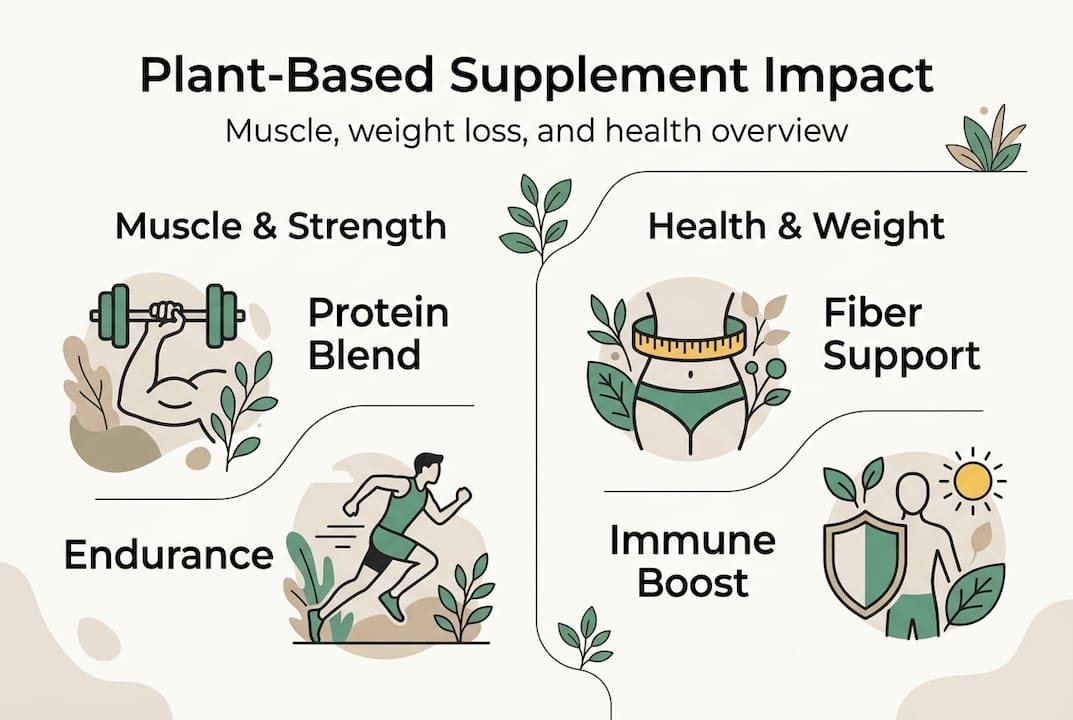
Outcome Vegan/plant-based Omnivorous
Fat mass reduction Greater Moderate
Muscle retention Preserved with resistance training Preserved
Satiety scores Higher (fiber effect) Lower
Inflammation post-diet Lower Higher
For muscle building, the formula is straightforward. Hit your protein targets (1.6 to 2.0g per kg of body weight daily), prioritize blended sources, and train consistently. No compromise in strength gains appears in RCTs comparing plant and animal protein groups in trained athletes.
Pro Tip: Combine pea and rice protein in a roughly 70/30 ratio to create a complete amino acid profile that rivals whey. Add a leucine supplement if your blend falls short of 2.5g per serving.
Practical steps to maximize results:
-
Choose a blended plant protein with at least 25 to 30g of protein per serving
-
Time your protein intake within 2 hours post-workout
-
Pair with a fiber-based supplement to support satiety and gut health
-
Consider adding a weight-loss supplement with plant-based thermogenics for accelerated fat loss
-
Track weekly intake to ensure you’re hitting protein and calorie targets consistently
For additional support, mushroom-based weight loss supplements offer adaptogenic and metabolic benefits that complement a plant-based protocol.
Absorption, blends, and maximizing bioavailability
Getting results from plant-based supplements isn’t just about what you take. It’s about how your body absorbs them.
Plant foods contain natural compounds like phytates and oxalates that can bind to minerals and reduce absorption. This is a real limitation, but it’s manageable with the right strategies.
How to improve plant-based nutrient absorption:
-
Blend protein sources (pea plus rice, soy plus hemp) to cover all essential amino acids
-
Ferment or sprout ingredients before processing to reduce phytate content
-
Pair fat-soluble nutrients (vitamins D, E, K) with healthy fats for better uptake
-
Cook or process legumes and grains to break down antinutrients
-
Choose algae-based omega-3s over flaxseed for direct EPA and DHA delivery
Bioavailability of plant nutrients can be enhanced through blending, fermentation, and fat pairing. In some cases, plant calcium and algae-derived omega-3s show absorption rates comparable or superior to synthetic or animal-derived forms.
Pro Tip: If you’re taking a plant-based vitamin D supplement, choose D3 derived from lichen rather than D2. Lichen-based D3 raises serum levels more effectively and is fully vegan.
For those managing eye health or cardiovascular wellness, omega-3s and plant-based blends that use algae-derived DHA are worth prioritizing. The bioavailability in supplements guide from Longevity Botanicals explains the science behind absorption in accessible terms.
Who should (and shouldn’t) choose plant-based supplements?
No supplement fits every person. Here’s a clear breakdown of who benefits most and where caution is warranted.
Best candidates for plant-based supplements:
-
Vegans and vegetarians who need to fill dietary gaps
-
Athletes with dairy allergies or lactose intolerance
-
Anyone managing chronic inflammation or cardiovascular risk
-
People prioritizing long-term health alongside performance
-
Those who respond poorly to whey (bloating, digestive discomfort)
When you may need additional supplementation:
“Plant-based supplements are suitable for vegans and athletes avoiding allergens or dairy, but may require strategic supplementation for B12, vitamin D, and omega-3s from algae.”
Vitamin B12 is not found in plant foods in meaningful amounts. Vitamin D3 from lichen is available but not always included in standard plant-based formulas. Algae-based omega-3s provide EPA and DHA directly, unlike flaxseed which requires conversion. These three nutrients deserve specific attention if you’re fully plant-based.
When plant-based supplements may not be optimal:
-
Elite powerlifters or bodybuilders needing maximum acute MPS stimulation may benefit from whey post-workout
-
High-dose antioxidant supplements (vitamin C, E) can blunt training adaptations if taken immediately post-exercise
-
Those with soy allergies need to avoid soy-based proteins and check labels carefully
For immune-specific considerations relevant to vegans, immune considerations for vegans covers the key nutrients and supplement strategies worth knowing.
Explore the best plant-based supplements for your goals
You now have the science. The next step is finding products that actually deliver on it. Not every plant-based supplement on the market is formulated well, and label claims vary widely in quality and honesty.
At RankOfSupplements.com, every review is built on scientific evidence and transparent analysis. Whether you’re focused on plant-based muscle support, looking for a fiber-focused weight management solution, or want to browse the full plant-based supplement rankings across all health goals, you’ll find unbiased, research-backed guidance in one place. Stop guessing and start choosing supplements that are studied for its ability to work for your specific goals.
Frequently asked questions
Can plant-based supplements build muscle as effectively as whey or animal proteins?
Yes. When plant-based blends provide at least 30g of protein with roughly 2.5g of leucine, studies show muscle and strength gains are equal to whey-based products over time.
Are there nutrients plant-based supplements don’t provide?
Yes. Vitamin B12, vitamin D, and omega-3s are the main gaps. Strategic supplementation with algae-based omega-3s and lichen-derived D3 covers most of these needs for vegans and vegetarians.
Do plant-based supplements have better absorption than animal forms?
It depends on the nutrient and formulation. Blending and processing can bring plant nutrient absorption in line with or above animal-derived forms, but single-source plant nutrients are sometimes less bioavailable.
Are plant-based supplements better for overall health?
Research consistently links plant-based supplementation to lower risk of cardiovascular disease and cancer, reduced inflammation, and better long-term metabolic outcomes compared to animal-based alternatives.