
TL;DR:
Personalized supplementation tailors nutrient intake based on individual biology and health data.
Scientific evidence supports targeted benefits for certain biomarkers like blood sugar and inflammation.
Ongoing testing and behavior changes are essential for sustained health improvements.
Most people assume that if a supplement works for their gym partner or their coworker, it should work for them too. That assumption is costing people money, time, and real health progress. A 12-week biomarker-guided study found that personalized supplementation reduced inflammatory markers in ways that generic protocols simply cannot replicate. The science of matching nutrients to your unique biology is moving fast, and understanding it gives you a serious edge. This guide breaks down what personalized supplementation actually is, how it works in practice, and what the evidence honestly says about its effectiveness.
Table of Contents
-
How personalized supplementation works: Key methods and data sources
-
Does personalized supplementation actually work? Evidence and limitations
-
Who benefits most and when is personalized supplementation right for you?
-
A reality check: What most people miss about personalized supplementation
Key Takeaways
Point Details
Personalization explained Supplement plans can be tailored to your biology and goals using modern testing and analysis.
Evidence is emerging Clinical studies show benefits for inflammation and blood sugar, though broad wellness claims are unproven.
Limitations exist Genetic tests alone have limited value and healthy basics like diet remain essential.
Best for targeted needs Those with specific health goals or lab findings may benefit most from personalization.
Quality and advice matter Choose evidence-backed options and seek professional input for the safest results.
What is personalized supplementation?
Personalized supplementation means adapting your nutrient intake to fit your specific biology, health goals, and lifestyle rather than following a one-size-fits-all formula. Think of it as the difference between wearing a tailored suit and grabbing something off the rack. Both cover you, but only one actually fits.
At its core, personalized supplementation pulls from several data sources to build a plan that makes sense for you. These typically include:
-
Blood biomarkers: Levels of vitamin D, iron, B12, inflammatory markers, and blood sugar indicators
-
Genetic variants: Specific gene mutations that affect how your body absorbs or uses certain nutrients
-
Health history: Existing conditions, medications, and past deficiencies
-
Lifestyle factors: Diet quality, exercise habits, sleep, and stress levels
-
Health goals: Whether you are targeting energy, recovery, weight management, or immune function
This is very different from picking up a multivitamin because it was on sale. Generic supplement routines assume average absorption, average needs, and average goals. Personalized plans challenge all three of those assumptions.
Areas where the evidence is growing include inflammatory marker reduction, blood sugar regulation, and targeted micronutrient dosing for specific deficiencies. Understanding supplement purity is also critical here because the quality of what you take matters just as much as what you take.
That said, it is worth being honest about the current state of the science. Personalized nutrition research shows limited randomized controlled trial evidence for broad efficacy, and genetic variants explain only a small portion of individual response differences. This does not mean personalization is useless. It means the approach works best when it is targeted and specific rather than marketed as a fix-all wellness bundle.
Personalized supplementation is best suited for people who want measured, data-driven results rather than hopeful guessing. If you are already supporting your immune system with evidence-backed supplements, layering in a personalized plan can sharpen what is already working.
Pro Tip: Start with a basic blood panel before investing in any personalized supplement program. Knowing your baseline biomarkers is the single most useful step you can take before spending a dollar on personalization.
How personalized supplementation works: Key methods and data sources
Once you understand what personalized supplementation means, it helps to see how these specialized plans are actually developed. The process is more structured than most people expect.
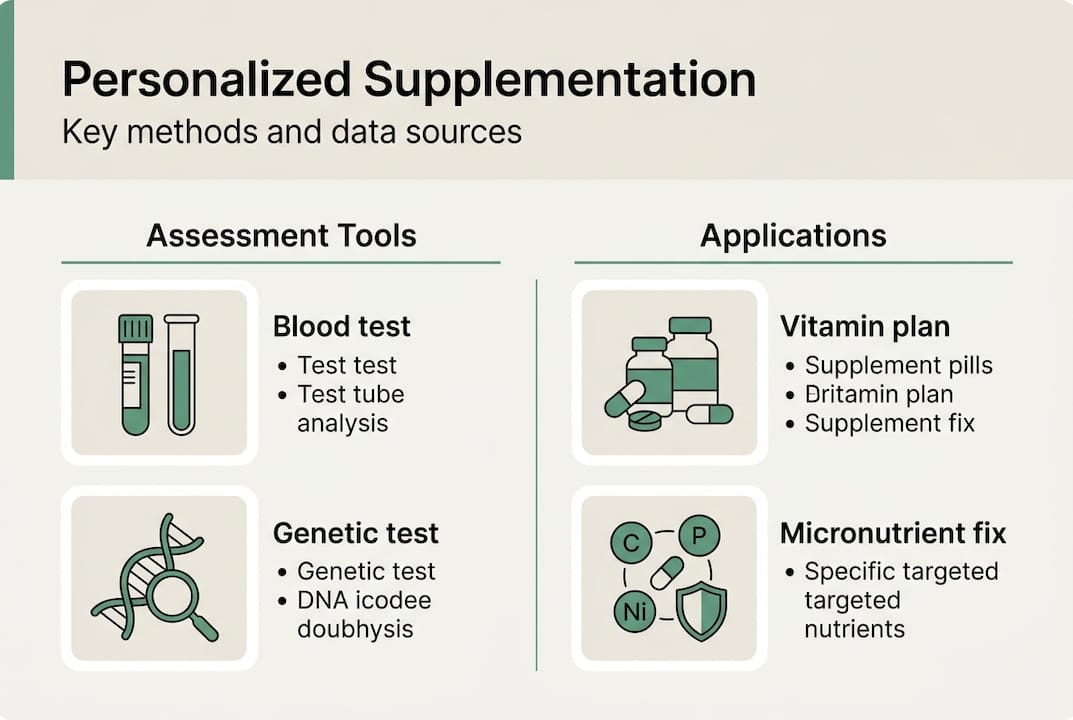
Modern personalization generally follows four steps:
-
Assess: Gather data through blood tests, DNA analysis, microbiome testing, or detailed health questionnaires
-
Analyze: Identify gaps, deficiencies, genetic variants, or risk markers that affect nutrient needs
-
Prescribe: Build a supplement protocol targeting the specific findings from the assessment
-
Monitor: Retest biomarkers after 8 to 12 weeks to measure actual changes and adjust the plan
Here is a breakdown of the main methods used and what each one actually measures:
Method What it measures Common supplement applications
Blood biomarkers Vitamin levels, inflammation, blood sugar, lipids Vitamin D, omega-3s, magnesium, B vitamins
DNA testing Genetic variants affecting absorption and metabolism Folate (MTHFR), vitamin D (VDR), iron metabolism
Microbiome analysis Gut bacteria composition and diversity Probiotics, prebiotics, fiber-based supplements
Health questionnaires Lifestyle, symptoms, diet patterns Broad-spectrum support, stress or sleep aids
A real-world example makes this clearer. Someone with low blood vitamin D levels and a VDR gene variant that reduces vitamin D receptor activity may need two to three times the standard supplemental dose to reach optimal blood levels. Without testing, they would likely take the generic 1,000 IU dose and see no meaningful improvement.

Using nutritional assessment tools professionally designed for this purpose adds another layer of precision to the process. These tools help practitioners map dietary intake against lab findings to identify where supplementation will actually move the needle.
The clinical evidence supports this approach when it is applied with rigor. A 12-week personalized protocol showed measurable reductions in homocysteine and TNF-alpha, two key markers of cardiovascular and inflammatory risk. Those are not minor wins. They are the kind of changes that affect long-term health outcomes.
For those already using exercise supplements strategically, adding biomarker-guided personalization can help identify which compounds are actually working and which ones are just adding cost without benefit.
Does personalized supplementation actually work? Evidence and limitations
Now that the methods are clear, the next question is whether this approach delivers real health results and when it might not.
The short answer is: yes, for specific outcomes, with important caveats. Clinical trials show that personalized nutrition programs improve key health markers in targeted populations. Randomized controlled trials demonstrate improvements in HbA1c, postprandial glucose, and carbohydrate intake in people with diabetes and pre-diabetes. A personalized dietary program using glucose and microbiome data reduced triglycerides, body weight, and HbA1c in a randomized controlled trial.
Here is how personalized and generic supplementation compare across key outcomes:
Outcome Personalized approach Generic approach
HbA1c (blood sugar) Significant improvement in targeted groups Modest or inconsistent results
Inflammatory markers Measurable reduction with biomarker guidance Variable, often negligible
Lipid levels Improved triglycerides with personalized diet data Limited effect without dietary context
Adherence Higher when results are visible and tracked Lower without feedback loop
Cost Higher upfront due to testing Lower upfront, often lower long-term value
“The evidence base for personalized nutrition is promising but still maturing. Most trials are short-term and conducted in specific populations, making broad generalization premature.”
This is the honest reality. Most studies run 8 to 16 weeks, which is not long enough to confirm lasting benefits. Genetics still explain only a small fraction of why individuals respond differently to supplements. And the approach has not yet been validated at a population level.
For conditions like varicose veins, where inflammation and circulation play a role, personalized strategies targeting inflammatory biomarkers may offer more targeted support than a generic vascular supplement. But the foundation still matters. You can explore personalized blood sugar strategies to understand how diet and supplementation interact in practice.
Pro Tip: Personalized supplementation works best as a layer on top of solid habits. If your diet is poor and you are not sleeping well, no amount of biomarker testing will produce lasting results.
Who benefits most and when is personalized supplementation right for you?
After understanding results and caveats, it is time to assess who stands to gain most and how to make smart choices.
Personalized supplementation is not for everyone at every stage. It tends to deliver the most value for people who fall into specific categories:
-
People with diagnosed deficiencies who have not responded to standard dosing
-
Those managing chronic conditions like pre-diabetes, cardiovascular risk, or autoimmune issues
-
Athletes or serious fitness enthusiasts who need precise recovery and performance support
-
Anyone who has tried generic supplements for 3 to 6 months without measurable improvement
-
People with unique lab findings that suggest absorption issues or elevated inflammatory markers
Genetic testing has a more limited role than the marketing suggests. Evidence is stronger for targeted applications like vitamin D dosing based on VDR gene variants than for broad wellness bundles that promise to optimize everything at once. Behavior change remains the biggest gap between testing and real outcomes.
If you are considering a personalized plan, here is what to look for in a quality program: evidence-backed testing methods, ongoing biomarker monitoring, professional oversight from a registered dietitian or physician, and transparent reporting of what the data actually shows versus what is assumed.
What to avoid: direct-to-consumer DNA kits that skip blood testing entirely, platforms that prescribe the same supplements to everyone who answers a questionnaire the same way, and any service that does not include follow-up reassessment.
For people focused on building muscle mass, comparing options like mass building supplements alongside personalized testing can help identify whether a performance gap is nutritional or training-related. Similarly, those dealing with joint discomfort may find that joint support supplements work better when inflammatory markers are tested first. Understanding functional foods can also help you build a smarter dietary foundation before layering in supplements.
A reality check: What most people miss about personalized supplementation
Here is the unfiltered truth from behind the scenes. The wellness industry has a talent for making personalization sound like a magic unlock. Buy the test, get your results, take your custom supplements, and watch your health transform. That narrative sells products, but it does not reflect how change actually happens.
The majority of health improvements that people attribute to personalized supplementation come from the behavior changes that accompany the process. Getting blood tested makes you more aware of what you eat. Tracking results makes you more consistent. The supplement itself is often a smaller piece of the puzzle than people realize.
Short-term wins are real and worth pursuing. Reducing homocysteine or bringing vitamin D into range in 12 weeks is genuinely meaningful. But sustaining those results requires ongoing reassessment, not a one-time protocol. A personalized plan is not set it and forget it.
Industry hype often outpaces the evidence by years. Ask any provider for the specific studies behind their recommendations. If they cannot point to peer-reviewed data, that is a red flag. Look for platforms that support evidence-backed immune supplements with transparent sourcing and testing standards. Personalization is a powerful tool when used honestly. It is not a replacement for fundamentals.
Take the next step: Smarter supplementation options
Ready to make supplementation work smarter for you? Here’s where expert guidance and evidence-based choices come together.
At RankOfSupplements.com, every review is built on science, not sponsored claims. Whether you are exploring performance options like the Nutrigo Lab Strength review or looking for targeted support in categories like eye health supplements, you will find rankings and breakdowns that cut through the noise.
Personalized supplementation starts with knowing what the evidence actually supports. Our trusted supplement guides give you the tools to compare options, understand ingredient quality, and make choices that match your specific goals. Use the science, skip the hype, and build a plan that actually fits your biology.
Frequently asked questions
Can personalized supplementation improve general wellness or only target conditions?
Most evidence supports benefits for specific biomarkers or health goals, while general wellness effects are less proven. Broad efficacy evidence from randomized controlled trials remains limited.
Is genetics the main driver of personalized supplementation plans?
Genetics contribute but explain only a small portion of individual response differences; lifestyle and current blood markers tend to be more impactful. Genetic variants account for a surprisingly small share of what actually drives outcomes.
Are direct-to-consumer DNA-based supplement tests worth it?
For most people, these tests offer limited actionable value without ongoing tracking and professional support. DTC products often overstate their utility when basic health practices are not already in place.
How often should a personalized supplement plan be reassessed?
Re-evaluate every three to four months or after any major health changes to adjust based on new lab results and outcomes. Regular retesting is what separates a living plan from a one-time purchase.
Are there risks with starting personalized supplements?
The main risks come from relying on unproven tests or neglecting dietary basics in favor of supplements. Insufficient evidence and industry hype can mislead consumers into spending money on plans that skip the fundamentals.