
TL;DR:
- Most adults consume less omega-3s than recommended, especially those not regularly eating fatty fish.
- Omega-3s support heart health, brain function, inflammation reduction, and muscle recovery.
- Supplementing with high-quality omega-3s is practical for those with low dietary intake or specific health goals.
Most people eating a balanced diet assume they’re covered on omega-3 fatty acids. That assumption has a real gap in it. Unless you’re regularly eating fatty fish several times a week, your actual EPA and DHA intake is likely falling short of what researchers consider optimal for heart, brain, and recovery support. While food sources are generally preferable because they deliver omega-3s alongside synergistic nutrients, supplements fill a very real gap for a large portion of the population. This article walks through exactly what omega-3s do, where the science stands on supplementation, and how to decide what’s right for your goals.
Table of Contents
- What are omega-3s and why do they matter?
- Key health benefits: Heart, inflammation, and more
- Food vs. supplements: What’s truly effective?
- Do omega-3 supplements really boost fitness and performance?
- Dosage, safety, and who should (or shouldn’t) supplement
- Our take: Stop thinking in absolutes about omega-3s
- Want the safest, most effective omega-3 supplement for you?
- Frequently asked questions
Key Takeaways
| Point | Details |
|---|---|
| Omega-3s are essential | Your body needs omega-3 fatty acids for heart, brain, and inflammation health but can’t make enough on its own. |
| Supplements are not always necessary | Food sources provide the most benefit, but supplements may help if your diet lacks fish or you have specific health needs. |
| Supplementation helps some groups | People with heart disease, high triglycerides, or certain athletes may see real benefits from targeted omega-3 use. |
| Dosage and safety matter | Stick to researched doses and consult a provider, especially if you have medical conditions or take other medications. |
| Evidence for muscle building is limited | Omega-3s help recovery but aren’t proven muscle builders for most healthy adults. |
What are omega-3s and why do they matter?
Omega-3 fatty acids are a family of polyunsaturated fats that your body needs but cannot make in meaningful amounts on its own. That makes them “essential,” meaning you must get them from food or supplements. There are three key players you need to know: EPA (eicosapentaenoic acid), DHA (docosahexaenoic acid), and ALA (alpha-linolenic acid).
ALA is the plant-based form found in flaxseed, chia seeds, and walnuts. Your body can technically convert ALA into EPA and DHA, but conversion rates are notoriously low, often under 10% for EPA and even less for DHA. EPA and DHA, found in fatty fish, algae, and fish oil supplements, are the biologically active forms that directly drive the health benefits most research focuses on.
Here’s why they matter so much to your health and performance:
- Heart function: Omega-3s lower triglycerides and may reduce cardiovascular risk factors including blood pressure and arrhythmias, especially in people with existing heart disease.
- Brain health: DHA is a structural building block in brain cell membranes. It supports cognitive function, mood regulation, and may reduce risk of age-related cognitive decline.
- Joint support: EPA and DHA modulate inflammatory pathways, making them relevant for people dealing with stiffness, soreness, and chronic low-grade inflammation.
- Eye health: DHA is heavily concentrated in retinal tissue, supporting visual sharpness over time.
- Cell membrane integrity: Every cell in your body uses fatty acids in its membrane. Omega-3s help maintain membrane fluidity, which affects how efficiently cells communicate and function.
“Omega-3 fatty acids are among the most studied nutrients in the world, yet most adults in Western countries still consume well below recommended amounts through diet alone.”
The takeaway here is simple. Your body depends on these fats for dozens of processes, from managing inflammation to keeping your heart rhythm steady, but it can’t produce them in adequate quantities. That’s a critical gap that diet alone doesn’t always close.
Key health benefits: Heart, inflammation, and more
Now that you understand what omega-3s are, let’s examine exactly how they improve specific aspects of health when taken as supplements, and where the evidence is strongest.
Cardiovascular benefits
The most well-researched benefit of omega-3 supplementation is cardiovascular support. Omega-3s reduce inflammation through multiple biological mechanisms, including reducing pro-inflammatory cytokines and promoting the production of specialized pro-resolving mediators (SPMs). SPMs are lipid compounds that actively resolve inflammation rather than simply suppressing it. For anyone managing heart health, this matters enormously.

Benefits overview by evidence strength
| Health area | Evidence strength | Notes |
|---|---|---|
| Triglyceride reduction | Very strong | FDA-approved prescription doses exist |
| Blood pressure reduction | Moderate | Modest but consistent effects |
| Joint inflammation | Moderate | Helpful alongside other joint support |
| Brain and mood | Moderate | Strongest in DHA deficiency cases |
| Muscle recovery | Emerging | More data needed but promising |
| Cancer prevention | Weak | Inconsistent findings across studies |
Inflammation and recovery
Chronic low-grade inflammation is behind a huge number of modern health problems, from metabolic disease to faster aging. Omega-3s intervene at the cellular level by shifting the body’s inflammatory signaling in a favorable direction.
For fitness enthusiasts specifically, this translates to real-world relevance. Omega-3s enhance muscle recovery post-exercise by reducing exercise-induced inflammation, which means less soreness, faster turnaround between sessions, and potentially better training consistency over weeks and months.
“Reducing systemic inflammation is not just about feeling less sore. It’s about how efficiently your body repairs, adapts, and performs across time.”
Pro Tip: If you’re already taking a joint support product, check whether it includes EPA or DHA. Many people stack joint health supplements with fish oil for broader anti-inflammatory coverage, but you can often simplify with a single well-formulated product.
Other researched benefits
Beyond heart health and inflammation, research is actively exploring omega-3 benefits for mental health (particularly depression and anxiety), metabolic function, pregnancy outcomes, and eye health. The evidence varies by condition, but the overall pattern is consistent: populations with higher omega-3 intake tend to show better health outcomes across multiple markers.
Food vs. supplements: What’s truly effective?
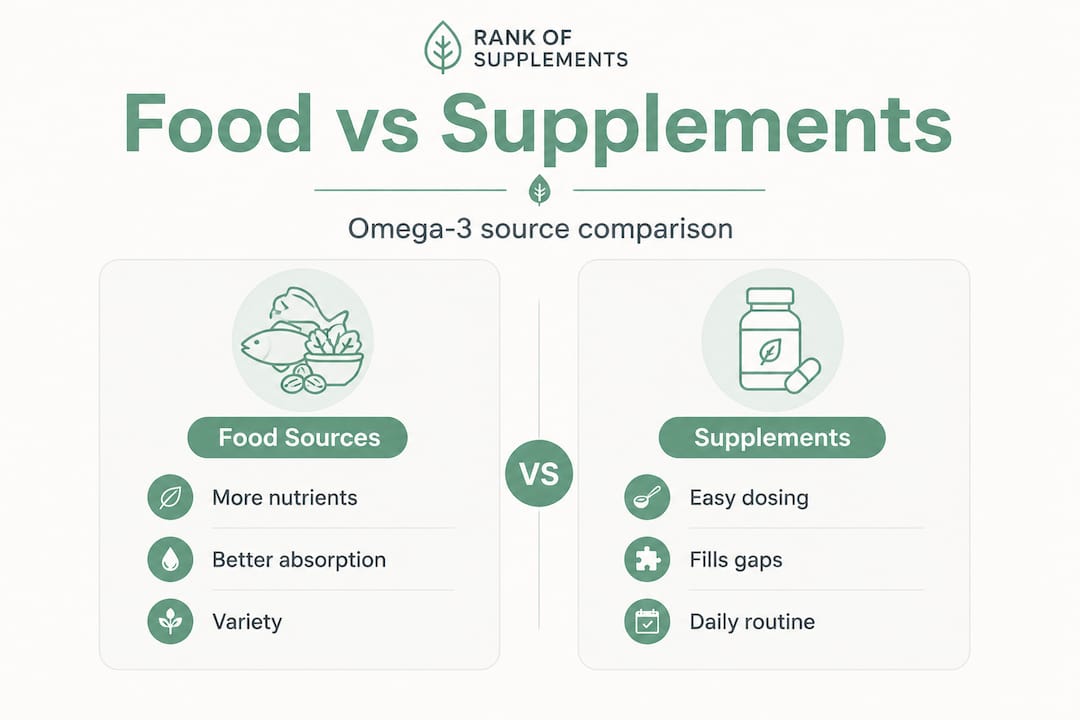
The debate between food and supplements is often framed as either/or. Reality is more nuanced. Food sources win on nutrient synergy. Supplements win on convenience and targeted dosing.
Best food sources of omega-3s
Fatty fish are the gold standard for EPA and DHA:
- Atlantic salmon: Roughly 1,500 to 2,000mg EPA+DHA per 3oz serving
- Sardines: About 1,300mg per 3oz serving (canned in water)
- Mackerel: Up to 2,600mg per 3oz serving
- Herring: Around 1,700mg per 3oz serving
- Anchovies: Approximately 900mg per 3oz serving
For plant-based options, ALA sources are widely available:
- Flaxseed (ground): About 2,350mg ALA per tablespoon
- Chia seeds: Around 5,000mg ALA per ounce
- Walnuts: Approximately 2,500mg ALA per ounce
- Algae oil: A direct vegan source of DHA, and increasingly EPA too
Food vs. supplement comparison
| Source | EPA+DHA per serving | Additional nutrients | Bioavailability |
|---|---|---|---|
| Salmon (3oz) | 1,500 to 2,000mg | Protein, vitamin D, selenium | High |
| Sardines (3oz) | 1,200 to 1,400mg | Calcium, B12 | High |
| Standard fish oil capsule | 300mg (180 EPA + 120 DHA) | None significant | Moderate to high |
| Krill oil (2 capsules) | 240 to 300mg | Astaxanthin, phospholipids | Potentially higher |
| Algae oil capsule | 200 to 400mg DHA | None significant | High |
Supplements are less effective than food sources because fish deliver omega-3s within a matrix of proteins, vitamins, and minerals that appear to work together. That said, health-conscious individuals with low dietary intake are reasonable candidates for supplementation, and those who avoid fish entirely need another reliable source.
When supplements make the most sense:
- You don’t eat fish regularly or at all
- You follow a plant-based diet and need direct EPA/DHA beyond what ALA conversion provides
- Your triglycerides are elevated and you’re working with a healthcare provider
- You’re managing chronic inflammation or want recovery support from training
- You’re pregnant or breastfeeding (DHA is critical for fetal brain development)
- You travel often or can’t reliably source quality fish
Pro Tip: If you’re exploring plant-based omega options or looking to add complementary nutrient-dense greens to your routine, check how those products stack up in EPA/DHA content versus their ALA or non-omega contributions. The numbers matter more than the marketing language.
The food-first principle still holds. But dismissing supplements entirely is impractical advice for most modern diets. Think of supplementation as closing the gap, not replacing real food.
Do omega-3 supplements really boost fitness and performance?
Fitness marketing loves to attach omega-3s to everything from fat loss to massive strength gains. Let’s cut through the noise and look at what the evidence actually supports.
What the research shows
Some studies show muscle mass and strength gains when omega-3 supplementation is combined with resistance training. However, when you look at meta-analyses (studies that pool data from multiple trials), the effects on lean mass and strength in healthy adults are limited to modest at best. The signal is clearest in older adults experiencing muscle loss (sarcopenia), and in people with higher training volumes where recovery stress is substantial.
For exercise-induced inflammation and recovery, however, the picture is more consistently positive. Omega-3s appear to reduce delayed onset muscle soreness (DOMS), support faster return to baseline strength after hard sessions, and may improve training consistency over a season.
Myth vs. fact: Omega-3s and training
- Myth: Omega-3s directly build muscle like protein does. Fact: They don’t trigger muscle protein synthesis the way leucine and essential amino acids do. Their role is supportive, reducing breakdown and inflammation rather than directly stimulating growth.
- Myth: You need megadoses for any fitness benefit. Fact: Research showing recovery benefits typically uses 2 to 3 grams of EPA+DHA daily, not extreme doses. More is not better.
- Myth: Athletes get plenty of omega-3s from a healthy diet. Fact: Most athletes, even those eating well, fall short of the amounts used in recovery research, particularly if fish is a small part of their diet.
- Myth: Omega-3s help with fat loss directly. Fact: Evidence for direct fat loss effects is weak. Any benefit is likely indirect through reduced inflammation and improved metabolic function.
- Myth: Plant sources fully cover your needs. Fact: ALA from plant foods does not convert reliably to EPA and DHA. If you train hard and don’t eat fish, an algae-based DHA+EPA supplement is a legitimate solution.
Who benefits most from omega-3s for fitness?
People in high-volume training phases, older athletes managing recovery and muscle maintenance, individuals new to resistance training (where tissue damage is highest), and anyone dealing with persistent post-workout soreness tend to see the most practical value. If you’re a well-trained athlete at moderate intensity, effects may be subtler but still worth considering for long-term joint and inflammation management.
Stat to know: In a review of omega-3 supplementation studies, subjects using 2 to 3 grams EPA+DHA daily showed statistically significant reductions in muscle soreness markers compared to placebo in multiple controlled trials.
For those managing weight alongside performance goals, it’s also worth noting that inflammation plays a role in body composition over time. Checking out weight control supplements that pair well with omega-3 intake is a logical next step if fat loss is part of your training objective.
Dosage, safety, and who should (or shouldn’t) supplement
Knowing omega-3s are beneficial is only part of the picture. Using them correctly and safely is equally important.
Dosing guidelines by goal
- General health maintenance: 250 to 500mg EPA+DHA combined daily is the baseline recommendation for healthy adults
- Cardiovascular support: The AHA recommends 1 gram per day of EPA+DHA for people with coronary heart disease, preferably from fatty fish, with supplements under physician direction for those who can’t meet this through diet
- Triglyceride management: Prescription omega-3 drugs use 2 to 4 grams daily under medical supervision
- Fitness and recovery support: Research typically uses 2 to 3 grams of EPA+DHA daily for exercise-related outcomes
Key safety points:
- Fish oil is generally well-tolerated at doses up to 3 grams daily for most healthy adults
- Common side effects include fishy aftertaste, mild digestive upset, and burping (taking with food usually helps)
- Blood thinning effect: omega-3s have mild antiplatelet activity, which matters if you take blood thinners like warfarin
- High-dose omega-3 supplementation above 2 to 4 grams per day may increase the risk of atrial fibrillation (an irregular heart rhythm), particularly in individuals with cardiovascular disease. Moderate doses appear much safer.
- Very high doses can suppress immune function over time, which is a lesser-known concern
Who should consult a healthcare provider before supplementing:
- People on blood-thinning medications (warfarin, aspirin therapy, newer anticoagulants)
- Individuals with a history of atrial fibrillation or arrhythmia
- Those with fish or shellfish allergies (certain supplement forms may not be appropriate)
- Anyone undergoing surgery (omega-3s may increase bleeding risk)
- People with liver disease, since metabolic processing of high-fat supplements may be affected
Pro Tip: Always choose omega-3 supplements that have been third-party tested for purity and oxidation. Fish oil that’s gone rancid is not just ineffective, it may actually increase oxidative stress rather than reduce it. Look for products certified by NSF International, USP, or IFOS for quality assurance.
Our take: Stop thinking in absolutes about omega-3s
Here’s something the standard nutrition advice rarely addresses directly. The “food first” message, while correct, is often used to dismiss omega-3 supplements entirely for people who actually need them. That’s not good guidance. It’s a shortcut.
We’ve reviewed a large volume of supplement research, and the omega-3 category is one of the most clearly supported by science. The nuance is in who needs it, how much, and in what form. A person eating salmon four times a week, living an active lifestyle with low inflammation markers, probably doesn’t need to spend money on fish oil capsules. But that person represents a small fraction of the population we actually hear from.
The more common reality is this: people who work out consistently, eat relatively well, but avoid fish for taste, sustainability, or ethical reasons, are running low on EPA and DHA. Their plant-forward diet gives them plenty of ALA from nuts and seeds, but that converts poorly to the active forms. They feel the recovery drag. They deal with low-grade inflammation that blunts their training progress. And they’re often told to just eat more fish, which isn’t a real solution for them.
Supplementation, done smartly, bridges that gap. The key phrase is “done smartly.” That means choosing a quality product, using a dose appropriate to your goal, and not expecting it to replace sleep, good training, or a solid diet. It’s a tool, not a cure.
We also want to push back on the idea that more is always better. We consistently see fitness enthusiasts doubling and tripling recommended doses based on the logic that if 1 gram is good, 4 grams must be better. The atrial fibrillation risk data at high doses is real, and it deserves more attention than it currently gets in mainstream fitness communities.
For broader nutrient synergy insights that pair well with omega-3 thinking, exploring how different nutrients interact can help you build a smarter overall supplement strategy rather than just stacking individual products.
The bottom line from where we sit: omega-3 supplementation earns its place in a well-constructed health and performance stack when dietary intake is genuinely low and the user understands both the benefits and the sensible dose range.
Want the safest, most effective omega-3 supplement for you?
Understanding omega-3 science is a great starting point, but translating that knowledge into a specific product purchase is where most people get stuck. There are hundreds of fish oil, krill oil, and algae oil products on the market with wildly different quality levels, concentrations, and price points.
At RankOfSupplements.com, we cut through that noise with science-backed reviews and rankings built around ingredient transparency and real efficacy data. Whether you’re optimizing for cardiovascular health, fitness recovery, or general wellness, our supplement guide connects you with the options most likely to deliver results. For performance-oriented users, check out the Nutrigo Lab Strength review to see how omega-3-adjacent products compare for muscle support. And if you’re also thinking about long-term health coverage, our breakdown of top eye health supplements is relevant since DHA is central to retinal health too.
Frequently asked questions
Is it better to get omega-3s from food or supplements?
Food sources are generally preferable because they deliver additional nutrients alongside omega-3s, but supplements fill the gap reliably when fish intake is low or absent.
Who should avoid omega-3 supplements?
People with bleeding disorders, those taking anticoagulant medications, or individuals with elevated atrial fibrillation risk should speak with a doctor before starting omega-3 supplements.
What is a common dosage for omega-3 supplements?
Most healthy adults aim for 250 to 500mg of combined EPA and DHA daily, with higher medical doses reserved for specific conditions managed by a physician.
Can omega-3 supplements build muscle mass?
Evidence is mixed. Meta-analyses show limited effects on lean mass or strength in healthy adults, though recovery support and muscle preservation in older adults are more consistently supported.
What are signs of omega-3 deficiency?
Common signs include dry, flaky skin, brittle hair and nails, persistent fatigue, difficulty concentrating, and increased joint stiffness, though true deficiency is uncommon in people eating a varied diet.