Losing your morning erections and your interest in sex are the two symptoms doctors weigh most heavily when they suspect low testosterone in men, far more than fatigue or low mood. But a symptom list alone doesn’t confirm anything. A real diagnosis needs two separate morning blood tests showing total testosterone below the clinical threshold for low testosterone, paired with symptoms that are actually affecting your life. If that describes you, the next step is a doctor’s visit, not another supplement search.
TL;DR:
- Men with confirmed low testosterone levels often exhibit persistent loss of morning erections and reduced sexual interest, which are more specific indicators than fatigue or mood changes.
- Accurate diagnosis requires two early-morning blood tests showing total testosterone below approximately 300 ng/dL, along with symptoms affecting daily life.
- Treat reversible causes such as obesity or sleep apnea first, as addressing these can restore testosterone levels without medication.
- Lifestyle interventions like weight loss, resistance training, and improved sleep have the strongest supporting evidence, while supplements lack consistent proof of benefit.
- Symptoms alone, especially if not backed by confirmatory tests, generally do not justify treatment, and a comprehensive evaluation is essential before considering testosterone replacement therapy.
Table of Contents
- Sexual Symptoms That Point Most Directly to Low Testosterone
- Fatigue, Muscle Loss, and Mood Changes Tied to Low T
- How Doctors Confirm a Low Testosterone Diagnosis
- Primary vs. Secondary Causes and What You Can Actually Change
- Is It Normal Aging or Something That Needs Treatment?
- What to Bring Up at Your Doctor’s Appointment
- Testosterone Replacement Therapy: Benefits and Real Risks
- Where Lifestyle and Supplements Actually Fit In
- A Common Presentation Worth Recognizing
- An Evidence-Based Adjunct Resource While You Get Evaluated
- Sources
- FAQ
Sexual Symptoms That Point Most Directly to Low Testosterone
Doctors rank sexual symptoms above every other complaint when they’re screening for testosterone deficiency, and there’s a reason for that hierarchy: they’re objective, measurable, and hard to mistake for something else. Fatigue could mean a dozen things. A total loss of morning erections points somewhere much more specific.
Low libido usually shows up as a genuine drop in sexual thoughts and interest, not just a busy week or a stressful month. It’s persistent, and it’s noticeable to the man experiencing it and often to his partner.
Loss of spontaneous or morning erections, along with reduced nocturnal tumescence, matters because these happen automatically during sleep cycles and don’t depend on arousal or a partner. When they stop happening, it’s a strong physiological signal rather than a psychological one.
- Erectile dysfunction can overlap with low T but often has separate causes, including vascular disease, diabetes, and medication side effects, so it doesn’t automatically mean testosterone is low.
- Reduced semen volume or low sperm count can accompany testosterone deficiency, particularly in men also dealing with fertility concerns.
- Testicular atrophy (smaller, softer testicles) is a physical sign clinicians check for during examination, especially when primary hypogonadism is suspected.
According to Cleveland Clinic, these sexual markers carry more diagnostic weight than fatigue or mood changes because they’re less likely to be explained by something unrelated to hormones.
Fatigue, Muscle Loss, and Mood Changes Tied to Low T
Non-sexual symptoms of testosterone deficiency are real, but they’re messier to interpret. Ordinary tiredness after a bad week doesn’t mean much. Fatigue that persists for months, doesn’t respond to sleep, and comes with other changes is a different story.
The StatPearls clinical reference notes that fatigue and mood symptoms are less specific than sexual ones, and clinicians need to rule out depression, sleep apnea, thyroid disease, and medication effects before pinning them on low testosterone.
Common non-sexual signs include:
- Noticeable loss of muscle mass and strength despite maintaining activity levels
- Increased body fat, particularly around the abdomen
- Difficulty concentrating, low motivation, or a flat mood that doesn’t match your circumstances
- Hot flashes, gynecomastia (breast tissue growth), and reduced bone density in more advanced deficiency
Gynecomastia and hot flashes tend to show up only with more severe or longer-standing deficiency, and osteoporosis risk climbs the longer testosterone stays low, since the hormone plays a role in maintaining bone density over time.
How Doctors Confirm a Low Testosterone Diagnosis
A single blood draw at 4 PM after a rough night’s sleep tells a doctor almost nothing useful. Testosterone follows a daily rhythm, peaking in the morning, so accurate testing depends on timing as much as the number itself.
- Test early, twice. Blood should be drawn between 7 and 10 AM on two separate mornings, since testosterone can swing significantly within a single day and even more between days.
- Compare against the threshold. A total testosterone level below approximately 300 ng/dL on both tests is the commonly cited cutoff, though StatPearls and lab-specific reference ranges can vary slightly by assay method.
- Dig deeper when needed. If levels are low, doctors often order free testosterone, LH, FSH, and sometimes prolactin to figure out whether the problem originates in the testicles or higher up in the pituitary or hypothalamus.
- Consider imaging in select cases. A pituitary MRI gets ordered when hormone levels or symptoms suggest a pituitary or hypothalamic cause rather than testicular failure.
Symptoms without a confirmed low reading generally don’t justify treatment, and the MedlinePlus patient guide follows the same workup sequence: history, exam, two morning tests, then targeted follow-up labs.
Primary vs. Secondary Causes and What You Can Actually Change
Where the problem originates changes everything about how it gets treated. Primary hypogonadism starts in the testicles themselves. Secondary hypogonadism originates in the pituitary gland or hypothalamus, the parts of the brain that signal the testicles to produce testosterone in the first place.
- Primary causes include testicular injury or trauma, genetic conditions like Klinefelter syndrome, chemotherapy or radiation, and infections that damage testicular tissue.
- Secondary causes include pituitary tumors, hypothalamic disease, chronic systemic illness, and obesity, which disrupts the hormonal signaling chain rather than the testicles directly.
- Medications and conditions that commonly suppress testosterone include long-term opioid use, anabolic steroid use, and severe acute illness.
- Reversible contributors matter most for men hoping to avoid lifelong treatment: obesity, untreated sleep apnea, and poorly controlled type 2 diabetes can all suppress testosterone, and Cleveland Clinic notes that treating these underlying issues can restore normal levels in some men without ever starting hormone therapy.
Pro Tip: If you snore heavily, wake up gasping, or your partner has mentioned you stop breathing at night, get evaluated for sleep apnea before assuming you need testosterone therapy. A sleep apnea treatment can sometimes resolve low T on its own.
Measuring LH and FSH separates the two categories in practice: elevated LH and FSH point toward primary testicular failure, while low or normal levels alongside low testosterone suggest a secondary, pituitary driven cause.
Is It Normal Aging or Something That Needs Treatment?
Testosterone drops gradually with age, at a slow rate starting in the late thirties, according to StatPearls. That slow decline is expected and rarely needs intervention on its own.
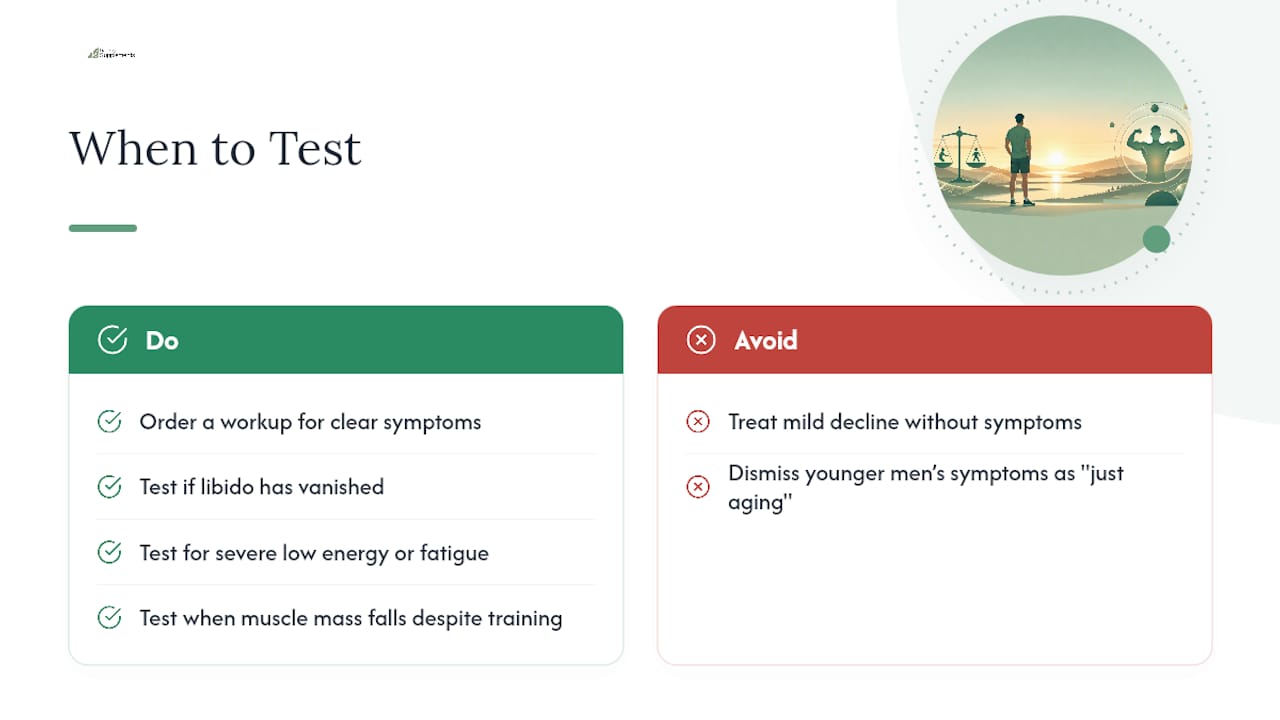
The distinction that matters is function. A 55-year-old with mildly lower testosterone but no symptoms doesn’t need treatment. A 45-year-old whose libido has vanished, whose energy has cratered, and whose muscle mass keeps dropping despite consistent training deserves an actual workup, not a shrug about getting older. Comorbidities like diabetes, obesity, and sleep disorders also factor into whether testing or treatment makes clinical sense.
What to Bring Up at Your Doctor’s Appointment
Walking into an appointment with vague complaints (“I just feel off”) makes a doctor’s job harder and slows down your own diagnosis. Specifics move things faster.
- Write down your history first. Note sexual symptoms, fertility goals, current medications, sleep quality, weight changes, and alcohol intake before you walk in.
- Expect two morning blood draws. Ask specifically for testosterone testing between 7 and 10 AM, and expect a repeat test to confirm the first result.
- Know when a referral makes sense. Endocrinology, urology, or sleep medicine referrals come up when initial results are ambiguous or when a pituitary cause is suspected.
- Flag red flags immediately. Rapid testicular shrinkage, new vision changes, or severe headaches alongside low testosterone symptoms warrant urgent evaluation, not a routine follow-up.
Testosterone Replacement Therapy: Benefits and Real Risks
Testosterone replacement therapy comes in several delivery forms, and the right one depends on lifestyle, cost, and how a man responds. Gels are convenient but can transfer to skin contact with others. Injections are cost-effective but produce peaks and valleys in blood levels. Patches and pellets offer steadier dosing with their own trade-offs in application and minor procedures.
- What improves: Sexual function and bone density respond most reliably, according to the Endocrine Society, with muscle mass showing more modest gains.
- Timeline: Most men who respond notice changes within about three months; if nothing improves by then, the diagnosis or treatment plan needs re-evaluation.
- Safety monitoring: Elevated hematocrit, fertility suppression, and prostate health all require ongoing bloodwork and follow-up.
- When it’s not appropriate: Men with normal testosterone levels and non-specific symptoms generally don’t benefit from TRT and take on risk without any real upside.
Roughly one in three men treated will need dose adjustments based on hematocrit and symptom response alone, which is why shared decision-making with a physician matters more than picking a delivery method off a list.
Where Lifestyle and Supplements Actually Fit In
Lifestyle changes carry more evidence than most supplement aisles do. Weight loss, better sleep, cutting back on alcohol, and resistance training are frequently reversible levers, especially when obesity or sleep apnea is part of the picture.
Supplement evidence is thinner. Fenugreek, D-aspartic acid, and zinc (when a man is actually deficient) show some limited signal in small studies, but nothing close to consistent, reliable benefit across the board.
- Rankofsupplements evaluates ingredients by the weight of clinical evidence, dosage accuracy, safety data, and label transparency before recommending anything.
- Skip unregulated “testosterone boosting” products sold with vague claims, and always check for interactions with existing medications.
Pro Tip: If you’re already on blood pressure or diabetes medication, run any new supplement past your doctor first. Interactions matter more than most product labels admit.
A Common Presentation Worth Recognizing
A man in his early forties comes in reporting no morning erections for six months and a libido that’s simply gone quiet, dismissing it as work stress until his partner pushes him to get checked. Two morning labs confirm testosterone at 240 ng/dL, and sleep apnea testing turns up the real driver.
The takeaway holds for most men in that position: don’t self-diagnose off a symptom checklist, and don’t wait a year hoping it resolves on its own. Get the two morning tests. Let the number, not the guesswork, drive what happens next.
— matteo
An Evidence-Based Adjunct Resource While You Get Evaluated
Supplements are not a substitute for a real diagnosis, a testosterone test, or a conversation with your doctor about TRT, and nothing here changes that. What Rankofsupplements offers is the research layer most men skip: a way to evaluate what actually has evidence behind it before spending money on the wrong bottle.
If a doctor has cleared you to try lifestyle-supportive options alongside medical treatment, or you’re just trying to understand what the ingredient labels actually mean, the supplement ingredient library breaks down the evidence behind individual compounds without the marketing spin. The best testosterone supplements ranking applies that same evidence standard to finished products, and the guide on supplements for low energy is worth a look if fatigue is your main complaint and blood work comes back within normal range. Start with the ingredient library if you want to understand what you’re actually buying before you buy it.
Sources
The clinical claims throughout this article draw on established medical references: the StatPearls clinical review on male hypogonadism, Cleveland Clinic’s overview of low testosterone, MedlinePlus’s patient guidance, and the Endocrine Society’s clinical guidelines on hypogonadism. Mayo Clinic’s patient resources on male hypogonadism symptoms and causes cover similar ground and are worth reading alongside these for a fuller picture.
- Male Hypogonadism - StatPearls - NCBI Bookshelf
- Low Testosterone (Low T): Hypogonadism, Symptoms & Treatment — Cleveland Clinic
- Could you have low testosterone?: MedlinePlus Medical Encyclopedia
- Hypogonadism in Men | Endocrine Society
FAQ
How do you fix low testosterone in men?
Treatment depends on the cause: reversible contributors like obesity, sleep apnea, or diabetes often respond to targeted lifestyle changes, while confirmed primary or secondary hypogonadism may require testosterone replacement therapy under a doctor’s supervision.
How can men boost testosterone naturally?
Weight loss, consistent resistance training, adequate sleep, and reduced alcohol intake are the interventions with the most consistent supporting evidence, particularly for men whose low levels stem from obesity or sleep apnea.
What foods can naturally increase testosterone levels?
No single food reliably raises testosterone, but diets adequate in zinc, vitamin D, and healthy fats support normal hormone production, and correcting an actual deficiency in these nutrients can help if one exists.
What causes low free testosterone specifically?
Low free testosterone can result from the same primary and secondary causes as total testosterone deficiency, but it can also occur when sex hormone binding globulin (SHBG) is elevated, which is why doctors sometimes order free testosterone alongside total levels.
How do I know if my testosterone is actually low or if I’m just tired?
The clearest signal is a change in sexual function, particularly the loss of morning erections and libido, since these are more specific to hormonal causes than fatigue alone, which has many other explanations.