
You’re taking multiple supplements to boost your health and fitness, but are you combining them correctly? Many people unknowingly mix supplements in ways that reduce effectiveness or trigger harmful interactions. Poor combinations can block nutrient absorption, amplify side effects, or interfere with medications. This comprehensive guide provides evidence-based strategies to help you safely stack supplements for optimal wellness and performance. You’ll learn which combinations to avoid, how to prepare and execute safe stacking, and methods to verify your results over time.
Table of Contents
Key Takeaways
Point Details
Assess nutritional needs Start by testing gaps with blood work and dietary review to avoid excess supplementation.
Consult healthcare provider Work with a clinician to evaluate interactions with medications and tailor a safe stacking plan.
Start with low doses Introduce one supplement at a time and wait a week before adding another.
Third party tested products Choose products verified by NSF or USP to ensure label accuracy and contaminant free ingredients.
Monitor and adjust Track energy, sleep, digestion, and performance for two to eight weeks to guide changes.
Prepare to combine supplements safely
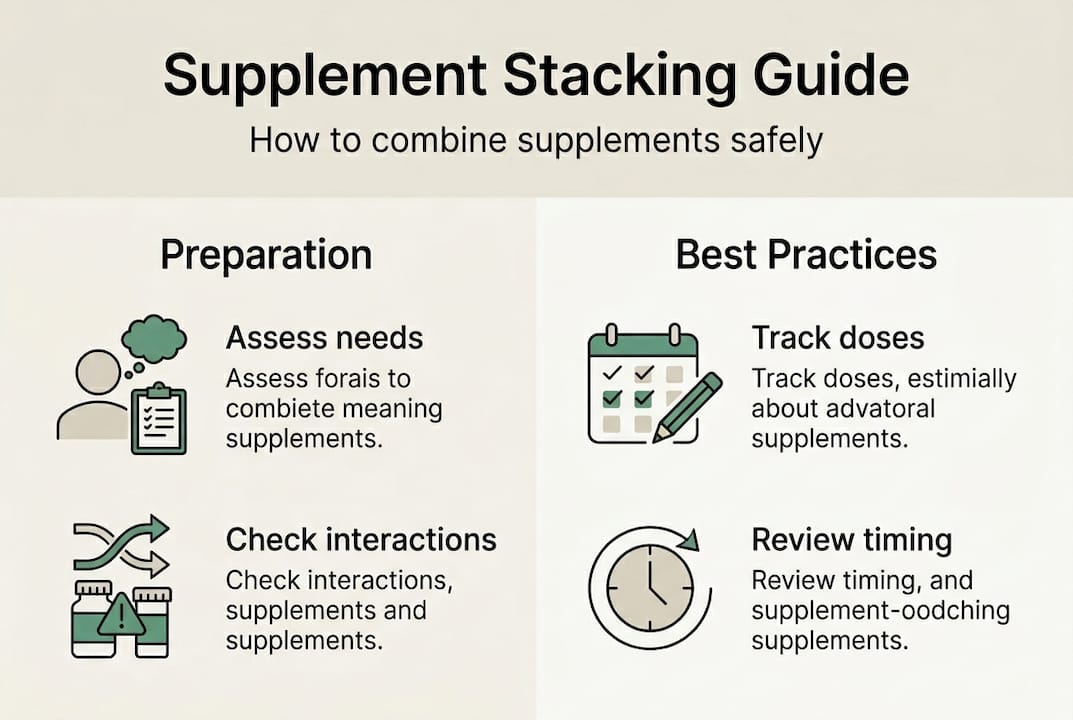
Before stacking any supplements, assess your actual nutritional needs through blood tests and dietary evaluation. Many people supplement based on trends rather than deficiencies, which can lead to excessive intake and toxicity. Work with your healthcare provider to identify genuine gaps in your nutrition that supplements should address.
Understand the upper intake levels for each nutrient you plan to take. Exceeding these limits, especially with fat-soluble vitamins like A, D, E, and K, can cause serious health problems. Water-soluble vitamins carry lower toxicity risks but can still produce side effects at high doses.
Identify potential interactions between your planned supplements and any medications you take. Combining medications and dietary supplements creates absorption or metabolism risks that your doctor needs to evaluate. Blood thinners, antidepressants, and blood pressure medications are particularly prone to supplement interactions.
Choose third-party tested products whenever possible. Independent verification from organizations like NSF International or USP confirms that supplements contain what their labels claim and are free from contaminants. This quality assurance becomes critical when stacking multiple products, as impurities can compound across your regimen.
Pro Tip: Create a supplement inventory listing every product you take, including dosages and timing. Share this document with your healthcare provider during consultations to get personalized stacking advice.
Consider your specific health and fitness goals when planning combinations. A stack designed for muscle strength and performance differs substantially from one targeting immune function. Avoid generic supplement protocols that don’t align with your individual needs and circumstances.
Recognize that supplements complement whole food nutrition but never replace it. Your diet should provide the foundation of nutrients, with supplements filling specific gaps. This approach reduces the total number of supplements you need and minimizes interaction risks.
How to combine supplements safely: step-by-step guide
Start every new supplement at the lowest effective dose to gauge your body’s response. Introducing multiple supplements simultaneously at full doses makes it impossible to identify which product causes any adverse reactions. Add one supplement at a time, waiting at least one week before introducing the next.

Space supplements with known absorption conflicts at different times throughout the day. Calcium and iron compete for absorption, so take them at least two hours apart. Similarly, separate zinc and copper supplements to prevent interference. Fat-soluble vitamins absorb best with meals containing healthy fats, while some minerals work better on an empty stomach.
Cycle adaptogens and stimulants to avoid tolerance buildup. Take these supplements for four to six weeks, then break for one to two weeks. This cycling strategy maintains effectiveness and prevents your body from adapting to their effects.
Monitor effects closely for two to eight weeks after starting any new combination. Track energy levels, sleep quality, digestion, workout performance, and any unusual symptoms in a journal. Objective measures like body composition, strength gains, or lab work provide more reliable feedback than subjective feelings alone.
Pro Tip: Set phone reminders for supplement timing to maintain consistent spacing between conflicting nutrients. Consistency maximizes absorption and helps you identify patterns in how your body responds.
Maintain a balanced diet as your nutritional foundation. Supplements should enhance an already solid eating pattern, not compensate for poor food choices. Whole foods provide fiber, phytonutrients, and nutrient combinations that isolated supplements cannot replicate.
Use this timing guide for common supplement combinations:
Supplement pairing Optimal timing Reason
Protein + Creatine Post-workout together Insulin spike enhances creatine uptake
Iron + Vitamin C Morning together Vitamin C boosts iron absorption significantly
Calcium + Vitamin D Evening with fat Supports bone health and calcium absorption
Magnesium Before bed alone Promotes relaxation without nutrient competition
Fat burners Morning on empty stomach Maximizes thermogenic effect
Fiber supplements Between meals with water Prevents interference with nutrient absorption
Adjust your supplement regimen as your diet, lifestyle, or health status changes. Seasonal variations in sun exposure affect vitamin D needs. Training intensity shifts impact protein and electrolyte requirements. Regular reassessment keeps your stack aligned with current needs.
Common supplement combinations to avoid and effective stacks
Certain supplement pairings significantly reduce absorption or increase side effect risks. Calcium blocks iron absorption, making this combination particularly problematic for people addressing anemia. Zinc interferes with calcium and copper absorption when taken simultaneously. Magnesium and zinc compete for the same absorption pathways, reducing effectiveness of both minerals.
Herbal supplements create especially dangerous interactions. St. John’s Wort combined with serotonin supplements or antidepressants can trigger serotonin syndrome, a potentially fatal condition. Ginkgo biloba paired with fish oil or other blood thinners increases bleeding risk substantially.
“The interaction between supplements and medications can be just as serious as drug-drug interactions. Some combinations reduce medication effectiveness, while others amplify side effects to dangerous levels.”
Avoid these risky supplement combinations:
-
Calcium with iron or zinc at the same time
-
Magnesium with zinc simultaneously
-
St. John’s Wort with any serotonergic supplements or medications
-
Ginkgo biloba with fish oil or blood thinners
-
High-dose vitamin E with blood thinners
-
Potassium supplements with ACE inhibitors
Conversely, some supplement stacks create synergistic benefits for fitness and wellness goals. Protein combined with creatine or BCAAs improves strength and recovery outcomes significantly. Beta-alanine paired with creatine enhances jump power and explosive performance beyond either supplement alone.
Consider these evidence-based supplement stacks:
Goal Effective stack Expected benefit
Muscle building Protein + Creatine + BCAAs Enhanced strength, faster recovery, increased muscle mass
Explosive power Beta-alanine + Creatine Improved jump height, sprint performance
Bone health Calcium + Vitamin D + Magnesium Better calcium absorption and bone density
Iron absorption Iron + Vitamin C Significantly increased iron uptake
Antioxidant support Vitamin C + Vitamin E Complementary free radical protection
These synergistic combinations work when dosed appropriately and timed correctly. Even beneficial stacks require professional guidance to optimize safety and effectiveness. Your individual health status, medications, and goals determine which combinations suit your situation best.
Explore exercise supplement synergies to understand how strategic combinations enhance athletic performance. Proper stacking transforms individual supplements into comprehensive support systems for your fitness objectives.
Verifying supplement safety and effectiveness over time
Schedule regular evaluations including blood tests to assess how your supplement stack affects nutrient status and health markers. Personalized supplementation requires blood tests for deficiencies and monitoring to avoid exceeding safe limits. Test every three to six months when taking multiple supplements long term.
Stay alert to changes in health markers or symptoms that indicate adverse effects. Digestive upset, unusual fatigue, skin changes, or mood shifts can signal supplement problems. Some interactions develop gradually, making ongoing vigilance essential even after months of seemingly safe use.
Cycle supplements as recommended to prevent tolerance or dependence. Adaptogens, stimulants, and some performance enhancers lose effectiveness with continuous use. Strategic cycling maintains benefits while reducing long-term risks. Your cycling schedule should account for training phases, competition timing, and recovery periods.
Adjust supplement combinations as your lifestyle, diet, or health status evolves. Dietary improvements may eliminate the need for certain supplements. New health conditions or medications might create previously absent interaction risks. Pregnancy, aging, and major life changes all warrant supplement regimen reassessment.
Pro Tip: Photograph your supplement bottles and share images with your healthcare provider during telehealth appointments. Visual references help providers quickly identify potential interactions and dosing concerns.
Track progress against specific fitness or wellness goals to verify stack effectiveness. Measure objective outcomes like body composition changes, strength improvements, or recovery times rather than relying solely on subjective feelings. If supplements aren’t producing measurable benefits after eight to twelve weeks, reassess your approach.
Consult healthcare providers for ongoing combination management, especially when adding new supplements or medications. Professional guidance helps you navigate complex interactions and optimize your regimen for safety and results. Regular check-ins catch problems early and keep your stack aligned with current health science.
Document everything in a supplement journal including products, doses, timing, and observed effects. This record becomes invaluable for identifying patterns, troubleshooting issues, and communicating effectively with healthcare providers. Detailed tracking transforms supplement use from guesswork into data-driven optimization.
Recognize that supplement needs change over time. What works perfectly now may require modification in six months. Flexibility and willingness to adjust based on results and professional advice ensure long-term safety and effectiveness. Quality supplements like Erisil Plus deliver consistent results when used as part of a monitored, personalized regimen.
Explore top-rated supplements for safe stacking
Now that you understand how to combine supplements safely, finding quality products becomes your next priority. RankOfSupplements offers expert reviews and detailed rankings on top supplements for strength, immunity, metabolic, and overall wellness. Our platform emphasizes third-party tested products that meet rigorous safety and quality standards.
Discover comprehensive Nutrigo Lab Strength reviews to support your muscle-building stacks with proven formulations. Explore our immune support supplement rankings to find products that complement your wellness regimen safely. Check out Fat Burn Active reviews for thermogenic options that integrate effectively into metabolic support stacks. Use our science-backed insights to choose supplements wisely and combine them for optimal health and fitness results.
Frequently asked questions
How do I know if supplements are interacting negatively?
Watch for digestive upset, unusual symptoms like headaches or skin reactions, or reduced effectiveness of your medications or supplements. These signs often indicate problematic interactions. Consult your healthcare provider immediately if you experience unexpected symptoms after starting a new supplement combination. Spacing conflicting supplements by several hours can resolve many absorption issues.
Can I take multiple mineral supplements together?
Avoid combining minerals like calcium with iron or zinc simultaneously, as they compete for absorption and significantly reduce effectiveness. Space mineral supplements at least two hours apart to maximize uptake. Taking calcium in the evening and iron in the morning with vitamin C optimizes absorption of both nutrients without interference.
What are safe supplement stacks for fitness performance?
Combining protein with creatine or BCAAs supports muscle gain and accelerates recovery after intense training. Beta-alanine plus creatine improves explosive movement and jump performance substantially. Follow recommended doses, typically five grams of creatine daily and three to six grams of beta-alanine, and time them around workouts for maximum benefits. Always start with lower doses to assess tolerance.
How long should I monitor effects after starting a new supplement stack?
Monitor for at least two to eight weeks to observe both benefits and potential side effects. Some supplements take several weeks to produce noticeable results, while adverse reactions may appear within days. Adjust doses or discontinue supplements based on your observed responses. Consult a healthcare provider if you experience persistent adverse symptoms or fail to see expected benefits after eight weeks of consistent use.