
Many fitness enthusiasts believe supplements alone build muscle and boost endurance, but that’s a myth. Resistance exercise stimulates muscle protein synthesis while modulating recovery, but supplements only enhance results when paired with consistent training. This article reveals evidence-backed supplement strategies, optimal timing protocols, and personalized approaches to maximize strength, power, and recovery through exercise-supplement synergy.
Table of Contents
-
Timing And Individualization Of Supplement Use For Optimal Results
-
Navigating Myths And Understanding Limitations Of Supplements With Exercise
Key takeaways
Point Details
Protein boosts strength Protein supplementation increases muscular strength significantly when combined with resistance training.
Creatine enhances power Creatine improves jump height and sprint speed by increasing muscle energy availability during intense efforts.
Timing matters for gains Post-workout protein and creatine maximize muscle protein synthesis and training adaptations.
Exercise is irreplaceable Supplements don’t increase lean body mass without the stimulus of resistance training.
Individualization optimizes results Personalized supplement strategies based on genetics, diet, and training goals outperform generic one-size-fits-all approaches.
Understanding how exercise drives muscle adaptation
Your muscles respond to resistance training through complex biological mechanisms. Resistance exercise stimulates skeletal muscle protein synthesis while balancing protein breakdown, creating the foundation for strength and size gains. This process activates key signaling pathways like mTORC1, which regulates muscle growth responses, though researchers continue investigating some aspects of these mechanisms.
Understanding these adaptations explains why supplements enhance but never replace exercise. Training intensity and consistency directly influence how effectively your muscles adapt. Supporting recovery and training tolerance indirectly amplifies these adaptations by allowing you to maintain higher workout volumes over time.
Key adaptation factors:
-
Mechanical tension from lifting triggers protein synthesis pathways
-
Metabolic stress accumulates during training sets, signaling growth responses
-
Recovery periods allow protein synthesis to exceed breakdown rates
-
Nutrition timing supports optimal adaptation windows
These mechanisms work synergistically. For example, conditions like varicose veins may affect blood flow and nutrient delivery to working muscles, potentially impacting recovery capacity.
“Muscle protein synthesis rates determine whether training leads to hypertrophy or merely maintains existing tissue.”
Consistent training provides the essential stimulus. Supplements amplify this stimulus when your nutrition, sleep, and recovery protocols support adaptation. Without proper exercise programming, even the best supplements produce minimal results.
Evidence-based supplements that boost exercise performance
Research identifies several supplements that deliver measurable performance improvements when combined with training. Protein supplementation yields the greatest improvement in muscular strength with an effect size of 0.64, particularly when using whey protein after resistance workouts. This significant effect reflects protein’s role in muscle repair and growth.
Top performance-enhancing supplements:
-
Protein powder: Whey delivers rapid amino acid absorption post-workout, supporting faster recovery and strength gains
-
Creatine monohydrate: Boosts sprint speed and jump height by increasing phosphocreatine stores for explosive movements
-
Beta-alanine: Buffers muscle acidity during intense efforts, delaying fatigue and improving muscular endurance
-
Caffeine: Enhances power output at 3-6 mg/kg and improves technical performance across multiple sports
-
Omega-3 fatty acids: Supports recovery and reduces inflammation but doesn’t directly trigger muscle growth
Supplement Primary Benefit Typical Dosage Best Timing
Whey Protein Muscle strength and recovery 20-30g per serving Post-workout
Creatine Power and sprint performance 3-5g daily Consistent daily intake
Beta-alanine Endurance and fatigue resistance 3-6g daily Split doses throughout day
Caffeine Power output and focus 3-6 mg/kg body weight 30-60 min pre-workout
Nutrigo Lab Strength combines several evidence-backed ingredients for comprehensive training support. Each supplement targets specific performance aspects. Creatine excels for explosive power, while beta-alanine shines during sustained high-intensity efforts.

Adjunct supplements like omega-3s aid recovery but don’t drive hypertrophy directly. Whey protein recovery research demonstrates its superior absorption profile compared to other protein sources, making it ideal for post-workout nutrition windows.
Pro Tip: Start with foundational supplements like protein and creatine before adding specialized products. Master consistent training and nutrition first, then layer in targeted supplements based on your specific performance gaps.
Caffeine works differently than other supplements, primarily enhancing central nervous system function rather than muscle metabolism directly. This makes it valuable for technical skills and sustained focus during complex training sessions.
Timing and individualization of supplement use for optimal results
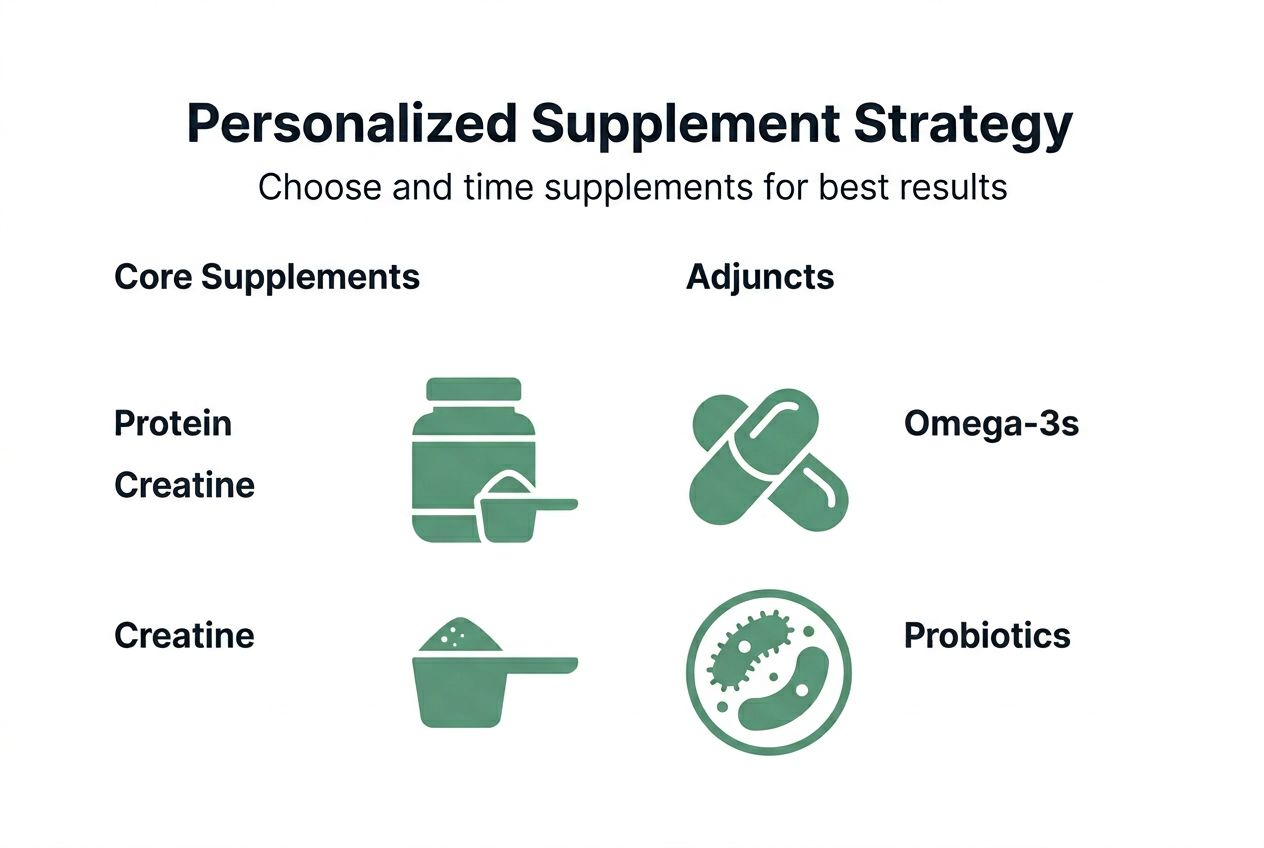
Protein and creatine taken post-workout maximize muscle protein synthesis and training gains by capitalizing on heightened metabolic activity after exercise. Your muscles remain primed for nutrient uptake for several hours following training, creating an optimal window for supplementation. However, consistency in daily creatine intake matters more than perfect timing around workouts.
Individual responses vary dramatically based on genetics, baseline diet, training history, and sport-specific demands. Someone with naturally high muscle creatine stores may see smaller gains from supplementation compared to someone starting with lower levels. Your protein needs differ based on training volume, body composition goals, and current dietary intake.
Timing strategies for common supplements:
-
Immediate post-workout: Whey protein and fast-digesting carbs to kickstart recovery
-
Daily consistent intake: Creatine, vitamin D, and omega-3s regardless of workout timing
-
Pre-workout window: Caffeine 30-60 minutes before training, beta-alanine for chronic loading
-
Throughout the day: Total daily protein split across 4-5 meals for optimal synthesis rates
Avoid excessive supplement use by sticking to evidence-backed dosages. More isn’t better and can compromise safety or efficacy. For example, mega-dosing protein beyond your body’s synthesis capacity simply increases expensive urine while stressing your kidneys unnecessarily.
Personalized supplementation strategies outperform generic protocols. Consider your training goals, dietary restrictions, budget, and performance gaps when selecting supplements. Femin Plus supplement review highlights gender-specific considerations that influence supplement selection and dosing.
Pro Tip: Track your performance metrics like strength gains, recovery time, and workout quality for 4-6 weeks after adding a new supplement. This personal data reveals whether a supplement delivers value for your specific situation.
Daily consistency trumps perfect timing for most supplements. Missing doses throughout the week undermines results more than sub-optimal timing on training days. Build sustainable supplement routines that fit your lifestyle rather than overly complex timing protocols you can’t maintain long term.
Navigating myths and understanding limitations of supplements with exercise
Popular supplements often lack strong evidence or only work under narrow conditions. Many supplements including BCAAs and HMB show inconsistent or limited evidence for boosting muscle gains across diverse populations. Marketing claims frequently outpace scientific support, creating unrealistic expectations about supplement capabilities.
No supplement substitutes for regular resistance and conditioning exercise stimulus. Your muscles require mechanical tension, metabolic stress, and progressive overload to trigger growth responses. Supplements enhance these processes but cannot initiate them independently.
Common supplement myths debunked:
-
Myth: Taking BCAAs during workouts prevents muscle breakdown and boosts growth
-
Reality: Whole protein sources provide superior amino acid profiles at lower cost
-
Myth: More protein always equals more muscle growth
-
Reality: Synthesis rates plateau around 1.6-2.2g per kg body weight daily
-
Myth: Fat burner supplements create significant fat loss without exercise
-
Reality: They may minimally increase metabolism but cannot overcome poor diet or inactivity
Lean body mass increases result primarily from training stimulus, not supplements alone. Studies consistently show supplements produce minimal body composition changes without concurrent exercise programming. This fundamental principle applies across all supplement categories.
Adjuncts like probiotics and omega-3s aid fatigue prevention and recovery but don’t trigger hypertrophy directly. They support the broader recovery environment that allows consistent high-quality training. Consider these secondary priorities after establishing protein, creatine, and training fundamentals.
Supplement Category Evidence Strength Primary Limitation
Protein powder Strong Requires training stimulus to build muscle
Creatine Strong Non-responders exist, saturation varies
Beta-alanine Moderate Benefits specific to high-intensity efforts
BCAAs Weak Whole protein sources more effective
Testosterone boosters Very weak Most lack human efficacy data
Standardized research faces limitations from inconsistent imaging protocols and trial designs. Different studies measure outcomes using varied methods, making direct comparisons difficult. This variability explains why some supplements show promise in certain studies but fail to replicate in others.
Managing expectations prevents disappointment and wasted money. Supplements provide incremental improvements, typically 5-15% performance boosts in well-trained individuals. Beginners often see larger gains simply from consistent training and adequate protein intake. Eye health supplements overview demonstrates similar principles apply across health categories, supplements support but don’t replace foundational health practices.
Explore trusted supplements to support your fitness journey
Ready to implement evidence-based supplement strategies? RankOfSupplements offers thorough reviews helping you identify high-quality products that deliver real results. Choosing scientifically backed supplements like creatine and protein supports your training gains safely without wasting money on unproven products.
Explore specialized supplements for strength, endurance, and recovery tailored to your specific needs. Nutrigo Lab Strength reviews break down ingredient profiles and dosing protocols for serious athletes. Femin Plus supplement reviews address gender-specific performance and recovery needs. For comprehensive wellness, check immune support supplements that maintain training consistency by reducing illness frequency. Remember to prioritize consistent training and balanced nutrition alongside supplementation for optimal results.
Frequently asked questions
What is the role of protein supplementation with exercise?
Protein supplementation produces the greatest improvement in muscular strength especially when consumed following resistance training sessions. It accelerates muscle protein synthesis rates, supporting faster recovery between workouts. This combination delivers measurably better strength gains compared to training without adequate protein intake.
How important is supplement timing around workouts?
Post-workout protein and creatine intake maximizes muscle protein synthesis and training adaptations by capitalizing on heightened metabolic activity. However, daily consistency matters more than perfect timing for creatine benefits since muscle stores accumulate over days and weeks. Missing doses throughout the week impacts overall results more than sub-optimal timing on training days.
Can supplements replace exercise for muscle growth?
Absolutely not. No supplement significantly increases lean body mass without exercise providing the essential growth stimulus. Resistance training creates mechanical tension and metabolic stress that trigger muscle protein synthesis pathways. Supplements enhance these training-induced responses but cannot initiate muscle growth independently.
Which supplements show the strongest evidence for performance benefits?
Protein powder, creatine monohydrate, and caffeine demonstrate the most robust research support for improving strength, power, and endurance. Beta-alanine shows moderate evidence for high-intensity efforts lasting 1-4 minutes. These four supplements consistently produce measurable performance improvements across diverse athletic populations when combined with appropriate training programs.
How do I personalize my supplement strategy?
Assess your training goals, current diet quality, performance gaps, and budget constraints before selecting supplements. Track objective performance metrics for 4-6 weeks after adding new supplements to evaluate individual response. Consider genetic factors like creatine responsiveness and adjust dosing based on body weight and training volume. Work with qualified professionals when addressing specific health conditions or competitive goals requiring advanced supplementation protocols.