
The supplement industry generates over $50 billion annually, yet many products lack robust scientific support. While marketing claims promise dramatic transformations, only a select group of supplements have proven benefits through rigorous clinical trials. Understanding which supplements deliver real results can save you money and optimize your health outcomes. This guide examines evidence-based supplements that actually work, helping you navigate the crowded marketplace with confidence. You’ll learn to identify scientifically validated products, avoid ineffective options, and make informed choices aligned with your fitness and wellness goals.
Table of Contents
Key takeaways
Point Details
Evidence-based definition Supplements proven effective through randomized controlled trials and peer-reviewed research
Performance boosters Caffeine and beta-alanine show consistent benefits for athletic performance and endurance
Critical evaluation Check for clinical trial citations, proper dosing, and third-party testing before purchasing
Future trends Personalized supplementation and novel compounds for recovery are emerging in 2026 research
Understanding evidence-based supplements
Evidence-based supplements stand apart from the thousands of products making unverified claims. These are compounds supported by well-designed scientific studies, including randomized controlled trials where researchers compare supplement effects against placebos. The gold standard involves multiple studies showing reproducible results at consistent dosages.
Several criteria distinguish evidence-based supplements from marketing hype. First, look for research published in reputable peer-reviewed journals rather than company-funded white papers. Second, verify that studies used adequate sample sizes and controlled for confounding variables. Third, check whether the dosage in commercial products matches amounts shown effective in research.
Contrast this with non-evidence-based supplements that rely on testimonials, celebrity endorsements, or proprietary blends hiding actual ingredient amounts. These products often feature exotic-sounding ingredients with zero clinical validation. The supplement industry faces minimal regulation compared to pharmaceuticals, allowing questionable products to reach consumers easily.
Why does this matter for your health and fitness? Evidence-based supplements offer predictable benefits when used correctly, while unproven products waste money at best and pose safety risks at worst. Scientific review processes evaluate supplement claims through systematic analysis of available research, helping separate fact from fiction.
For serious athletes and health-conscious individuals, choosing evidence-based options optimizes results while minimizing unnecessary risks. Products like Nutrigo Lab Strength exemplify formulations built on scientific principles rather than marketing trends.
Key characteristics of evidence-based supplements include:
-
Multiple independent studies confirming benefits
-
Clear mechanisms of action understood by researchers
-
Established safety profiles from long-term use data
-
Consistent dosing recommendations across studies
-
Transparency in ingredient sourcing and manufacturing
Proven supplements for athletic performance and wellness
Recent research has identified specific supplements that consistently deliver measurable benefits for athletes and fitness enthusiasts. Understanding these compounds and their optimal use can significantly enhance your training outcomes.
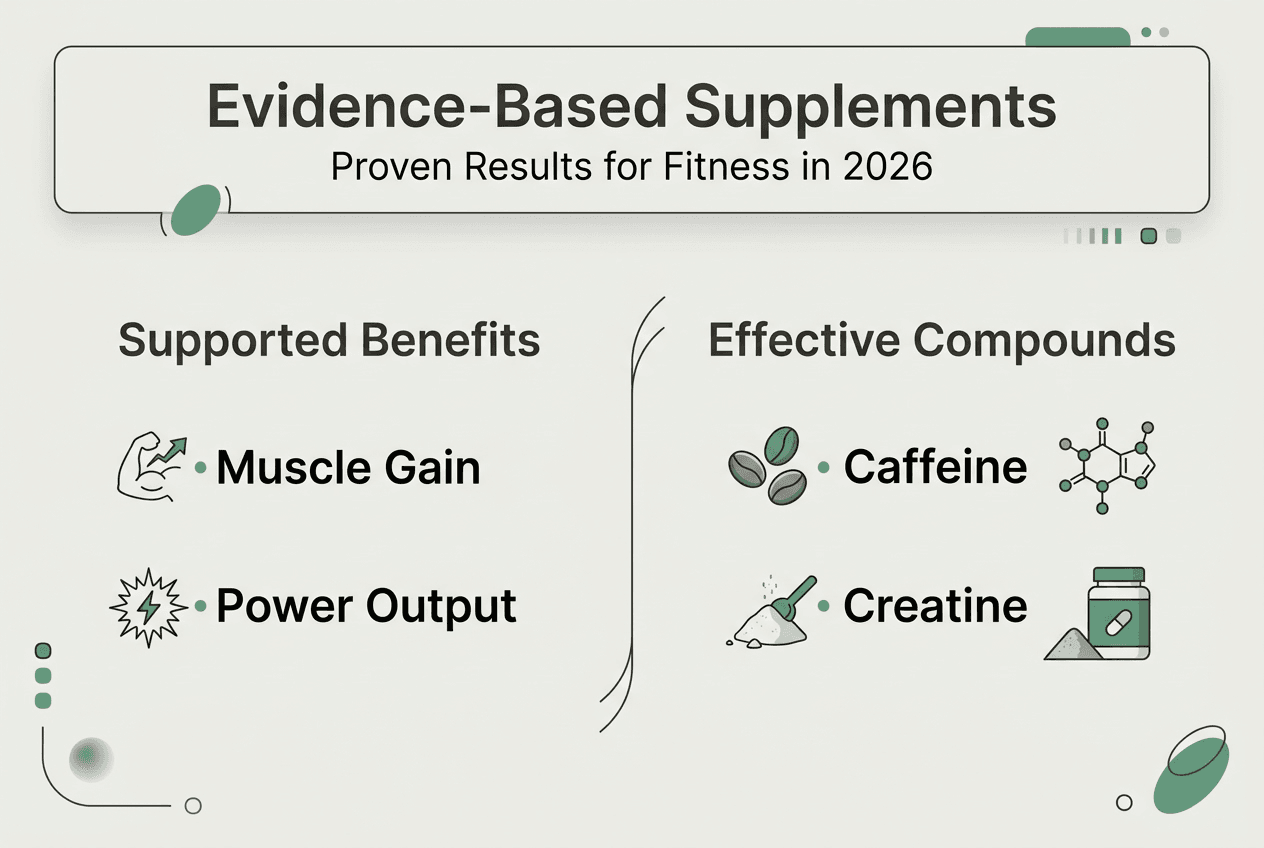
Caffeine (3 to 6 mg/kg) consistently improved power output and technical performance in elite athletes across multiple sports. This stimulant works by blocking adenosine receptors in the brain, reducing perceived exertion while increasing alertness. For a 70 kg person, this translates to 210-420 mg of caffeine, roughly equivalent to 2-4 cups of coffee consumed 30-60 minutes before exercise.
Beta-alanine demonstrated sport-specific benefits in elite athletes, particularly for activities lasting 1-4 minutes. This amino acid increases muscle carnosine levels, buffering hydrogen ions that cause fatigue during intense exercise. Athletes typically take 3-6 grams daily, split into smaller doses to minimize tingling sensations.
Amino acids and probiotics showed promise for fatigue prevention and exercise tolerance in elite athletes. Branched-chain amino acids may reduce muscle damage markers, while specific probiotic strains support immune function during heavy training periods.
Caffeine supplementation at 3-6 mg/kg body weight produces consistent performance improvements of 2-4% across endurance, strength, and skill-based activities, making it one of the most reliable ergogenic aids available.
The table below compares key evidence-based supplements:
Supplement Primary Benefit Effective Dose Evidence Strength
Caffeine Power output, alertness 3-6 mg/kg Very strong
Beta-alanine Endurance, fatigue buffering 3-6 g/day Strong
Creatine Strength, muscle mass 5 g/day Very strong
Protein powder Muscle recovery, growth 20-40 g post-workout Strong
Omega-3 Inflammation, heart health 1-3 g EPA+DHA Moderate to strong
Pro Tip: Timing matters as much as dosing. Take caffeine 30-60 minutes before training, beta-alanine consistently throughout the day, and creatine anytime with food for optimal absorption and results.
Research from coffee performance studies confirms that natural caffeine sources like coffee provide similar benefits to synthetic caffeine supplements. The key is consuming adequate amounts at the right time relative to your workout.
Understanding these evidence-based options helps you build a supplement stack that actually works. Rather than trying every new product that hits the market, focus on these proven compounds that deliver consistent results backed by decades of research.
How to evaluate and choose supplements wisely
Navigating the supplement marketplace requires critical thinking skills and knowledge of scientific standards. Many products use clever marketing to obscure their lack of evidence, making evaluation skills essential for smart purchasing decisions.

Start by examining the research behind any supplement claim. Look for citations of clinical trials published in reputable journals like the Journal of the International Society of Sports Nutrition or the American Journal of Clinical Nutrition. Company websites often reference studies, but check whether these are actual peer-reviewed publications or just internal testing.
Verify that ingredient dosages in commercial products match amounts used in successful studies. A supplement containing 50 mg of an ingredient studied at 500 mg doses won’t deliver the same benefits. Manufacturers sometimes include trace amounts of researched ingredients just to list them on labels.
Third-party testing provides crucial quality assurance. Organizations like NSF International, Informed Sport, and USP verify that products contain listed ingredients at stated amounts without harmful contaminants. These certifications cost manufacturers money, so their presence signals commitment to quality.
Beware of red flags indicating questionable products. Proprietary blends hide individual ingredient amounts, making it impossible to verify effective dosing. Claims of “revolutionary breakthroughs” or “secret formulas” typically indicate marketing rather than science. Before-and-after photos prove nothing without controlled conditions.
Follow these five steps for evaluating supplement credibility:
-
Search for the ingredient name plus “clinical trial” or “systematic review” in Google Scholar or PubMed to find actual research
-
Check whether studies used the supplement alone or combined with other interventions like exercise programs that might explain results
-
Look for conflicts of interest in study funding, favoring independent research over manufacturer-sponsored trials
-
Verify that study participants resemble you in age, fitness level, and health status for relevant results
-
Compare the supplement’s cost against proven alternatives, considering whether potential benefits justify the price
Pro Tip: Consult a registered dietitian or sports nutritionist before starting new supplements, especially if you take medications or have health conditions. Professional guidance helps you avoid dangerous interactions and waste money on unnecessary products.
Quality supplements for specific health goals exist across categories. For instance, eye health supplements containing lutein and zeaxanthin have solid research supporting their benefits for macular health. The key is distinguishing these evidence-based options from the countless products making unsupported claims.
Remember that supplements work best as additions to solid nutrition and training programs. No pill replaces consistent effort in the gym or kitchen. Evidence-based supplements optimize results when you’ve already built a strong foundation through diet and exercise.
The future of supplements: trends and ongoing research
The supplement industry continues evolving as researchers explore new compounds and refine our understanding of existing ones. Several emerging trends in 2026 promise to reshape how we approach supplementation for health and performance.
Personalized supplementation represents the frontier of evidence-based nutrition. Genetic testing services now analyze DNA variants affecting nutrient metabolism, helping identify individual needs for vitamins, minerals, and other compounds. While still developing, this precision approach could replace one-size-fits-all recommendations with targeted protocols.
Researchers are investigating novel applications for established supplements. Probiotics, once limited to digestive health claims, now show promise for mental health, skin conditions, and athletic recovery. Specific strains like Lactobacillus plantarum may reduce exercise-induced inflammation and improve training adaptations.
Amino acid research continues expanding beyond basic protein synthesis. Scientists study compounds like taurine for cardiovascular benefits and glycine for sleep quality. These investigations may validate traditional uses while uncovering unexpected applications.
Advances in supplement delivery systems aim to improve absorption and effectiveness. Liposomal encapsulation protects sensitive compounds through digestion, while time-release formulations maintain steady blood levels. These technologies could make previously ineffective oral supplements viable alternatives to injections.
Key trends to watch in 2026 and beyond include:
-
Microbiome-targeted supplements using prebiotics and postbiotics alongside probiotics
-
Adaptogenic compounds for stress management backed by rigorous clinical trials
-
Mitochondrial support supplements targeting cellular energy production
-
Senolytic compounds that may support healthy aging by clearing damaged cells
-
Nootropic stacks optimized for cognitive performance with solid safety data
The following table summarizes promising supplements currently under investigation:
Supplement Potential Benefit Research Status Expected Timeline
Urolithin A Mitochondrial health, muscle function Phase 2 trials complete Available now, expanding evidence
NMN/NR Cellular energy, longevity Ongoing human trials 1-2 years for consensus
Sulforaphane Elimination, cancer prevention Multiple trials underway Strong preliminary data
Apigenin Sleep quality, anxiety reduction Early clinical research 2-3 years for solid evidence
Epicatechin Muscle growth, cardiovascular health Mixed results, needs more study 3-5 years
Products like Matcha Extreme represent the intersection of traditional ingredients and modern research. Green tea compounds including EGCG have substantial evidence for metabolic benefits, while ongoing studies explore optimal extraction methods and dosing strategies.
Regulatory changes may also impact the supplement landscape. Increased scrutiny from health agencies could eliminate questionable products while validating effective ones. Some researchers advocate for a middle category between supplements and drugs, requiring more rigorous testing for compounds making specific health claims.
The challenge for consumers remains distinguishing genuine scientific progress from marketing hype. As research advances, maintaining critical evaluation skills becomes even more important. Future evidence-based supplements will likely target specific mechanisms with precision rather than making broad wellness claims.
Explore top evidence-based supplements at RankOfSupplements
Now that you understand the science behind effective supplementation, finding quality products that match your goals becomes the next step. RankOfSupplements offers comprehensive reviews of top supplements built on scientific evidence rather than marketing hype.
Our platform provides detailed analysis of supplement formulations, comparing ingredient profiles against clinical research standards. You’ll find information on optimal dosing, timing strategies, and potential interactions. User feedback complements scientific data, giving you real-world perspectives on product effectiveness.
Explore specialized categories tailored to your objectives. Whether you’re focused on strength gains with Nutrigo Lab Strength, fat loss with Fat Burn Active, or overall wellness through immune support supplements, our reviews help you make informed decisions. All content reflects 2026 research and industry developments, ensuring you access current information.
Frequently asked questions
What are evidence-based supplements?
Evidence-based supplements are products supported by rigorous scientific research, including randomized controlled trials published in peer-reviewed journals. These supplements have demonstrated consistent benefits across multiple studies, with clear mechanisms of action and established safety profiles. Unlike products relying on testimonials or marketing claims, evidence-based supplements provide predictable results when used at researched dosages.
How do I know if a supplement is truly evidence-based?
Look for citations of randomized controlled trials and systematic reviews in reputable scientific journals. Check that the product’s ingredient dosages match amounts shown effective in research studies. Verify third-party testing certifications from organizations like NSF International or Informed Sport. Be skeptical of proprietary blends, exaggerated claims, or products lacking transparent ingredient information.
Can evidence-based supplements help with weight loss and muscle gain?
Certain supplements like caffeine show benefits for exercise performance, which can indirectly support weight loss and muscle gain goals. Beta-alanine and creatine have strong evidence for improving training capacity and strength. However, supplements should complement proper nutrition and consistent training programs, not replace them. No supplement overcomes poor diet or inadequate exercise habits.
Are there risks to taking supplements without scientific support?
Unsupported supplements may be ineffective, wasting your money on products that provide no real benefits. Some pose safety risks through contamination, undisclosed ingredients, or interactions with medications. Without scientific validation, you can’t predict how a supplement will affect your body. Always check for evidence from independent research and consult healthcare providers before starting new supplements, especially if you have medical conditions or take prescription medications.