Juice wins for acute nitrate delivery. It's what most clinical trials on blood pressure and endurance actually used, and fresh or bottled juice typically packs more nitrate per serving than powder. Powder wins for daily maintenance: less sugar, a bit of fiber, and no fridge required. Which one you need depends on whether you're chasing a race-day edge or a habit you can keep for months, and product quality (not just format) decides whether either one delivers what the label promises.
TL;DR:
- Quality and verified nitrate content are more important than format, with third-party testing recommended for all beet products.
- Juice generally provides higher nitrate doses suitable for acute performance or blood pressure effects, while powder offers lower sugar and longer shelf life for daily use.
- The timing of intake should be 90 to 150 minutes before exercise to maximize endurance and blood pressure benefits from nitrate conversion.
- Nitrate response varies based on individual oral bacteria, so a trial of at least three to four uses is necessary to determine personal effectiveness.
- Products with undefined nitrate levels and those produced through heat-drying may underperform compared to well-standardized, properly tested juices or freeze-dried powders.
Table of Contents
- Beet Powder vs Juice: Nitrates, Betalains, Sugar, and Fiber Side by Side
- Does Beet Juice or Powder Work Better for Athletic Performance?
- Blood Pressure and Cardiovascular Effects: What the Evidence Shows
- Sugar, Fiber, and Metabolic Considerations: Choosing by Your Goal
- Freeze-Dried vs Heat-Dried Powder: Why Processing Changes Everything
- How to Use Beet Powder or Juice: Servings, Mixing, and Sample Routines
- Safety, Side Effects, and Who Should Be Cautious
- How Rankofsupplements Evaluates Beet Products
- The Bottom Line on Beet Powder vs Juice
- What Athletes and Daily Users Get Wrong About This Comparison
- Sources
- FAQ
Beet Powder vs Juice: Nitrates, Betalains, Sugar, and Fiber Side by Side
Nitrate content is the whole game here, and it swings wildly depending on the beet variety, growing conditions, and how the product was processed. Fresh beet juice commonly delivers a high range of nitrate per 8 ounce serving, while beetroot juice concentrates (the shot format most performance studies use) can run higher still. Powders vary more, often landing anywhere from under 100 milligrams to several hundred per serving, because dehydration methods degrade nitrate differently.
The nitrate itself isn't the only story. A 2021 review of beetroot bioactives identifies nitrate and betalains as the plant's two headline compounds, and explains how dietary nitrate converts to nitrite and then nitric oxide in the body, which is the mechanism behind both the blood pressure drop and the endurance boost athletes chase. Betalains and polyphenols add antioxidant activity on top of that, and juice generally retains more of these pigments than heavily processed powder.
Sugar and fiber tell a different story entirely:
- An 8 ounce serving of fresh beet juice can carry about 22 grams of sugar, roughly the same as a can of soda.
- One tablespoon of beet powder contains closer to 1 gram of fiber and far less sugar, since it's concentrated dry matter rather than liquid extract.
- Fiber slows how fast your body absorbs the natural sugars, which matters if you're watching blood glucose response.
Beetroot powder advantages show up clearly here: lower glycemic impact, easier portion control, and a longer shelf life than a bottle of juice you need to drink within days.
Does Beet Juice or Powder Work Better for Athletic Performance?
Most of the performance research behind beet supplementation used juice or concentrated shots, not powder, dosing a notable amount of nitrate roughly 2 to 3 hours before exercise. That timing window matters. Nitrate needs time to convert to nitrite and then nitric oxide, and studies on endurance cycling and running consistently show the benefit kicks in somewhere between 90 minutes and 3 hours post ingestion, not immediately.
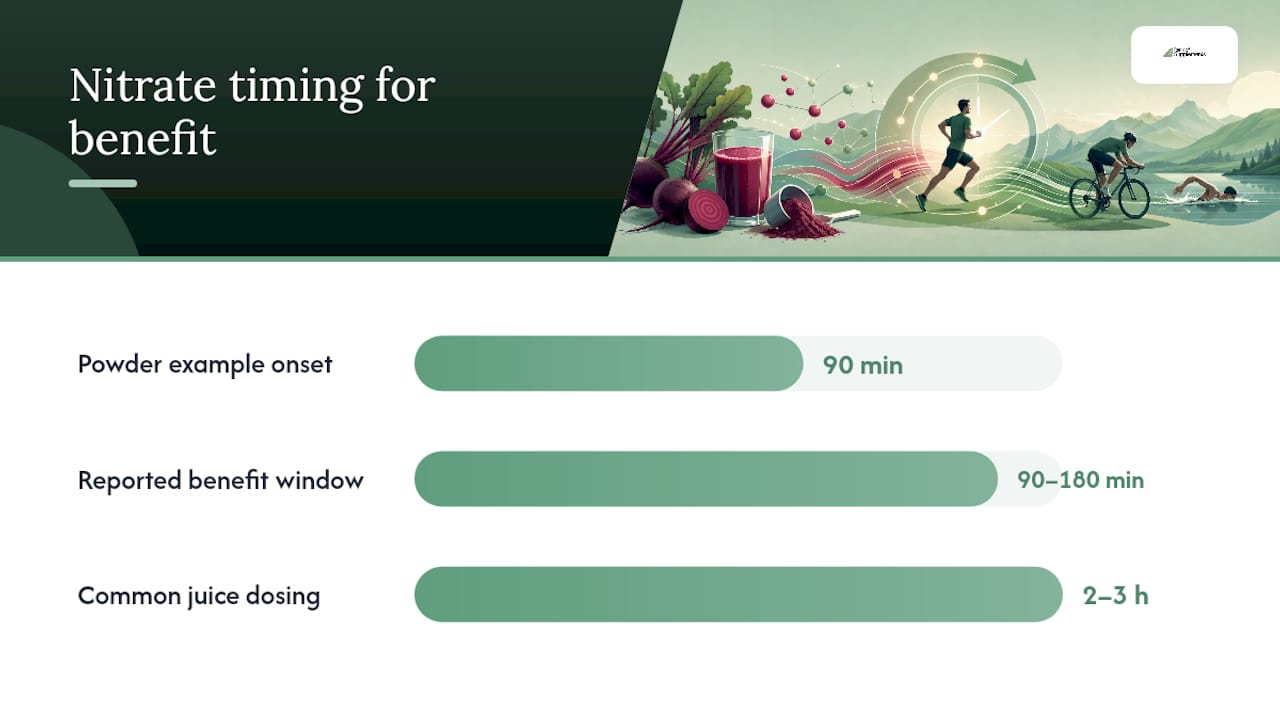
Powder has its own timing data point worth knowing. A study on beetroot powder and cognitive performance found that 3 grams taken 90 minutes before testing produced roughly a 21% improvement in short-term memory scores compared to placebo. That's not a VO2 max study, but it's a useful real-world example of how quickly a modest powder dose can act when timed right.
If you're translating powder scoops into juice-equivalent nitrate doses, check the label for milligrams of nitrate per serving rather than assuming volume equivalence. A rough starting approach for athletes:
- Run a two-week trial alternating juice shots and powder mixed in water, at the same labeled nitrate dose each time.
- Track perceived effort and pace on comparable workouts to spot your personal response.
- Adjust timing toward the 90 to 150 minute pre-exercise window based on what you notice.
Pro Tip: Don't judge a product after one use. Nitric oxide response varies by individual gut bacteria, since oral bacteria play a direct role in converting nitrate to nitrite, so give any new format at least three or four trials before deciding it doesn't work for you.
Blood Pressure and Cardiovascular Effects: What the Evidence Shows
Beet juice has the deeper evidence base for blood pressure. Pooled data from clinical trials and meta-analyses on dietary nitrate report systolic reductions as high as 7 mmHg in some analyses following regular nitrate dosing, a meaningful drop for anyone managing borderline hypertension.
Cleveland Clinic guidance confirms beet juice can lower blood pressure and improve exercise endurance, and notes that juice and concentrated products typically deliver more nitrate per serving than many powders on the market. That consistency is why juice remains the reference standard in BP research, while powder studies are thinner and more product-dependent.
For maintenance, daily or near-daily intake over several weeks tends to sustain the effect better than occasional dosing. Anyone already on blood pressure medication should talk to a doctor before adding regular nitrate supplementation, since the combined effect can push blood pressure lower than intended.
Sugar, Fiber, and Metabolic Considerations: Choosing by Your Goal
If you're managing blood sugar or just trying to avoid liquid calories, powder is the more forgiving format. The math is straightforward: a serving of juice can carry about 22 grams of sugar, while a tablespoon of powder contributes closer to 1 gram of fiber and a fraction of the carbohydrate load.
A few practical label-reading habits help here:
- Check for "added sugars" separate from naturally occurring sugars. Some juice blends sneak in apple or cane sugar to mask the earthy beet taste.
- If you have diabetes or are pre-diabetic, favor powder mixed into water over bottled juice, and split servings if a full scoop feels like too much at once.
- Watch total carbohydrate count, not just sugar, since beet fiber still counts toward daily intake even if it doesn't spike glucose the same way.
Freeze-Dried vs Heat-Dried Powder: Why Processing Changes Everything
How a powder gets made determines how much of the beet's original nitrate and antioxidant content survives. Heat-drying tends to degrade both nitrate and polyphenol levels more than freeze-drying does, which is a major reason two powders with identical serving sizes can perform completely differently in your body. This is also why nitrate content across brands varies so widely, sometimes by several multiples, with little standardization in labeling.
A quick product checklist before buying:
- Look for a stated nitrate content per serving, not just "beetroot powder, 5000mg" with no breakdown.
- Prioritize brands offering a certificate of analysis (COA) or third-party testing, similar to Informed-Sport certification used in competitive sports.
- Skip labels with vague "proprietary blend" language and no ingredient transparency.
- Check for added fillers or bulking agents that dilute the actual beet content per scoop.
Pro Tip: A COA showing standardized nitrate milligrams per serving is worth more than any marketing claim about "high potency." If a brand won't show you the number, assume it's inconsistent.
How to Use Beet Powder or Juice: Servings, Mixing, and Sample Routines
Getting the dose and timing right matters more than which format you pick. Here's how to translate label numbers into a workable routine.
- Match nitrate milligrams, not volume. An 8 ounce juice serving and a powder scoop are rarely equivalent unless both list nitrate content directly.
- Mix powder with an acidic liquid, like citrus juice or a splash of vinegar-based drink, which some athletes find helps with the earthy taste and may support the nitrate-to-nitrite conversion process.
- Avoid antibacterial mouthwash close to dosing. It kills the oral bacteria responsible for converting nitrate to nitrite, blunting the whole effect.
- Store juice refrigerated and use within the printed window. Store powder in a cool, dry place, sealed tightly to protect against moisture degrading potency over time.
Two sample routines:
- Pre-competition: A single concentrated juice shot or a powder dose at the higher end of the labeled range, taken 2 to 3 hours before the event.
- Daily maintenance: A smaller powder scoop mixed into water each morning, chosen for lower sugar and easier long-term habit-building.
Safety, Side Effects, and Who Should Be Cautious
Beeturia, the harmless pink or red tinge in urine (and sometimes stool) after eating beets, happens to a portion of the population regardless of format and isn't a health concern on its own. Juice tends to cause more gastrointestinal upset in sensitive people simply because of its higher sugar concentration and volume; powder mixed into a smaller liquid amount is often gentler.
The bigger caution is drug interaction. Anyone taking blood pressure medication should check with a doctor before adding regular nitrate supplementation, since beet juice's blood-pressure-lowering effect can stack with antihypertensives and push readings too low. Pregnant or nursing individuals should also talk to a provider first, and infants should never be given concentrated beet products due to nitrate sensitivity in young digestive systems.
- Start with a conservative dose (half the labeled serving) for your first few uses.
- Watch for stomach discomfort and scale back if it appears.
- If you're on medication for blood pressure, get a professional check-in before starting a routine.
How Rankofsupplements Evaluates Beet Products
Rankofsupplements weighs three signals before recommending any beet supplement: clinical citation for the claimed benefit, a certificate of analysis backing the nitrate number on the label, and third-party testing where athletic use is involved. Products that hide behind "proprietary blend" language without disclosing nitrate milligrams don't clear that bar.
For readers who want to verify a specific ingredient claim themselves, the supplement ingredient library breaks down bioactive compounds like nitrate and betalains with the research behind them. Reviews on the site, including deeper dives like the Force Factor Total Beets review, are attributed and built on that same standard.
The Bottom Line on Beet Powder vs Juice
Chasing a performance or blood pressure edge before a specific event favors juice, since it has the stronger clinical track record. Building a sustainable daily habit with less sugar favors powder. Either way, test a third-party verified product for two to three weeks and track your own response before committing.
What Athletes and Daily Users Get Wrong About This Comparison
Most comparisons treat this as a binary choice, juice or powder, when the real variable is manufacturing quality, not format. A cheap, heat-dried powder with unverified nitrate content will underperform a well-made juice concentrate every time, and a watered-down juice blend loaded with apple sugar for taste can underperform a properly dosed powder. The format debate is really a proxy for a sourcing debate, and most buyers skip that step entirely.
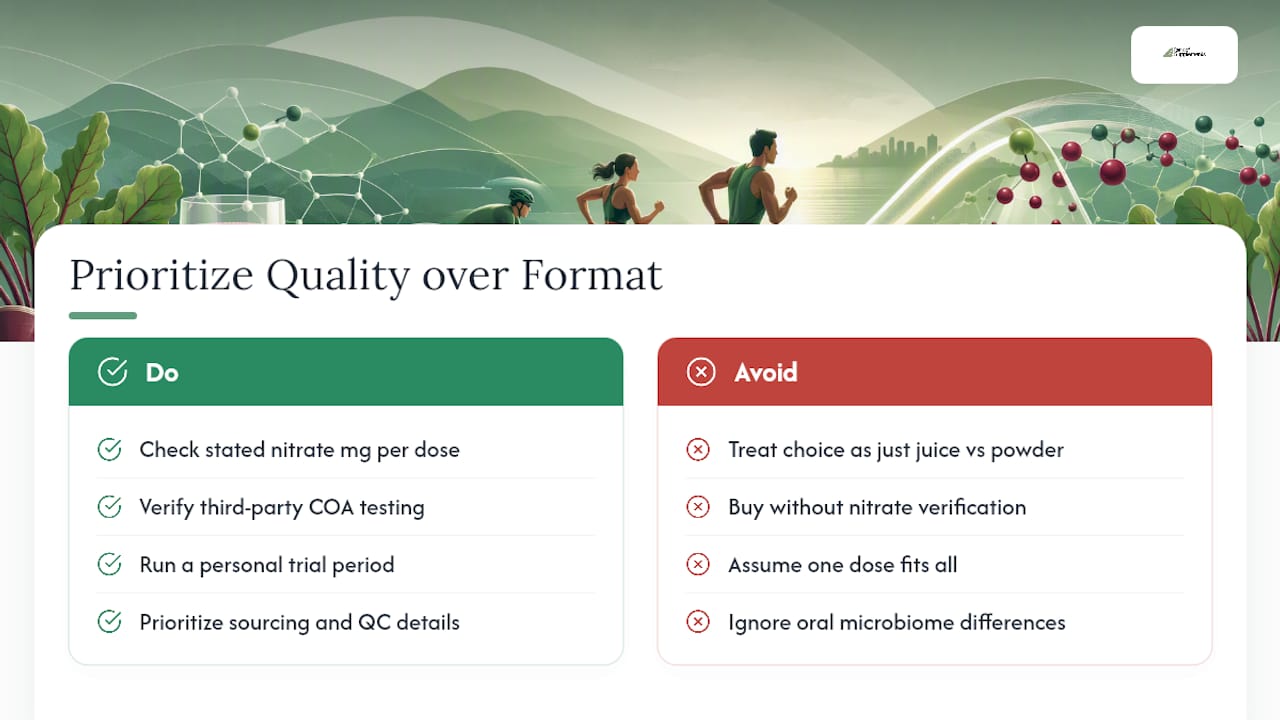
The other overlooked nuance: conventional advice treats beet supplementation like a one-size dose, when individual response to dietary nitrate varies based on oral microbiome composition. Two people taking the identical labeled dose can see meaningfully different nitric oxide conversion. That's why a personal trial period matters more than any general guideline about "the best form of beetroot."
If you're prioritizing one thing, prioritize verification. Look for a stated nitrate milligram count and, ideally, third-party testing, before you look at whether the product comes as juice or powder. Format is the second decision. Quality control is the first, and it's the one most buyers never check.
— matteo
This article is general information, not a substitute for advice from a qualified doctor. Consult a qualified healthcare professional about your own circumstances before acting on anything here.
Sources
- Beetroot Supplement vs. Beetroot Juice
- Foods (2021) review on beetroot bioactives
- Can Beetroot Powder Improve Athletic Performance? — Cleveland Clinic
FAQ
Is it okay to drink beet juice or take beet powder every day?
Yes, for most healthy adults, daily use at labeled doses is generally considered safe, though anyone on blood pressure medication should check with a doctor first since the effects can stack.
What should I avoid when taking beetroot powder?
Avoid using antibacterial mouthwash close to your dose, since it kills the oral bacteria that convert nitrate to nitrite, and avoid products that don't disclose nitrate content per serving.
What is the best form of beetroot to consume?
It depends on your goal: juice or concentrate delivers more nitrate for acute performance and blood pressure effects, while powder offers more convenience and less sugar for daily use, and choosing a third-party tested product matters more than the format itself.
Should I take beet powder or juice in the morning or before a workout?
For performance or blood pressure benefits, timing matters more than time of day. Take it roughly 90 minutes to 3 hours before exercise to allow the nitrate-to-nitric-oxide conversion process to take effect.