Creatine reliably improves short-burst strength and power, and when paired with resistance training, it supports measurable lean mass gains, as explained in this detailed guide to creatin wirkung and benefits. Research also points to emerging cognitive benefits, particularly under sleep loss or in older adults. The clinically supported approach is simple: 3 to 5 grams of creatine monohydrate daily, which is safe for most healthy adults according to major reviews.
TL;DR:
- Creatine benefits vegetarians, older adults, and menopausal women most by boosting muscle creatine stores and enhancing resistance training results.
- The recommended daily dose is 3 to 5 grams of creatine monohydrate, with loading optional and not mandatory for effective saturation.
- Creatine is generally safe for long-term use in healthy adults, with minimal side effects limited to water retention and occasional stomach upset.
- Combining creatine with carbohydrate sources may slightly improve muscle uptake, but consistency in daily intake is more important than timing.
- The most cost-effective and proven form is creatine monohydrate, especially when verified by third-party testing and transparent labeling.
Table of Contents
- The Real Advantages of Creatine Supplementation for Strength and Muscle
- Does Creatine Actually Help Your Brain?
- Who Gets the Biggest Benefit From Creatine?
- How to Take Creatine: Dosing, Timing, and Loading
- Is Creatine Safe? Side Effects and Common Myths
- Why Creatine Monohydrate Is Still the Gold Standard
- Getting More Out of Your Creatine Routine
- Our Take on the Creatine Evidence
- The Bottom Line on Creatine’s Benefits
- Sources
- FAQ
The Real Advantages of Creatine Supplementation for Strength and Muscle
Creatine works by recharging your muscles’ fastest energy system. During a heavy set of squats or a sprint, your body burns through phosphocreatine to regenerate ATP, the molecule that fuels muscle contraction. More phosphocreatine on board means more fuel for those short, explosive efforts before fatigue sets in.
That mechanism translates into measurable results. The International Society of Sports Nutrition’s position stand identifies creatine monohydrate as the most effective supplement currently available for increasing high-intensity exercise capacity and lean body mass when combined with a resistance training program. This isn’t a marginal effect confined to elite lifters. Recreational gym-goers on a structured program typically see it show up as:
- More reps completed at a given weight before muscle failure
- Small-to-moderate lean mass gains over several weeks of consistent training
- Better tolerance for high-volume training blocks without excessive fatigue
- Possible support for faster recovery between hard sessions
The takeaway: creatine doesn’t build muscle by itself. It extends how hard and how long you can push during the sets that actually stimulate growth. The lean mass gains and strength improvements documented across dozens of trials in the ISSN position stand only show up when supplementation rides alongside a real progressive overload program. Skip the training, and you’re just paying for slightly heavier muscles from water retention.
Does Creatine Actually Help Your Brain?
Muscle isn’t the only tissue that runs on phosphocreatine. Neurons need rapid, on-demand energy too, and creatine helps buffer that supply during periods of high demand. Research on brain energy metabolism points to creatine acting as a backup energy reservoir for neurons, which becomes especially relevant when the brain is under strain.
That strain shows up in specific circumstances, and the cognitive benefits tend to concentrate in a few groups:
- Sleep-deprived people, where creatine has shown modest improvements in tasks requiring sustained attention
- Older adults, where preliminary work suggests support for memory and processing speed
- Perimenopausal and menopausal women, where emerging data suggests a potential role in supporting cognition alongside muscle maintenance during a period marked by declining natural creatine synthesis
None of this rises to the level of “creatine as a nootropic for everyone.” The strongest cognitive signals appear in people whose baseline energy reserves are already taxed, whether by poor sleep, aging, or hormonal shifts. Healthy, well-rested young adults may notice little to nothing upstairs. The research here is real but early, and it deserves that qualifier every time someone oversells it.
Who Gets the Biggest Benefit From Creatine?
Not everyone starts from the same place, and that changes how much creatine actually moves the needle.
- Vegetarians and vegans. Dietary creatine comes almost entirely from meat and fish, so plant-based eaters typically start with lower muscle creatine stores. That lower baseline means larger relative increases in both intramuscular creatine and functional strength once they start supplementing.
- Older adults. Combined with resistance training, creatine has evidence behind it for offsetting age-related muscle loss, or sarcopenia, one of the biggest threats to independence later in life.
- Perimenopausal and menopausal women. This is one of the most under-covered groups in mainstream creatine coverage, despite genuine emerging interest in both muscle and cognitive outcomes during this transition.
- Athletes and general gym-goers. The baseline population the research was originally built around, and still the group with the deepest evidence base.
People who are pregnant, nursing, or managing severe kidney disease should talk to a doctor before starting, since those groups are usually excluded from the trials this evidence rests on.
How to Take Creatine: Dosing, Timing, and Loading
The dosing question has a shorter answer than most supplement debates. Both Mayo Clinic and Cedars-Sinai point to 3 to 5 grams per day as the standard maintenance dose, and it’s the amount used across the bulk of the clinical research behind this article.
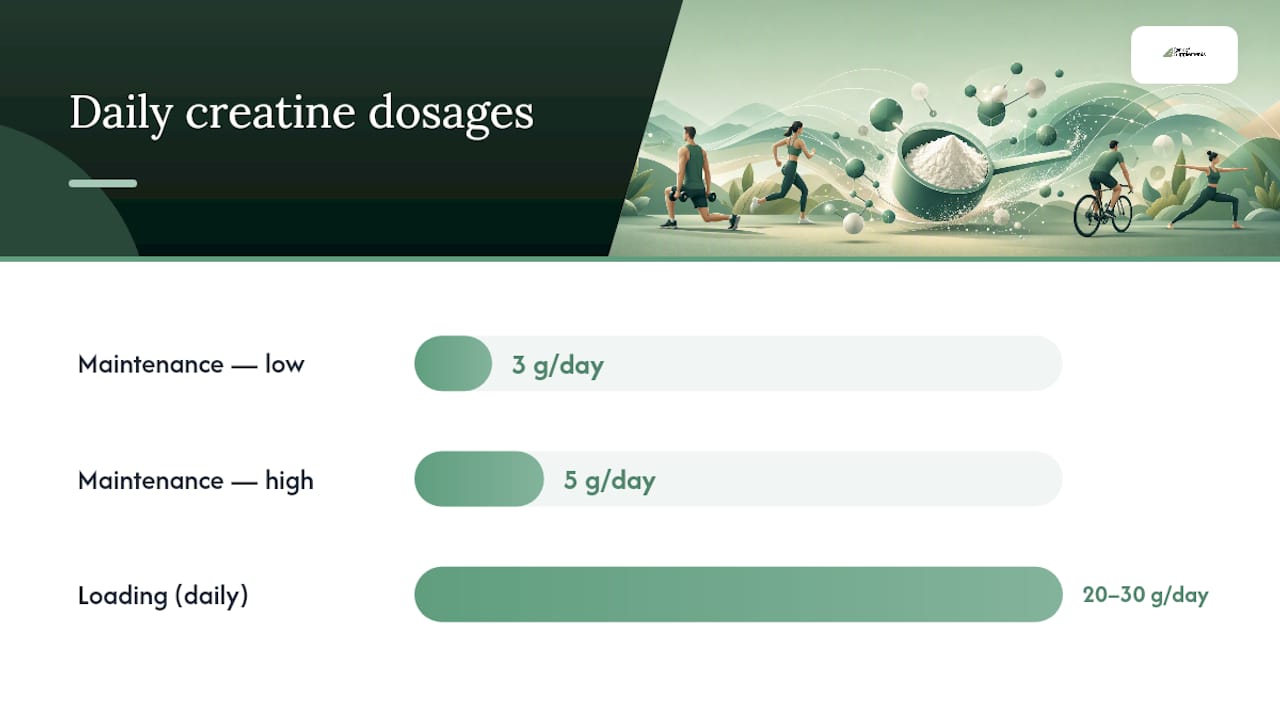
Loading is optional, not required. Some protocols use roughly 20 to 30 grams a day, split into smaller servings, for 5 to 7 days to saturate muscle stores faster, followed by the regular maintenance dose. Skip it, and you’ll reach the same saturation point in about three to four weeks instead of a week. Neither approach is wrong; loading just buys you speed.
A few practical notes:
- Timing barely matters. Morning, post-workout, or with dinner all work, since creatine builds up in your system over time rather than acting like a pre-workout stimulant.
- Consistency matters far more than timing. Taking 3 grams every single day beats taking 5 grams sporadically.
- Mix it into water, juice, or a shake. Creatine monohydrate dissolves slowly in cold water, so warm liquid or a bit of stirring helps.
Pro Tip: Pre-mix a week’s worth of single doses into small containers on Sunday. The single biggest reason people fall off creatine isn’t side effects, it’s forgetting the scoop most mornings.
Long-term use, tracked across years of trial data, hasn’t turned up red flags in healthy adults. If you have an existing kidney or liver condition, check with your doctor before adding any daily supplement, creatine included. For dosing specifics and how to adjust for body weight, our guide to using creatine effectively breaks down loading math in more detail.
Is Creatine Safe? Side Effects and Common Myths
Creatine monohydrate is one of the most studied supplements in sports nutrition, and the safety data is unusually deep. A 2025 review across the lifespan found it rarely turns up in adverse-event reporting despite being used by an enormous number of people over decades, including in long-duration trials.
That doesn’t mean zero side effects. What actually shows up:
- Water retention in the first few weeks, as muscles hold slightly more intracellular fluid
- Occasional mild stomach upset, usually tied to taking too much at once rather than the ingredient itself
- No consistent evidence of kidney or liver harm in healthy adults taking recommended doses, according to the broader clinical review in Creatine in Health and Disease
The cramps-and-kidney-damage myth persists mostly from confusing correlation with causation. Athletes who cramp often just aren’t drinking enough water, not because creatine damaged their kidneys. People with pre-existing kidney disease, and those who are pregnant or nursing, still belong in the “ask your doctor first” category, since they’re excluded from most of the safety trials.
Why Creatine Monohydrate Is Still the Gold Standard
Skip the fancy-sounding variants. Comparative research on creatine forms consistently shows monohydrate matching or beating buffered, ethyl ester, and other marketed alternatives, usually at a fraction of the price. There’s no convincing evidence any other form absorbs better or works faster.
When you’re comparing products, a few markers separate serious brands from the rest:
- Third-party testing seals like NSF Certified for Sport or Informed-Sport, especially important for competitive athletes
- A single-ingredient label rather than a proprietary blend hiding the actual creatine dose
- Price per gram of actual creatine, not per scoop, since serving sizes vary
- Clear serving counts so you know exactly how many days a tub actually covers
Our creatine monohydrate ingredient page breaks down specific products that meet these standards if you want a shortcut past label-reading.
Getting More Out of Your Creatine Routine
The supplement does its job. Whether you notice the benefit depends on what you build around it.
- Train with progressive overload. Creatine amplifies the training effect; it doesn’t replace it. Add weight, reps, or volume over time and the lean mass and strength gains compound.
- Prioritize consistency over precision. A prepacked daily dose taken at roughly the same time beats an occasional “loading” binge. Set a habit trigger, like right after brushing your teeth.
- Mix with a source of carbohydrate occasionally. A modest carb source, like juice or a banana, may support creatine uptake into muscle. It’s not mandatory, just a small edge.
- Watch caffeine timing if you’re GI-sensitive. Some people notice stomach discomfort stacking a large caffeine dose right on top of creatine. Space them out if that’s you.
Pro Tip: If you’re cycling on and off creatine for personal reasons, know that the research doesn’t actually require it. Continuous daily use is what the safety data covers most thoroughly. For more on that specific question, see our breakdown on whether cycling creatine actually matters.
Our Take on the Creatine Evidence
Creatine has more consistent research behind it than almost any other supplement on the market, and that’s exactly why this supplement is considered a baseline recommendation rather than a trend. Our creatine monohydrate reviews prioritize products carrying third-party testing seals over flashy marketing claims, because a clean label matters more than a proprietary blend name.
If you’re past the “should I take this” question and ready to pick a product, our guide for readers over 30 starting creatine narrows the field to options that pass those certification checks. For a broader look at ingredients worth stacking creatine with, browse the full supplement ingredient library.
— matteo
The Bottom Line on Creatine’s Benefits
Athletes, older adults protecting muscle mass, vegetarians with lower baseline stores, and women navigating menopause all show up in the research as groups who benefit meaningfully from creatine. The simplest way to start: 3 grams of creatine monohydrate daily, paired with a resistance training routine you’ll actually stick with. For dosing specifics or product picks, our how-to guide is the logical next stop.

This article is general information, not a substitute for advice from a qualified doctor. Consult a qualified healthcare professional about your own circumstances before acting on anything here.
Sources
- Should you be taking creatine? Here’s what the science says | Cedars-Sinai
- Creatine - Mayo Clinic
- Creatine supplementation is safe, beneficial throughout the lifespan
FAQ
What are the main benefits of taking creatine?
Creatine’s best-documented benefits are improved strength, power output during short bursts of exercise, and lean mass gains when paired with resistance training, with emerging evidence for cognitive support under stress or sleep loss.
How should menopausal women take creatine?
Most emerging research on creatine and menopause uses the standard 3 to 5 gram daily maintenance dose alongside resistance training, though women managing other health conditions should confirm the approach with their doctor first.
Is creatine safe for daily long-term use?
Yes, for most healthy adults. Long-term trial data and adverse-event reporting reviewed in a 2025 lifespan analysis show no consistent pattern of kidney or liver harm at recommended doses.
Do I need to load creatine, or can I skip it?
Loading is optional. Skipping it and taking 3 to 5 grams daily from day one still saturates your muscles fully within about three to four weeks, just slower than a loading protocol.
Which type of creatine should I buy?
Creatine monohydrate remains the most researched and cost-effective option, since comparative studies haven’t found other forms to outperform it.