Alpha-GPC: Dosage, Benefits and Side Effects
Also known as: Choline alfoscerate, L-alpha-glycerylphosphorylcholine, Alpha-glycerophosphocholine
Alpha-GPC is a choline compound used both as a nootropic and, in Europe, as a prescription treatment for cognitive decline after stroke. It has better human trial support than most nootropic ingredients, including a 2024 randomised trial in mild cognitive impairment. Its use in pre-workouts for power output rests on a much smaller literature.
How Alpha-GPC Works
Delivers choline across the blood-brain barrier more efficiently than choline bitartrate, raising acetylcholine synthesis. Acetylcholine matters for both memory formation and neuromuscular signalling, which is the rationale for its two very different uses.
Benefits
- Mild cognitive impairment: a 2024 multicentre randomised trial in 100 subjects found 600 mg/day improved ADAS-cog scores by 2.34 points more than placebo over 12 weeks.
- Post-stroke cognitive recovery: a large Italian multicentre trial in 2,044 patients used 1,000 mg/day injected for 28 days then 1,200 mg/day orally for five months.
- Acute cognitive performance: improved Stroop scores in healthy trained men at 315 mg and 630 mg.
- Power output: small trials suggest an effect on force production; the evidence is thin next to the cognitive data.
Research Summary
A 2024 randomised double-blind placebo-controlled trial of 600 mg/day in amnestic mild cognitive impairment, Barbagallo Sangiorgi 1994 multicentre trial in 2,044 stroke and transient ischaemic attack patients, and a 2015 trial of alpha-GPC against caffeine and placebo on mood, cognition and power. The cognitive evidence is stronger and better replicated than the athletic evidence.
Recommended Dosage
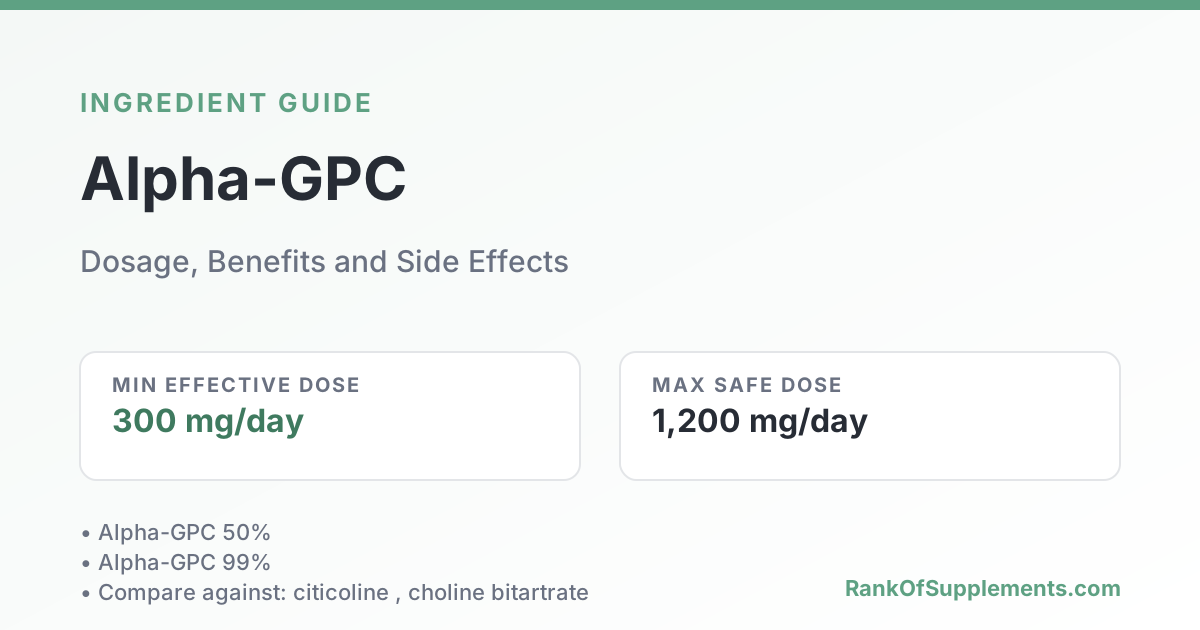
Min effective dose
300 mg/day
Max safe dose
1,200 mg/day
300-600 mg/day for cognitive use, the range the trials used. Pre-workout products typically use 300-600 mg taken 30-60 minutes before training. Splitting the dose is common but not required.
Side Effects
Headache, insomnia, dizziness, heartburn and GI upset at higher doses. Generally well tolerated in the trials, including the six-month post-stroke study.
Interactions
Additive with other cholinergic agents including acetylcholinesterase inhibitors, where excess cholinergic activity can cause nausea and cramping. Anticholinergic drugs work against it. Some observational work has linked choline metabolites to cardiovascular risk via TMAO; the clinical significance for supplemental alpha-GPC is not settled and is worth mentioning to a prescriber if you have cardiovascular disease.
Best Supplements Containing Alpha-GPC
- Pineal 10x— 4.3/5Check Price
- MemoryFuel— 4.3/5Check Price
- BrainAMP— 4.3/5Check Price
- Stratos— 4.3/5Check Price
- NeuroPrime— 4.3/5Check Price
- NeuroActiv6— 4.3/5Check Price
- SynaBoost— 4.3/5Check Price
- CogniSurge— 4.3/5Check Price
- Nervovive— 4.3/5Check Price
- NeuroVera— 4.3/5Check Price
Frequently Asked Questions
Medical Disclaimer
The content on this page is for informational purposes only and is not intended as medical advice, diagnosis, or treatment. Always consult your physician or qualified healthcare provider before starting any new supplement regimen. Individual results may vary.
Sources & References
- 2024 randomised double-blind placebo-controlled trial — Choline alphoscerate for amnestic mild cognitive impairment.
- Barbagallo Sangiorgi G et al. 1994 — Alpha-glycerophosphocholine in the mental recovery of cerebral ischaemic attacks: Italian multicentre clinical trial. Ann N Y Acad Sci.
- 2024 — Acute alpha-glycerylphosphorylcholine supplementation enhances cognitive performance in healthy men.