
TL;DR:
- A targeted supplement routine focusing on creatine, protein, and omega-3s, taken consistently with meals, enhances strength, endurance, and recovery. Prioritizing these three compounds and integrating them into daily habits yields better results than overcomplicated stacks or perfect timing. Building a simple, goal-aligned protocol and addressing nutritional gaps first ensures sustainable progress and minimizes unnecessary supplement use.
A supplement routine for fitness is most effective when built around three evidence-backed compounds: creatine monohydrate, protein, and omega-3 fatty acids, each aligned to your specific training goals. The supplement industry generates billions in annual revenue, yet most athletes overcomplicate their approach by stacking dozens of products when the research consistently points to a short, targeted list. A 2026 meta-analysis of 35 trials with 1,211 participants confirmed that these three supplements produce measurable, statistically significant improvements across strength, endurance, and recovery. The key is not which exotic compound you add next. It is whether you take the right ones consistently, with meals, every single day.
What are the essential supplements for a fitness routine?
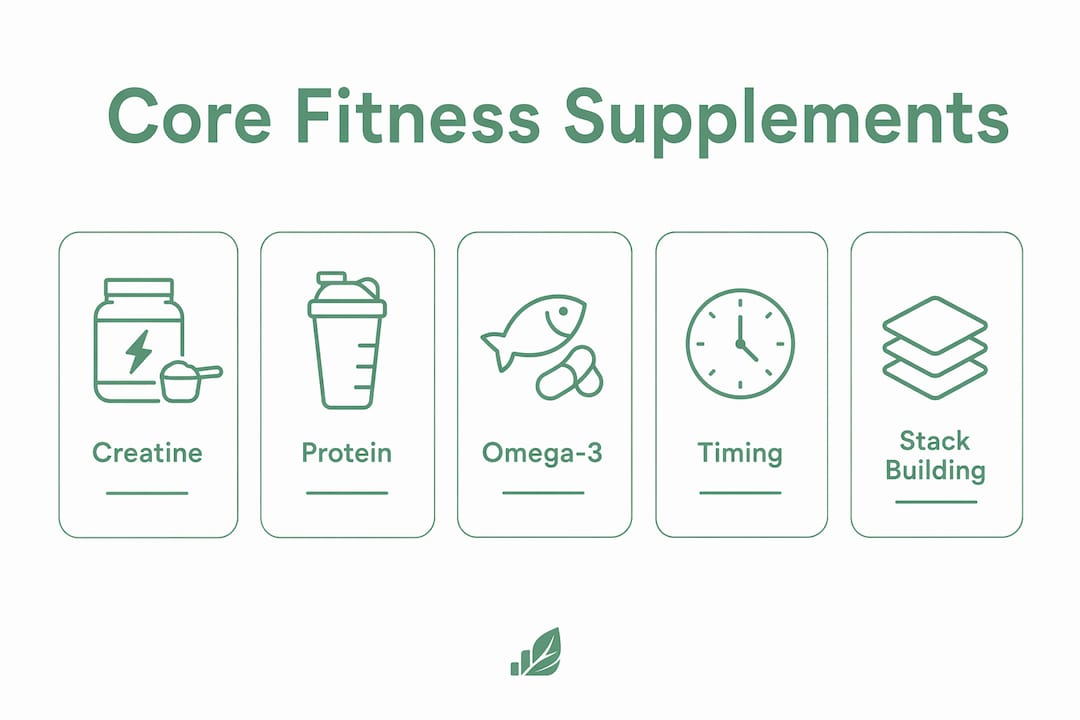
The foundation of any effective fitness supplement plan starts with three compounds that have the strongest evidence base across all training outcomes: creatine monohydrate, dietary protein, and omega-3 fatty acids. Each targets a different physiological mechanism, which means they work together rather than overlap.
Creatine monohydrate for strength and power
Creatine monohydrate is the most studied performance supplement in sports science, and the data is unambiguous. A 2026 meta-analysis of 35 trials found creatine produced the highest effect size for muscle strength among all supplements tested, with a standardized mean difference of 0.46. That number means creatine users gained meaningfully more strength than non-users across a wide range of training protocols. The standard dose is 3 to 5 grams per day, taken consistently with food. You do not need a loading phase unless you want faster saturation in the first week.

For a detailed breakdown of dosing and product quality, the creatine monohydrate guide at Rankofsupplements covers the evidence thoroughly.
Protein for muscle growth and endurance
Protein supplementation is the most versatile tool in a daily supplement regimen because it supports both muscle gain and endurance performance. The same 2026 meta-analysis found protein achieved a standardized mean difference of 0.28 for endurance outcomes, the highest of any supplement tested for that category. That result surprises most people who associate protein only with hypertrophy. The practical target for trained athletes is 1.6 to 2.2 grams per kilogram of body weight per day, distributed across meals rather than consumed in one large dose. Whey protein isolate is the most bioavailable form for post-training use, while casein works better for overnight recovery.
Omega-3 fatty acids for recovery
Omega-3 fatty acids, specifically EPA and DHA from fish oil, rank highest for recovery outcomes among the three core supplements. The 2026 meta-analysis recorded an effect size of 0.40 for recovery indicators, meaning omega-3 users showed significantly reduced inflammation and faster muscle repair after training. The practical dose is 2 to 3 grams of combined EPA and DHA daily, taken with a fat-containing meal to maximize absorption. For a full breakdown of dosing and sourcing, the omega-3 ingredient page at Rankofsupplements is worth reviewing before you buy.
| Supplement | Primary benefit | Effect size (SMD) | Daily dose |
|---|---|---|---|
| Creatine monohydrate | Muscle strength | 0.46 | 3 to 5 g |
| Protein | Endurance and muscle gain | 0.28 | 1.6 to 2.2 g/kg |
| Omega-3 (EPA + DHA) | Recovery and inflammation | 0.40 | 2 to 3 g |
Pro Tip: Choose whey protein isolate over concentrate if you train fasted or have lactose sensitivity. The higher purity means faster absorption and fewer digestive issues, which matters when you are trying to hit consistent daily protein targets.
How to optimize supplement timing for maximum fitness benefits
Optimal supplement timing is one of the most misunderstood topics in fitness nutrition. The popular belief that you must consume protein within a strict 30 to 60 minute post-workout window to trigger muscle growth is not supported by current evidence.
The ISSN consensus, referenced in a 2026 practical guide, clarifies that a 1 to 3 hour pre or post-training meal window is sufficient, and that muscle protein synthesis remains elevated for 12 to 24 hours after exercise. This means missing your shake by 45 minutes does not cost you your gains. What matters far more is whether you hit your total daily protein target and distribute it sensibly across meals.
How to time creatine intake
Creatine timing is even less critical than protein timing. Research shows that creatine with food improves muscle uptake by up to 60% through the insulin response, which means co-ingestion with a carbohydrate and protein meal is the one timing rule that actually matters. Whether you take it before training, after training, or with breakfast makes no measurable difference to long-term outcomes. Creatine works through muscle saturation over weeks, not through acute spikes. Take it with whichever meal you eat most reliably.
Protein distribution across the day
Spreading protein intake across at least 3 to 4 meals with 25 to 40 grams per meal is the most evidence-supported pattern for maximizing muscle protein synthesis. This approach outperforms both front-loading protein at breakfast and saving most of it for a large dinner. The practical structure looks like this:
- Meal 1 (morning): 30 to 40 g protein, with creatine and omega-3s
- Pre-training meal (1 to 2 hours before): 25 to 35 g protein with carbohydrates
- Post-training meal (within 1 to 3 hours): 30 to 40 g protein
- Evening meal: 25 to 35 g protein, with omega-3s if not taken at breakfast
Omega-3 timing
Omega-3 absorption is straightforward. Take fish oil with any meal that contains dietary fat. The fat content in the meal increases bile secretion, which directly improves EPA and DHA absorption. Morning or evening makes no difference. Splitting the dose across two meals slightly improves tolerability if you experience nausea with larger single doses.
| Supplement | Best timing | Key rule |
|---|---|---|
| Creatine | Any meal, consistently | Co-ingest with carbs and protein |
| Protein | 3 to 4 meals, 25 to 40 g each | Include one meal near training |
| Omega-3 | With fat-containing meal | Split dose if GI issues occur |
Pro Tip: Set your supplement schedule around meals you already eat reliably, not around your workout time. Adherence over weeks beats perfect timing on any given day.
How to build a supplement stack aligned with your fitness goals
Building a supplement stack that works means aligning supplements to your primary training goal rather than stacking everything at once. Supplement sprawl, taking eight to twelve products simultaneously, is one of the most common and expensive mistakes in fitness nutrition. It makes it impossible to identify what is working and what is not.
The most productive approach structures your routine in layers, starting with foundational nutrients before adding performance compounds.
Step-by-step approach to building your stack
-
Close nutritional gaps first. Before adding creatine or protein powder, address deficiencies in magnesium, vitamin D, and omega-3s. A layered approach that prioritizes closing deficiencies before adding performance supplements produces better overall results. These nutrients affect sleep quality, hormonal function, and inflammation, all of which directly impact training adaptation.
-
Add protein supplementation. If your whole-food diet does not consistently hit 1.6 to 2.2 g/kg of body weight per day, a whey protein isolate or a plant-based blend like pea and rice protein fills the gap. This is the highest-leverage move for both muscle gain and endurance performance.
-
Introduce creatine monohydrate. Start at 3 to 5 grams per day with your most consistent meal. No loading phase is required for most people. Expect to see strength improvements within 2 to 4 weeks as muscle creatine stores saturate.
-
Evaluate and adjust after 8 weeks. Track your performance metrics: one-rep maxes, training volume, recovery quality, and body composition. Only add a new supplement after confirming the core stack is working and your diet is dialed in.
Goal-specific priorities
Strength focus: Creatine monohydrate is the primary tool. Pair it with adequate protein (closer to 2.2 g/kg) and prioritize progressive overload in training. Omega-3s support joint health and reduce training-related inflammation, which matters when you are lifting heavy frequently.
Endurance focus: Protein distribution becomes the priority. Spreading intake across the day supports muscle repair between sessions and prevents the muscle breakdown that accumulates during high-volume training. Omega-3s reduce systemic inflammation that builds up over long training blocks.
Recovery focus: Omega-3s and protein together form the most evidence-backed recovery combination. The highest recovery effect sizes in the 2026 meta-analysis came from omega-3 supplementation, with protein distribution providing the structural repair substrate.
Common mistakes to avoid
Three mistakes consistently derail supplement routines. First, supplement sprawl: adding pre-workouts, BCAAs, glutamine, and multiple fat burners before the core stack is established. Second, neglecting consistency: taking creatine three days a week produces a fraction of the benefit of daily intake. Third, overcomplicating timing: spending mental energy on whether to take protein 20 minutes or 40 minutes post-workout, while missing doses entirely on busy days.
Practical supplement routine examples and troubleshooting
A practical daily supplement regimen does not require a spreadsheet. The goal is a schedule simple enough to follow on your worst day, not just your best.
Sample routine for morning training
- 6:30 AM (pre-training): Whole food meal or protein shake with 30 to 35 g protein, 5 g creatine, and omega-3s taken with the meal
- 9:00 AM (post-training): Whey protein isolate shake with 30 g protein and carbohydrates within 1 to 3 hours of finishing training
- 1:00 PM (lunch): Whole food meal with 30 to 40 g protein from chicken, fish, or legumes
- 7:00 PM (dinner): 30 to 35 g protein with omega-3s if not taken at breakfast
Sample routine for evening training
- 7:00 AM (breakfast): 30 to 40 g protein with 5 g creatine and omega-3s
- 1:00 PM (lunch): 30 to 35 g protein from whole foods
- 5:00 PM (pre-training): Light meal or shake with 25 to 30 g protein and carbohydrates
- 8:30 PM (post-training): 30 g protein shake or whole food meal within 1 to 3 hours
Troubleshooting common issues
Gastrointestinal discomfort from creatine: Switch from creatine monohydrate powder to micronized creatine monohydrate, which dissolves more completely and causes less stomach irritation. Take it with food rather than on an empty stomach.
Missing doses consistently: Attach supplement intake to an existing habit. Place creatine next to your coffee maker. Keep protein powder next to the blender. The most effective strategy for long-term adherence is reducing friction, not adding willpower.
Timing confusion: Stop optimizing timing until you have hit your daily targets consistently for four weeks straight. Daily consistency in supplement intake matters far more than precise timing for most individuals. Get the dose right before you worry about the clock.
Beginners feeling overwhelmed: Start with protein only. Hit your daily target for two weeks. Then add creatine. Then add omega-3s. Introducing one supplement at a time reduces cognitive load and makes it easier to identify what is working.
Key takeaways
A supplement routine for fitness works best when it centers on creatine, protein, and omega-3s, taken consistently with meals, and aligned to your primary training goal rather than scattered across a dozen products.
| Point | Details |
|---|---|
| Core stack is three supplements | Creatine, protein, and omega-3s cover strength, endurance, and recovery with the strongest evidence. |
| Timing matters less than consistency | Daily intake with food beats perfect pre/post workout timing every time. |
| Protein distribution drives results | Spread 25 to 40 g protein across 3 to 4 meals, including one near your training window. |
| Align stack to your goal | Prioritize creatine for strength, protein distribution for endurance, omega-3s for recovery. |
| Build in layers | Close nutritional gaps before adding performance supplements to avoid supplement sprawl. |
Why I stopped chasing the perfect timing and started winning
The most common mistake I see fitness enthusiasts make is treating their supplement routine like a precision engineering problem. They obsess over whether to take creatine 15 minutes before or 20 minutes after training, while skipping doses entirely on travel days or busy weeks.
I spent years reviewing supplement research at Rankofsupplements, and the pattern is consistent: the people who get the best results are not the ones with the most sophisticated stacks. They are the ones who take three to four supplements every single day, with meals, without exception. The 2026 meta-analysis data reinforced what I had already observed anecdotally. Creatine’s effect size of 0.46 for strength and omega-3s’ effect size of 0.40 for recovery are not achieved through perfect timing. They are achieved through weeks of consistent saturation.
The other thing worth saying directly: most people do not need more supplements. They need more protein from their diet, better sleep, and a training program they actually follow. Supplements work on top of a solid foundation. They do not replace it. If your diet is inconsistent and your sleep is poor, adding a pre-workout or a fat burner will not move the needle. Fix the foundation first, then let creatine and omega-3s do their job.
My honest recommendation is to run the core three for eight weeks before evaluating anything else. Track your lifts, your recovery quality, and your body composition. The data will tell you whether you need to add anything. Most of the time, you will not.
matteo
Find the right supplements for your fitness goals
If you are ready to move from general principles to specific product choices, Rankofsupplements has the resources to make that decision easier.
The supplement ingredient library at Rankofsupplements covers creatine, omega-3s, protein sources, and dozens of other compounds with science-backed breakdowns of dosing, mechanisms, and quality markers. For strength-focused athletes, the Nutrigo Lab Strength review provides a detailed analysis of one of the top-rated workout supplements in 2026. Whether you are building your first stack or refining an existing one, Rankofsupplements gives you the evidence-based foundation to choose with confidence.
Recommended
- Related article: Top vitamins for fitness covers the micronutrient layer that supports your core supplement stack.
- Top list: Best creatine supplements for beginners over 30 ranks the top creatine products with quality and dosing analysis.
- Specific product: Nutrigo Lab Strength review for a top-rated strength supplement evaluated against the latest evidence.
- Ingredient guide: Creatine monohydrate ingredient page for a full breakdown of dosing, benefits, and sourcing.
FAQ
What supplements should beginners start with for fitness?
Beginners should start with protein supplementation to hit daily targets of 1.6 to 2.2 g/kg of body weight, then add creatine monohydrate at 3 to 5 grams per day once protein intake is consistent. Omega-3 fatty acids are the third addition, taken with any fat-containing meal to support recovery.
Does creatine timing matter for muscle gains?
Creatine timing has minimal impact on long-term outcomes. Taking creatine with a carbohydrate and protein meal improves muscle uptake by up to 60% through the insulin response, but whether that meal is before or after training does not significantly affect results.
How much protein do you need per day for muscle gain?
The evidence-supported range for muscle gain is 1.6 to 2.2 grams of protein per kilogram of body weight per day, distributed across 3 to 4 meals with 25 to 40 grams per meal. Total daily intake and distribution matter more than the timing of any single dose.
Are omega-3 supplements necessary if you eat fish regularly?
Omega-3 supplements are not necessary if you consistently eat two to three servings of fatty fish like salmon or mackerel per week. For most people who do not hit that target reliably, 2 to 3 grams of combined EPA and DHA from fish oil covers the recovery and inflammation benefits shown in the research.
How long does it take to see results from a supplement routine?
Creatine requires 2 to 4 weeks of daily intake to saturate muscle stores and produce measurable strength improvements. Protein benefits accumulate over weeks of consistent intake aligned with training. Omega-3 effects on recovery and inflammation typically become noticeable after 4 to 6 weeks of daily use.