
TL;DR:
- Micronutrients are essential for activating metabolic processes that support fat loss. Adequate levels of magnesium, zinc, iron, and vitamin D improve energy production, hormone regulation, and muscle preservation during dieting. Addressing common deficiencies before weight loss enhances the chances of losing at least 5% of body weight within 12 weeks.
Micronutrients are the vitamins and minerals your body needs in small amounts to run the metabolic processes that make fat loss possible. Without them, your cells cannot produce energy efficiently, regulate hunger hormones, or preserve muscle during a calorie deficit. Understanding why micronutrients for weight loss matter goes far beyond eating less and moving more. Research shows that correcting deficiencies in magnesium, zinc, iron, and vitamin D before starting a diet gives people a 58% higher likelihood of losing at least 5% of body weight within 12 weeks. That single finding reframes the entire conversation around dieting.
Why micronutrients for weight loss are non-negotiable
Micronutrients do not directly burn fat. They support the biochemical pathways that regulate metabolism and appetite, which is what makes sustainable fat loss possible. Think of them as the spark plugs in an engine. The fuel is there, but without the spark, nothing fires.

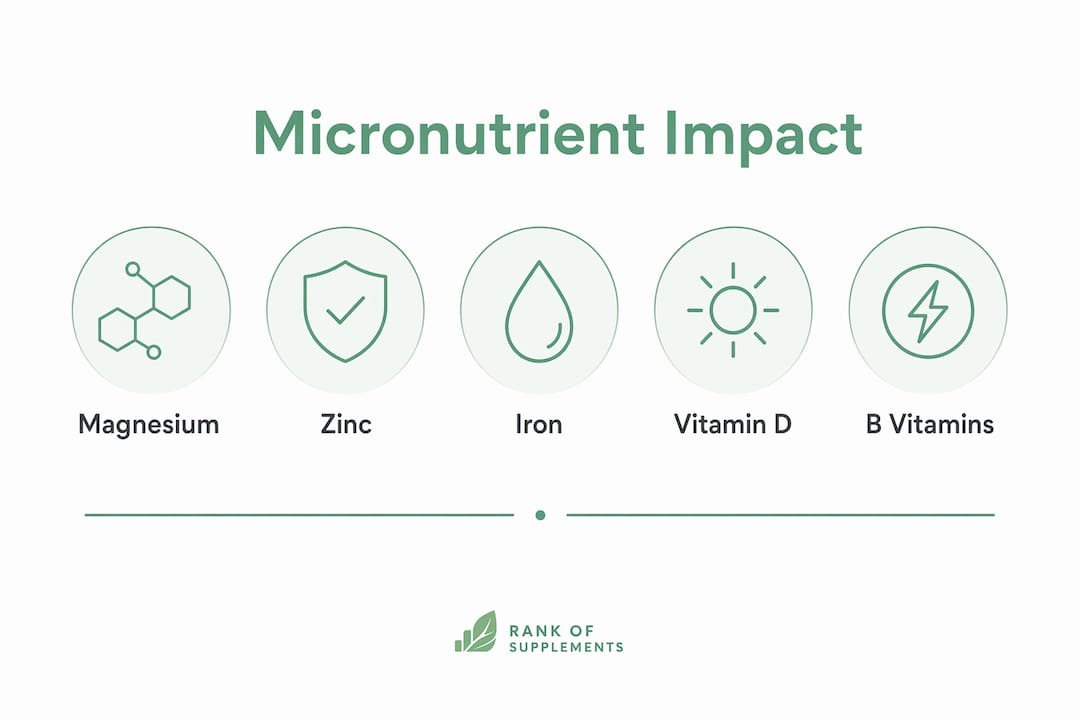
The four micronutrients most directly linked to weight loss outcomes are magnesium, zinc, iron, and vitamin D. Each one plays a distinct role. Magnesium activates over 300 enzymatic reactions, including those involved in ATP synthesis and insulin signaling. Zinc regulates thyroid hormone production and leptin, the hormone that tells your brain you are full. Iron carries oxygen to working muscles, which directly affects how much energy you can burn during exercise. Vitamin D acts more like a hormone than a vitamin, influencing fat cell behavior, muscle function, and inflammation.
The role of micronutrients in weight loss is not theoretical. It is biochemical and measurable. When these nutrients are present at adequate levels, your body can oxidize fat efficiently, maintain muscle tissue, and keep hunger signals in check. When they are low, every one of those processes degrades.
How do micronutrients influence metabolism and fat oxidation?
Metabolism is not a single process. It is a network of hundreds of chemical reactions, and micronutrients act as cofactors that make those reactions run. B vitamins are the clearest example. Vitamins B1, B2, B3, B5, B6, B7, B9, and B12 all participate in converting carbohydrates, fats, and proteins into ATP, the body’s energy currency. Without adequate B vitamins, your mitochondria cannot extract energy from food efficiently, which means lower energy output and slower metabolic.
Magnesium is equally central. A 12-week trial using 300 mg per day of magnesium supplementation in overweight individuals improved respiratory quotient, a direct measure of fat versus carbohydrate burning. A lower respiratory quotient means the body is burning more fat relative to carbohydrates. That is a meaningful metabolic shift, not a marginal one.
Vitamin D’s role in fat loss is often underestimated. Participants with vitamin D levels above 30 ng/mL lost 2.3 kg more fat mass and 0.8 kg less lean mass over 16 weeks compared to a deficient group on the same diet. Preserving lean mass matters because muscle tissue burns more calories at rest than fat tissue does. Losing muscle during a diet slows your metabolism and makes weight regain more likely.
Here is a quick summary of the key metabolic roles:
- Magnesium: ATP synthesis, insulin sensitivity, fat oxidation
- Zinc: Thyroid hormone production, leptin signaling, appetite regulation
- B vitamins: Coenzyme functions in carbohydrate, fat, and protein metabolism
- Vitamin D: Muscle preservation, hormonal regulation, fat cell function
- Iron: Oxygen transport to muscles, aerobic energy production
Pro Tip: If your energy crashes mid-workout or you feel persistently fatigued on a calorie-restricted diet, low iron or B12 is often the culprit. Ask your doctor for a full blood panel before assuming you need to eat more.
What are common micronutrient deficiencies during weight loss?
Deficiencies during weight loss are more common than most people expect. Obesity itself creates what researchers call the nutritional paradox: a state of being overfed in calories but undernourished in vitamins and minerals. Excess body fat drives chronic inflammation, which impairs nutrient absorption and alters how the body stores and uses micronutrients. So even before a diet begins, many people are already running low.
When calorie intake drops, the problem compounds. Eating less food means consuming fewer micronutrients, especially if the diet relies on processed or low-variety foods. The result is a cascade of metabolic problems:
- Mitochondrial dysfunction: Without adequate B vitamins, magnesium, and iron, mitochondria cannot produce ATP efficiently. Metabolic slows.
- Impaired leptin signaling: Low zinc disrupts leptin sensitivity, making it harder for your brain to register fullness. Hunger increases even when calories are adequate.
- Accelerated muscle breakdown: Deficiencies in zinc, selenium, vitamin B12, iron, and vitamin D impair muscle preservation during calorie restriction, reducing metabolic rate over time.
- Hormonal disruption: Low vitamin D and zinc both affect thyroid function, which governs the overall speed of your metabolism.
“Micronutrient deficiencies occur despite excess energy intake, driven by inflammation and absorption issues.”, The Nutritional Paradox of Obesity, MDPI
The practical implication is clear. Addressing micronutrient status before cutting calories is not optional preparation. It is a prerequisite for effective fat loss. People who correct at least two common deficiencies before starting calorie restriction are significantly more likely to achieve meaningful weight loss within the first three months.
How do weight loss drugs affect micronutrient intake?
GLP-1 receptor agonists like semaglutide and tirzepatide have become widely used tools for weight management. They work by slowing gastric emptying and reducing appetite, which leads to smaller meals and fewer eating occasions. That mechanism is effective for reducing calorie intake, but it creates a serious nutritional side effect.
Adults on GLP-1 therapy consumed an average of only 33.4 g of protein and 7.2 g of fiber daily, far below the recommended amounts for maintaining muscle and gut health. Protein and fiber are not micronutrients, but their deficiency signals a broader problem. When total food volume drops this dramatically, micronutrient intake drops with it. Reduced meal frequency and smaller portions mean lower micronutrient exposure even when the macronutrient targets are technically met.
A Cambridge professor’s warning published in 2025 highlighted that doctors frequently miss this hidden nutritional risk in patients on weight loss drugs. The concern is not just about vitamins. It is about the long-term metabolic consequences of running low on iron, magnesium, zinc, and vitamin D while simultaneously losing body mass.
Practical strategies for people on GLP-1 medications include:
- Prioritize nutrient-dense foods in every small meal: eggs, leafy greens, legumes, fatty fish, and nuts deliver high micronutrient density per calorie.
- Monitor blood markers every 8 to 12 weeks: ferritin, vitamin D, magnesium, and zinc are the four most critical to track.
- Consider a high-quality multivitamin formulated for calorie-restricted diets, particularly one that covers B12, iron, and vitamin D.
- Work with a registered dietitian who understands pharmacotherapy-induced nutritional gaps.
Pro Tip: If you are on a GLP-1 medication, do not wait for symptoms to appear before checking your micronutrient levels. Fatigue, hair thinning, and muscle cramps are late-stage signs. Catching deficiencies early through blood work prevents them from derailing your progress. Learn more about how GLP-1 medications work and their nutritional implications.
How can you assess and optimize your micronutrient intake?
The first step is knowing where you stand. Four blood markers give you the clearest picture of your micronutrient status before and during a weight loss program. These critical blood markers are ferritin (stored iron), 25-hydroxyvitamin D, serum magnesium, and serum zinc. All four are depleted in obesity and essential for the metabolic reactions that support fat loss.
Key micronutrient markers and their targets
| Marker | Why it matters | Optimal range |
|---|---|---|
| Ferritin | Oxygen delivery to muscles; energy production | 30 to 100 ng/mL |
| Vitamin D (25-OH) | Muscle preservation, fat cell regulation | Above 30 ng/mL |
| Serum magnesium | ATP synthesis, insulin sensitivity | 0.85 to 1.10 mmol/L |
| Serum zinc | Thyroid function, leptin signaling | 70 to 120 mcg/dL |
Once you have your baseline, dietary strategy comes next. A colorful plate is not a cliché. It is a practical shortcut to micronutrient variety. Dark leafy greens supply magnesium, iron, and folate. Fatty fish like salmon and mackerel provide vitamin D and B12. Pumpkin seeds and oysters are among the richest sources of zinc. Legumes deliver iron, B vitamins, and fiber simultaneously.
Here is a four-step approach to optimizing your intake:
- Get tested first. Request the four markers above from your doctor before starting any diet or supplement program.
- Fix diet quality before adding supplements. Whole foods deliver micronutrients in forms your body absorbs more readily than most pills.
- Add targeted supplements where diet falls short. Magnesium glycinate is well-absorbed and gentle on the stomach. Vitamin D3 combined with K2 improves calcium metabolism alongside fat loss. You can review the evidence on magnesium supplementation to understand dosing and quality differences.
- Pair micronutrients with adequate protein. Lean muscle preservation during weight loss requires both micronutrients and protein working together. Aim for at least 1.2 to 1.6 g of protein per kilogram of body weight daily to protect muscle mass and metabolic rate.
Balancing fiber intake also matters. Fiber slows digestion, which improves the absorption of fat-soluble vitamins like D, A, E, and K. It also feeds gut bacteria that produce short-chain fatty acids, supporting the gut environment where much of your micronutrient absorption happens. For a broader look at how vitamins support fitness and fat loss, the top vitamins for fitness guide at Rankofsupplements covers the evidence in practical detail.
A healthcare professional, ideally a registered dietitian or functional medicine doctor, should review your results and guide supplementation. Self-prescribing high-dose iron or zinc without testing can cause toxicity and interfere with other nutrient absorption. Personalized guidance is not a luxury here. It is the difference between a plan that works and one that creates new problems. For those wanting to lose fat while keeping muscle, micronutrient support is a core part of the strategy, not an afterthought.
Key takeaways
Micronutrients are the biochemical foundation of effective weight loss. Without adequate levels of magnesium, zinc, iron, and vitamin D, your metabolism cannot function at the rate needed for consistent, sustainable fat loss.
| Point | Details |
|---|---|
| Correct deficiencies first | Fixing magnesium, zinc, iron, and vitamin D before dieting raises fat loss success rates significantly. |
| Metabolism depends on micronutrients | B vitamins, magnesium, and iron are direct cofactors in ATP production and fat oxidation. |
| GLP-1 drugs increase deficiency risk | Reduced food volume on weight loss medications lowers micronutrient intake even when calories are tracked. |
| Test before you supplement | Ferritin, vitamin D, magnesium, and zinc blood markers reveal your true baseline before any intervention. |
| Protein and micronutrients work together | Preserving lean muscle during fat loss requires both adequate protein and sufficient micronutrient intake. |
The part of weight loss nobody talks about enough
I have reviewed hundreds of weight loss programs, supplement stacks, and diet protocols over the years. The pattern I keep seeing is the same. People obsess over calorie counts and macros, then wonder why they feel exhausted, lose muscle, and plateau after six weeks. The answer is almost always sitting in their blood work.
Micronutrient status is the silent variable in weight loss. It does not show up on a food tracking app. It does not get mentioned in most diet books. But it determines whether your metabolism is running at full capacity or grinding along at 60%. I have seen people stall completely on a well-designed calorie deficit, then start losing again after correcting a vitamin D deficiency or bringing ferritin up to a healthy range. The biochemistry is not complicated once you understand it.
The rise of GLP-1 medications has made this issue more urgent. These drugs are genuinely effective for reducing appetite and body weight. But the nutritional blind spot they create is real and underappreciated. A Cambridge professor flagged this publicly in 2025, and the clinical data backs it up. If you are on one of these medications and nobody has checked your ferritin or vitamin D recently, that is a gap worth closing.
My honest recommendation is to treat micronutrient assessment as step one of any weight loss plan, not an optional add-on. The beginner’s guide to supplements for weight loss at Rankofsupplements is a good starting point if you want a structured way to think about what to take and when.
matteo
What Rankofsupplements covers for your micronutrient needs
Choosing the right supplements for weight loss is not guesswork. It requires understanding which ingredients are backed by evidence, which doses are effective, and which product formulations actually deliver what they promise.

Rankofsupplements maintains a detailed supplement ingredient library where you can look up the clinical evidence behind individual micronutrients like magnesium glycinate, vitamin D3, zinc bisglycinate, and B-complex formulas. The platform also publishes ranked reviews of weight management supplements filtered by evidence quality and ingredient transparency. Whether you are starting a calorie-restricted diet, managing nutrition on a GLP-1 medication, or simply trying to close known gaps in your intake, Rankofsupplements gives you the science-backed information to make that decision with confidence.
FAQ
Why do micronutrients matter for weight loss?
Micronutrients act as cofactors in the metabolic reactions that produce energy and regulate hunger hormones. Without adequate levels of vitamins and minerals like magnesium, zinc, and vitamin D, fat oxidation slows and muscle breakdown accelerates.
Which micronutrients support fat loss the most?
Magnesium, zinc, iron, vitamin D, and B vitamins are the most directly linked to weight loss outcomes. Each one supports a different part of the metabolic process, from ATP production to leptin signaling to muscle preservation.
Can micronutrient deficiencies cause weight gain?
Deficiencies do not directly cause weight gain, but they impair the metabolic processes that enable fat loss. Low zinc disrupts leptin sensitivity, increasing hunger, while low iron reduces energy output during exercise, lowering total calorie expenditure.
Do GLP-1 weight loss drugs cause micronutrient deficiencies?
GLP-1 medications reduce appetite and meal volume, which lowers total micronutrient intake even when calorie targets are met. Clinical data shows patients on these drugs often fall well short of recommended protein, fiber, and micronutrient levels.
Should I take a multivitamin while dieting?
A high-quality multivitamin can help cover gaps during calorie restriction, but it should complement, not replace, a nutrient-dense diet. Blood testing for ferritin, vitamin D, magnesium, and zinc first tells you exactly which nutrients need targeted support.
Recommended
- Related article: Beginner’s Guide to Supplements for Weight Loss
- Top list: Best Supplements for Weight Management
- Specific product: Magnesium Glycinate: Benefits, Dosage & Best Supplements
- Guide: Top Vitamins for Fitness: Your Evidence-Based Guide