
TL;DR:
- Balanced nutrition involves consistently eating a variety of nutrient-dense whole foods to support long-term health.
- It reduces chronic disease risk, boosts immunity, and improves body functions through adequacy, balance, moderation, and diversity.
Balanced nutrition is the practice of eating a diverse array of nutrient-dense whole foods in proportions that meet your body’s needs for energy, repair, and disease prevention. The World Health Organization, the CDC, and Harvard Health all identify this eating pattern as the single most effective dietary strategy for reducing chronic disease risk. This is not about counting every calorie or following a rigid macro split. It is about adequacy, variety, and moderation applied consistently over time. Understanding why balanced nutrition works gives you a practical framework for making food choices that support your health for the long term.
Why balanced nutrition is the foundation of long-term health
Balanced nutrition, known in clinical nutrition as a “healthy dietary pattern,” is defined by the consistent intake of whole grains, lean proteins, fruits, vegetables, and healthy fats across meals and days. The World Health Organization identifies this pattern as central to preventing noncommunicable diseases including type 2 diabetes, cardiovascular disease, and certain cancers. The CDC adds that a varied, balanced diet contributes to longevity and supports multiple aspects of physiological health simultaneously.
What makes this approach different from a diet is its time horizon. A diet is temporary. A balanced eating pattern is a lifelong practice. Harvard Health frames it as building an “eating pattern” rather than following a set of rules, which is why it produces lasting results where short-term diets fail.
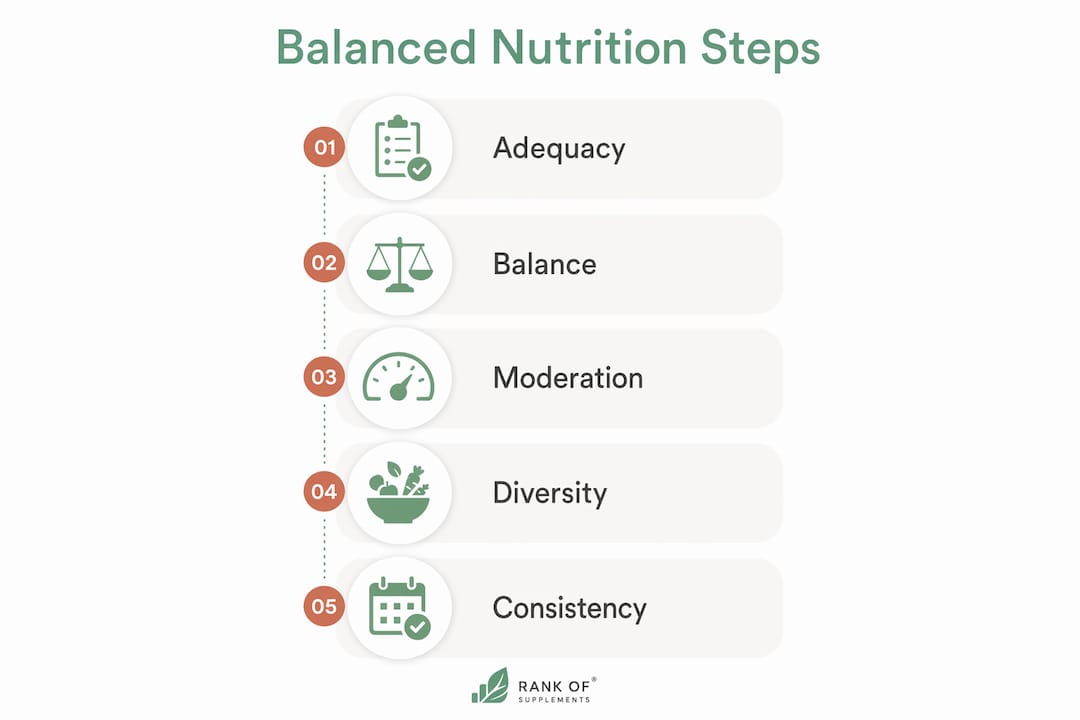
The core principles are four: adequacy, balance, moderation, and diversity. Adequacy means getting enough of every essential nutrient. Balance means no single food group dominates. Moderation means limiting foods that offer calories without nutritional value. Diversity means rotating food sources so your body receives a full spectrum of vitamins, minerals, and phytonutrients. These four principles work together, and removing any one of them weakens the whole system.

What are the core benefits of a balanced diet for your body?
A balanced diet produces measurable benefits across nearly every body system. The CDC confirms that healthy eating supports stronger bones, better immunity, healthier skin, sharper vision, and reduced risk for heart disease, type 2 diabetes, and some cancers. That breadth of benefit is what separates balanced nutrition from targeted supplements or single-nutrient interventions.
The key benefits include:
- Chronic disease prevention. Consistent intake of plant-based foods, lean proteins, and whole grains is linked to reduced chronic illness risk and improved life expectancy.
- Immune function. Micronutrients like zinc, vitamin C, and vitamin D found in whole foods directly support immune cell production and response.
- Bone and muscle strength. Calcium, magnesium, and protein work together to maintain bone density and preserve muscle mass, especially as you age.
- Weight management. Fiber-rich foods promote satiety and stabilize blood sugar, naturally reducing the drive to overeat.
- Digestive health. Dietary fiber from vegetables, legumes, and whole grains feeds beneficial gut bacteria and supports regular bowel function.
- Mental energy. Stable blood sugar from complex carbohydrates and protein prevents the energy crashes that follow high-sugar meals.
Each of these benefits compounds over time. A person who eats well at 35 carries significantly lower disease risk at 55. That is the real return on balanced nutrition.
Pro Tip: Consistency matters more than perfection. Eating a balanced diet 80 to 90% of the time produces far better long-term outcomes than strict adherence for two weeks followed by abandonment.
How does food quality influence health outcomes?
Food quality is the variable that most people underestimate. Two diets can have identical calorie counts and macro ratios but produce completely different health outcomes depending on the quality of the foods involved. Harvard Health research shows that diets emphasizing whole foods over processed refined carbohydrates correlate with approximately 15% lower heart disease risk. That gap comes entirely from food quality, not calorie math.
The table below shows how high-quality and low-quality food choices differ in their effects on the body.
| Factor | High-quality foods | Low-quality foods |
|---|---|---|
| Blood sugar response | Slow, stable rise and fall | Rapid spike followed by crash |
| Satiety | Sustained for 3 to 4 hours | Short-lived, triggers hunger quickly |
| Nutrient density | High in vitamins, minerals, fiber | High in calories, low in nutrients |
| Inflammation | Anti-inflammatory compounds present | Pro-inflammatory additives common |
| Heart disease risk | Reduced with consistent intake | Elevated with regular consumption |
| Gut microbiome | Feeds beneficial bacteria | Disrupts microbial diversity |
Whole foods like legumes, leafy greens, oily fish, nuts, and whole grains deliver fiber, plant proteins, and unsaturated fats. These three components together reduce cardiovascular risk more effectively than any single low-fat or low-carb approach. Processed foods, by contrast, strip out fiber and micronutrients during manufacturing and replace them with sodium, refined sugars, and industrial fats.
The practical implication is straightforward. When you choose your next meal, the most useful question is not “how many calories does this have?” It is “how close is this to its original, whole form?” The closer to whole, the better the health outcome.
Pro Tip: Shop the perimeter of the grocery store first. The perimeter is where fresh produce, proteins, and dairy live. The center aisles are where most ultra-processed products sit.
What practical methods help you achieve balanced nutrition daily?
The most evidence-backed tool for building a balanced diet is the balanced plate method, recommended by both the CDC and Harvard Health. The method is simple: fill half your plate with fruits and vegetables, one quarter with lean protein, and one quarter with whole grains. This visual approach promotes energy metabolism and satiety more reliably than calorie counting because it builds nutrient density into every meal automatically.
Here are six steps to put balanced nutrition into practice starting today:
- Apply the balanced plate at every meal. Half vegetables or fruit, one quarter protein (chicken, fish, legumes, eggs), one quarter whole grains (brown rice, quinoa, oats). No measuring required.
- Eat at regular intervals. Skipping meals slows metabolism and increases hunger, which leads to overeating at the next meal. Three structured meals with one or two small snacks works for most people.
- Prioritize protein at breakfast. Protein in the morning stabilizes blood sugar for hours and reduces cravings later in the day. Eggs, Greek yogurt, or a protein-rich smoothie all qualify.
- Build muscle through protein and activity. Adequate protein supports glucose metabolism and reduces insulin resistance risk. Muscle tissue is metabolically active and processes blood sugar more efficiently than fat tissue.
- Read nutrition labels for fiber and added sugar. Aim for at least 3 grams of fiber per serving and no more than 5 grams of added sugar per serving in packaged foods.
- Rotate your protein and vegetable sources weekly. Eating the same foods every day limits your micronutrient range. Rotating sources ensures you cover a broader spectrum of vitamins and minerals over time.
The balanced plate method works because it does not require tracking apps, food scales, or nutrition degrees. It translates complex dietary science into a visual habit anyone can apply at any meal, anywhere.
Common myths about balanced nutrition and how to correct them
The biggest misconception about balanced nutrition is that it requires precise, per-meal nutrient ratios. It does not. Nutritional balance achieved by variety/01%3A_Module_1_Core_Concepts_in_Nutrition/1.03%3A_Achieving_a_Healthy_Diet/1.3.03%3A_What_Is_Nutritional_Balance_and_Moderation) over time avoids nutrient antagonism issues and supports health better than strict per-meal balance. Calcium and iron, for example, compete for absorption when consumed together. Spreading them across different meals throughout the day solves this without any complex planning.
Here are the most common myths, corrected:
- Myth: Balanced eating means eating the same healthy foods every day. Fact: Variety is the mechanism. Rotating food sources prevents nutrient gaps and supports a diverse gut microbiome.
- Myth: You must count calories to eat well. Fact: Harvard Health experts warn that focusing exclusively on calorie counting often leads to poor adherence and confusion. Food quality and variety matter more.
- Myth: Skipping a meal helps with weight loss. Fact: Skipping meals may slow metabolism and increase hunger, which undermines long-term weight management.
- Myth: Fad diets deliver balanced nutrition. Fact: Sustainable healthy eating requires an eating pattern over time, not a temporary dietary fix.
- Myth: Supplements replace a balanced diet. Fact: Supplements fill specific gaps but cannot replicate the full matrix of nutrients, fiber, and phytonutrients found in whole foods.
The confusion around nutrition often comes from conflicting headlines and trend-driven diets that promise fast results. The research is consistent: no single superfood, macro ratio, or elimination diet outperforms a sustained pattern of varied, high-quality eating. Building that pattern gradually, one meal at a time, is more effective than any dramatic overhaul.
Pro Tip: Instead of overhauling your entire diet at once, swap one low-quality food per week for a whole-food alternative. Small, consistent changes build lasting habits without burnout.
Key Takeaways
Balanced nutrition is the most evidence-supported dietary strategy for preventing chronic disease, managing weight, and sustaining energy across every stage of life.
| Point | Details |
|---|---|
| Quality over calorie math | Whole foods reduce heart disease risk more effectively than calorie counting or strict macro ratios. |
| Balanced plate method | Fill half your plate with vegetables or fruit, one quarter protein, one quarter whole grains at every meal. |
| Consistency beats perfection | Eating a varied, nutrient-dense diet most of the time produces far better outcomes than short-term strict diets. |
| Variety prevents nutrient gaps | Rotating food sources across the week covers a broader micronutrient spectrum and supports gut health. |
| Muscle mass matters | Adequate protein intake combined with activity improves glucose metabolism and reduces insulin resistance risk. |
What I’ve learned from years of watching people chase the wrong nutrition goals
Most people who struggle with their diet are not failing because they lack willpower. They are failing because they are trying to solve a long-term problem with a short-term tool. I have watched people obsess over macro percentages, eliminate entire food groups, and track every gram of food they eat, only to burn out within three months and return to their old habits. The research backs this up. Harvard Health is clear that rigid calorie and ratio focus leads to poor adherence. The body does not need perfection. It needs consistency.
The shift that actually works is moving from restriction to addition. Instead of asking “what should I cut out?”, ask “what can I add to this meal to make it more complete?” Add a handful of spinach to your eggs. Add a serving of legumes to your lunch. Add a piece of fruit to your afternoon snack. These additions crowd out low-quality foods naturally, without the psychological weight of deprivation.
The other thing I have seen underestimated repeatedly is the role of muscle mass. Most nutrition conversations focus on what you eat and ignore what your body does with it. Increasing muscle mass improves glucose processing and reduces insulin resistance risk. That means the combination of adequate protein and regular resistance training makes your balanced diet work harder. Food and movement are not separate strategies. They are one system.
My honest advice: stop looking for the perfect diet and start building the habit of eating a little better at each meal. The chronic disease prevention benefits of balanced nutrition accumulate quietly over years, not weeks. That is exactly why they are worth the effort.
matteo
How Rankofsupplements supports your nutrition goals
A balanced diet is the foundation, but specific nutrient gaps are real and common, especially for people managing energy, immunity, or weight. Rankofsupplements provides science-backed reviews and rankings to help you identify supplements that complement your eating pattern, not replace it.
The Supplement Ingredient Library at Rankofsupplements breaks down the evidence behind individual nutrients so you can make informed decisions about what your diet may be missing. For targeted support, the supplements by health goal section covers immune health, energy, weight management, and more, all ranked by evidence quality. Whether you are filling a specific gap or building a complete wellness routine, Rankofsupplements gives you the research without the guesswork.
FAQ
What is balanced nutrition, exactly?
Balanced nutrition is the consistent intake of a variety of nutrient-dense whole foods, including fruits, vegetables, lean proteins, whole grains, and healthy fats, in proportions that meet your body’s daily needs. The World Health Organization defines it by adequacy, variety, and moderation rather than rigid nutrient ratios.
How does balanced nutrition prevent chronic disease?
A healthy eating pattern consistently including plant-based foods, lean proteins, and whole grains is linked to reduced risk of type 2 diabetes, heart disease, and certain cancers. The CDC confirms that a varied, balanced diet contributes to longevity and supports multiple aspects of physiological health.
Do I need to count calories to eat a balanced diet?
No. Harvard Health experts state that focusing exclusively on calorie counting often leads to poor adherence and confusion. The balanced plate method, which fills half your plate with vegetables or fruit, one quarter with protein, and one quarter with whole grains, achieves nutrient balance without tracking numbers.
How quickly do the benefits of balanced nutrition show up?
Some benefits, like improved energy and better digestion, appear within days of improving food quality. Long-term benefits like reduced chronic disease risk and improved metabolic health accumulate over months and years of consistent eating patterns.
Can supplements replace a balanced diet?
Supplements address specific nutrient gaps but cannot replicate the full range of fiber, phytonutrients, and synergistic compounds found in whole foods. They work best as a complement to a balanced diet, not a substitute for one.
Recommended
- Related article: How to balance diet and supplements for better health
- Top list: Best supplements for immune support
- Product review: Top-ranked wellness supplements for 2026
- Guide: Your supplement routine for fitness: a 2026 guide