
TL;DR:
- Nutritional synergy occurs when combining nutrients or foods enhances their health effects beyond their individual contributions. It relies on mechanisms like improved bioavailability, cofactor activation, antioxidant recycling, and natural food compounds. Applying strategic food pairings can boost health and performance, but reliance on supplements without diet balance can lead to nutrient antagonism.
Nutritional synergy is defined as two or more nutrients or foods consumed together producing a combined biological effect greater than the sum of their individual effects. This concept, sometimes called nutrient synergy in scientific literature, explains why a spinach salad with lemon juice outperforms a spinach salad alone. The lemon’s vitamin C converts plant-based iron into a form your body actually absorbs. Understanding what is nutritional synergy gives you a practical tool for getting more from the food you already eat, without adding complexity or cost to your diet.
What is nutritional synergy and how does it work in your body?
Nutritional synergy operates through a set of well-documented biochemical mechanisms. The most important is bioavailability, which refers to how much of a nutrient your body actually absorbs and uses after you consume it. A nutrient can be present in food but still largely wasted if the body cannot process it efficiently. Synergistic pairings change that equation.
Vitamins and minerals often act as cofactors, meaning one nutrient activates or enables another to do its job. Vitamin D, for example, is required for calcium to be absorbed in the intestine. Without adequate vitamin D, most dietary calcium passes through the body unused. This is not a minor effect. Co-supplementing vitamin D with calcium reduces fracture risk more effectively than calcium alone, which shows the clinical weight of this interaction.

Antioxidant synergy is another key mechanism. Vitamins C and E work together in the body: vitamin E neutralizes free radicals in cell membranes, and vitamin C regenerates vitamin E so it can keep working. Neither nutrient performs this cycle alone. The result is a more sustained antioxidant defense than either provides independently.
The food matrix also plays a major role. Whole foods contain natural balancing compounds, fiber, enzymes, and phytochemicals that support absorption in ways isolated supplements cannot replicate. Whole foods provide natural compounds that supplements lack, making food-based synergy inherently more effective than supplement-based synergy, which depends heavily on formulation and timing.
Key mechanisms behind nutrient synergy:
- Cofactor activation: One nutrient enables another to function (vitamin D activating calcium absorption)
- Conversion enhancement: Vitamin C converts non-heme iron from plant foods into a more absorbable ferrous form
- Antioxidant recycling: Paired antioxidants extend each other’s active lifespan in the body
- Fat-soluble transport: Vitamins A, D, E, and K require dietary fat present in the same meal to be absorbed at all
- Enzyme activation: Magnesium activates over 300 enzyme systems, many of which process B vitamins
Pro Tip: When eating leafy greens like spinach or kale, add a small drizzle of olive oil or a handful of nuts to the same meal. The fat content triggers the absorption of fat-soluble vitamins naturally present in those greens.
Which nutrient combinations have the strongest scientific evidence?
The research on specific synergistic pairings is clear and practical. These are not theoretical interactions. They are measurable, reproducible effects documented in clinical studies.
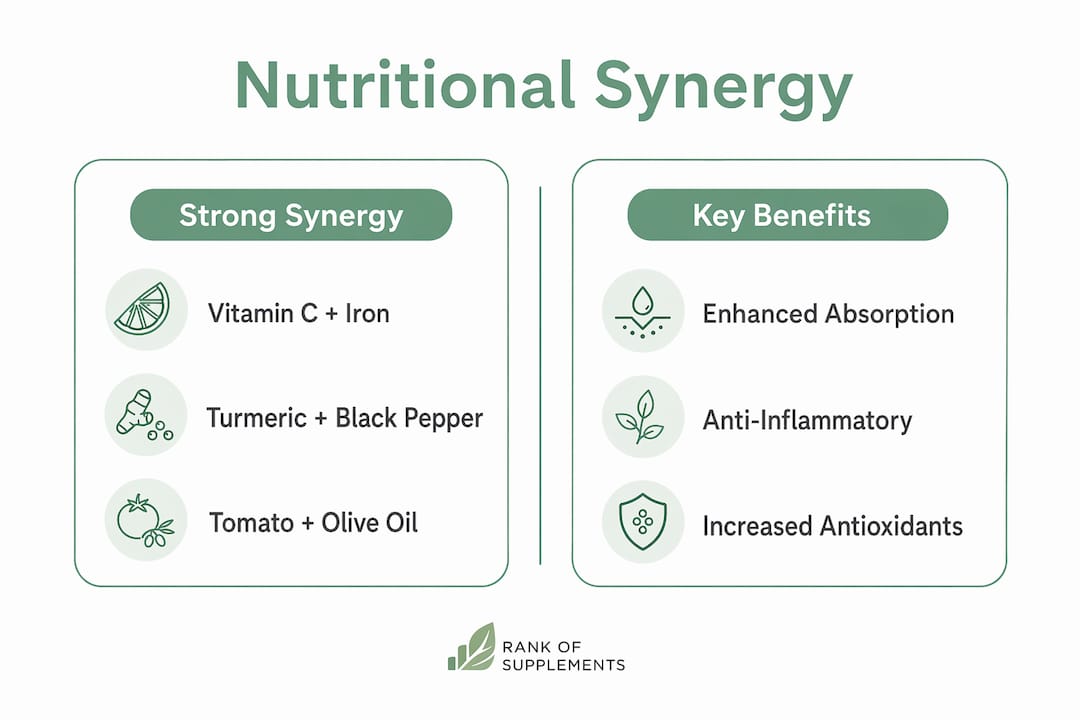
Vitamin C and non-heme iron is the most widely applicable pairing for everyday health. Plant-based iron absorption improves significantly when consumed alongside vitamin C-rich foods. This matters most for vegetarians, vegans, and anyone relying on beans, lentils, or fortified cereals as iron sources. Squeezing lemon juice over a lentil dish or eating an orange alongside a bowl of oatmeal are simple, effective applications.
Turmeric and black pepper is one of the most dramatic examples in nutrition science. Curcumin, the active compound in turmeric, has poor bioavailability on its own. Piperine, found in black pepper, increases curcumin absorption by over 2,000% by inhibiting the liver enzymes that would otherwise break it down too quickly. That number is not a typo. A pinch of black pepper in a turmeric-spiced dish is not optional if you want the anti-inflammatory benefit.
Tomatoes and olive oil offer another well-studied example. Lycopene, the antioxidant that gives tomatoes their red color, is fat-soluble. Cooking tomatoes in olive oil can triple lycopene bioavailability compared to eating raw tomatoes without fat. This is why traditional Mediterranean cooking, which routinely combines these two ingredients, produces measurably better health outcomes.
Prebiotics and probiotics, when consumed together, form what researchers call synbiotics. Prebiotics paired with probiotics improve gut microbiome health in ways that neither achieves alone. Prebiotics feed and sustain the probiotic bacteria, extending their activity in the gut and amplifying their effect on nutrient absorption and immune function.
| Nutrient Pairing | Key Benefit | Mechanism |
|---|---|---|
| Vitamin C + non-heme iron | Improved iron absorption | Converts ferric to ferrous iron |
| Curcumin + piperine | Dramatically higher curcumin uptake | Inhibits metabolic breakdown |
| Lycopene + dietary fat | Tripled lycopene bioavailability | Fat-soluble transport |
| Calcium + vitamin D | Reduced fracture risk | Intestinal calcium absorption |
| Prebiotics + probiotics | Stronger gut microbiome support | Bacterial feeding and survival |
Dr. Maryam S. Makowski of Stanford Lifestyle Medicine emphasizes shifting focus from isolated nutrients to combinations to optimize heart, bone, and brain health. That shift in perspective is what separates a functional diet from a merely adequate one.
What are the benefits and limits of nutritional synergy for health and performance?
The benefits of applying nutrient synergy span multiple body systems. For cardiovascular health, a Mediterranean-style diet rich in natural food synergies links to better cardiovascular, metabolic, and cognitive outcomes. This diet is not built around any single superfood. It works because of the cumulative effect of dozens of synergistic food pairings consumed consistently over time.
For athletes and active people, synergy affects recovery and performance in concrete ways. Vitamin C supports collagen synthesis, which repairs connective tissue after training. Magnesium activates the enzymes that process carbohydrates for energy. Iron carries oxygen to working muscles. Each of these nutrients performs better when the diet supports its cofactors and absorption partners.
For bone health, the calcium-vitamin D relationship is the clearest example in clinical research. For cognitive function, omega-3 fatty acids work alongside B vitamins, particularly B12 and folate, to support brain cell membrane integrity and neurotransmitter production. Rankofsupplements covers these interactions in depth in its cognitive health supplement guide.
The limits matter just as much as the benefits. Nutrient antagonism is real. High doses of calcium can inhibit absorption of iron and zinc when consumed at the same time. This means taking a high-dose calcium supplement with an iron-rich meal actively works against you. Timing and separation of these nutrients is not optional.
Dr. Silja Schäfer makes a point that deserves direct attention: nutrient synergy cannot compensate for an overall unbalanced diet. Synergy is an amplifier, not a foundation. If your diet is poor, pairing turmeric with black pepper will not rescue it.
Practical limits to keep in mind:
- Synergy requires the right dose of each nutrient. Too little of one partner reduces the effect.
- Supplement timing matters. Fat-soluble vitamins require a fat-containing meal to absorb properly.
- Antagonistic pairs need to be separated. Take calcium and iron supplements at different times of day.
- Synergy does not replace dietary variety. It enhances it.
Pro Tip: If you take a calcium supplement, take it at a different meal than your iron-rich foods or iron supplement. A gap of at least two hours between the two significantly reduces the competitive absorption effect.
How can you apply nutritional synergy in your daily diet?
Applying nutrient synergy does not require a nutrition degree or a rigid meal plan. Registered Dietitian Abbey Sharp describes the approach as a gentle upgrade rather than a strict rule system. That framing is useful. You are making small, consistent improvements to an already reasonable diet, not rebuilding it from scratch.
Here are practical ways to build synergy into your daily routine:
-
Add citrus to iron-rich meals. Squeeze lemon over lentil soup, add orange segments to a spinach salad, or stir lime juice into black bean dishes. The vitamin C content converts plant iron into a form your body absorbs efficiently.
-
Use black pepper with turmeric every time. Add both to curries, soups, scrambled eggs, or roasted vegetables. The combination is standard in South Asian cooking for a reason that predates modern nutrition science.
-
Cook tomato-based sauces in olive oil. Slow-cooked tomato sauce with a generous pour of olive oil is not just Italian tradition. It is one of the most effective ways to extract lycopene from tomatoes.
-
Take fat-soluble vitamins with your largest meal. Vitamins A, D, E, and K all require dietary fat for absorption. Taking them with breakfast if that meal contains eggs, avocado, or nuts makes a measurable difference.
-
Pair fermented foods with fiber-rich vegetables. Yogurt or kefir alongside roasted asparagus, garlic, or onions gives probiotic bacteria the prebiotic fuel they need to thrive. This is the synbiotic effect in practice.
-
Separate antagonistic supplements by meal. If you take both calcium and iron supplements, assign each to a different meal. This simple scheduling change prevents one from blocking the other.
-
Build meals around whole food combinations first. Before reaching for supplements, check whether a food pairing can achieve the same effect. Whole foods deliver synergy with built-in balancing compounds that isolated supplements cannot match.
For people who do use supplements, learning how to balance diet and supplements is the next logical step. The goal is a diet that works as a system, not a collection of individual nutrients consumed in isolation.
Key Takeaways
Nutritional synergy works because nutrients do not act alone. Pairing the right foods and supplements consistently produces measurably better health outcomes than consuming the same nutrients in isolation.
| Point | Details |
|---|---|
| Core definition | Nutritional synergy means two or more nutrients together produce a greater effect than each alone. |
| Strongest pairings | Vitamin C with iron, curcumin with piperine, and calcium with vitamin D have the clearest evidence. |
| Whole foods first | Food-based synergy outperforms supplement-based synergy because of natural balancing compounds. |
| Antagonism is real | High-dose calcium blocks iron and zinc absorption; separate these nutrients by meal timing. |
| Synergy is not a fix | Nutrient synergy amplifies a good diet. It cannot compensate for a poor one. |
Why I think most people are applying synergy backwards
Most health-focused people I encounter are chasing individual nutrients. They read that magnesium is important, so they buy a magnesium supplement. They hear that vitamin D is deficient in most adults, so they add a standalone capsule. The logic seems sound, but it misses the point entirely.
Nutritional synergy is not a bonus feature you add on top of a supplement stack. It is the operating system. The body processes nutrients as a network, not as isolated inputs. When you take a high-dose single nutrient without its cofactors, you are often creating imbalances rather than solving them. High-dose zinc without copper, for example, can deplete copper over time. High-dose iron without vitamin C is largely wasted.
What actually works, based on everything the research shows, is building the diet first and using supplements to fill specific, identified gaps. A varied diet built around whole foods, legumes, vegetables, healthy fats, and quality proteins will deliver more synergistic benefit than any supplement stack assembled without that foundation. Rankofsupplements exists precisely to help you identify which supplements are worth adding and which are redundant given what your diet already provides. Check the top wellness supplements guide for evidence-based picks that account for these interactions.
The future of nutrition is personalized. Genetic variation affects how individuals absorb and metabolize specific nutrients, which means synergy will eventually be tailored to your biology. For now, the practical version of that is simple: eat diverse, pair strategically, and supplement with intention rather than habit.
matteo
What Rankofsupplements can help you find next
Understanding nutrient synergy is the first step. Knowing which specific ingredients and supplements actually deliver on that science is the second.
Rankofsupplements maintains a detailed Supplement Ingredient Library that breaks down individual ingredients, their mechanisms, and how they interact with other nutrients. If you want to know whether a specific supplement fits your health goals, that library is the right place to start. For people focused on specific health areas, the supplements by health goal section organizes evidence-based picks by condition, from cardiovascular health to digestion and gut support. Every recommendation accounts for the synergy principles covered in this article.
FAQ
What is nutritional synergy in simple terms?
Nutritional synergy means that two or more nutrients or foods consumed together produce a greater health benefit than either would alone. The classic example is vitamin C improving iron absorption from plant foods.
Does nutritional synergy apply to supplements or only food?
Synergy applies to both, but whole foods deliver it more reliably. Supplements can achieve synergy when formulated correctly and taken with the right cofactors, such as fat-soluble vitamins taken with a fat-containing meal.
What is the most powerful example of nutrient synergy?
Curcumin from turmeric paired with piperine from black pepper is one of the most dramatic examples. Piperine increases curcumin absorption by over 2,000% by slowing the liver enzymes that break it down.
Can nutrients work against each other instead of together?
Yes. High doses of calcium can inhibit iron and zinc absorption when consumed at the same time. This is called nutrient antagonism, and it is managed by separating competing nutrients across different meals.
Is nutritional synergy relevant for athletic performance?
Directly. Iron, magnesium, vitamin C, and B vitamins each support energy production, oxygen transport, and tissue repair. Their synergistic interactions mean that athletic recovery depends on the full nutrient network, not any single compound.
Recommended
- How to Balance Diet and Supplements for Better Health, practical guidance on building a diet and supplement routine that works together
- Top Wellness Supplements 2026: What Actually Works, evidence-based rankings of supplements that account for synergy principles
- Best Supplements for Digestion and Gut Health, synbiotic and gut health supplement guide with probiotic and prebiotic pairings
- Supplement Ingredient Library, full catalog of ingredients with interaction and synergy data for informed supplement choices