
TL;DR:
- Probiotics are live microorganisms that benefit health when consumed correctly. They can improve athletic performance by enhancing endurance, reducing fatigue, and supporting immune function through effects on the gut-muscle axis. Consistent use of strains like Lactiplantibacillus plantarum TWK10 for at least eight weeks at doses between 10^9 and 10^11 CFU can optimize training results.
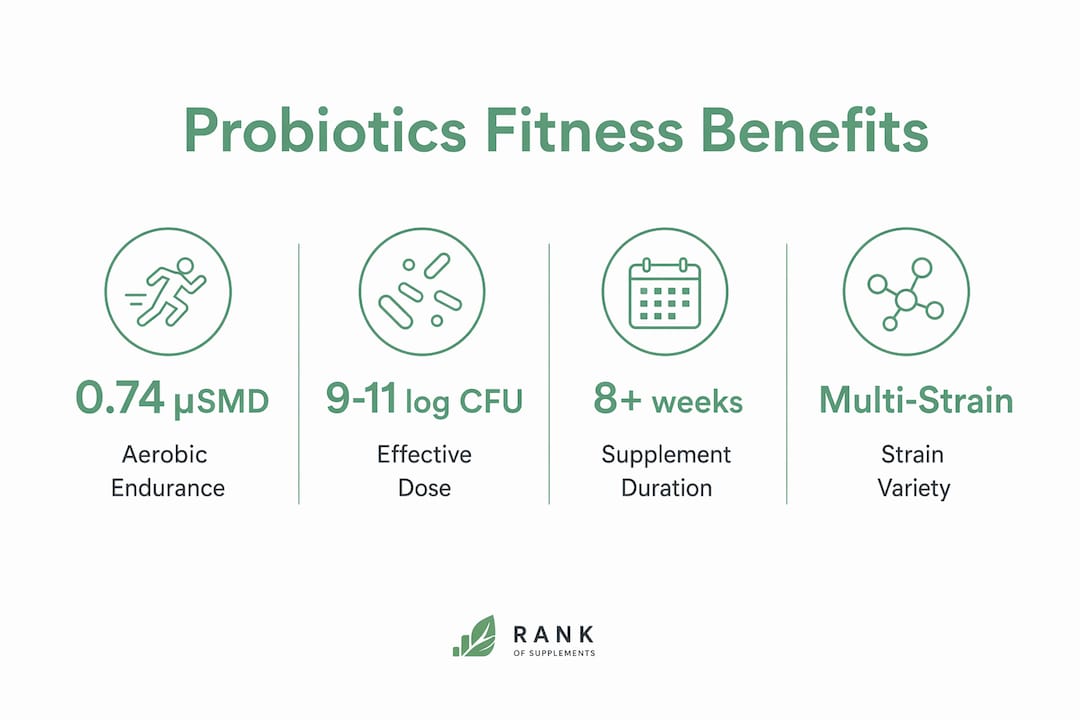
Probiotics are defined by the FAO and WHO as live microorganisms that, when consumed in adequate amounts, confer a measurable health benefit on the host. The role of probiotics in fitness extends well beyond digestive comfort. A 2026 Bayesian meta-analysis found probiotic supplementation improves overall athletic performance by a small-to-moderate effect size (μSMD 0.38), with aerobic endurance showing an even stronger signal (μSMD 0.74). That means the gut is not just a digestion organ. It is an active participant in how hard you can train, how fast you recover, and how resilient your immune system stays through a full training block.
What does the science say about probiotics and athletic performance?

The evidence base for probiotics in sports nutrition has grown sharply since 2021. A systematic review covering 2021 to 2026 confirmed that consistent probiotic use produces measurable gains in endurance capacity, time to exhaustion, and post-exercise recovery markers. These are not marginal rounding errors. They are differences that show up in race times and training logs.
Endurance and VO2max
The 2026 meta-analysis specifically identified aerobic endurance as the performance domain most responsive to probiotic supplementation, with a μSMD of 0.74. VO2max, the gold standard measure of aerobic capacity, improved across multiple trials. For endurance athletes, that kind of shift can separate a podium finish from a mid-pack result.
Muscle strength and explosive power
Multi-strain probiotic formulations show benefits beyond pure cardio. Research links them to improved endurance and explosive strength, suggesting the gut-muscle connection operates across energy systems. Resistance-trained athletes are not left out of the probiotic conversation.
Fatigue reduction
Probiotics reduce exercise-induced fatigue by modulating pro-inflammatory cytokines and preserving gut barrier integrity under training stress. Inflammation is a normal part of adaptation, but unchecked inflammatory signaling slows recovery and blunts performance. Probiotics act as a regulatory buffer in that process.
| Performance Domain | Effect Observed | Key Mechanism |
|---|---|---|
| Aerobic endurance | μSMD 0.74 (strong signal) | Enhanced VO2max, mitochondrial efficiency |
| Overall athletic performance | μSMD 0.38 (moderate signal) | Multi-system gut-muscle axis support |
| Time to exhaustion | Extended in multiple trials | Fatigue-reducing cytokine modulation |
| Explosive strength | Improved with multi-strain formulas | Metabolic substrate availability |
| Immune resilience | Fewer illness episodes | Mucosal immunity strengthening |
Pro Tip: Track your training volume and illness frequency for 8 weeks before starting probiotics. That baseline makes it much easier to see whether a specific strain is actually working for you.
How do probiotics biologically support fitness?
The gut-muscle axis is the central concept here. Microbial homeostasis in the gut directly influences mitochondrial function and energy metabolism in muscle tissue. When the gut microbiome is disrupted by heavy training loads, poor diet, or antibiotic use, downstream effects include reduced energy production, slower recovery, and higher perceived exertion during workouts.
Probiotics intervene at several points in this chain:
- Short-chain fatty acid (SCFA) production: Beneficial bacteria ferment dietary fiber into SCFAs like butyrate and propionate. These compounds fuel colonocytes, reduce gut permeability, and serve as metabolic signals that influence muscle energy use.
- Cytokine modulation: Probiotics reduce pro-inflammatory markers such as IL-6 and TNF-alpha after intense exercise. Lower systemic inflammation means faster tissue repair and less post-workout soreness.
- Mucosal immunity: Probiotics strengthen the gut’s mucosal lining, which acts as the first line of defense against pathogens. Endurance athletes who train at high volumes are especially vulnerable to upper respiratory infections, and stronger mucosal immunity directly reduces illness-related training disruptions.
- Gut barrier integrity: Intense exercise increases intestinal permeability, a condition sometimes called “leaky gut.” Probiotics preserve tight junction proteins in the gut wall, preventing bacterial endotoxins from entering the bloodstream and triggering systemic inflammation.
- Neuroendocrine regulation: The gut-brain-muscle axis governs central fatigue through neurotransmitter precursors and hormonal signals. A healthy microbiome supports serotonin and cortisol regulation, which affects motivation, perceived effort, and sleep quality during hard training blocks.
Pro Tip: Pair your probiotic with a fiber-rich meal rather than taking it on an empty stomach. Dietary fiber acts as a prebiotic substrate, giving the live bacteria something to ferment and helping them establish faster.
The gut-brain-muscle axis is particularly underappreciated by athletes focused only on macros and training volume. Dysbiosis from overtraining can be mitigated with targeted probiotic use, making gut health a genuine performance variable, not just a wellness trend.
What are the best practices for probiotic dosing and strain selection?
Dosing is where most fitness enthusiasts get probiotics wrong. The effective range sits between 10^9 and 10^11 CFU per day, taken consistently for at least 8 weeks. Below that threshold, colonization is too transient to produce measurable performance effects. Above it, you risk digestive discomfort without any additional benefit.
Recommended supplementation protocol
- Start at 10^9 CFU daily for the first two weeks to let your gut microbiome adjust without triggering bloating or loose stools.
- Increase to 10^10 CFU from week three onward if no digestive issues arise. This is the sweet spot for most performance-focused protocols.
- Maintain for a minimum of 8 weeks before evaluating results. Probiotic benefits are not acute. They accumulate through consistent colonization and microbial community shifts.
- Cycle with your training blocks. Many athletes run probiotic protocols during high-volume training phases when immune stress and gut permeability are highest.
- Do not exceed 10^11 CFU without a specific clinical reason. Higher doses cause digestive discomfort and do not produce additional performance gains.
Strain selection matters more than brand
Not all probiotics are equal. Lactiplantibacillus plantarum TWK10 is the most research-backed strain for fatigue reduction and time to exhaustion in athletic populations. It works by improving glycogen storage and reducing ammonia accumulation in muscle tissue. Multi-strain formulations that include Lactobacillus and Bifidobacterium species alongside TWK10 extend benefits to metabolic efficiency and immune resilience.
Synbiotics: probiotics plus prebiotics
A synbiotic approach combines probiotics with prebiotic fibers in the same protocol. Prebiotics fuel probiotic colonization by providing fermentable substrate, which amplifies SCFA production and accelerates the gut environment changes that drive performance benefits. Inulin, fructooligosaccharides (FOS), and resistant starch are the most studied prebiotic fibers for this purpose. You can learn more about improving your gut microbiome with prebiotics to build a complete synbiotic strategy.
| Approach | CFU Range | Duration | Best For |
|---|---|---|---|
| Single-strain (TWK10) | 10^9 to 10^11 CFU/day | 8+ weeks | Fatigue reduction, endurance |
| Multi-strain blend | 10^9 to 10^11 CFU/day | 8+ weeks | Broad metabolic and immune support |
| Synbiotic (probiotic + prebiotic) | 10^9 to 10^11 CFU/day | 8+ weeks | Maximum colonization and recovery |
| High-dose (above 10^11 CFU) | Not recommended | N/A | No added benefit; risk of discomfort |
How can fitness enthusiasts integrate probiotics into their routines?
Probiotics work best when they fit into a consistent daily structure rather than being treated as an occasional add-on. Here is how to build that structure effectively:
- Time your dose with meals. Taking probiotics with food buffers stomach acid and improves bacterial survival through the digestive tract. Breakfast or a pre-workout meal works well for most people.
- Pair with fiber-rich foods. Vegetables, legumes, oats, and whole grains provide the prebiotic substrate that helps probiotic strains colonize and produce SCFAs. A diet low in fiber undermines even the best probiotic supplement.
- Combine with your existing supplement stack thoughtfully. Probiotics pair well with protein supplements and vitamins for fitness without interaction concerns. Avoid taking probiotics at the same time as antibiotics, which kill beneficial bacteria indiscriminately.
- Prioritize consistency over intensity. Missing a day occasionally does not reset your progress, but skipping weeks does. Set a daily reminder and treat probiotics like any other training variable that requires adherence.
- Use immune support as a secondary metric. Probiotics reduce upper respiratory infections in endurance athletes, which is one of the clearest signs the supplement is working. Fewer sick days mean more training days, which compounds over a season.
- Align supplementation with high-stress training phases. Overreaching blocks, competition prep, and travel all increase gut permeability and immune stress. These are the periods where probiotic support delivers the most return. The gut health and immunity connection becomes especially relevant during these windows.
The practical takeaway is simple. Probiotics are not a pre-workout you feel in 30 minutes. They are a background system upgrade that shows up as better recovery, fewer sick days, and more consistent training output over months.
What are the current limitations of probiotic research in fitness?
The science is promising but not settled. Substantial heterogeneity across trials in strains used, doses tested, and athlete populations studied makes it difficult to issue universal recommendations with high confidence. A study showing strong results with L. plantarum TWK10 in male endurance runners does not automatically translate to female strength athletes or recreational gym-goers.
Several gaps remain. Most trials run for 8 to 12 weeks, which is enough to see initial effects but too short to understand long-term microbiome shifts. Sex-specific responses to probiotic supplementation are almost entirely unstudied. Sport-specific protocols, meaning different strains and doses for power sports versus ultra-endurance events, are still in early development.
The gut-brain-muscle axis research is the most exciting frontier. Early work suggests that microbiome composition influences central fatigue, motivation, and even sleep architecture during training. If those connections are confirmed in larger trials, personalized probiotic interventions based on individual microbiome profiling could become a standard part of sports nutrition. For now, the honest position is that probiotics are a supportive variable within a broader training and nutrition plan, not a standalone performance solution.
Key Takeaways
Probiotics improve athletic performance most reliably when the right strain is taken at 10^9 to 10^11 CFU daily for at least 8 weeks alongside a fiber-rich diet.
| Point | Details |
|---|---|
| Aerobic endurance benefits most | Meta-analyses show a μSMD of 0.74 for endurance, the strongest performance signal across all domains. |
| Strain specificity is non-negotiable | L. plantarum TWK10 targets fatigue; multi-strain blends extend benefits to immune and metabolic function. |
| Dose range is fixed | Stay within 10^9 to 10^11 CFU per day. Higher doses cause discomfort without adding performance gains. |
| Synbiotics outperform probiotics alone | Pairing probiotics with prebiotic fiber accelerates colonization and amplifies SCFA production. |
| Consistency over 8 weeks is required | Probiotic benefits accumulate gradually. Short-term use produces no measurable performance effect. |
Why most athletes are thinking about probiotics the wrong way
I have watched fitness enthusiasts spend serious money on exotic probiotic blends with 50 strains and 500 billion CFU, expecting to feel a difference by Friday. That is not how this works, and the research is clear on why.
The gut microbiome is a community, not a switch. You cannot flood it with bacteria and expect instant results. What you can do is give it the right species at the right dose, feed them with fiber, and wait. Eight weeks minimum. That timeline frustrates people who are used to pre-workouts that hit in 20 minutes, but it is the biological reality.
The other mistake I see constantly is ignoring the gut-brain-muscle axis entirely. Athletes obsess over protein timing and creatine loading while their gut microbiome is in dysbiosis from overtraining, poor sleep, and low fiber intake. That dysbiosis is quietly raising their perceived exertion, slowing their recovery, and making them more susceptible to illness. Fixing it with a targeted probiotic protocol costs less than most pre-workout stacks and delivers more durable results.
My practical advice: pick a product with L. plantarum TWK10 or a well-documented multi-strain formula, check the supplement ingredient library to verify what you are actually buying, and commit to 8 weeks before drawing conclusions. Probiotics are not magic. They are a modifiable variable in your training system, and when used correctly, they are one of the more underrated ones available.
matteo
Rankofsupplements resources for your probiotic and fitness supplement decisions
Choosing the right probiotic for your training goals requires more than reading a label. Rankofsupplements provides evidence-based reviews and rankings across the full spectrum of fitness supplements, so you can match products to your specific performance and recovery needs.
The Supplement Ingredient Library at Rankofsupplements breaks down individual ingredients, including probiotic strains, by mechanism, dosing evidence, and quality standards. If you want to build a complete supplement routine around your training block, the supplement routine guide covers how to layer probiotics with protein, vitamins, and recovery aids for maximum effect. For gut-specific support, the digestion and gut health page lists the top-ranked products with direct relevance to fitness performance.
Recommended
- Related article: Your Supplement Routine for Fitness: A 2026 Guide
- Top list: Best Immune Support Supplements 2026
- Specific product: Fibre Select Review, a fiber-based supplement that supports the prebiotic side of a synbiotic protocol
- Condition guide: Best Supplements for Digestion & Gut Health
FAQ
What is the role of probiotics in fitness?
Probiotics improve fitness by enhancing aerobic endurance, reducing exercise-induced fatigue, and strengthening immune function through gut-muscle axis mechanisms. A 2026 meta-analysis found a μSMD of 0.74 for aerobic endurance specifically.
How long do probiotics take to work for exercise performance?
Consistent supplementation at 10^9 to 10^11 CFU per day for at least 8 weeks is required before measurable performance and recovery benefits appear. Short-term use produces no reliable effect.
Which probiotic strain is best for athletes?
Lactiplantibacillus plantarum TWK10 is the most research-backed strain for fatigue reduction and extended time to exhaustion in athletic populations. Multi-strain formulas add broader metabolic and immune benefits.
What is the difference between a prebiotic and a probiotic for athletes?
Probiotics are live bacteria that colonize the gut and produce performance-relevant metabolites. Prebiotics are non-digestible fibers that feed those bacteria. Combining both in a synbiotic approach produces stronger colonization and greater SCFA output than either alone.
Can you take too many probiotics?
Doses above 10^11 CFU per day do not improve performance and frequently cause bloating and digestive discomfort. The optimal range for fitness applications is 10^9 to 10^11 CFU daily, maintained consistently over weeks rather than taken in large single doses.