TL;DR:
- Herbal extracts are concentrated plant compounds designed to deliver consistent doses for therapeutic benefits. The method of extraction influences which phytochemicals are included, affecting efficacy and safety. Standardized extracts with verified active compound percentages are crucial for reliable herbal supplementation.
Herbal extracts are defined as concentrated preparations of active plant compounds, produced by drawing out specific phytochemicals from raw plant material using solvents like water, ethanol, or hydroethanolic mixtures. The role of herbal extracts in natural health is to deliver therapeutic compounds at consistent, measurable doses that raw herbs simply cannot guarantee. The global herbal medicine market is projected to reach $386.7 billion by 2032, a figure that reflects how deeply botanical preparations have embedded themselves in mainstream wellness. That growth also brings real risks, from contamination to drug interactions, which makes understanding how these extracts work a practical necessity, not just an academic interest.
What is the role of herbal extracts in natural health?
Herbal extracts concentrate the biologically active parts of a plant, separating them from inert fiber, water, and structural material. The result is a preparation with a higher density of the compounds that actually produce a therapeutic effect. This is the core distinction between chewing a raw herb and taking a standardized extract: one delivers a variable mix of everything in the plant, the other delivers a defined quantity of the compounds that matter.

The industry term for this process is phytochemical extraction, and it sits at the intersection of traditional herbalism and modern pharmaceutical science. Standardized extracts go one step further by guaranteeing a minimum percentage of a key active compound in every batch. Curcumin extracts from turmeric, for example, are often standardized to 95% curcuminoids, a concentration impossible to achieve through diet alone.
The importance of botanical extracts also extends to shelf life and bioavailability. Raw plant material degrades quickly. Concentrated extracts, especially when encapsulated or combined with absorption enhancers like piperine, remain stable and deliver more of the active compound to the bloodstream. That practical advantage explains why the supplement industry has shifted heavily toward extract forms over whole dried herbs.
What are the key types of herbal extracts and how do extraction methods affect results?
The extraction method determines which phytochemicals end up in the final product. Different solvents pull different compounds. Water extracts polysaccharides and some flavonoids. Ethanol captures alkaloids, resins, and essential oils. Hydroethanolic mixtures offer the broadest spectrum, pulling both water-soluble and fat-soluble compounds simultaneously. A stronger solvent does not automatically produce a better extract. It produces a different extract, one that may be ideal for one application and counterproductive for another.
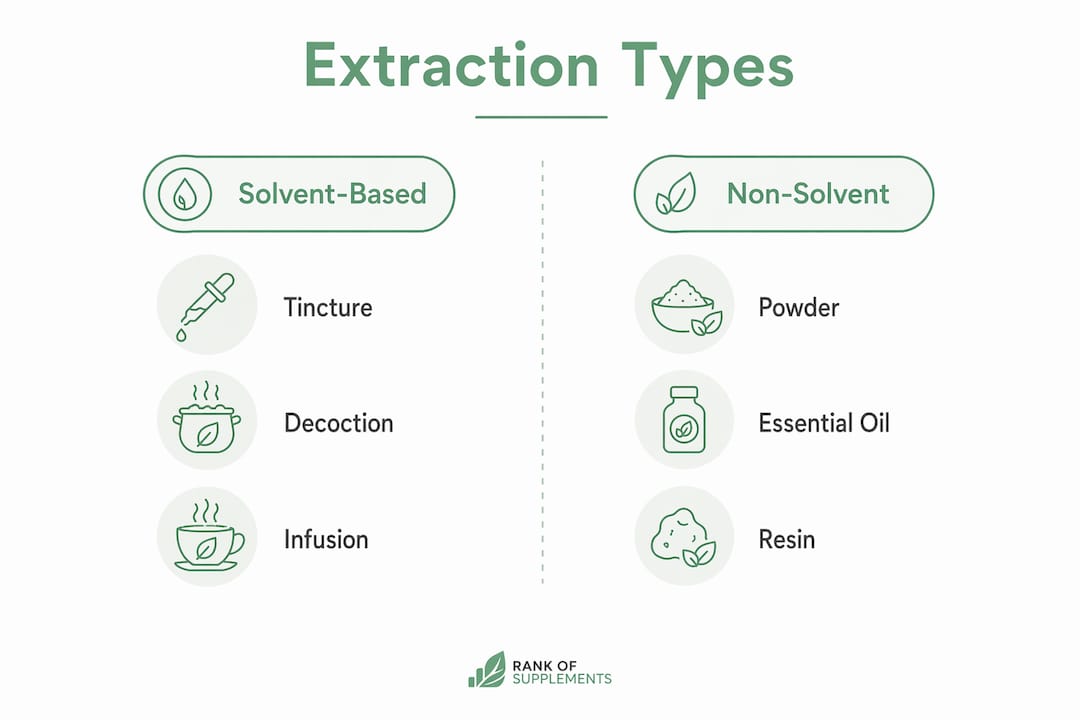
Common extraction types and their tradeoffs
| Extraction type | Solvent | Strengths | Limitations |
|---|---|---|---|
| Tincture | Ethanol or ethanol/water | Broad phytochemical capture, long shelf life | Alcohol content, variable ratios |
| Decoction | Water (boiled) | Traditional, accessible | Degrades heat-sensitive compounds |
| Standardized extract | Varies by target compound | Consistent dosing, clinical alignment | May lose synergistic minor compounds |
| CO2 extraction | Supercritical CO2 | Preserves volatile compounds, no solvent residue | High equipment cost |
| Cold-pressed oil | Mechanical pressure | Retains fat-soluble nutrients | Limited to oil-soluble phytochemicals |
The debate between isolated compounds and complex extracts is one of the most consequential in herbal medicine. Isolated compounds offer defined purity and repeatable dosing. Complex extracts provide multi-target activity through synergy between dozens of phytochemicals, but they introduce batch variability that requires standardization to control. Neither approach is universally superior. The right choice depends on the therapeutic goal.
Whole herbs versus standardized extracts present a similar tradeoff. Whole herbs provide a buffered, gentler nutrient profile with the full chemical matrix intact. Standardized extracts deliver consistent doses aligned with clinical evidence but may omit some of the buffering compounds that make whole herbs gentler on the body. For people new to herbal supplementation, whole herb forms often serve as a lower-risk starting point.
Pro Tip: When reading a supplement label, look for the phrase “standardized to X%” followed by the name of the active compound. If that language is absent, the product’s potency may vary significantly between batches.
What are the primary health benefits and applications of herbal extracts today?
The benefits of herbal extracts span several major therapeutic categories, and clinical research has moved well beyond anecdote for many of them. Anti-inflammatory, antioxidant, anxiolytic, and sedative effects are the four most studied areas, each supported by a growing body of controlled trials.
The following herbs and their extracts have the strongest evidence base across these categories:
- Turmeric (curcumin): Anti-inflammatory and antioxidant effects. Curcumin is one of the most studied plant compounds in clinical research, with demonstrated effects on inflammatory markers like NF-kB and COX-2 pathways.
- Ashwagandha (withanolides): Adaptogenic and anxiolytic. Standardized withanolide extracts show consistent reductions in cortisol and perceived stress scores in clinical trials.
- Valerian root: Sedative and sleep-supporting. Valerian extracts affect GABA receptors in a mechanism similar to, though weaker than, pharmaceutical anxiolytics.
- St. John’s Wort (hypericin, hyperforin): Mild antidepressant effects documented in multiple meta-analyses, though it carries significant drug interaction risks.
- Ginger: Anti-nausea and anti-inflammatory. Gingerol compounds in standardized ginger extracts reduce prostaglandin synthesis.
- Rosemary, oregano, and thyme: Antioxidant-rich culinary herbs with measurable clinical effects at specific doses.
Research shows that common culinary herbs like coriander, sage, mint, basil, rosemary, oregano, and thyme produce clinically relevant anti-inflammatory effects at doses of 3 grams individually or 6.6 grams combined daily. That finding matters because it places effective doses within reach of dietary intake, not just supplementation.
Synergy is one of the most underappreciated aspects of complex herbal extracts. A full-spectrum turmeric extract, for example, contains curcumin alongside turmerones and other curcuminoids that collectively produce a broader effect than isolated curcumin alone. This is why many clinical researchers now argue that whole-plant extracts often outperform single-compound isolates for chronic, multi-pathway conditions like systemic inflammation.
Pro Tip: For stress and sleep support, look for ashwagandha extracts standardized to at least 5% withanolides and valerian extracts standardized to 0.8% valerenic acid. These are the benchmarks most clinical trials use.
The effects of herbal supplements like St. John’s Wort, valerian, and ashwagandha show real potential for anxiety and sleep support. That potential comes paired with pharmacological risks, including herb-drug interactions and adverse effects like serotonin syndrome, that require the same respect you would give a pharmaceutical drug.
What safety considerations and risks come with herbal extract use?
Herbal extracts are not automatically safe because they are natural. The herbal supplement market carries documented risks that every informed consumer needs to understand before purchasing.
The most serious concern is liver injury. The global herbal medicine market’s rapid growth has come alongside evidence that herbal products are linked to 15%, 27.5% of liver injury cases in some populations. That range reflects real variation across product types and populations, but the core message is clear: liver toxicity from herbal products is not rare.
Contamination compounds the risk. Research shows that approximately one-third of 386 tested alternative medicinal products contained undeclared pharmaceutical adulterants, and nearly all had heavy metal contamination. That finding means a product labeled as pure herbal may contain unlisted drugs, lead, arsenic, or mercury. Poor regulation and fragmented supply chains make this a persistent problem, not an isolated one.
Herb-drug interactions represent the third major risk category. Certain herbs including garlic, ginkgo, ginger, and turmeric increase bleeding risk by interacting with anticoagulant drugs, requiring medication reconciliation before surgery. St. John’s Wort accelerates the metabolism of dozens of drugs, including oral contraceptives and antiretrovirals, by inducing the CYP3A4 enzyme system.
Safety practices for herbal extract use
- Stop certain supplements before surgery. Garlic, ginkgo, ginger, turmeric, and valerian should be discontinued at least two weeks before any surgical procedure to reduce bleeding and anesthesia interaction risks.
- Check for third-party testing. Look for products certified by NSF International, USP, or ConsumerLab. These organizations test for heavy metals, adulterants, and label accuracy.
- Disclose all supplements to your doctor. Herb-drug interactions are pharmacologically real. Your physician needs a complete picture before prescribing or adjusting medications.
- Prioritize supply chain transparency. Product traceability is the clearest signal of a quality manufacturer. Companies that publish sourcing, batch testing, and certificate of analysis data are meaningfully safer choices.
- Start with lower doses. Individual responses to herbal extracts vary based on genetics, gut microbiome, and existing medications. Starting at the lower end of the recommended range reduces the risk of adverse reactions.
How can you incorporate herbal extracts into a wellness routine effectively?
Building a practical herbal supplement routine starts with matching the extract form to your specific health goal. Not every format suits every purpose, and the wrong form can reduce effectiveness even when the underlying herb is well-researched.
The most common formats and their best uses include:
- Capsules and tablets: Best for standardized extracts where consistent dosing matters, such as ashwagandha for stress or curcumin for inflammation. Look for labels that state the extract ratio (e.g. 10:1) and the standardized compound percentage.
- Liquid tinctures: Faster absorption than capsules. Useful for acute applications like ginger for nausea or echinacea at the onset of illness. Alcohol content is a consideration for some people.
- Teas and decoctions: Gentler, lower-concentration delivery. Appropriate for daily wellness support using herbs like chamomile, peppermint, or lemon balm, but not suitable when a clinical dose is needed.
- Topical extracts: Relevant for localized applications. Arnica, calendula, and tea tree oil extracts are used for skin inflammation, wound healing, and antimicrobial purposes.
Timing matters as much as form. Fat-soluble compounds like curcumin absorb significantly better when taken with a meal containing dietary fat. Adaptogenic herbs like ashwagandha are often taken in the evening to support cortisol reduction and sleep. Stimulating herbs like ginseng are better suited to morning use. You can find detailed guidance on balancing supplements with diet to build a routine that works with your existing habits.
Ingredient transparency is the single most important factor in product selection. A supplement that lists “proprietary blend” without disclosing individual ingredient amounts gives you no way to verify whether the dose matches what clinical research actually used. Avoid products that hide behind that label when standardized alternatives exist. The supplement decision process for herbal products in 2026 should always include verifying that the extract form, dose, and standardization match the clinical evidence behind the herb.
For common wellness goals, a practical starting framework looks like this: stress and sleep support respond well to ashwagandha (300 to 600 mg of a withanolide-standardized extract) and valerian (300 to 600 mg of a valerenic acid-standardized extract). Immune support benefits from elderberry extract, echinacea, and medicinal mushroom extracts. Anti-inflammatory goals are well-served by curcumin with piperine, boswellia, and ginger. You can explore herbal supplement examples for a broader look at how specific herbs map to wellness outcomes.
Key takeaways
Herbal extracts deliver concentrated plant compounds with measurable therapeutic effects, but their safety and efficacy depend entirely on extraction quality, standardization, and informed use.
| Point | Details |
|---|---|
| Standardization matters most | Choose extracts that list the active compound percentage to match clinical evidence. |
| Extraction method shapes the product | Solvent choice determines which phytochemicals are captured and in what concentration. |
| Safety risks are real and documented | Liver injury, heavy metal contamination, and drug interactions are documented risks, not theoretical ones. |
| Synergy vs. isolation is a real tradeoff | Complex extracts offer multi-target effects; isolated compounds offer precision and repeatability. |
| Timing and form affect results | Fat-soluble extracts need dietary fat; adaptogenic herbs work best when timed to the body’s cortisol rhythm. |
What I’ve learned from watching the herbal extract market mature
The conversation around herbal extracts has shifted in a way I find genuinely encouraging, and also a little alarming. The encouraging part is that clinical research has finally caught up with traditional use for several key herbs. Ashwagandha, curcumin, and valerian now have enough controlled trial data to make evidence-based recommendations. That was not true a decade ago.
The alarming part is that the market has grown faster than the regulatory infrastructure designed to protect consumers. The contamination and adulteration data is not a fringe finding. It reflects a supply chain that still operates with minimal oversight in many countries, including the United States. When one-third of tested products contain undeclared pharmaceuticals, the label on the bottle is not a reliable guide to what is inside it.
My practical observation after years of following this space: the gap between a well-made standardized extract and a poorly sourced one is enormous, and the price difference is often small. The brands that invest in third-party testing, publish their certificates of analysis, and disclose their extraction ratios are not charging dramatically more. They are just harder to find without knowing what to look for.
The synergy versus precision debate is one I find genuinely unresolved. I lean toward complex extracts for chronic conditions and isolated compounds for acute, targeted applications. But I hold that view loosely, because the research on synergistic phytochemical interactions is still developing. What I am confident about is that the worst approach is treating any herbal extract as automatically safe because it comes from a plant. Pharmacological activity cuts both ways.
The mushroom extract category is one area I am watching closely. Beta-glucan standardized extracts from lion’s mane and reishi are producing some of the most interesting immune and cognitive data in current research. That space will look very different in five years.
matteo
How Rankofsupplements helps you choose the right herbal extract supplement
Choosing a herbal extract supplement without reliable information is a real risk, not just a minor inconvenience. Rankofsupplements was built specifically to close that gap.
The supplement ingredient library at Rankofsupplements covers the active compounds behind the most widely used herbal extracts, including curcumin, withanolides, valerenic acid, and dozens more. Each entry includes clinical dosing data, bioavailability notes, and safety flags. For readers who want to go deeper on specific products, the 2026 supplement reviews apply the same evidence-based standard to finished products. The goal is to give you the information you need to make a confident, informed choice rather than relying on marketing language alone.
Recommended
- Related article: Examples of herbal supplements for better wellness
- Top list: Best supplement reviews and rankings 2026
- Specific product: Curcumin: benefits, dosage, and best supplements
- Guide: Supplement decision workflow: your 2026 choosing guide
FAQ
What are herbal extracts used for in medicine?
Herbal extracts are used in medicine for anti-inflammatory, antioxidant, anxiolytic, and sedative applications. Clinical evidence supports their use in conditions ranging from chronic inflammation to anxiety and sleep disorders.
How do herbal extracts work differently from whole herbs?
Herbal extracts concentrate specific active compounds to higher levels than whole herbs contain naturally. Standardized extracts guarantee a defined percentage of the key compound in every dose, which whole herbs cannot provide.
Are herbal extracts safe to take with prescription medications?
Not always. Herbs like St. John’s Wort, garlic, ginkgo, and turmeric have documented interactions with anticoagulants, antidepressants, and other drugs. Always disclose all supplements to your prescribing physician before combining them with medications.
What does “standardized extract” mean on a supplement label?
A standardized extract offers a minimum percentage of a specific active compound per dose. For example, a valerian extract standardized to 0.8% valerenic acid contains a consistent, clinically relevant amount of the compound responsible for its sedative effect.
How can I verify the quality of a herbal extract supplement?
Look for products certified by NSF International, USP, or ConsumerLab, and prioritize brands that publish batch-specific certificates of analysis. These markers confirm the product has been tested for heavy metals, adulterants, and label accuracy.