
TL;DR:
- Adaptogens are natural substances that help the body resist stress and regulate the HPA axis. They work gradually across multiple pathways, with Ashwagandha and Rhodiola having the strongest clinical evidence. Proper dosing of standardized extracts is essential for effectiveness, and they are best used as long-term regulators alongside lifestyle habits.
Adaptogens are natural plant, root, and mushroom substances that help your body resist stress and maintain physiological balance. The role of adaptogens in wellness centers on their ability to regulate the hypothalamic, pituitary, adrenal (HPA) axis, the system that controls your cortisol output and stress response. Unlike caffeine or prescription stimulants, adaptogens work across multiple biological pathways at once, nudging your body back toward homeostasis rather than forcing a single chemical reaction. Ashwagandha (Withania somnifera) and Rhodiola rosea are the two most clinically studied examples, and both show measurable effects on cortisol, fatigue, and recovery. This guide covers the science, the evidence, the limits, and how to use these herbs practically.
What is the role of adaptogens in wellness?
Adaptogens are defined by three criteria established in pharmacological research: they must be nontoxic at normal doses, they must produce a nonspecific resistance to stress, and they must help normalize body functions regardless of the direction of the stressor. That last point is what makes them genuinely unusual in the supplement world.
Most supplements push one lever. Adaptogens regulate multiple signaling pathways simultaneously, which sets them apart from traditional drugs that target a single molecule. This multi-pathway action is why researchers classify them as “system-level” modulators rather than stimulants or sedatives.
The HPA axis is the central target. When you face physical or psychological stress, your hypothalamus signals the pituitary gland, which then triggers cortisol release from the adrenal glands. Chronic activation of this loop leads to fatigue, poor sleep, impaired immunity, and reduced athletic performance. Adaptogens interrupt this cycle at several points, reducing the peak cortisol spike and supporting faster recovery to baseline.
Ashwagandha is the most researched adaptogen for this mechanism. Rhodiola rosea follows closely, with strong evidence for mental fatigue reduction. Other commonly marketed adaptogens, including lion’s mane, reishi, and eleuthero, have far less human clinical data behind them.
How do adaptogens work to regulate stress?
The biological mechanism behind adaptogen action is more specific than most wellness content suggests. Adaptogens modulate the HPA axis to regulate the stress response without causing dependence, tolerance, or energy depletion. That distinction matters enormously if you have ever experienced the crash that follows a stimulant.
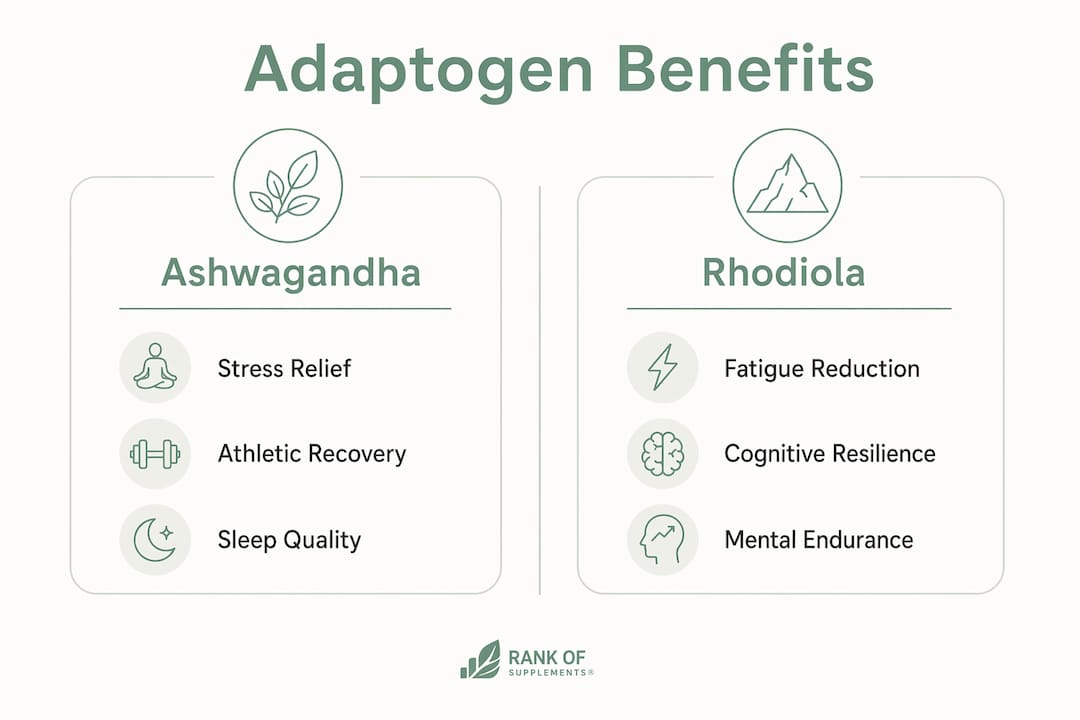
At the molecular level, adaptogens interact with glucocorticoid receptors, heat shock proteins, and neuropeptide Y pathways. These are the same systems your body uses to manage acute stress. Adaptogens essentially train those systems to respond more efficiently, rather than overriding them with an external chemical signal.
This is why the effects of adaptogens build gradually over days and weeks rather than hitting immediately. You are not getting a spike. You are getting a recalibration. That slower onset is also why short-term trials sometimes show modest results while longer studies show stronger ones.
Adaptogens also differ from pharmaceuticals in their lack of a single “target molecule.” A conventional anxiolytic like a benzodiazepine binds to one receptor type. Ashwagandha, by contrast, affects GABAergic signaling, cortisol regulation, and inflammatory markers at the same time. That breadth is both the strength and the complexity of adaptogen research.
Pro Tip: If you switch from a stimulant-based energy supplement to an adaptogen, expect a two-week adjustment period. The absence of an immediate buzz does not mean the product is not working.
What does the science say about Ashwagandha and Rhodiola?
The clinical evidence for adaptogens is uneven, and that unevenness matters. The strongest human data concentrates on two herbs: Ashwagandha for stress and cortisol reduction, and Rhodiola for mental and physical fatigue. Everything else requires more scrutiny.
Ashwagandha: stress, recovery, and athletic performance
A 2026 study on 56 team sports athletes found that 600 mg/day of Ashwagandha root extract over 42 days stabilized stress biomarkers and improved recovery parameters compared to placebo. Cortisol levels were measurably lower in the supplemented group during pre-season training, which is one of the highest-stress periods in an athlete’s calendar.

Separate research confirms that 300 mg twice daily of a standardized Ashwagandha extract over eight weeks significantly increases muscle strength and mass, improves VO2 max, and reduces exercise-induced muscle damage in healthy adults. These are not marginal gains. They are the kind of numbers that justify including Ashwagandha in a serious recovery protocol.
Ashwagandha also enhances sleep quality and cognitive function alongside stress reduction, possibly through GABAergic signaling modulation. This makes it one of the few supplements with credible evidence across mental health, physical performance, and sleep quality simultaneously. You can read a full breakdown of its mechanisms and dosing in the Ashwagandha evidence guide at Rankofsupplements.
Rhodiola rosea: fatigue and cognitive resilience
Rhodiola’s strongest evidence is in fatigue reduction, particularly the kind of mental exhaustion that follows sustained cognitive work or overtraining. Studies show it reduces perceived effort during exercise and shortens recovery time between training sessions. The mechanism involves monoamine oxidase inhibition and cortisol modulation, though the effect size is smaller than Ashwagandha’s in most head-to-head comparisons.
Key adaptogen comparison
| Adaptogen | Primary studied benefit | Studied dosage | Evidence strength |
|---|---|---|---|
| Ashwagandha | Stress, cortisol, muscle recovery | 300 to 600 mg/day | Strong (multiple RCTs) |
| Rhodiola rosea | Mental fatigue, endurance | 200 to 600 mg/day | Moderate (several RCTs) |
| Lion’s Mane | Cognitive function | 500 to 3,000 mg/day | Limited (few human trials) |
| Reishi | Immune support | 1,000 to 3,000 mg/day | Weak (mostly animal data) |
| Eleuthero | Stamina | 300 to 1,200 mg/day | Weak (limited human data) |
Pro Tip: When reading adaptogen research, check whether the study used a standardized extract or a raw powder. Standardized high-concentration extracts produce measurably better outcomes. Generic powders often do not replicate clinical results.
What are the biggest misconceptions about adaptogens?
The wellness industry has overclaimed adaptogens for years. Understanding the real limits protects you from wasting money and, more importantly, from substituting a supplement for care you actually need.
The bidirectional effect is harder to prove than it sounds
The idea that adaptogens “raise low cortisol and lower high cortisol” is appealing. Adaptogens act as regulators that can lower elevated cortisol or raise it in chronic fatigue cases, supporting the body’s natural rhythm. However, the theoretical bidirectional effect is difficult to demonstrate clinically, so claims of universal cortisol normalization deserve skepticism. Most trials measure cortisol reduction in high-stress populations. Evidence for cortisol elevation in low-cortisol states is much thinner.
Most marketed adaptogens lack solid human data
The strongest evidence in the field concentrates on Ashwagandha and Rhodiola. Many other adaptogens widely promoted in wellness products rely on animal studies or traditional use claims rather than randomized controlled trials. Reishi and eleuthero, for example, have limited human clinical data despite heavy marketing presence.
Here is what to watch for when evaluating any adaptogen product:
- Standardized extract vs. raw powder. Standardized extracts specify the concentration of active compounds (e.g. withanolides in Ashwagandha). Raw powders do not.
- Studied dosage. Products that underdose relative to clinical trials will not replicate study results.
- Human trial evidence. Animal data and in vitro studies do not confirm human effects.
- Duration claims. Adaptogens are not fast-acting. Products promising overnight results are not being honest.
- Drug interaction disclosures. Ashwagandha can interact with thyroid medications and immunosuppressants. Any product that omits this is cutting corners on safety.
Adaptogens are regulators, not replacements for medicine. They work best as part of a broader wellness approach, not as a standalone fix for clinical anxiety, depression, or adrenal disorders.
How do you safely add adaptogens to your wellness routine?
Incorporating adaptogens effectively requires more than buying a product and hoping for results. The quality of the supplement, the timing, and your overall health context all determine whether you get clinical-level benefits or nothing at all.
Start with a conversation with your healthcare provider, especially if you take prescription medications. Adaptogens should be used as short-term supplements with medical guidance to avoid drug interactions and rare adverse events. This is not a formality. Ashwagandha specifically can affect thyroid hormone levels and interact with sedatives.
For stress support, Ashwagandha at 300 to 600 mg/day of a standardized root extract is the most evidence-backed starting point. Take it consistently for at least four weeks before evaluating results. For athletic recovery, the same dosage range applies, with some protocols splitting the dose between morning and post-training. Rhodiola works better taken in the morning, as its mild stimulating properties can interfere with sleep if taken late in the day.
For athletes specifically, the role of adaptogens in training extends beyond cortisol. Ashwagandha’s effects on muscle damage markers and VO2 max make it a legitimate addition to a pre-season protocol. You can also explore holistic support for chronic stress to understand how adaptogens fit within a broader stress management framework.
Lifestyle habits that amplify adaptogen effects:
- Consistent sleep schedule. Adaptogens support the HPA axis, but poor sleep overrides that support.
- Resistance training. Ashwagandha’s muscle recovery benefits are most pronounced in people who train regularly.
- Reduced caffeine intake. High caffeine use keeps cortisol elevated and works against adaptogen regulation.
- Dietary protein. Muscle recovery benefits require adequate protein intake alongside supplementation.
- Stress reduction practices. Meditation, breathwork, and time in nature all reduce HPA axis activation independently.
Choose products that list the extract standardization on the label, name the specific plant species (not just a common name), and provide a clear dosage per serving. Avoid proprietary blends that hide individual ingredient amounts. For a curated list of herbal supplements for wellness, Rankofsupplements covers the evidence behind the most common options.
Key Takeaways
Adaptogens work best when you choose clinically studied extracts at proven dosages, pair them with consistent lifestyle habits, and treat them as long-term regulators rather than quick fixes.
| Point | Details |
|---|---|
| HPA axis regulation | Adaptogens modulate cortisol and stress pathways without causing dependence or tolerance. |
| Ashwagandha leads the evidence | 300 to 600 mg/day of standardized extract improves stress, recovery, muscle strength, and sleep. |
| Evidence is uneven | Rhodiola has moderate support for fatigue; reishi and eleuthero lack strong human trial data. |
| Extract quality matters | Standardized extracts outperform raw powders; always check withanolide or active compound percentage. |
| Use with medical guidance | Ashwagandha interacts with thyroid medications and sedatives; consult a provider before starting. |
Why I think most people are using adaptogens wrong
After spending years reviewing supplement research, I keep seeing the same pattern: people buy an adaptogen blend, take it for two weeks, feel nothing dramatic, and conclude it does not work. The problem is not the herb. It is the expectation.
Adaptogens are not stimulants. They do not produce a feeling. They recalibrate a system. That recalibration takes time, consistency, and the right product. Most of the blends I see on store shelves underdose every ingredient, hide amounts in proprietary blends, and use raw powders instead of standardized extracts. You cannot replicate a clinical trial with a product that contains 50 mg of Ashwagandha buried in a 10-ingredient stack.
The other mistake I see constantly is treating adaptogens as a substitute for addressing the root cause of stress. If you are sleeping five hours a night, training twice a day, and running on caffeine, no supplement will fix that. Ashwagandha can take the edge off a high-stress period. It cannot compensate for a lifestyle that is fundamentally incompatible with recovery.
What I find genuinely exciting about the 2026 research is the athletic recovery data. The evidence that 600 mg/day of standardized Ashwagandha root extract measurably reduces cortisol and improves recovery in team sport athletes during pre-season training is the kind of specific, practical finding that changes how I recommend supplements. That is not a wellness trend. That is a tool with a defined use case and a studied dose.
My honest advice: pick one well-researched adaptogen, use a standardized extract at the clinical dose, give it six to eight weeks, and track how you feel. Do not start with a blend. Start with a single ingredient you can actually evaluate.
matteo
Find the right adaptogen supplement with Rankofsupplements
Choosing an adaptogen supplement is easier when you have evidence-based rankings to guide you, not just marketing copy.
Rankofsupplements reviews and ranks supplements based on ingredient quality, dosage accuracy, and clinical evidence. The Supplement Ingredient Library covers Ashwagandha, Rhodiola, and other adaptogens with detailed breakdowns of active compounds, studied dosages, and safety profiles. For a broader view of what is worth taking in 2026, the top wellness supplements guide cuts through the noise with rankings built on real research. You can also browse supplements organized by health goal and condition to find options matched to stress reduction, recovery, or energy support.
FAQ
What are adaptogens, exactly?
Adaptogens are natural plant, root, and mushroom substances that help the body resist physical and psychological stress by modulating the HPA axis and multiple physiological pathways without causing dependence or tolerance.
Which adaptogen has the strongest scientific evidence?
Ashwagandha has the strongest human clinical evidence for stress reduction, cortisol stabilization, muscle recovery, and sleep quality. Rhodiola rosea follows with solid evidence for mental and physical fatigue.
How long does it take for adaptogens to work?
Most clinical studies measure effects after four to eight weeks of consistent daily use. Adaptogens recalibrate physiological systems gradually, so short-term use rarely produces measurable results.
Are adaptogens safe to take every day?
Ashwagandha and Rhodiola are generally safe at studied dosages for healthy adults. However, adaptogens should be used with medical guidance if you take prescription medications, particularly thyroid drugs or sedatives, due to potential interactions.
Do adaptogens help athletes specifically?
Yes. Research shows that 600 mg/day of Ashwagandha over 42 days reduces cortisol and improves recovery in team sport athletes during pre-season training. The role of adaptogens for athletes also includes improvements in VO2 max and reduced exercise-induced muscle damage at 300 mg twice daily.
Recommended
- Examples of Herbal Supplements for Better Wellness
- Top Wellness Supplements 2026: What Actually Works
- Ashwagandha Benefits, Dosage & Side Effects
- Supplements by Health Goal & Condition