
Saccharomyces boulardii’s strongest, best-documented benefit is cutting the risk of antibiotic-associated diarrhea nearly in half, with real support for reinforcing the gut barrier, calming mucosal inflammation, and shortening some cases of acute and traveler’s diarrhea. The standard prevention protocol used in trials is 250 mg twice daily, started with the first antibiotic dose and continued for several days after the course ends. It is well tolerated by most healthy adults, but people with severe immunosuppression or central venous catheters should skip it or check with a clinician first because of a rare but documented risk of fungemia.
Here’s what the evidence actually supports, ranked by how solid the data is:
- Prevents antibiotic-associated diarrhea (AAD). A meta-analysis found risk dropped from 18.7% to 8.5% in antibiotic-treated patients.
- Protects the gut barrier and supports mucosal immunity. Strain-specific research shows it preserves tight-junction integrity and reduces inflammatory signaling.
- Reduces traveler’s diarrhea incidence. Dose-dependent protection shows up in trials when supplementation starts before departure.
That said, this isn’t a universal fix. Skip it, or talk to your doctor first, if you’re severely immunocompromised, have a central line, or are critically ill in a hospital setting, since rare fungemia cases have been reported in exactly those groups.
Key Takeaways
Saccharomyces boulardii CNCM I-745 most reliably prevents antibiotic-associated diarrhea and traveler’s diarrhea, works through gut barrier and immune mechanisms, and is safe for most adults except the severely immunocompromised.
| Point | Details |
|---|---|
| Strongest use case | AAD prevention, with risk reduced from 18.7% to 8.5% in a pooled meta-analysis of RCTs. |
| Standard dosing | 250 mg twice daily, started with the first antibiotic dose, continued 1 to 2 weeks after. |
| Strain matters | Favor products listing CNCM I-745 specifically, since that’s the strain behind most trial data. |
| Key safety flag | Avoid or consult a clinician first if severely immunocompromised, critically ill, or using a central line. |
| Where to compare options | Rankofsupplements’ ingredient library grades gut-health ingredients by evidence strength and strain specificity. |
Table of Contents
- What Is Saccharomyces Boulardii and How Does It Differ From Bacterial Probiotics?
- How Does Saccharomyces Boulardii Work in the Gut?
- What Does the Clinical Evidence Show for Each Condition?
- Why Does the CNCM I-745 Strain Matter So Much?
- What’s the Right Dosage and How Should You Take It?
- What Are the Side Effects and Who Should Avoid It?
- How Do You Choose a Quality S. Boulardii Product?
- What Does the Full Body of Evidence Actually Tell Us?
- Our Take on When Saccharomyces Boulardii Is Worth Using
- Where to Go From Here for Evidence-Based Gut Support
- Primary Sources and Further Reading
- Sources
- FAQ
What Is Saccharomyces Boulardii and How Does It Differ From Bacterial Probiotics?
Saccharomyces boulardii is a probiotic yeast, not a bacterium. That single fact drives almost every practical difference between it and the Lactobacillus or Bifidobacterium strains that dominate the probiotic aisle. The clinical research almost entirely centers on one specific strain, CNCM I-745, which is why you’ll see that code on well-formulated labels. It’s not a marketing flourish. It’s the strain identifier tied to the actual trial data.
Being a yeast rather than a bacterium changes how the organism behaves in your gut and how it should be used alongside medication.
- Antibiotic resistance: As a eukaryote, S. boulardii is naturally resistant to antibacterial antibiotics, so it survives right through a course of amoxicillin or clindamycin, where most bacterial probiotics get wiped out alongside your gut flora.
- Colonization behavior: It doesn’t set up permanent residence. It passes through, exerts its effects, and clears out, typically within days of stopping supplementation.
- Formulation and storage: It’s more heat-tolerant and shelf-stable than many bacterial strains, which is one reason it travels well and doesn’t always require refrigeration.
You’ll typically find it as capsules or lyophilized (freeze-dried) sachets that get mixed into water or food. Labels should list a CFU count (colony-forming units, though for yeast this is sometimes expressed as viable cell count) alongside the strain designation CNCM I-745 if the product is trying to match the clinical dosing used in studies.
One term trips people up: “transient colonizer.” It sounds like a euphemism for “doesn’t work,” but it’s the opposite. Research on S. boulardii’s transient colonizer behavior shows the yeast binds pathogens and modulates immune responses while it’s passing through, then gets flushed out naturally. That’s the intended mechanism, not a failure state. It’s also why repeated short courses, during antibiotic treatment or a trip abroad, make more sense than trying to “build up” a permanent colony.
Pro Tip: Don’t confuse a lack of long-term detection in stool samples with the supplement “not working.” Transient passage is the entire point of how this yeast operates.
How Does Saccharomyces Boulardii Work in the Gut?
The clinical benefits trace back to a handful of overlapping mechanisms, and understanding them helps explain why this yeast shows up in such different contexts, from antibiotic side effects to travel prep to H. pylori treatment.
- Anti-toxin activity: It produces proteases that break down bacterial toxins, including those from Clostridioides difficile and certain strains of E. coli, before they can damage the intestinal lining.
- Tight junction reinforcement: It helps maintain the protein structures that hold intestinal cells together, limiting the “leaky gut” permeability that lets bacteria and toxins cross into tissue they shouldn’t reach.
- Inflammatory pathway modulation: Research on its mechanisms of action points to effects on NF-κB signaling, one of the body’s central inflammatory switches, dialing down the cascade that produces excess gut inflammation.
- Secretory IgA stimulation: It appears to boost production of this antibody, a frontline defender in the mucosal immune system that patrols the gut lining.
- Antimicrobial peptide production: It triggers the release of compounds that directly inhibit pathogenic microbes.
- Competitive exclusion: It occupies binding sites on the intestinal wall, physically crowding out pathogens looking to attach.
Each mechanism maps to a specific clinical outcome. Tight-junction reinforcement is the most direct explanation for reduced AAD risk, since antibiotics disrupt the gut lining as a side effect of killing bacteria indiscriminately. Anti-toxin activity is the likely reason it shows benefit against C. difficile related diarrhea specifically. And the secretory IgA boost connects to the immune-support angle that shows up in mucosal infection contexts, including some traveler’s diarrhea protection.
Picture a diagram split into two panels: one showing a healthy, tightly sealed intestinal lining with S. boulardii cells releasing protective enzymes near the surface, the other showing immune cells activated by increased secretory IgA in the mucosal layer. That’s essentially the visual summary researchers use in review papers on CNCM I-745, and it captures the two-pronged approach: physical barrier defense plus immune signaling.
Restoring and preserving intestinal barrier function through anti-inflammatory, anti-secretory, and pro-adhesive effects is the core mechanism tying S. boulardii’s clinical outcomes together across multiple diarrheal conditions.
Why does a yeast pull this off differently than bacteria? Its eukaryotic cell wall and enzyme profile give it tools bacterial probiotics don’t have, particularly the protease activity that neutralizes toxins directly rather than just competing for space. That’s a mechanistic advantage specific to fungal physiology, not something you’d expect from a Lactobacillus strain doing a similar job.
What Does the Clinical Evidence Show for Each Condition?
Evidence quality varies sharply by indication, and lumping them together is where a lot of supplement marketing goes wrong. Here’s the indication-by-indication breakdown.
Antibiotic-associated diarrhea: strong evidence. This is the best-supported use case, backed by a meta-analysis covering multiple randomized controlled trials in both adults and children.

Traveler’s diarrhea: moderate to strong evidence, dose-dependent. Preventive dosing started before departure and continued during travel shows measurable reductions in incidence. The effect size varies by destination and dose used.
Adjunctive H. pylori therapy: moderate evidence, mostly for side-effect reduction. Adding S. boulardii to standard eradication regimens is associated with a modest bump in eradication rates and a substantial drop in treatment-related GI side effects like diarrhea and nausea, which matters because those side effects are the main reason patients quit eradication therapy early.
Pediatric acute gastroenteritis: moderate evidence. Multiple trials support a modest reduction in diarrhea duration in children, though results are less dramatic than the AAD data.
C. difficile infection: limited, mostly adjunctive. Evidence supports a possible role in reducing recurrence when used alongside antibiotic treatment for C. diff, but it’s not a standalone treatment and shouldn’t be treated as one.
IBS and IBD maintenance: investigational. Data here remains preclinical or very limited in scope. This is not an area where you should expect S. boulardii to replace prescribed IBD management.
| Indication | Typical trial outcome | Key numbers | Evidence strength |
|---|---|---|---|
| Antibiotic-associated diarrhea | Reduced incidence across pooled RCTs | Risk cut from 18.7% to 8.5% | Strong |
| Traveler’s diarrhea | Dose-dependent reduction in incidence | Preventive dosing shows measurable protection | Moderate to strong |
| Adjunctive H. pylori therapy | Improved tolerability, modest eradication boost | modest bump in eradication rates in pooled analyses | Moderate |
| Pediatric acute gastroenteritis | Shortened diarrhea duration | Multiple supportive RCTs | Moderate |
| C. difficile infection (adjunctive) | Possible reduced recurrence | Limited, mixed trial sizes | Limited |
| IBS / IBD maintenance | No consistent clinical benefit shown | Preclinical or small-scale data only | Limited/investigational |
Systematic reviews synthesizing multiple RCTs consistently rank AAD prevention and traveler’s diarrhea protection as the two indications with the most reproducible, high-quality data behind them. That’s not a coincidence. Both conditions involve a clear, time-limited trigger (a course of antibiotics, a trip abroad) that makes trial design straightforward: give the yeast, track diarrhea incidence, compare to placebo.
Practical takeaways from the evidence pattern:
- Use it prophylactically alongside antibiotics if you’re prone to AAD or taking a broad-spectrum antibiotic known for high diarrhea rates.
- Consider travel prophylaxis if you’re heading somewhere with elevated traveler’s diarrhea risk and want an added layer of protection.
- Consider it as an adjunct (not a replacement) during H. pylori eradication therapy to improve tolerability.
- Don’t expect it to manage IBD flares or replace IBS-specific treatment protocols; the data isn’t there yet.
The main limitation across this literature is heterogeneity. Trials differ in strain reporting (not all specify CNCM I-745), dosing (some use 250 mg twice daily, others go up to 1,000 mg total), and outcome measures (stool frequency versus diarrhea incidence versus symptom scores). That variability is exactly why strain-specific, dose-matched products matter more here than in categories with more standardized formulations.
Why Does the CNCM I-745 Strain Matter So Much?
Strain specificity isn’t a technicality here. It’s the difference between buying a product that matches the clinical trials and buying one that shares a species name but nothing else. CNCM I-745 is, by a wide margin, the most extensively studied strain of S. boulardii, appearing in the large majority of the RCTs behind the AAD and pediatric diarrhea data.
The strain repeatedly shows up in the strongest trials for a practical reason: researchers keep using it because it’s well characterized and consistently sourced, which makes results reproducible across studies in a way that generic “Saccharomyces boulardii” labeling doesn’t guarantee.
When you’re reading a label, check for these four things:
- Strain name explicitly listed (CNCM I-745, not just “Saccharomyces boulardii” with no strain code).
- CFU count per serving, ideally matched to trial doses (roughly 250 mg equivalents per capsule for twice-daily dosing).
- Storage instructions, since heat and humidity exposure can reduce viability even in a shelf-stable yeast.
- Expiry date and lot number, which matter more for live-organism supplements than for most vitamins.
Pro Tip: If a product just says “Saccharomyces boulardii” with no strain code, treat it as unverified against the clinical literature. It might still work, but you have no way to connect it to a specific trial outcome. When in doubt, favor the product that names its strain.
One caveat worth being blunt about: trial results for CNCM I-745 don’t automatically transfer to unspecified S. boulardii products, even from the same species. Manufacturing processes, viability at the point of consumption, and even minor genetic drift between production batches can all affect real-world performance. The strain code is the closest thing you get to a paper trail back to the actual research.
What’s the Right Dosage and How Should You Take It?
Dosing protocols vary a bit by what you’re using it for, but they cluster around a few well-tested regimens rather than a wide-open range.
| Indication | Typical trial dose | Common regimen and duration |
|---|---|---|
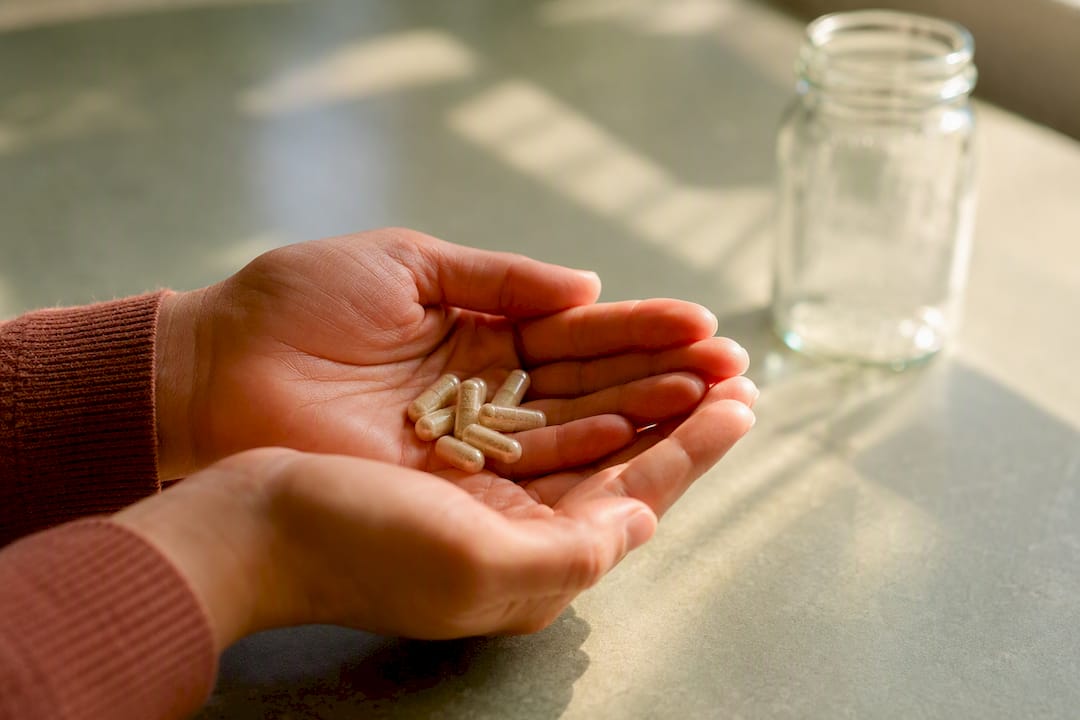
| AAD prevention | 250 mg twice daily | Start with first antibiotic dose; continue for several days after treatment |
| Traveler’s diarrhea prevention | 250 mg twice daily | Start several days before travel; continue throughout the trip |
| Adjunctive H. pylori therapy | 250 mg twice daily | Alongside standard eradication regimen for its full duration |
| Pediatric acute gastroenteritis | Weight-adjusted, typically lower total mg | Duration matches acute illness course; consult pediatrician for exact dosing |
Standard clinical dosing for AAD prevention runs 250 mg twice daily, though some protocols push to 1,000 mg total daily in higher-risk situations. The timing detail that matters most: start on day one of the antibiotic course, not after symptoms appear. Waiting until diarrhea starts defeats the preventive mechanism.
A few practical points on taking it correctly:
- Because it’s a yeast that survives antibacterial antibiotics, you can take S. boulardii at the same time as your antibiotic rather than needing to space doses apart by hours, though some people still stagger by a couple of hours out of habit carried over from bacterial probiotic advice.
- Capsules and lyophilized sachets both work; sachets mixed into cool (not hot) water or food are common for people who have trouble swallowing capsules or for pediatric dosing.
- Take with or without food; there’s no strong evidence either way changes effectiveness.
- Store in a cool, dry place. It’s more heat-tolerant than most bacterial probiotics, but that doesn’t mean it’s indestructible; a car glove compartment in summer will still degrade viability.
On CFU versus mg: some labels quote milligrams, others quote colony-forming or viable-cell units. As a rough guide, most products designed to match clinical dosing target the equivalent of what a 250 mg capsule delivered in trials, so cross-check against the trial dose in the table above rather than assuming a bigger CFU number automatically means a stronger effect.
What Are the Side Effects and Who Should Avoid It?
Most healthy adults tolerate S. boulardii without issue. The mild end of the side effect spectrum includes gas, bloating, and occasional constipation, symptoms that usually resolve within the first few days as your gut adjusts.
The rare but serious risk is fungemia, a bloodstream yeast infection. Documented case reports and expert cautions tie this almost exclusively to specific high-risk situations, not general use in healthy people.
- Severe immunosuppression (advanced HIV/AIDS, chemotherapy, organ transplant immunosuppressants) raises fungemia risk meaningfully.
- Central venous catheters are a documented risk factor, since airborne yeast particles from opened capsules have, in rare hospital cases, contaminated catheter lines.
- Critical illness or ICU admission is generally considered a reason to avoid probiotic yeast supplementation altogether.
If any of those apply to you or someone you’re caring for, skip it and talk to a clinician about alternatives instead.
Drug interaction note: antifungal medications will inactivate S. boulardii, since it’s a yeast and antifungals are designed to kill fungal organisms. Taking both together essentially cancels out the supplement’s benefit, so space them apart or skip the yeast entirely while on antifungal therapy. If you’re managing multiple medications, a resource like Legacy Meds’ medication safety guidance is a reasonable starting point for understanding how supplements can interact with prescription drugs more broadly.
Data on pregnancy and lactation remains limited; there isn’t a robust trial base establishing safety in that population, so the standard, conservative advice is to check with an OB or midwife before starting it. For overall probiotic safety context, the NCCIH’s guidance on probiotics is a useful primer.
If you experience an unexpected reaction or suspect a product quality issue, that’s worth reporting through the FDA’s MedWatch adverse event system, and it’s worth checking product recalls periodically since dietary supplements don’t carry the same pre-market scrutiny as prescription drugs.
How Do You Choose a Quality S. Boulardii Product?
Run through this checklist before buying:
- Strain confirmed: Look for CNCM I-745 specifically if you want your purchase to map onto the clinical trial data discussed above.
- Clear CFU per serving: The label should state a specific viable count, not a vague “proprietary blend.”
- Expiry and storage instructions: Live organisms lose potency over time; a clear expiry date signals a manufacturer tracking viability seriously.
- Third-party testing seals: Independent lab verification (the kind of testing NSF or USP-style certification programs perform) confirms the product contains what the label claims.
- No unnecessary fillers: Extra additives don’t add clinical value and can be an issue for people with sensitivities.
Third-party seals matter because dietary supplements in the United States don’t undergo FDA pre-market efficacy testing the way drugs do. An independent lab check is one of the few external verifications a consumer actually gets.
Pro Tip: Because S. boulardii is comparatively heat-tolerant, it’s one of the more travel-friendly probiotics you can pack. If you’re prioritizing it for a trip, favor a shelf-stable capsule over a refrigerated formulation and check that the strain and dose match what’s shown in the traveler’s diarrhea trials.
Price doesn’t reliably track with quality here. A higher price tag with no strain designation and no third-party testing tells you less than a moderately priced product that specifies CNCM I-745 and publishes lab verification. For a broader look at how digestive supplements stack up on these same criteria, Rankofsupplements’ gut health guide walks through the category in more depth.
What Does the Full Body of Evidence Actually Tell Us?
The clearest signal across the literature is that AAD prevention is where S. boulardii earns its reputation. The meta-analysis showing risk cut roughly in half, combined with consistent reproduction across multiple RCTs using the CNCM I-745 strain, makes this the use case with the least ambiguity in the entire body of research.
Picture a 42-year-old starting a 7-day course of amoxicillin-clavulanate for a sinus infection, a combination well known for causing GI upset. Starting 250 mg of S. boulardii twice daily on day one, continuing through the full antibiotic course, and extending it about a week afterward lines up with the exact protocol used in the trials showing benefit. That’s not a hypothetical stretch; it’s close to the literal design of the studies behind the numbers.
The strongest, most reproducible finding in this entire literature is narrow and specific: a defined strain, a defined dose, started at a defined moment relative to antibiotic exposure. Everything outside that narrow lane, IBS, IBD maintenance, general “gut health,” carries progressively weaker evidence.
The honest limitations: strain reporting inconsistency across older trials, dose variability between 250 mg and 1,000 mg daily protocols, and outcome measures that don’t always match cleanly from study to study. New trials that standardize strain reporting and use consistent diarrhea-incidence definitions would do more to clarify remaining questions than another general “probiotics for gut health” study would.
- Strongest evidence: AAD prevention, traveler’s diarrhea prophylaxis.
- Moderate evidence: adjunctive H. pylori therapy, pediatric acute gastroenteritis.
- Weakest evidence: IBS, IBD maintenance, general wellness claims.
Our Take on When Saccharomyces Boulardii Is Worth Using
The evidence points to a narrow but genuinely useful role, not a cure-all. We come at this from an evidence-first position: S. boulardii earns a clear recommendation for antibiotic-associated diarrhea prevention and travel prophylaxis, and it’s a reasonable adjunct during H. pylori eradication therapy. Beyond that, the data thins out fast, and we’d rather say so plainly than stretch a strong AAD result into a blanket gut-health claim it doesn’t support.
Where we push back on the wider supplement conversation: a lot of marketing treats “probiotic” as one interchangeable category, and that’s a mistake with this particular organism. Being a yeast that survives antibiotics is a genuinely different mechanism than what bacterial strains offer, not a marginal variation. That’s worth understanding before you decide it belongs in your routine.
Who benefits most: adults and children starting antibiotics with a history of GI upset from prior courses, frequent travelers to regions with elevated diarrheal disease risk, and patients undergoing H. pylori eradication who want better tolerability. Who should hold off and talk to a clinician first: anyone severely immunocompromised, critically ill, or carrying a central venous catheter.
Where to Go From Here for Evidence-Based Gut Support
If you’re weighing S. boulardii against other digestive support options, Rankofsupplements’ ingredient library breaks down individual compounds the same way this article does: strain and dose specifics, evidence strength by use case, and what the research actually supports rather than what a label promises.
Choosing the right gut-health strategy usually means comparing more than one ingredient, and that’s exactly what Rankofsupplements is built for. Instead of piecing together claims from a dozen product pages, you get evidence-graded comparisons in one place, the same strain-specific, dose-matched approach used throughout this guide. If your situation involves immunosuppression, pregnancy, or a critical illness, talk to a healthcare provider before adding any new supplement, S. boulardii included. For a broader look at how supplements are evaluated across health goals, browse the supplements by condition directory to see how gut-health ingredients stack up against other evidence-based options and find what fits your specific situation.
Primary Sources and Further Reading
- PubMed meta-analysis on S. boulardii and antibiotic-associated diarrhea: the core RCT synthesis behind the AAD risk-reduction figures.
- MDPI review on S. boulardii CNCM I-745 and gut dysbiosis: strain-specific evidence across multiple diarrheal conditions, including H. pylori adjunctive use.
- PMC review on intestinal barrier effects of CNCM I-745: mechanistic detail on barrier preservation and restoration.
- PMC review on mechanisms of action: the toxin-neutralization, tight-junction, and immune-signaling research.
- NCCIH guidance on probiotics safety: regulatory and consumer-safety context for probiotic supplementation generally.
- WebMD safety and side effect summary: plain-language overview of fungemia risk and contraindications.
This article is general information, not a substitute for advice from a qualified doctor. Consult a qualified healthcare professional about your own circumstances before acting on anything here.
Sources
- PubMed: Saccharomyces boulardii meta-analysis (AAD)
- PMC: Beneficial effects of Saccharomyces boulardii CNCM I-745 on intestinal barrier disruption
- PMC: Mechanisms of action for S. boulardii
- WebMD: Saccharomyces boulardii — Uses, side effects, and warnings
FAQ
Is It Good to Take Saccharomyces Boulardii Every Day?
Daily use makes sense during a defined period, like the length of an antibiotic course or a trip, rather than as an indefinite daily supplement. There’s limited evidence supporting continuous, long-term daily use outside of a specific clinical trigger.
What’s Better: Saccharomyces Boulardii or Bacterial Probiotics?
Neither is universally better; they solve different problems. S. boulardii’s advantage is surviving antibiotic treatment and providing anti-toxin activity, while bacterial strains like Lactobacillus often have stronger evidence for general microbiome balance outside of antibiotic use.
What Are the Disadvantages of Saccharomyces Boulardii?
The main drawbacks are a rare fungemia risk in severely immunocompromised patients or those with central venous catheters, inactivation by antifungal medications, and limited evidence for broader digestive conditions like IBS or IBD.
What Happens When You Take Saccharomyces Boulardii?
It passes through your gut as a transient yeast, reinforcing the intestinal barrier, neutralizing certain bacterial toxins, and stimulating immune signaling before being naturally cleared within days, without establishing permanent colonization.