
TL;DR:
- Micronutrients like vitamins and minerals are essential in small amounts to support metabolic, immune, and cellular functions. Adequate intake from a varied diet is usually sufficient, and supplementation should target deficiencies or specific at-risk groups. Excessive intake of fat-soluble vitamins can lead to toxicity, while deficiency causes widespread health issues globally.
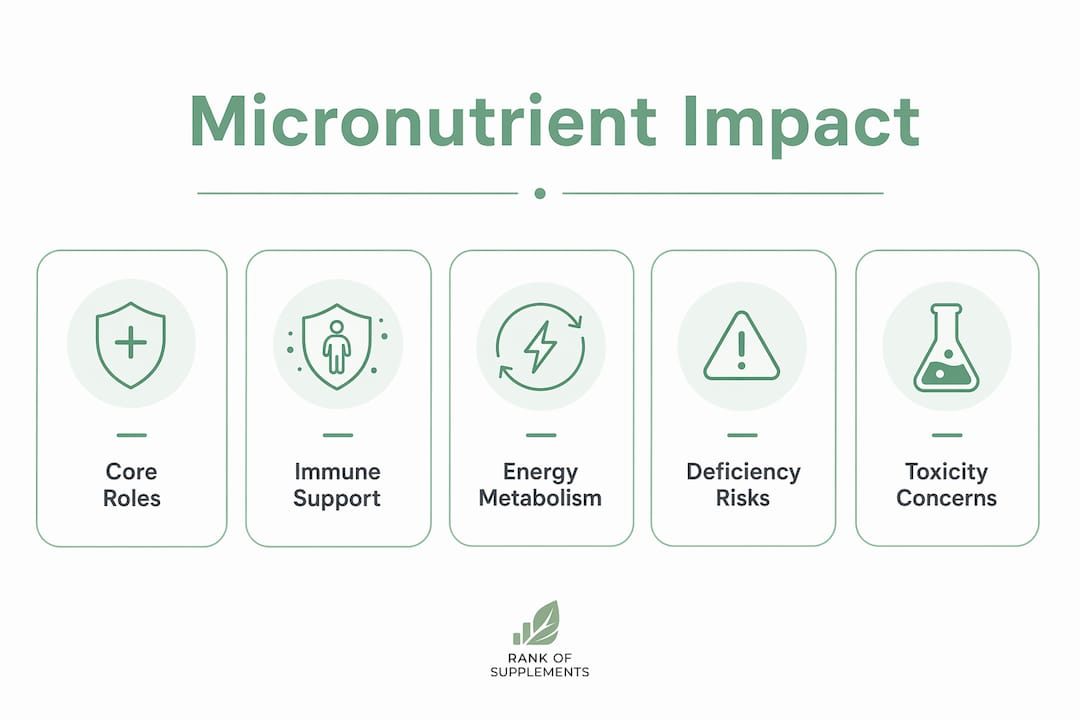
Micronutrients are vitamins and minerals your body needs in small amounts to run nearly every biological process that keeps you alive and well. Without them, metabolism stalls, tissues break down, and the immune system loses its edge. The WHO and CDC both emphasize that adequate intake is non-negotiable at every life stage, and that both deficiency and excess cause real harm.
Here is what adequate micronutrient intake supports:
- Energy metabolism and enzymatic reactions throughout the body
- Hormone synthesis, gene transcription, and cellular signaling
- Immune defense, tissue repair, and antioxidant protection
- Fetal development, bone growth, and cognitive function
What do micronutrients actually do inside your body?
Micronutrients function primarily as cofactors and coenzymes, meaning they activate the proteins and enzymes that drive metabolism. Without them, those enzymes simply do not work. Magnesium, for example, participates in over 300 enzymatic reactions, including energy transfer via ATP, neuromuscular signaling, and bone development. Selenium forms part of selenoproteins that neutralize free radicals, and a 50% increase in blood selenium is associated with a 24% lower risk of heart disease.
Beyond enzymes, vitamins and minerals regulate gene expression and hormone production. Iodine is the raw material for thyroid hormones, which control metabolic rate across virtually every organ. Zinc acts as a structural component in transcription factors, directly influencing which genes get switched on or off. Vitamin A drives the differentiation of immune cells and epithelial tissue through nuclear receptor pathways.
Key biochemical roles at a glance:
| Micronutrient | Primary biochemical role | Main dietary sources |
|---|---|---|
| Magnesium | Energy transfer, neuromuscular function | Nuts, whole grains, leafy vegetables |
| Selenium | Antioxidant defense via selenoproteins | Brazil nuts, beef, fish, eggs |
| Zinc | Cofactor for 300+ enzymes, gene regulation | Oysters, red meat, legumes |
| Iodine | Thyroid hormone synthesis | Iodized salt, seafood |
| Iron | Oxygen transport, immune and endocrine function | Meat, fortified grains, leafy greens |
What are the recommended intake levels in the US?
The US Recommended Dietary Allowances (RDAs) set the daily intake that meets the needs of nearly all healthy adults. For adults, the RDA for magnesium is 400 mg per day, for iron it is 8 to 18 mg per day depending on sex and life stage, for zinc it is 10 mg per day, for selenium it is 55 mcg per day, and for iodine it is 150 mcg per day.
Food fortification has made outright clinical deficiencies rare in the United States. Wheat flour fortified with iron and folic acid, iodized salt, and vitamin D added to dairy products have collectively shifted the problem from frank deficiency to subclinical insufficiency. Eating below the RDA without reaching clinical deficiency territory still raises the risk of heart disease, type 2 diabetes, cancer, and osteoporosis over time.
A few practical points on meeting your needs:
- A varied diet built around whole grains, legumes, fruits, vegetables, lean protein, and healthy fats covers most RDAs without supplementation
- Supplementation is warranted for demonstrated deficiency or specific at-risk groups, not as a general insurance policy
- Fortified foods count toward daily intake and often close gaps that a less varied diet would otherwise leave open
Pro Tip: Before reaching for a multivitamin, look at your actual diet pattern for a week. Most adults eating a reasonably varied diet are closer to their RDAs than they think.
Who is most at risk of micronutrient deficiency?
Micronutrient deficiencies affect a large share of the global population, with children under five and pregnant or lactating women carrying the heaviest burden. In the US, the risk is lower overall, but certain groups remain genuinely vulnerable.
- Children under 5: At risk for iron, vitamin A, zinc, and iodine deficiency, all of which impair brain development, immunity, and growth
- Pregnant and lactating women: Increased requirements for folate, iron, iodine, and vitamin D that diet alone often cannot meet
- Older adults: Reduced appetite, impaired absorption, and limited sun exposure create gaps in vitamin D, B12, and calcium
- Low-income households: Limited access to nutrient-dense food drives what public health researchers call “hidden hunger,” a state where caloric needs are met but micronutrient needs are not
Hidden hunger is driven by poverty, limited dietary diversity, and weak food systems. It rarely looks like starvation but quietly impairs concentration, immune response, and long-term productivity. Addressing it requires food fortification, biofortification of crops, and nutrition education, not just supplement handouts.
How does illness change your micronutrient needs?
Disease alters micronutrient metabolism in ways that standard blood tests can miss. During infection or inflammation, the body redistributes micronutrients away from the bloodstream and into tissues, so serum levels drop even when total body stores are adequate. A low serum zinc or iron result during an acute illness may reflect this redistribution rather than true deficiency.
Pregnancy raises requirements for nearly every micronutrient, particularly folate, iron, and iodine. Chronic conditions like inflammatory bowel disease reduce absorption across the gut, creating deficits that a normal diet cannot correct. Certain medications also deplete specific nutrients: long-term metformin use, for instance, reduces vitamin B12 absorption.
The practical implication is that supplementing based on a single blood test taken during illness can be misleading. Clinical context matters as much as the number on the lab report.
What happens when you don’t get enough?
Iron deficiency is the most common micronutrient deficiency worldwide and the leading cause of anemia, affecting millions of children and pregnant women. Anemia during pregnancy raises the risk of maternal and neonatal death, preterm birth, and low birth weight. Globally, anemia affects 40% of children under 5 and 30% of pregnant women.
Beyond iron, the consequences of inadequate intake span every organ system:
- Vitamin A deficiency is the leading cause of preventable blindness in children and increases mortality from measles and diarrhea
- Iodine deficiency is the most common cause of preventable intellectual disability worldwide
- Folate insufficiency before and during early pregnancy causes neural tube defects including spina bifida
- Zinc deficiency impairs immunity, increases susceptibility to diarrhea and pneumonia, and stunts growth in children
Single-nutrient deficiencies are rare in developed countries, but subclinical multiple insufficiencies are not. People with poor dietary variety often accumulate small gaps across several micronutrients simultaneously, producing chronic fatigue, impaired immunity, and cognitive fog that no single lab test flags cleanly.
What experts say about supplementation and intake balance
Alan Shenkin, a leading clinical nutrition researcher, has emphasized that the body’s first priority is maintaining metabolism and tissue function, and that excess supplementation carries real risk when no deficiency exists. That framing cuts against the popular idea that more is always better.
Harvard Health experts reinforce the same point: five micronutrients including vitamin B6, vitamin C, vitamin E, magnesium, and zinc support immune function, but supplements containing them in doses far above the RDA show no benefit beyond what a healthy diet already provides. The marketing around “immune boosting” megadoses is not backed by clinical evidence.
Statistic to know: A 50% rise in blood selenium correlates with a 24% reduction in heart disease risk, illustrating how even trace minerals carry outsized cardiovascular effects at adequate levels.
No reliable evidence supports megadosing for immune enhancement beyond a healthy diet, and excessive intake of fat-soluble vitamins like A, D, E, and K can accumulate in tissue to toxic levels. Supplementation belongs in the toolkit for vulnerable populations with demonstrated need, not as a daily hedge for people already eating well.
Where do micronutrients come from in your diet?
Whole foods remain the most reliable source of vitamins and minerals because they deliver micronutrients alongside fiber, phytochemicals, and other compounds that affect how those nutrients are absorbed and used. Leafy greens supply folate, magnesium, and vitamin K. Fatty fish provide vitamin D and selenium. Legumes cover zinc, iron, and folate. Dairy and fortified plant milks deliver calcium, vitamin D, and B12.

Fortified foods fill gaps that whole foods alone sometimes cannot. Iodized salt, iron-fortified cereals, and folic acid in bread products have reduced the burden of several deficiencies at the population level. Biofortification, which involves breeding or engineering crops to contain more of a target nutrient, extends this approach to regions where food fortification infrastructure is limited.
For people with restricted diets, whether by choice or circumstance, understanding your micronutrient needs before reaching for supplements is the smarter starting point.
How does your body absorb micronutrients?
Bioavailability, the fraction of a nutrient that actually enters circulation and reaches target tissues, varies widely depending on the food source, the nutrient’s chemical form, and what else you eat at the same meal. Heme iron from meat absorbs at roughly two to three times the rate of non-heme iron from plants. Vitamin C consumed alongside non-heme iron significantly boosts its absorption. Calcium competes with iron for the same intestinal transporters, so taking both at once reduces how much of each you absorb.
Fat-soluble vitamins (A, D, E, K) require dietary fat for absorption. Eating a vitamin A-rich sweet potato with a fat-free dressing cuts absorption sharply compared to eating it with olive oil. Cooking also matters: heat breaks down cell walls in vegetables, releasing carotenoids and making them more available, while prolonged boiling leaches water-soluble vitamins like B and C into the cooking water.
How do micronutrients interact with each other and with macronutrients?
Micronutrient interactions are one of the most underappreciated aspects of nutrition. Zinc and copper compete for absorption; high-dose zinc supplementation can deplete copper over time, causing neurological symptoms. Vitamin D is required for calcium absorption in the gut, so calcium supplements taken without adequate vitamin D have limited effect on bone density. Folate and vitamin B12 work together in the methylation cycle; a deficiency in either one can mask the other’s deficiency on standard blood tests.
Macronutrients also shape micronutrient metabolism. Dietary fat is not just a vehicle for fat-soluble vitamins; it also influences the gut microbiome, which in turn affects how certain B vitamins are synthesized and absorbed. Protein intake affects zinc and iron absorption, with animal protein generally enhancing uptake of both. For a deeper look at how specific supplement forms compare, magnesium supplement forms vary considerably in bioavailability and clinical effect.
Can you get too much of a micronutrient?
Yes, and the risk is real for fat-soluble vitamins in particular. Vitamins A, D, E, and K accumulate in fat tissue and the liver rather than being excreted, so chronic overconsumption from supplements leads to toxicity. Hypervitaminosis A causes liver damage, bone loss, and birth defects at high doses. Excess vitamin D raises blood calcium to dangerous levels, causing nausea, kidney stones, and cardiac arrhythmia.
Water-soluble vitamins like C and the B vitamins are excreted in urine when consumed in excess, making toxicity less common, but not impossible. Very high doses of vitamin B6 over extended periods cause peripheral neuropathy. Excess iron from supplementation causes oxidative damage to the gut lining and, in people with hemochromatosis, accumulates in organs. The lesson is consistent: the therapeutic window for micronutrients is real, and staying within it matters as much as avoiding deficiency.
How do vitamins and minerals support your immune system?
The immune system depends on micronutrients at every stage, from the physical barriers of skin and mucous membranes to the activation of T-cells and antibody production. Vitamin A maintains the integrity of epithelial surfaces, the body’s first line of defense. Vitamin D activates macrophages and regulates inflammatory responses, and deficiency is associated with increased susceptibility to respiratory infections. Zinc is required for the development and function of neutrophils, natural killer cells, and T-lymphocytes.
For antioxidant protection, selenium and vitamin E neutralize reactive oxygen species that would otherwise damage immune cells during an active infection. Vitamin C supports the production and function of white blood cells and shortens the duration of the common cold in people under physical stress. The CDC notes that vitamin D helps the immune system resist both bacteria and viruses, and deficiency causes bone diseases including rickets in children and osteomalacia in adults.
Recommended resources from Rankofsupplements
Getting your micronutrient intake right starts with knowing what your body actually needs. Rankofsupplements has put together resources to help you make evidence-based decisions rather than guessing at the supplement aisle.
- Related article: Why micronutrients support weight loss and the science behind iron, metabolism, and energy
- Top list: Best antioxidant supplements for 2026, ranked and reviewed for efficacy and safety
- Product review: Glycofortin review for those managing blood sugar and micronutrient balance
- Complete guide: Supplement ingredient library covering the science behind every major vitamin, mineral, and compound
Key Takeaways
Micronutrients drive metabolism, immunity, and tissue function, and both deficiency and excess cause measurable harm at every life stage.
| Point | Details |
|---|---|
| Biochemical roles are specific | Magnesium drives 300+ enzymatic reactions; selenium powers antioxidant defense via selenoproteins. |
| Selenium and heart health | A 50% rise in blood selenium correlates with a 24% lower risk of heart disease. |
| Deficiency burden is wide | Iron deficiency causes anemia in 40% of children under 5 and 30% of pregnant women globally. |
| Megadosing carries risk | Fat-soluble vitamins accumulate in tissue; no evidence supports high-dose supplements over a healthy diet. |
| Diet first, supplements second | A varied whole-food diet meets most RDAs; supplementation is warranted only with clinical indication. |
FAQ
What is the primary role of micronutrients in the body?
Micronutrients act as enzymatic cofactors, antioxidants, and regulators of gene transcription and hormone synthesis, supporting metabolism and tissue maintenance in trace amounts.
Which micronutrient deficiency is most common worldwide?
Iron deficiency is the most common micronutrient deficiency globally and the leading cause of anemia, affecting 40% of children under 5 and 30% of pregnant women worldwide.
Can you get too much of a vitamin or mineral from supplements?
Yes. Fat-soluble vitamins like A and D accumulate in tissue and cause toxicity at high doses, and even water-soluble B6 causes nerve damage with prolonged megadosing.
Do supplements boost immunity better than food?
No. Harvard Health experts note that supplements containing immune-related micronutrients in doses above the RDA show no benefit beyond what a healthy, varied diet already provides.
How does illness affect micronutrient levels in the blood?
During infection or inflammation, the body redistributes micronutrients away from the bloodstream into tissues, so serum test results may underestimate true body stores and should be interpreted with clinical context.