Some natural supplements and foods can modestly support GLP-1, related pathways, but they are nowhere near the potency of prescription GLP-1 receptor agonists. That’s the honest answer, and it matters before you spend money on anything labeled a “GLP-1 booster.”
GLP-1 (glucagon-like peptide-1) is a gut hormone released after eating. It signals the pancreas to release insulin, slows gastric emptying, and tells your brain you’re full. Prescription drugs like semaglutide and liraglutide mimic this hormone directly, binding GLP-1 receptors with sustained, pharmacological force. In large randomized trials, these prescription GLP-1 receptor agonists have produced substantial, durable weight loss and measurable cardiovascular risk reduction. No natural supplement has replicated that in comparable trials.
What natural options can do is more modest: certain fibers, berberine, and a handful of other ingredients influence satiety, glycemic control, or gut-microbiome activity through indirect pathways. Ohio State clinicians note that the metabolic benefits from supplements typically come from indirect mechanisms like fiber-induced fullness rather than direct GLP-1 stimulation. Geisinger clinicians put it plainly: berberine shows the most promise among herbal ingredients, but no supplement contains synthetic GLP-1.

The practical bottom line: fiber-first strategies and evidence-backed ingredients like berberine are reasonable, low-cost adjuncts when paired with diet and exercise. They are not replacements for clinical care. Because several carry real drug-interaction and liver risks, talk to a clinician before starting any of them.
Quick reference: what the evidence actually supports
- Strongest human evidence: Berberine, psyllium/glucomannan (soluble fiber)
- Moderate or emerging evidence: Curcumin, ginseng, probiotics
- Preliminary or weak human evidence: Bitter melon, yerba mate, NAC
- Effect size vs. prescription drugs: Modest and indirect vs. large and direct receptor agonism
- Safety flags: Drug interactions (especially berberine + glucose-lowering meds), liver risk with high-dose herbal extracts, quality-control gaps
This article is general information, not medical advice. Confirm any supplement plan with a qualified clinician, especially if you take prescription medications.
Table of Contents
- What natural GLP-1 supplements actually show in human studies
- What foods and lifestyle habits reliably raise GLP-1
- How do natural supplements compare to prescription GLP-1 drugs?
- Safety, interactions, and who should avoid these supplements
- How to choose a safe, evidence-based supplement and what to ask your clinician
- What do human studies actually show for each ingredient?
- Key Takeaways
- The gap between “GLP-1 booster” marketing and what the science supports
- Rankofsupplements helps you find supplements that actually match the evidence
- Useful sources and further reading
- FAQ
What natural GLP-1 supplements actually show in human studies
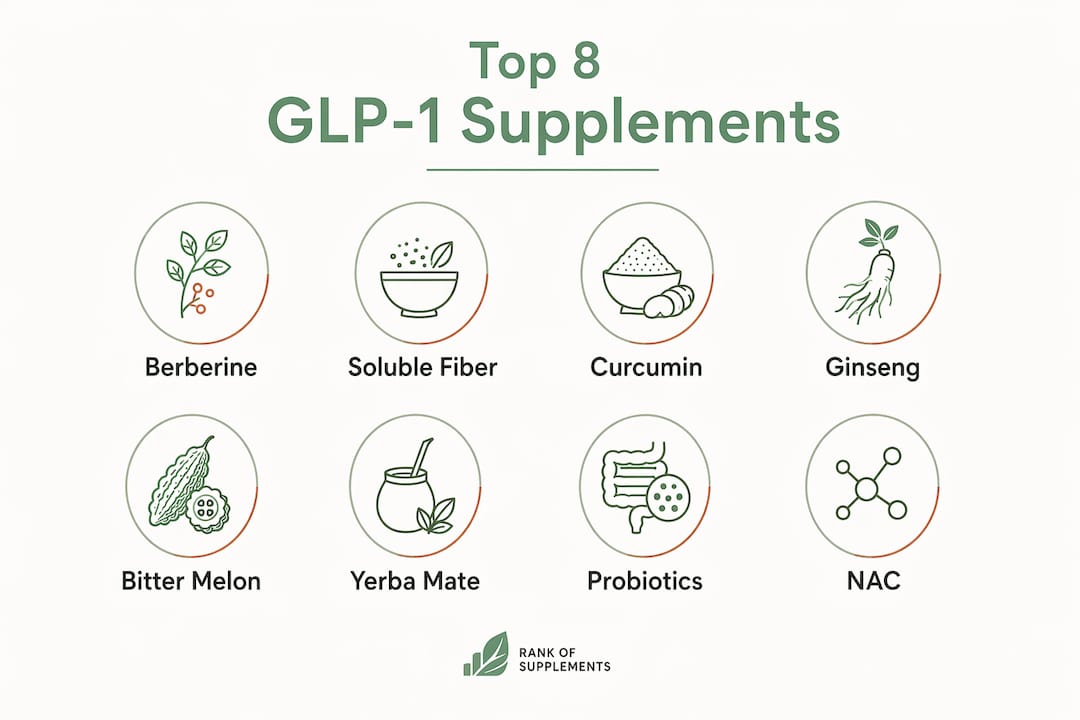
The eight ingredients below appear most often in the clinical literature on natural GLP-1 support. They’re ranked roughly by the strength of human evidence, not marketing claims.
Berberine
Berberine has the strongest human-evidence profile of any herbal ingredient in this category. Multiple trials show it lowers HbA1c and fasting glucose, with dosing commonly studied at 500 mg two to three times daily (1,000 to 1,500 mg/day total). Its primary mechanism is indirect: berberine activates AMPK, improves insulin sensitivity, and modulates gut bacteria that influence incretin secretion. Effects on glycemic markers typically appear within 4 to 8 weeks. The critical safety flag is its interaction with insulin, sulfonylureas, and metformin; combining berberine with glucose-lowering medications can push blood sugar too low.

Psyllium (soluble fiber)
Psyllium works through gut distension and viscosity. When it forms a gel in the small intestine, it slows glucose absorption and stimulates L-cells in the distal gut to release GLP-1. Glucomannan has shown weight-loss effects when combined with calorie restriction; psyllium improves satiety and lowers LDL cholesterol in some studies. Effects on fullness appear within a single meal. It’s among the safest options here, though it can cause bloating if you ramp up too fast, and it can slow the absorption of medications taken at the same time.
Curcumin (turmeric extract)
Curcumin has mechanistic plausibility through anti-inflammatory and antioxidant pathways that may support incretin function, but robust human GLP-1 outcome trials are lacking. Most positive data come from animal models or small pilot studies. Typical studied doses include standardized extract of curcumin. High-dose curcumin has been linked to rare liver injury reports. Bioavailability is notoriously poor without piperine or a lipid delivery system.
Ginseng
Both Asian ginseng (Panax ginseng) and American ginseng have shown modest effects on postprandial glucose in small trials, with some evidence of incretin pathway involvement. Evidence is inconsistent across studies, and most trials are short-term with small sample sizes. Typical studied doses are moderate amounts of standardized extract. Ginseng can interact with warfarin and stimulant medications, and effects on GLP-1 specifically remain preliminary.
Wild bitter gourd (Momordica charantia)
Bitter melon contains compounds (charantin, polypeptide-p) that may mimic insulin and modestly influence glucose metabolism. A PubMed review on natural GLP-1 modulators identifies it among herbal candidates, but human RCT evidence for direct GLP-1 elevation is thin. Typical studied doses include dried fruit extract. It carries a real hypoglycemia risk when combined with diabetes medications.
Yerba mate
Yerba mate contains caffeine, theobromine, and chlorogenic acids that may slow gastric emptying and modestly influence satiety hormones. Human evidence specifically for GLP-1 elevation is limited to small studies. The caffeine content means it can raise heart rate and blood pressure, and it interacts with stimulant medications and MAOIs. Typical studied doses include dried herb or equivalent extract.
Probiotics
Certain probiotic strains appear to support gut microbiome diversity that correlates with incretin responses. Small interventional studies link microbiome changes to GLP-1 production, but specific strains lack large RCTs demonstrating direct GLP-1 elevation. Lactobacillus and Bifidobacterium species are most studied. Probiotics are generally well-tolerated, though immunocompromised individuals should consult a clinician first.
N-acetyl cysteine (NAC)
NAC is an antioxidant precursor to glutathione. Some preliminary mechanistic work suggests it may reduce oxidative stress in gut endocrine cells, potentially supporting GLP-1 secretion. But human GLP-1 outcome trials are lacking, and the evidence base is largely preclinical. Typical studied doses include oral doses in moderate ranges. NAC can interact with nitroglycerin and some blood-pressure medications.
Comparison table: evidence, dose, mechanism, and safety
| Ingredient | Evidence strength | Typical studied dose | Mechanism type | Main safety concern | Time to effect |
|---|---|---|---|---|---|
| Berberine | Strong (multiple RCTs) | 1,000 to 1,500 mg/day | Indirect (AMPK, gut microbiome) | Hypoglycemia with glucose-lowering meds | 4 to 8 weeks |
| Psyllium / glucomannan | Strong (regulatory recognition) | ~3 g/day (glucomannan) | Indirect (gut distension, L-cell stimulation) | Medication absorption delay | 1 meal |
| Curcumin | Weak human evidence | 500 to 2,000 mg/day | Indirect (anti-inflammatory) | Rare liver injury at high doses | Unknown |
| Ginseng | Moderate, inconsistent | 200 mg/day | Indirect (incretin pathway, unclear) | Warfarin interaction | 2 to 4 weeks |
| Bitter melon | Weak human evidence | 1,000 to 2,000 mg/day | Indirect (insulin-mimetic compounds) | Hypoglycemia with diabetes meds | Variable |
| Yerba mate | Weak human evidence | 1 to 3 g/day | Indirect (gastric emptying, caffeine) | Cardiovascular, MAOI interaction | Acute (caffeine) |
| Probiotics | Emerging | Strain-dependent | Indirect (microbiome, incretin signaling) | Caution in immunocompromised | Weeks to months |
| NAC | Preliminary / preclinical | Indirect (antioxidant, gut endocrine cells) | Nitroglycerin interaction | Unknown |
Pro Tip: Start with the two best-supported options: a soluble fiber (psyllium or glucomannan) before your largest meal, and berberine if your clinician clears it given your medications. Add probiotics from fermented foods before reaching for capsules. Only layer in additional ingredients once you’ve established a baseline with diet and exercise.
Look for products with third-party testing seals (USP, NSF International, or Informed Sport) and a dose that matches the ranges in the table above. Proprietary blends that hide individual ingredient amounts are a red flag.
What foods and lifestyle habits reliably raise GLP-1
The most reliable way to increase endogenous GLP-1 is through what and how you eat. L-cells in the distal small intestine and colon release GLP-1 in direct response to nutrients, particularly fiber fermentation products (short-chain fatty acids), protein, and fat. Exercise and sleep quality also influence the hormone’s baseline secretion.
Foods and meal patterns with the strongest evidence:
- Soluble fiber: Oats, barley, psyllium husk, legumes, and glucomannan all slow digestion and trigger L-cell GLP-1 release. Aim for a sufficient daily intake of dietary fiber, with an emphasis on soluble sources.
- High-protein meals: Protein stimulates GLP-1 more potently than carbohydrates alone. Eggs, Greek yogurt, legumes, and lean meats at breakfast can extend satiety through the morning.
- Healthy fats: Olive oil, avocado, and nuts slow gastric emptying and prolong GLP-1 elevation after meals.
- Resistant starch: Cooled cooked potatoes, green bananas, and cooked-then-cooled rice feed colonic bacteria that produce short-chain fatty acids, which in turn stimulate GLP-1 secretion.
- Fermented foods: Yogurt, kefir, kimchi, and sauerkraut support the microbiome diversity associated with better incretin responses.
- Mixed meals: Combining protein, fat, and fiber in a single meal produces a larger and more sustained GLP-1 response than any macronutrient eaten alone.
Lifestyle factors that matter:
- Aerobic exercise: Even a single bout of moderate-intensity cardio (30 minutes of brisk walking or cycling) can acutely raise GLP-1 levels. Consistent training amplifies the baseline response over weeks.
- Sleep: Poor sleep disrupts gut hormone rhythms, including GLP-1 secretion. Seven to nine hours is the standard clinical recommendation.
- Meal timing: Eating earlier in the day, when circadian rhythms favor insulin sensitivity, tends to produce a stronger GLP-1 response than late-night eating.
Pro Tip: Add fiber gradually, over 2 to 3 weeks, and drink at least 8 oz of water with every fiber supplement dose. Jumping from low to high fiber intake in a week causes significant bloating and gas, which most people misread as intolerance and quit. The gut adapts; the discomfort is temporary.
A simple daily checklist: one high-fiber food at each meal, a protein source at breakfast, a 20 to 30 minute walk after your largest meal, and a consistent sleep window. These four habits cost nothing and have the most consistent evidence behind them.
How do natural supplements compare to prescription GLP-1 drugs?
The gap in effect size is large enough that it changes the conversation entirely.
Prescription GLP-1 receptor agonists like semaglutide and liraglutide bind GLP-1 receptors directly and maintain that activation continuously. Clinical trials show their superiority over other antihyperglycemic drugs in improving glycemic control, reducing weight, and producing cardioprotective effects. The NEJM review documents cardiovascular risk reduction and consistent metabolic improvements across large RCTs. Natural supplements have not undergone comparable large randomized trials showing similar long-term outcomes.
The mechanism difference is the key point. Prescription drugs are receptor agonists: they directly activate the GLP-1 receptor with pharmacological precision. Natural supplements work indirectly, through fiber-induced gut distension, glycemic modulation (berberine), or microbiome shifts (probiotics). The effect is real but smaller, less predictable, and not durable once you stop the supplement.
When prescription therapy is the appropriate conversation:
- BMI of 30 or above, or BMI of 27 or above with a weight-related comorbidity (type 2 diabetes, hypertension, sleep apnea)
- Failed lifestyle-only attempts over 3 to 6 months
- Established cardiovascular disease or high cardiovascular risk
- Type 2 diabetes with HbA1c above target despite metformin
When supplements may be a reasonable adjunct:
- You’re already implementing diet and exercise changes and want additional modest support
- Your clinician has cleared the specific ingredient given your medications
- You understand the effect size is small and indirect
- You’re using a product with verified dosing and third-party testing
Natural supplements are not a stepping stone to avoid prescription therapy if prescription therapy is clinically indicated. They’re a low-cost, low-risk addition to a structured lifestyle plan, nothing more.
Safety, interactions, and who should avoid these supplements
The “natural” label does not mean safe for everyone. Mayo Clinic’s review is direct: most weight-loss supplements lack robust clinical proof, and some have been linked to liver injury and contain undeclared prescription ingredients. Weight-management supplements are among the highest-risk categories for adulteration.
Key safety signals by ingredient:
- Berberine: Can cause significant hypoglycemia when combined with insulin, sulfonylureas, or metformin. Also inhibits CYP3A4, affecting the metabolism of many common drugs.
- High-dose curcumin: Rare but documented liver injury reports at doses above 2,000 mg/day. Avoid if you have existing liver disease.
- Yerba mate: Caffeine-driven cardiovascular effects (elevated heart rate, blood pressure). Interacts with MAOIs and stimulant medications.
- Bitter melon: Hypoglycemia risk with any glucose-lowering medication. Avoid during pregnancy.
- Green tea extract (EGCG): High-dose green tea extract has been associated with rare liver injury case reports, particularly when taken on an empty stomach.
Groups who should avoid or delay these supplements:
- Pregnant or breastfeeding women (most herbal supplements lack safety data for these populations)
- People with serious liver disease
- Anyone on insulin, sulfonylureas, or other glucose-lowering medications (without clinician clearance)
- Children and adolescents
- Anyone with complex polypharmacy (five or more medications)
Quality-control risks: Reviews confirm that weight-loss supplements are a high-risk category for adulterants, including undeclared stimulants and even prescription drugs. Avoid proprietary blends that don’t disclose individual ingredient amounts. Buy only from brands with lot-specific third-party testing certificates (USP, NSF International, or Informed Sport).
Pro Tip: Signs of a serious adverse reaction to watch for: yellowing of the skin or eyes (jaundice), dark urine, upper-right abdominal pain, or unusual fatigue. These can signal liver stress. Stop the supplement immediately and contact your clinician. Don’t wait to see if it resolves on its own.
Common supplement mistakes that can amplify these risks, like mixing herbal extracts with prescription medications without checking interactions, are covered in detail in this supplement safety guide.
How to choose a safe, evidence-based supplement and what to ask your clinician
Most products marketed as “GLP-1 boosters” are not worth buying. Here’s how to separate the credible options from the noise.
Product quality checklist:
- Ingredient transparency: Every ingredient and its exact amount is listed on the label. No “proprietary blends.”
- Third-party testing: Look for a USP Verified, NSF Certified for Sport, or Informed Sport seal. Better yet, ask the brand for a lot-specific certificate of analysis (COA).
- Dose matches human studies: Compare the label dose to the studied ranges in the table above. A berberine product with 100 mg per capsule is not the same as one studied at 500 mg three times daily.
- Clear contraindication labeling: Reputable products list who should not use them.
- No outrageous claims: Any product claiming to “replace Ozempic” or produce “20 lbs of weight loss in 30 days” is making claims no supplement can legally or scientifically support.
- Return policy: A brand confident in its product offers a clear refund window.
What to tell your clinician before starting:
- List every supplement you’re considering, with the exact dose
- Ask specifically about interactions with your current medications
- If you have any liver disease risk factors (alcohol use, fatty liver, prior hepatitis), ask about a baseline liver function test
- Ask what realistic benefits to expect and over what timeframe
- Agree on a monitoring plan (e.g. blood glucose checks if you’re adding berberine)
Reading the label: “Turmeric extract” and “curcumin” are not interchangeable on a label. Turmeric root powder is roughly 3% curcuminoids by weight; a standardized extract at 95% curcuminoids is a very different product at the same milligram count. The same logic applies to ginseng (check the ginsenoside percentage) and psyllium (check whether it’s psyllium husk or psyllium seed).
Pro Tip: When a brand claims third-party testing, ask for the actual COA for the specific lot number on your bottle, not a generic certificate. Reputable brands provide this on request. If they can’t, that’s your answer.
For a structured approach to building a supplement routine, the wellness supplement intake workflow at Rankofsupplements walks through clinician-communication prompts and timing protocols.
What do human studies actually show for each ingredient?
| Ingredient | Study type / size | Primary outcome measured | Typical dose studied | Effect or result | Evidence quality |
|---|---|---|---|---|---|
| Berberine | Multiple RCTs, meta-analyses | HbA1c, fasting glucose | 1,000 to 1,500 mg/day | Significant HbA1c reduction | Moderate-high |
| Glucomannan | RCTs + regulatory review | Body weight (with calorie restriction) | ~3 g/day | Modest weight loss vs. placebo | Moderate |
| Psyllium | RCTs | Satiety, LDL cholesterol | 5 to 10 g/day | Improved satiety, LDL reduction | Moderate |
| Curcumin | Small pilots, animal models | GLP-1, inflammatory markers | 500 to 2,000 mg/day | Inconsistent; limited human GLP-1 data | Low |
| Ginseng | Small RCTs | Postprandial glucose | 200 mg/day | Modest glucose reduction; inconsistent | Low-moderate |
| Bitter melon | Small RCTs | Fasting glucose, HbA1c | 1,000 to 2,000 mg/day | Mixed results; no large RCT | Low |
| Probiotics | Small interventional studies | Microbiome, incretin response | Strain-dependent | Correlational; no large GLP-1 RCT | Low-emerging |
| NAC | Preclinical / mechanistic | Oxidative stress, GLP-1 secretion | No robust human GLP-1 trials | Very low |
Berberine and soluble fibers (glucomannan, psyllium) stand apart from the rest. They have the most replicated human data, the clearest mechanisms, and the most consistent effect sizes, even if those effects are modest compared to prescription therapy. A PubMed review identifies berberine, curcumin, and several other herbal constituents as having modulatory effects on GLP-1 release, but the clinical translation varies significantly by ingredient.
The honest evidence gap: no natural supplement has been tested in a large, long-term RCT with GLP-1 elevation as the primary endpoint. Most positive findings are secondary outcomes in metabolic trials, or come from small studies with short follow-up. That doesn’t mean the ingredients are useless; it means the evidence ceiling is lower than what’s available for prescription drugs.
Trusted institutional guidance:
- Mayo Clinic on dietary supplements for weight loss
- Geisinger on GLP-1 supplements
- NEJM review on GLP-1 receptor agonists
- StatPearls: GLP-1 receptor agonists
Bring these citations to your next clinician visit if you want a grounded conversation about whether any of these ingredients fit your situation.
Key Takeaways
No natural supplement replicates the direct receptor agonism of prescription GLP-1 drugs, but berberine and soluble fiber have the strongest human evidence for indirect metabolic support and are worth discussing with your clinician.
| Point | Details |
|---|---|
| Fiber and berberine lead the evidence | Glucomannan (~3 g/day) and berberine have the most replicated human data among natural options. |
| Effects are indirect and modest | Natural supplements work through satiety, glycemic control, or gut microbiome shifts, not direct GLP-1 receptor activation. |
| Drug interactions are real | Berberine interacts with insulin and sulfonylureas; bitter melon and psyllium can also affect medication absorption. |
| Quality control is non-negotiable | Buy only products with lot-specific third-party testing (USP, NSF International); avoid proprietary blends. |
| Rankofsupplements for vetted options | Rankofsupplements reviews ingredients by human-study dose, third-party testing status, and safety flags for each category. |
The gap between “GLP-1 booster” marketing and what the science supports
The supplement industry’s pivot to “GLP-1 support” branding is one of the more transparent marketing moves in recent memory. Semaglutide became a household name, and within months, dozens of products appeared with “GLP-1” on the label, none of which contain GLP-1 or act on its receptor.
What frustrates me about most coverage of this topic is the false binary it creates: either you dismiss all natural supplements as useless, or you treat berberine as a natural Ozempic. Neither is accurate. Berberine genuinely does something useful for glycemic control, and the dose-response data from multiple trials is real. But the mechanism is AMPK activation and gut microbiome modulation, not GLP-1 receptor agonism. Calling it a “GLP-1 booster” is technically defensible in the loosest sense and practically misleading.
The nuance most articles skip: psyllium taken before a meal, specifically 5 to 10 minutes before, can meaningfully blunt the postprandial glucose spike during a calorie-restricted eating plan. That’s not a GLP-1 drug effect; it’s a viscosity and gastric-emptying effect that happens to overlap with what GLP-1 does. For someone managing blood sugar through diet alone, that’s a genuinely useful tool. For someone who needs 15% body-weight loss to resolve metabolic disease, it’s not enough.
The common supplement myths that “natural equals safe” and “if it’s sold, it’s been tested” are the two beliefs that cause the most real harm in this category. A supplement that interacts with your metformin or stresses your liver is not safe because it came from a plant. Evidence-first evaluation, not label reading, is the only reliable filter.
Rankofsupplements helps you find supplements that actually match the evidence
Most “GLP-1 support” products on the market don’t disclose whether their doses match what human studies actually used. Rankofsupplements reviews each ingredient against the clinical literature: the studied dose range, the mechanism, the third-party testing status, and the specific safety flags for your situation.
The supplement ingredient library gives you a full profile for every ingredient covered in this article, including berberine, psyllium, curcumin, and probiotics, with dosing evidence, interaction warnings, and quality benchmarks in one place. For fiber-specific products, the Fibre Select review shows exactly how Rankofsupplements applies those criteria to a real product. If you want a broader view of what’s worth considering for weight management, the evidence-based weight management guide maps the full category by goal and evidence level.
Start with the ingredient library for the specific compound you’re considering, check the dose against the human-study range, and bring the profile to your next clinician visit.
Useful sources and further reading
The sources below are the primary institutional and clinical references used throughout this article. Bring them to a clinician visit if you want a grounded conversation about any specific ingredient or prescription option.
- Mayo Clinic: Dietary supplements for weight loss, covers safety, liver risk, and regulatory limits
- Geisinger: What to know about GLP-1 supplements, clinician perspective on berberine and lifestyle-first approach
- NEJM review on GLP-1 receptor agonists, large-scale RCT evidence for prescription drugs
- StatPearls: GLP-1 receptor agonists (NCBI), mechanism, FDA approvals, and clinical use
- PubMed: Boosting GLP-1 by natural products, review of herbal modulators including berberine and curcumin
- Ohio State Health: Can supplements help with weight loss?, indirect mechanism explanation and clinical context
- PMC: Dietary supplements for weight management, safety and metabolic evidence for glucomannan, green tea extract, and caffeine
Use these to verify dosing ranges, check safety signals for your specific health situation, and bring the most relevant citations to your clinician before starting any new supplement.
FAQ
Which natural GLP-1 supplement has the strongest evidence?
Berberine and soluble fiber (psyllium, glucomannan) have the most replicated human data. Berberine is typically studied at 1,000 to 1,500 mg/day and shows consistent effects on HbA1c and fasting glucose; glucomannan at roughly 3 g/day has shown modest weight-loss effects when combined with calorie restriction.
What naturally works like Ozempic?
Nothing works exactly like Ozempic (semaglutide), which directly activates GLP-1 receptors with pharmacological precision. Berberine and soluble fiber influence overlapping metabolic pathways indirectly, producing smaller and less durable effects. They’re useful adjuncts to diet and exercise, not substitutes for prescription therapy.
How can you increase GLP-1 naturally without supplements?
Eating mixed meals with protein, healthy fats, and soluble fiber triggers the strongest natural GLP-1 release from gut L-cells. Regular aerobic exercise, adequate sleep (recommended 7 to 9 hours), and earlier meal timing also support GLP-1 secretion. These lifestyle strategies have more consistent evidence than most supplements.
What 3 ingredients most closely mimic GLP-1 effects?
Berberine (glycemic control via AMPK), psyllium or glucomannan (satiety via gut distension and L-cell stimulation), and probiotics (microbiome support linked to incretin responses) are the three with the most plausible mechanistic overlap with GLP-1 function. None acts as a receptor agonist; all work through indirect pathways.