
No, natural alternatives cannot replace Mounjaro (tirzepatide) or Ozempic (semaglutide). Evidence-backed lifestyle strategies and supplements can produce modest, meaningful improvements in weight and blood sugar, but they do not replicate the potency, mechanism, or clinical indications of prescription GLP-1 drugs. If you are currently prescribed either medication for type 2 diabetes or obesity, do not stop taking it without clinician guidance. This article covers the best evidence-based natural options, what they realistically deliver, and exactly who should not treat them as a substitute.
Medical disclaimer: This article is general health information, not medical advice. Never stop or reduce a prescribed medication without consulting your doctor or a licensed clinician. If you have type 2 diabetes, a BMI of 30 or higher, or a cardiovascular condition, your treatment decisions require professional oversight.
Brand GLP-1 injectables typically cost around $900, $1,200 per month in the U.S. without insurance. Quality supplement protocols typically cost considerably less monthly, which explains why many people search for natural alternatives to Mounjaro or Ozempic.
Table of Contents
- How Mounjaro and Ozempic actually work in your body
- Why natural approaches can’t fully replicate prescription GLP-1 drugs
- Evidence-backed lifestyle strategies that move the needle
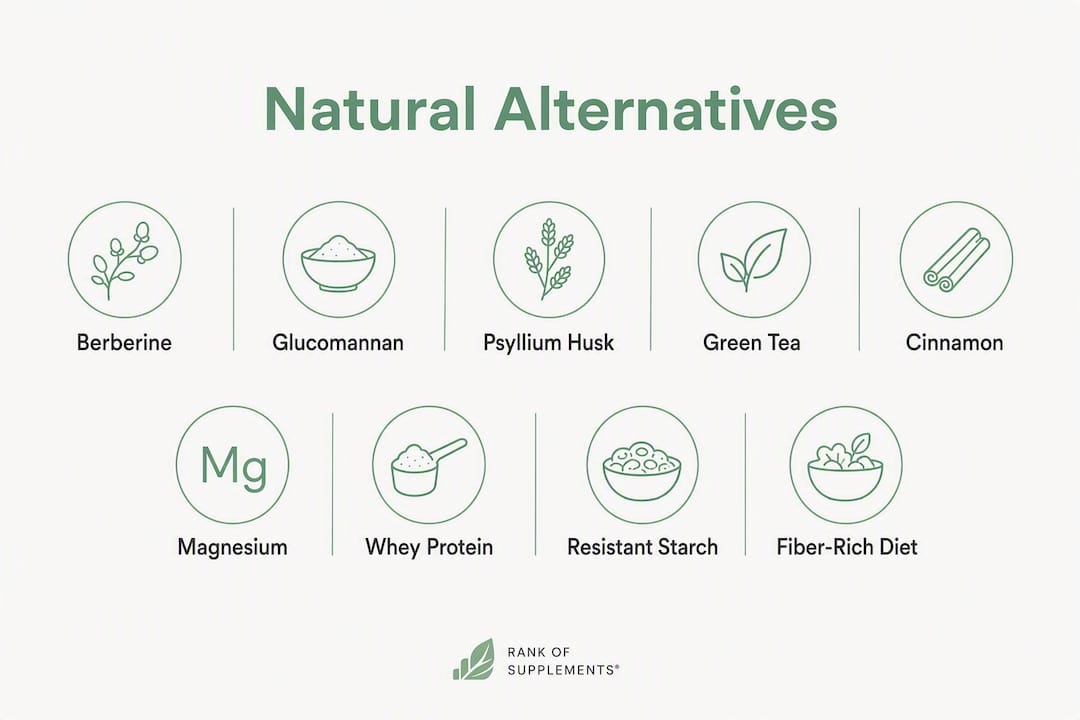
- 1. Berberine
- 2. Glucomannan
- 3. Psyllium husk
- 4. Green tea (EGCG)
- 5. Cinnamon
- 6. Magnesium
- 7. Whey protein preload
- 8. Resistant starch
- 9. Fiber-rich dietary pattern (overall diet structure)
- Who should not use natural approaches as a substitute
- A 12-week protocol to try natural alternatives safely
- How we reviewed the evidence
- Key Takeaways
- The gap nobody talks about honestly
- Finding supplements you can actually trust
- Selected sources and further reading
- FAQ
How Mounjaro and Ozempic actually work in your body
Understanding the pharmacology here is what separates realistic expectations from wishful thinking.
Ozempic (semaglutide) is a GLP-1 receptor agonist; it binds to GLP-1 receptors in the gut, brain, and pancreas. Mounjaro (tirzepatide) goes further by also activating GIP receptors, making it a dual agonist. That second receptor pathway is a significant part of why tirzepatide produced greater A1C reductions and greater percentage weight loss than semaglutide in head-to-head trials like SURPASS-2.
Both drugs work through three overlapping mechanisms:
- Appetite suppression: GLP-1 receptor activation in the hypothalamus reduces hunger signals, so you eat less without fighting cravings consciously.
- Gastric emptying slowdown: Food moves out of the stomach more slowly, extending fullness and blunting post-meal glucose spikes.
- Insulin/glucagon regulation: The pancreas releases more insulin when glucose is present and less glucagon, keeping blood sugar tightly controlled.
The pharmacological trick that makes these drugs so effective is durability. Your body’s own GLP-1 has a half-life of roughly 2 to 3 minutes before the enzyme DPP-4 breaks it down. Pharmaceutical versions are chemically modified to resist DPP-4, extending receptor activation by roughly 500 times compared to the endogenous hormone. Semaglutide has a half-life of about one week; tirzepatide, similar. That sustained signal is what drives the clinical outcomes.
Pro Tip: If you want to understand why a supplement “raises GLP-1” but still produces far smaller effects than the drug, the answer is almost always half-life. A food or supplement can briefly nudge GLP-1 upward; it cannot keep receptors activated for days.
Why natural approaches can’t fully replicate prescription GLP-1 drugs
This is the most important section in the article, and the most frequently glossed over.
Tirzepatide is a 39-amino-acid synthetic peptide produced via recombinant DNA methods in bioreactors. No plant, animal, or mineral contains it. The phrase “natural Mounjaro” is a marketing construct, not a biochemical reality. Even if a food briefly stimulates your gut to release a small pulse of GLP-1, that pulse is gone in minutes. The drug’s effect lasts a week.
The magnitude gap is real. Tirzepatide produced substantial average weight loss in clinical trials. The best-performing natural combination protocols in research produce moderate weight loss over several months. Most individual supplements yield smaller effects.
The FDA and independent testing have flagged products marketed as “natural tirzepatide” or “natural GLP-1 recipes” for containing undeclared pharmaceuticals or synthetic peptides. Buying a supplement because it claims to “mimic Mounjaro” is not just ineffective; it can be dangerous.
Three practical risks of treating natural options as equivalent:
- Delayed necessary care. Someone with an A1C of 9% who spends 12 weeks on berberine instead of starting metformin or a GLP-1 drug risks serious complications.
- Adulterated products. Regulatory warnings have been issued to companies selling products claiming to be natural GLP-1 analogues.
- False confidence. Modest weight loss from supplements can mask continued metabolic deterioration if A1C and fasting glucose are not monitored.
Natural strategies belong in the toolkit as adjuncts or as a first step for lower-risk individuals, not as replacements for prescribed therapy.
Evidence-backed lifestyle strategies that move the needle
Before any supplement, these lifestyle interventions have the strongest and most consistent evidence for improving weight and blood-sugar control.
- High-protein preloading: Consuming 20 g of whey protein 30 minutes before a meal raises endogenous GLP-1 and GIP, slows gastric emptying, and reduces meal-time calorie intake. Effects are measurable within 2 to 4 weeks.
- Viscous fiber targets: Glucomannan (3 to 4 g/day) and psyllium husk (10 to 15 g/day) form a gel in the gut that slows digestion, blunts glucose spikes, and increases satiety. Both have RCT support for modest weight and glycemic benefits.
- Resistant starch (15 to 20 g/day): Found in cooled cooked potatoes, green bananas, and oats, resistant starch feeds gut bacteria that produce short-chain fatty acids, which in turn stimulate GLP-1 release from L-cells in the colon.
- Resistance training (2 to 3 sessions/week): Increases GLUT-4 transporter density in muscle, improving glucose uptake independent of insulin. Measurable A1C improvements typically appear at 8 to 12 weeks.
- Aerobic exercise (150 min/week moderate intensity): Reduces fasting glucose and improves insulin sensitivity. The combination of aerobic and resistance training outperforms either alone.
- Sleep (7 to 9 hours/night): Chronic short sleep raises ghrelin and lowers leptin, directly increasing appetite and impairing glucose tolerance. Fixing sleep is often the highest-yield single change for people struggling with both weight and blood sugar.
- Time-restricted eating (10 to 12 hour eating window): Aligns food intake with circadian insulin sensitivity. Most studies show modest but real benefits for fasting glucose and body weight over 8 to 12 weeks.
- Stress reduction (cortisol management): Chronic cortisol elevation raises fasting glucose and promotes visceral fat storage. Structured practices like diaphragmatic breathing or progressive muscle relaxation have measurable glycemic effects in RCTs.
Realistic timeline: expect meaningful changes in fasting glucose and body weight at 8 to 12 weeks when two or more of these strategies are combined consistently.
1. Berberine
Berberine is the most studied natural compound for metabolic health and the one most often compared to prescription diabetes drugs. It works primarily through AMPK activation, the same cellular energy-sensing pathway targeted by metformin. That is a completely different mechanism from GLP-1 receptor agonism.

Trials show berberine produces roughly 3% weight loss over 12 weeks and HbA1c reductions of approximately 0.3 to 0.7%. Typical study doses are 500 mg two to three times daily with meals. The most common side effects are GI: nausea, cramping, and loose stools, particularly at the start. Berberine inhibits CYP3A4 and CYP2D6 enzymes, which means it can raise blood levels of several drugs including cyclosporine, some statins, and certain antidepressants. If you take any prescription medication, check interactions before starting.
For a detailed breakdown of how berberine compares to Ozempic specifically, Rankofsupplements has a dedicated berberine vs Ozempic analysis that covers effect sizes and when to prefer prescription therapy.
2. Glucomannan
Glucomannan is a viscous soluble fiber derived from the konjac root. It does not raise GLP-1 directly; it slows gastric emptying and increases satiety by forming a thick gel in the stomach, producing an effect that loosely parallels one part of what GLP-1 drugs do.
Typical study doses range from 3 to 4 g/day, taken with a large glass of water 30 to 45 minutes before meals. RCTs show modest but consistent weight loss of 1 to 2 kg over 8 to 12 weeks and small reductions in fasting glucose. The main safety concern is choking risk if taken without adequate water, and it must be separated from other medications by at least 2 hours because it can reduce their absorption.
3. Psyllium husk
Psyllium is a fermentable fiber with strong evidence for both glycemic control and LDL cholesterol reduction. At 10 to 15 g/day (split across meals), it reduces post-meal glucose spikes and improves insulin sensitivity over 6 to 12 weeks. The NCBI Bookshelf’s review of complementary approaches for type 2 diabetes lists psyllium among the better-supported dietary supplements for glycemic endpoints.
Unlike glucomannan, psyllium is inexpensive, widely available, and has a long safety record. The same medication-separation rule applies: take it at least 2 hours away from any prescription drug.
4. Green tea (EGCG)
Epigallocatechin gallate (EGCG), the primary catechin in green tea, has two relevant mechanisms: it mildly inhibits DPP-4 (the same enzyme that degrades endogenous GLP-1) and activates AMPK in fat and liver cells. Clinical summaries show small but measurable effects for EGCG on weight and glycemic markers.

Typical doses in trials are 400 to 800 mg EGCG/day from standardized extract. Weight loss effects are modest: roughly 1 to 2 kg over 12 weeks in most RCTs. High-dose EGCG supplements (above 800 mg/day) have been associated with liver stress in case reports, so staying within studied dose ranges matters. Green tea beverages provide far lower doses than extracts and are generally safe at any reasonable intake.
5. Cinnamon
Cinnamon, specifically Ceylon cinnamon (Cinnamomum verum), contains compounds that appear to improve insulin receptor sensitivity and slow carbohydrate digestion. Typical study doses are 1 to 3 g/day of Ceylon cinnamon powder or extract. Effects on fasting glucose are modest, roughly 5 to 10 mg/dL reductions in some trials, with inconsistent results across studies.
One practical note: most grocery-store cinnamon is Cassia cinnamon, which contains coumarin, a compound that can cause liver damage at high doses. If you are taking cinnamon as a supplement, Ceylon is the safer choice. Evidence quality for cinnamon is lower than for berberine or psyllium; treat it as a useful add-on, not a primary intervention.
6. Magnesium
Magnesium deficiency is common in people with type 2 diabetes and insulin resistance, and correcting it improves insulin sensitivity. Typical supplemental doses are 200 to 400 mg/day of magnesium glycinate or citrate (better absorbed than oxide). RCTs in magnesium-deficient populations show meaningful improvements in fasting glucose and HOMA-IR scores.
This one is worth checking before you start: a serum magnesium test costs very little, and if you are deficient, correcting it can produce noticeable metabolic improvements relatively quickly. If you are not deficient, the benefit is smaller.
7. Whey protein preload
This is the most underused intervention in the natural alternatives conversation. Twenty grams of whey protein consumed 30 minutes before a meal raises GIP and GLP-1, slows gastric emptying, and reduces meal-time calorie intake. The mechanism is real and well-documented.
When combined with resistant starch and berberine, one 24-week trial reported 7.8% weight loss versus 1.4% in the control arm. That is the strongest natural-protocol signal in the literature and the basis for the 12-week plan in the protocol section below. Whey is also the cheapest intervention on this list.
8. Resistant starch
Resistant starch (15 to 20 g/day) feeds colonic bacteria that produce butyrate and other short-chain fatty acids, which stimulate GLP-1 release from intestinal L-cells. It is the closest thing to a genuine endogenous GLP-1 secretagogue available without a prescription.
Practical sources: cooled cooked potatoes, green banana flour, high-amylose corn starch, and cooked-then-cooled rice. Supplemental forms (Hi-Maize, potato starch) are more reliable for hitting the 15 to 20 g target. GI tolerance varies; start at 5 g/day and increase gradually over 2 to 3 weeks.
9. Fiber-rich dietary pattern (overall diet structure)
No single supplement outperforms a consistently high-fiber, protein-adequate diet. Targeting 35 to 40 g of total dietary fiber per day from vegetables, legumes, whole grains, and fruit produces sustained improvements in fasting glucose, post-meal glucose variability, and body weight that individual supplements cannot match.
The mechanism is cumulative: fiber slows digestion, feeds beneficial gut bacteria, reduces calorie density, and supports endogenous GLP-1 secretion continuously throughout the day. This is the foundation on which every supplement above works better.
Who should not use natural approaches as a substitute
Some readers should stop here and call their doctor instead of trying a natural protocol.
Do not substitute natural approaches for prescription therapy if any of the following apply to you. The risk of delayed necessary care in these groups outweighs any potential benefit of a natural-first trial.
Clear contraindications for substitution:
- BMI of 30 or higher, or BMI of 27 or higher with a comorbidity (hypertension, sleep apnea, dyslipidemia)
- Established type 2 diabetes with A1C above 7.5% or any symptomatic hyperglycemia
- Pregnancy or planned pregnancy
- Recent cardiovascular event (heart attack, stroke, or hospitalization for heart failure) within the past 12 months
- Chronic kidney disease stage 3 or higher
- Any current prescription for a GLP-1 agonist, insulin, or sulfonylurea
Monitoring checklist for lower-risk individuals trying natural approaches:
- Fasting glucose: check at baseline, week 6, and week 12
- A1C: baseline and week 12 (or week 16 if baseline was recent)
- Body weight: weekly, same time of day
- Blood pressure: monthly
- Symptoms to watch: increased thirst, frequent urination, blurred vision, fatigue, or unexplained weight loss
Stop and seek care immediately if: fasting glucose rises above 200 mg/dL, A1C increases by more than 0.5% from baseline, or you develop any symptoms of hyperglycemia.
A 12-week protocol to try natural alternatives safely
This plan is designed for lower-risk adults (prediabetes or metabolic syndrome, BMI under 30, no current prescription GLP-1 therapy) who want a structured, clinician-supervised natural trial. Share it with your doctor before starting.
Weeks 1 to 2: Baseline and setup
- Get baseline labs: fasting glucose, A1C, lipid panel, liver enzymes, serum magnesium, blood pressure, and body weight.
- Start protein preload: 20 g whey protein in water, 30 minutes before your two largest meals.
- Add psyllium husk: 5 g/day with meals, increasing to 10 g by week 2.
- Begin tracking sleep (target 7 to 9 hours) and set a consistent eating window of 10 to 12 hours.
Weeks 3 to 6: Add fiber and movement
- Introduce resistant starch at 5 g/day, increasing to 15 g by week 4.
- Start resistance training: 2 sessions/week, full-body, 30 to 45 minutes each.
- Add 150 minutes/week of moderate aerobic activity (brisk walking counts).
- If magnesium-deficient on baseline labs, start 200 to 400 mg magnesium glycinate at night.
Weeks 7 to 12: Consider berberine if indicated
- If fasting glucose or A1C has not improved meaningfully by week 6, discuss adding berberine 500 mg twice daily with meals with your clinician. Check for drug interactions first.
- Week 6 check: repeat fasting glucose and weight. If fasting glucose is above 200 mg/dL or A1C has risen, stop the trial and resume/start prescription therapy.
- Week 12 check: repeat full labs. Evaluate whether to continue, escalate to prescription therapy, or maintain.
| Checkpoint | Labs/Metrics | Stop-and-escalate trigger |
|---|---|---|
| Baseline | Fasting glucose, A1C, weight, BP, liver enzymes, Mg | Any A1C above 9% → consult clinician before starting |
| Week 6 | Fasting glucose, weight, BP | Fasting glucose above 200 mg/dL or A1C rising |
| Week 12 | Full baseline panel repeat | A1C increased by 0.5%+ or no weight change with full adherence |
Critical rule: If you are currently on a GLP-1 drug and want to transition off, do not stop abruptly. Clinicians advise gradual down-titration under supervision while introducing natural secretagogues to reduce rebound appetite and weight regain. That transition requires a prescriber, not a supplement protocol.
How we reviewed the evidence
Every claim in this article is grounded in human clinical trials, meta-analyses, or regulatory guidance. Here is how the evidence was selected and weighted.
Inclusion criteria:
- Human RCTs or systematic reviews/meta-analyses where available
- Endpoints: weight loss (kg or % body weight), A1C or fasting glucose reduction, or both
- Dosing fidelity: only doses actually used in trials are cited, not manufacturer claims
- Safety signals: drug interactions, adulteration warnings, and adverse event data from regulatory sources
Evidence weighting:
- Combination intervention trials (protein + fiber + berberine) were weighted above single-supplement trials because they better reflect real-world use.
- Regulatory warnings (FDA adulteration notices) were treated as high-priority safety signals regardless of the source’s commercial interest.
- Observational data and mechanistic studies were used only to explain mechanisms, not to claim clinical effect sizes.
On conflicts of interest: Rankofsupplements earns affiliate income from supplement recommendations. Every supplement included here was selected on evidence quality, not commercial availability. Supplements with weak or inconsistent evidence (chromium, alpha-lipoic acid, bitter melon) were excluded despite being widely marketed.
This article was written and reviewed by matteo, a supplements reviewer at Rankofsupplements with a focus on metabolic health and evidence-based ingredient analysis. [Author credentials and institutional affiliations available on the Rankofsupplements author page.]
Key Takeaways
Natural strategies produce real but modest metabolic benefits and work best as a structured protocol for lower-risk adults, not as replacements for prescription GLP-1 therapy in people with established diabetes or high BMI.
| Point | Details |
|---|---|
| Natural options are adjuncts, not substitutes | Evidence-backed strategies produce 3 to 8% weight loss over 12 to 24 weeks; GLP-1 drugs produce substantially greater weight loss in clinical trials. |
| Combination protocols outperform single supplements | Whey preload + resistant starch + berberine produced 7.8% weight loss vs 1.4% in controls over 24 weeks in a combination trial. |
| High-risk groups should not substitute | BMI 30+, A1C above 7.5%, cardiovascular disease, or pregnancy require prescription therapy, not a natural trial. |
| Monitor with labs, not symptoms alone | Check fasting glucose and A1C at baseline, week 6, and week 12; stop if fasting glucose exceeds 200 mg/dL. |
| Rankofsupplements ingredient library | Use Rankofsupplements to verify third-party testing, dosing, and interaction data before buying any supplement. |
The gap nobody talks about honestly
Most articles comparing natural alternatives to GLP-1 drugs make one of two mistakes: they either dismiss natural options entirely or oversell them as equivalent. Neither is accurate, and neither helps you.
Here is the nuance worth sitting with. The combination of whey protein preload, resistant starch, and berberine is not a “natural Ozempic.” But for a 38-year-old with prediabetes, a fasting glucose of 108 mg/dL, and a BMI of 26 who cannot afford $1,100/month for a GLP-1 drug, a well-structured 12-week natural protocol is a genuinely reasonable first step. The 7.8% weight loss figure from combination trials is clinically meaningful for that person. It is not meaningful for someone with an A1C of 9.5% who needs glycemic control now.
The sequencing insight most people miss: whey preload + resistant starch tends to produce the earliest measurable signal (fasting glucose improvements within 3 to 4 weeks) because both directly stimulate endogenous GLP-1 and GIP. Berberine’s AMPK effects take longer, typically 6 to 8 weeks, to show up in A1C. Starting the fiber and protein first, then adding berberine at week 3 or 4, gives you an early win that keeps motivation up while the slower-acting compound builds effect. That sequencing is rarely mentioned in generic supplement roundups, but it is what the combination trial protocols actually did.
The red line is clear: if your fasting glucose is above 200 mg/dL, if you have symptoms (thirst, frequent urination, blurred vision), or if your A1C is rising despite adherence, a natural protocol is not the right tool. Prescription therapy exists for exactly that situation.
Finding supplements you can actually trust
The single biggest problem with the natural alternatives space is not that the ingredients lack evidence. It is that product quality is wildly inconsistent. A berberine supplement with 40% of the labeled dose will not produce the effects seen in trials. A glucomannan product with poor viscosity won’t gel properly in your gut.
Rankofsupplements reviews berberine, glucomannan, psyllium, and other weight-loss supplements against third-party testing data, label accuracy, and the actual doses used in clinical trials. Before you spend money on any supplement mentioned in this article, check the ingredient library to see which products meet the evidence standard and which fall short.
For a curated shortlist of blood-sugar supplements ranked by evidence quality, the best blood sugar supplements guide is the fastest way to find products that have been evaluated against the criteria above. And if you want to understand how to avoid the most common supplement-buying mistakes, the common supplement mistakes guide covers the quality-control and dosing pitfalls that cost people money and results.
Supplements are adjuncts. They work best alongside diet, exercise, and sleep, and under clinician oversight when any metabolic condition is involved. Consult your doctor before starting any new supplement, particularly if you take prescription medications.
Selected sources and further reading
The claims in this article draw on the following peer-reviewed and regulatory sources. Bring this list to your next clinician visit if you want to discuss any of the interventions.
- Non-Pharmaceutical Intervention Options for Type 2 Diabetes, NCBI Bookshelf (Endotext): Comprehensive review of complementary and integrative approaches for diabetes, including dietary supplements and evidence quality ratings.
- Mounjaro vs. Ozempic: Effectiveness, Side Effects and Cost Comparison, Drugwatch: Clinical comparison of tirzepatide and semaglutide trial outcomes, including SURPASS-2 data.
- Mounjaro vs. Ozempic: Which Is Right for You?, Drugs.com: Mechanism and indication comparison from a clinical pharmacology perspective.
- Berberine, Cinnamon, Green Tea May Mimic Ozempic’s Weight-Loss Effect, Medical News Today: Summary of clinical evidence for common weight-loss supplements.
- Naturally Occurring Molecule Rivals Ozempic in Weight Loss, Stanford Medicine News: Stanford research on endogenous compounds with GLP-1-adjacent mechanisms.
- Natural GLP-1 Supplements: Top 8 Ranked by Evidence, Rankofsupplements: Evidence-based ranking of natural GLP-1-targeting supplements with dosing and safety notes.
- Ozempic Cost Without Insurance Guide, RoenRx: Cost and access context for GLP-1 injectables in the U.S.
This article is general health information only, not a substitute for professional medical advice. Always consult a qualified clinician before changing, stopping, or starting any treatment for diabetes, obesity, or cardiovascular disease.
FAQ
Can you mimic Ozempic naturally?
No supplement or food replicates Ozempic’s mechanism. Berberine, resistant starch, and whey protein preloading can raise endogenous GLP-1 briefly and activate overlapping metabolic pathways, but the effect size and duration are far smaller than semaglutide’s week-long receptor activation.
What is the most affordable alternative to Ozempic?
A combination of whey protein preload (20 g before meals), psyllium husk (10 to 15 g/day), and berberine (500 mg twice daily) typically costs considerably less monthly than brand GLP-1 injectables and has the strongest combined evidence among natural options. For prescription cost guidance, GLP-1 insurance and access resources can help identify coverage options.
What can you take instead of Mounjaro?
No supplement replaces Mounjaro’s dual GIP/GLP-1 action. For lower-risk individuals, the best-supported natural options are berberine, glucomannan, psyllium, and a protein-forward diet with resistance training. Anyone with established type 2 diabetes or BMI of 30 or higher should discuss alternatives with a prescriber, not a supplement guide.
What is the best natural GLP-1 supplement for weight loss?
Resistant starch (15 to 20 g/day) is the most direct natural GLP-1 secretagogue, stimulating L-cells in the colon to release GLP-1. Combined with whey protein preload and berberine, it produced 7.8% weight loss over 24 weeks in one combination trial. Rankofsupplements ranks and reviews natural GLP-1 supplements by evidence quality if you want product-level guidance.