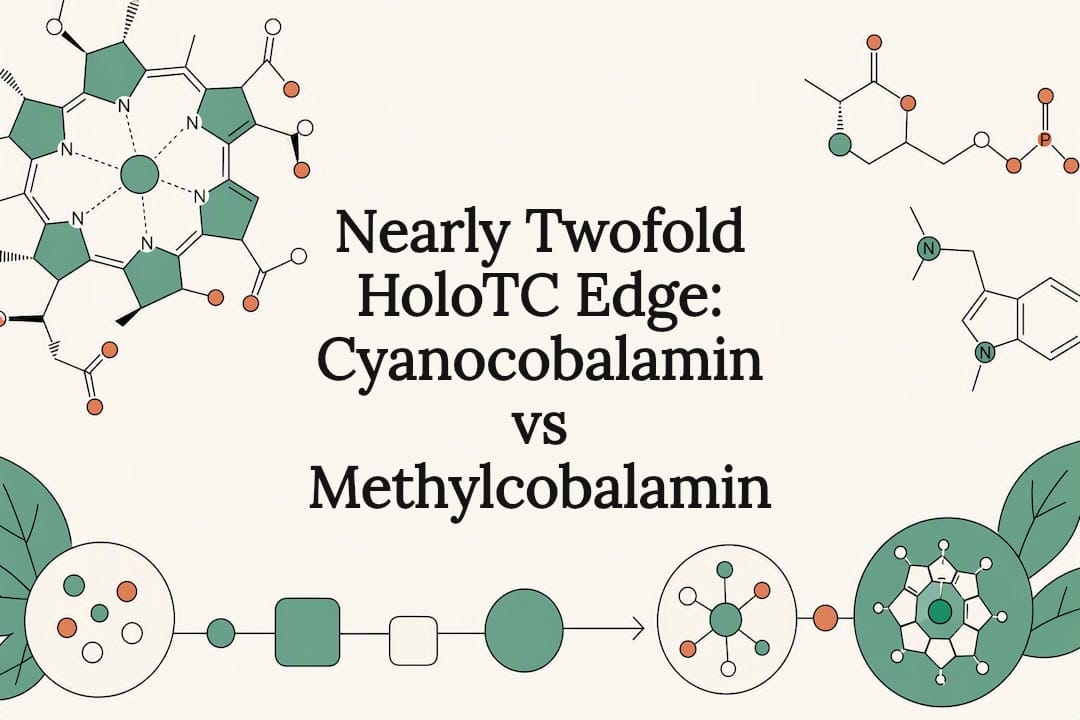
For most people, cyanocobalamin is the smarter default: it’s stable, cheap, and clinically proven to correct deficiency, including in vegans where it outperformed methylcobalamin at maintaining B12 status in a 2021 trial. Methylcobalamin earns a spot when someone is chasing neurological symptoms or didn’t respond well to the synthetic form. If malabsorption or pernicious anemia is in play, oral supplements of either type may not matter much. That’s when injections take over.
TL;DR:
- Cyanocobalamin remains the preferred choice for routine B12 supplementation due to its stability, lower cost, and extensive clinical data supporting its use.
- The absorption and conversion of both cyanocobalamin and methylcobalamin are fundamentally similar, relying on stomach intrinsic factor and cellular processing, regardless of the initial form.
- A 2021 trial found cyanocobalamin maintained higher active B12 levels in vegans compared to methylcobalamin, especially when dosing frequency is optimized.
- Higher doses and split dosing improve absorption because of the saturable intrinsic factor pathway, making frequent lower doses potentially more effective than sporadic high doses.
- Trace cyanide in cyanocobalamin is harmless for healthy individuals but may require caution in people with severe kidney impairment.
Table of Contents
- Methylcobalamin vs Cyanocobalamin at a Glance
- How Your Body Actually Converts Each Form of B12
- What the Clinical Evidence Says About Absorption and Retention
- Dosing: Oral Maintenance vs. Injectable Repletion
- Is the Cyanide in Cyanocobalamin Actually Dangerous?
- Which Form Should You Actually Choose?
- How to Choose and Start a B12 Supplement Safely
- Our Take: Stop Treating “Natural” as a Synonym for “Better”
- Find the Right B12 Supplement Without Guessing at Labels
- Sources
- FAQ
Methylcobalamin vs Cyanocobalamin at a Glance
The core difference comes down to one small chemical attachment. Cyanocobalamin carries a cyanide ligand bonded to the cobalt core, while methylcobalamin carries a methyl group instead. Both are inactive until the body strips off that ligand and rebuilds the active cofactors cells actually use, which is why “bioactive” marketing claims for methylcobalamin oversell what happens biochemically.
Here’s how the practical differences shake out:
- Stability: Cyanocobalamin resists light, heat, and oxidation far better, which is why it dominates fortified foods and shelf-stable multivitamins.
- Cost: Cyanocobalamin is cheaper to manufacture, a big reason it shows up in low-cost supplements and public health fortification programs.
- Clinical use: Cyanocobalamin is the standard injectable for pernicious anemia; methylcobalamin shows up more often in oral supplements marketed for nerve health, and in higher-dose neuropathy research.
- Evidence base: Cyanocobalamin has decades of dosing data behind it. Methylcobalamin has promising but smaller, less consistent trial data.
If your goal is routine maintenance or you’re vegan and want a dependable status marker, cyanocobalamin is the safer bet based on current trial data. If you’re specifically targeting nerve-related symptoms, methylcobalamin is worth trying, though the evidence for it is thinner than the marketing suggests.
How Your Body Actually Converts Each Form of B12
Vitamin B12, or cobalamin, isn’t one molecule. It’s a family of compounds sharing a cobalt-centered ring structure called a Corbin ring, with different chemical groups attached to that cobalt atom. The two forms your body actually uses at the cellular level are methylcobalamin (MeCbl), which drives the methylation cycle in the cytoplasm, and adenosylcobalamin (AdCbl), which fuels a mitochondrial enzyme involved in fatty acid and amino acid metabolism. Cyanocobalamin and hydroxocobalamin are not native active forms. They’re precursors the body has to process first.
Absorption starts in the stomach, where cobalamin binds to a protein called intrinsic factor, made by the stomach’s parietal cells. That complex travels to the terminal ileum, where specific receptors pull it into the bloodstream. This is the bottleneck that matters most: without functioning intrinsic factor or a healthy ileum, it doesn’t matter which B12 form you swallow. Little of it gets absorbed. That’s the mechanism behind pernicious anemia, and it’s why oral supplementation, no matter the form, sometimes fails outright.
Once inside cells, both cyanocobalamin and methylcobalamin get stripped of their attached ligand (cyanide or methyl group, respectively) and rebuilt into MeCbl or AdCbl depending on which enzyme needs it. Comparative bioavailability research confirms this conversion happens regardless of starting form, which undercuts the common claim that methylcobalamin supplements skip a metabolic step other forms don’t. The methyl ligand you swallow is not necessarily the methyl group your cells end up using. The PubChem structural data on methylcobalamin shows exactly where that methyl group sits on the cobalt atom, and it’s the same site cyanide occupies in the cyanocobalamin molecule.
Where things get more interesting is genetics. Certain polymorphisms in genes like MTHFR or the transcobalamin transport proteins can alter how efficiently someone processes and recycles cobalamin internally. There’s no standard commercial test that tells you definitively how your B12 pathway handles each form, which is why some practitioners suggest trialing methylcobalamin, adenosylcobalamin, or a combination when someone isn’t responding to cyanocobalamin as expected. It’s an educated guess, not a diagnosis, but it’s a reasonable one when standard repletion isn’t working.
What the Clinical Evidence Says About Absorption and Retention
The most direct head-to-head data comes from a 2021 trial in vegan adults, and the results cut against the popular assumption that “natural” methylcobalamin wins on absorption.
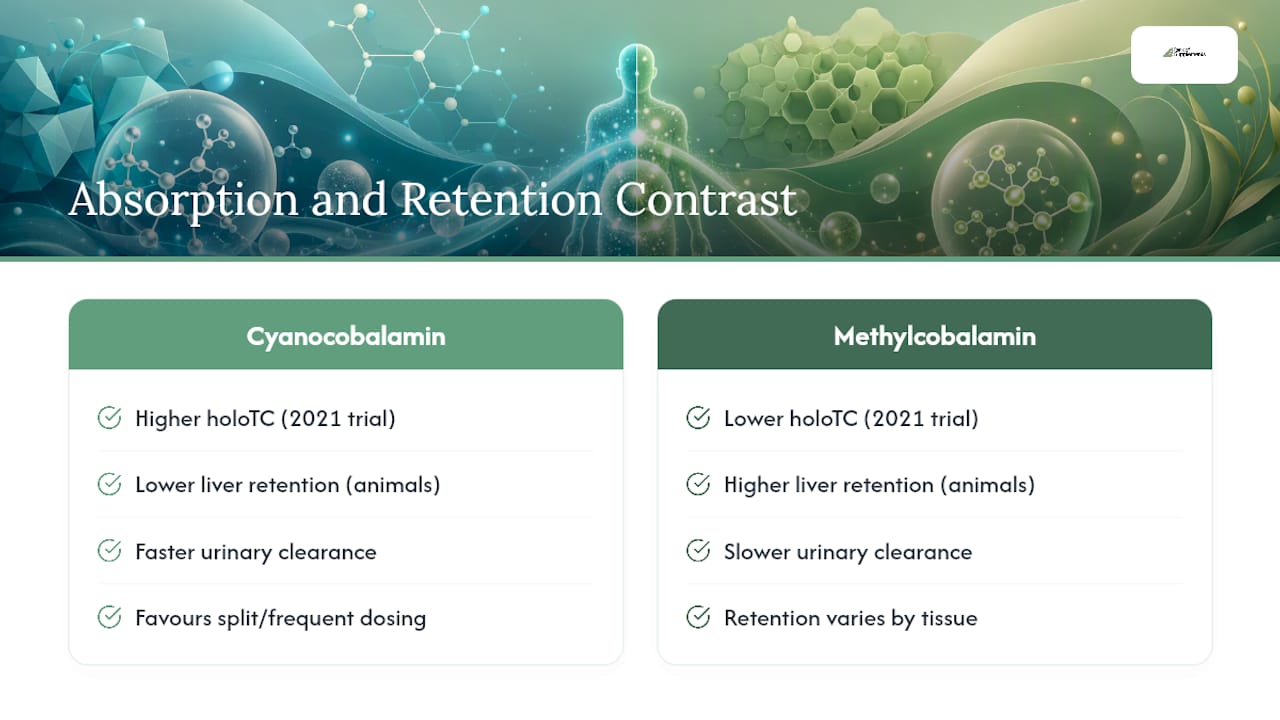
By the numbers: Vegan adults supplementing with cyanocobalamin maintained a median holotranscobalamin (holoTC) level notably higher than the methylcobalamin group.
HoloTC measures the fraction of B12 actively bound to its transport protein and headed for tissue use, making it one of the more sensitive early markers of B12 status. A nearly two-fold gap in median holoTC is a meaningful signal that cyanocobalamin, at least in this study population and dosing schedule, sustained usable B12 status better than methylcobalamin did. The study’s own authors flagged dosing frequency as a major variable, not just the form itself, which matters more than most comparison articles let on.
That single trial doesn’t settle the debate on its own. Older animal studies and pharmacokinetic reviews have found the opposite pattern in some tissues: higher methylcobalamin retention in the liver, alongside faster urinary clearance of cyanocobalamin after oral dosing. Reconciling these findings requires looking past “which form is better” and toward “better at what, measured how, over what timeframe.” Liver retention in an animal model measures something different than serum holoTC in vegan humans over weeks of daily dosing. Both are legitimate data points. Neither is the final word.
Dose size and dosing frequency explain a lot of the disagreement between studies. Cobalamin absorption through the intrinsic factor pathway is saturable, meaning the gut can only absorb a fixed amount per exposure, roughly 1 to 2 micrograms at a time, regardless of how much you swallow. Take a single 1,000 mcg tablet and you absorb a small percentage of it through that active pathway, plus a bit more through passive diffusion at higher doses. Split that same total dose across several smaller daily doses and the cumulative absorbed amount often comes out higher. This is likely why the vegan trial’s authors singled out frequency as a key variable, and it’s a detail most consumer-facing B12 comparisons skip entirely.
The three biomarkers worth knowing for interpreting any of this: holoTC (active, transport-bound B12, an early indicator of status), methylmalonic acid or MMA (a metabolic byproduct that rises when cellular B12 is functionally insufficient, even if serum levels look normal), and homocysteine (an amino acid that climbs when methylation pathways are B12- or folate-starved). The NIH Office of Dietary Supplements factsheet covers how clinicians use these three together rather than relying on a single serum B12 number, which alone can be misleadingly normal in early deficiency.
Dosing: Oral Maintenance vs. Injectable Repletion
Dosing decisions hinge on why someone needs B12 in the first place: general maintenance, confirmed deficiency, or a specific neurological complaint. The ranges below reflect commonly used clinical and supplement protocols, not a one-size prescription.
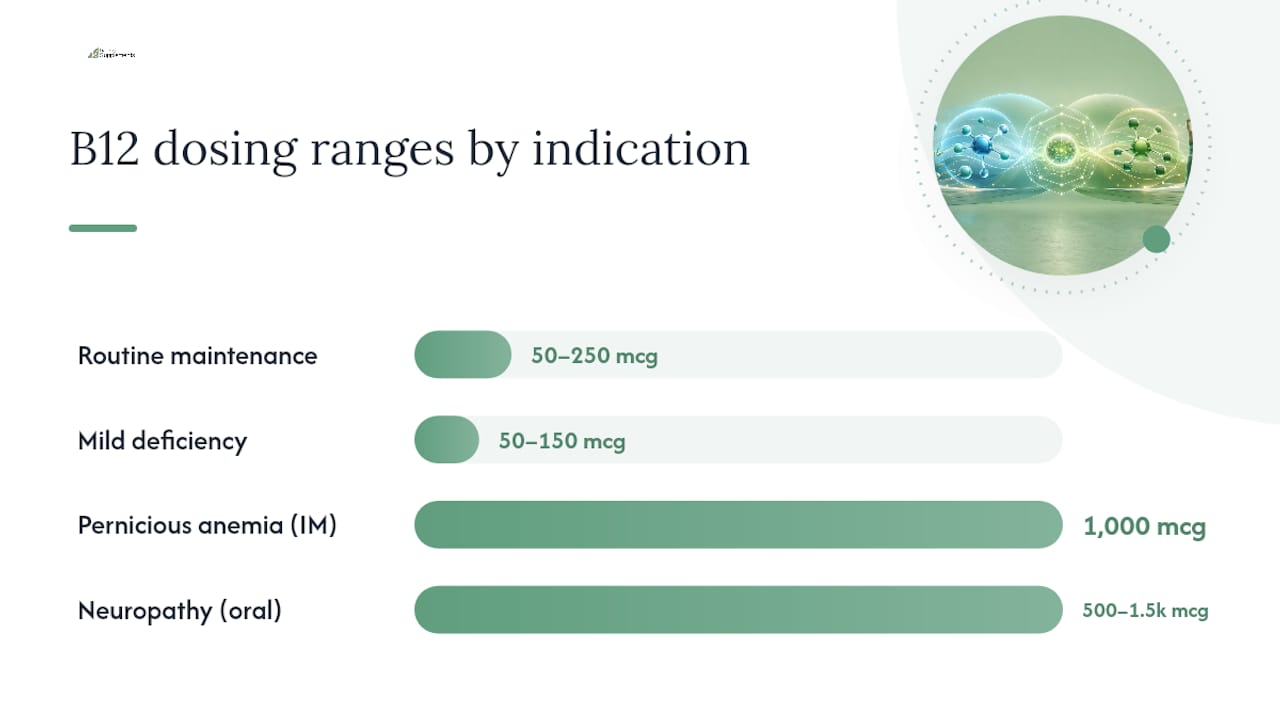
- Routine oral maintenance: 50 to 250 mcg of cyanocobalamin or methylcobalamin daily is typical for people without absorption problems who simply want to cover dietary gaps, particularly vegans and older adults with reduced stomach acid.
- Diet-related mild deficiency: Oral doses in the same 50 to 150 mcg daily range are commonly used, per Medscape’s dosing reference, often reassessed after 8 to 12 weeks with a follow-up blood test.
- Pernicious anemia or confirmed malabsorption: The standard protocol calls for 1,000 mcg of cyanocobalamin by intramuscular injection daily for 6 to 7 days, then weekly for several weeks, then monthly for maintenance, a regimen documented in DailyMed’s cyanocobalamin injection labeling.
- Neuropathy-focused protocols: Methylcobalamin trials for nerve-related symptoms have used considerably higher oral doses, often in the 500 to 1,500 mcg per day range or higher, well above what’s used for simple maintenance.
Frequency matters as much as the number on the label. A person taking a single massive weekly dose and someone taking a smaller daily dose can end up with very different absorbed totals, thanks to that saturable gut transport system described earlier. This is one of the more underappreciated points in B12 supplementation: a supplement with a lower “on paper” dose taken daily can outperform a higher-dose product taken sporadically.
It’s also worth flagging that most of the trial data supporting higher-dose methylcobalamin for neuropathy comes from smaller studies with short follow-up windows, not the kind of large, multi-year trials that back cyanocobalamin’s injectable protocols for pernicious anemia. That doesn’t make methylcobalamin ineffective for nerve symptoms. It means the evidence supporting those higher doses is a narrower, more provisional signal than the decades of injectable cyanocobalamin data.
Is the Cyanide in Cyanocobalamin Actually Dangerous?
No, and this is one of the most persistent myths in the B12 comparison debate. Cyanocobalamin does contain a cyanide molecule bonded to its cobalt core, but the quantity is minuscule, far below any threshold that causes toxicity in someone with normal kidney and liver function. The body clears trace cyanide through normal detoxification pathways without issue at standard supplemental or even injectable doses.
The exception worth knowing: people with significant renal impairment metabolize and clear compounds more slowly across the board, and clinicians sometimes take that into account when choosing between cyanocobalamin and hydroxocobalamin for repletion in that specific population. This isn’t a reason for a healthy person to avoid cyanocobalamin. It’s a reason for someone with kidney disease to loop in their physician before self-dosing high amounts of any B12 form.
Injectable cyanocobalamin carries its own documented, if uncommon, adverse event profile per its DailyMed labeling, including injection site reactions, mild diarrhea, itching, and rare hypersensitivity responses. True allergic reactions to cobalamin itself are rare but documented, and they can occur with either form since the reaction is typically to the cobalamin molecule or a preservative in the injectable solution, not specifically the ligand.
Oral supplementation with either form is considered safe at a wide range of doses for the general population, since B12 is water-soluble and excess is excreted rather than stored to toxic levels. There’s no established upper limit for B12 the way there is for fat-soluble vitamins like A or D. That said, anyone on medications that affect B12 metabolism, including certain diabetes drugs like metformin and acid-reducing medications like proton pump inhibitors, should mention B12 supplementation to their prescriber, since these drugs are known to lower B12 status over time and can complicate lab interpretation.
Which Form Should You Actually Choose?
Match the form to the situation rather than picking based on which one sounds more “natural.” Here’s how that breaks down across the scenarios readers ask about most:
- Routine dietary insurance (omnivores, mild dietary gaps): Cyanocobalamin covers this well. It’s stable, affordable, and backed by the deepest dosing history of any B12 form.
- Vegans and plant-based eaters: Cyanocobalamin is the better-supported default here too, given the 2021 trial data showing stronger holoTC maintenance. Pair it with periodic testing since dietary B12 intake is effectively zero without animal products or fortified food.
- Neurological symptoms (tingling, numbness, brain fog with confirmed low B12): Methylcobalamin is worth trialing, particularly if cyanocobalamin hasn’t resolved symptoms after a reasonable window. Higher oral doses used in neuropathy research reflect this use case specifically.
- Confirmed pernicious anemia or malabsorption (Crohn’s, gastric bypass, long-term PPI use): Oral supplements of either form may underperform regardless of dose. Injectable cyanocobalamin or hydroxocobalamin, following the standard loading-then-maintenance schedule, is the appropriate route, and this needs clinician oversight.
- Older adults with reduced stomach acid: Either oral form works, but higher-dose crystalline B12 (1,000 mcg or more daily) is often recommended since it partially bypasses the intrinsic factor bottleneck through passive absorption.
Pro Tip: Don’t just retest total serum B12 to confirm your supplement is working. It can look normal even when cells are functionally deficient. Ask for a methylmalonic acid (MMA) or holoTC test 8 to 12 weeks after starting a new regimen for a clearer picture of whether your chosen form is actually doing its job.
If you’re building out a broader plant-based supplement stack, RankOfSupplements’ guide to top vegan supplements covers where B12 fits alongside other common gaps like iron and omega-3s.
How to Choose and Start a B12 Supplement Safely
A quality B12 supplement should make a few things easy to verify on the label, and most cheap products fail at least one of these.
- Confirm the exact form listed (cyanocobalamin, methylcobalamin, or a blend) rather than a vague “vitamin B12” line with no chemical name.
- Check the dose per serving against your goal. 250 mcg or less suits maintenance; higher doses target confirmed deficiency or neuropathy protocols under guidance.
- Look for third-party testing seals (USP, NSF, or ConsumerLab verification) confirming the label matches what’s actually in the capsule.
- Check storage guidance. Methylcobalamin is notably more sensitive to light and heat than cyanocobalamin, so opaque packaging and a cool, dry storage spot matter more for that form.
- Verify an expiration date and lot number are printed, a basic transparency marker that low-quality brands sometimes skip.
For confirmed deficiency, that regimen typically escalates under medical supervision, often to daily higher-dose oral repletion or a short injectable course before stepping down to maintenance.
If you’re tracking a dosing schedule alongside other supplements, RankOfSupplements’ wellness supplement intake workflow guide walks through building a routine that’s actually sustainable rather than another abandoned pill organizer. And for a deeper look at how the site evaluates competing supplement forms generally, the iron bisglycinate versus ferrous sulfate comparison uses a similar evidence-first approach.
Our Take: Stop Treating “Natural” as a Synonym for “Better”
The methylcobalamin marketing machine has done a genuinely impressive job convincing health-conscious shoppers that “bioactive” and “natural” automatically mean superior. The chemistry doesn’t back that up cleanly. Your cells strip the ligand off either form and rebuild what they need, and the one human trial directly comparing the two in a real-world population, vegans, found cyanocobalamin held holoTC levels nearly twice as high as methylcobalamin did.
That doesn’t make methylcobalamin worthless. It has a legitimate, if narrower, place for people chasing nerve-related symptoms, and the higher doses used in that research context are a genuinely different intervention than a 250 mcg maintenance capsule. What RankOfSupplements weighs most heavily when evaluating any B12 product is dosing frequency and third-party verification of label accuracy, not which ligand sounds more impressive on the bottle. Clinical studies carry more weight in our assessments than a brand’s own marketing copy, and product quality checks (testing seals, storage stability, transparent labeling) matter just as much as the molecule itself.
The honest recommendation is unglamorous: pick cyanocobalamin first unless you have a specific reason not to, dose it consistently rather than sporadically, and retest with an MMA or holoTC panel before assuming any supplement, in any form, is actually working.
— matteo
Find the Right B12 Supplement Without Guessing at Labels
Picking between methylcobalamin and cyanocobalamin only solves half the problem. The other half is figuring out which actual products contain the dose, form, and purity they claim, and that’s where most shoppers get stuck scanning ingredient panels with no reference point. Rankofsupplements built its Supplement Ingredient Library specifically to close that gap: a searchable reference for exactly what a form like cyanocobalamin or methylcobalamin should look like on a legitimate label, what dose ranges are typical, and what red flags to watch for on cheaper brands.
If B12 is one piece of a larger supplement routine you’re building, the ingredient library pairs well with condition-specific breakdowns on Supplements by Health Goal & Condition, where you can check how B12 fits alongside other nutrients relevant to your specific goal, whether that’s energy, nerve health, or general deficiency correction. Start by searching cyanocobalamin or methylcobalamin in the library before your next purchase, and skip the guesswork on whether a product’s label actually matches what’s inside the bottle.
Sources
Readers who want to go past this comparison and check the primary evidence themselves have a short, high-value reading list:
- Efficacy of supplementation with methylcobalamin and cyancobalamin in maintaining the level of serum holotranscobalamin in a group of plant-based diet (vegan) adults
- DailyMed — Cyanocobalamin Injection, USP
- Office of Dietary Supplements (NIH) — Vitamin B12 (Health Professional Fact Sheet)
This article is general information, not a substitute for advice from a qualified doctor. Consult a qualified healthcare professional about your own circumstances before acting on anything here.
FAQ
What is the disadvantage of methylcobalamin?
It’s less stable than cyanocobalamin, sensitive to light and heat, and generally costs more. Clinical evidence supporting its edge for maintaining B12 status is also thinner than the marketing implies, with the 2021 vegan trial actually favoring cyanocobalamin for holoTC maintenance.
Why do doctors avoid cyanocobalamin in some cases?
Most clinicians don’t avoid it; it remains the standard for injectable B12 repletion. The rare exception involves patients with significant kidney impairment, where slower clearance of the trace cyanide component can factor into choosing hydroxocobalamin instead.
What form of B12 is best absorbed?
Neither form has a clear absorption advantage across the board. In the vegan trial data, cyanocobalamin maintained higher holoTC levels, but dosing frequency influenced outcomes as much as the form itself, and both are absorbed through the same intrinsic factor pathway.
Why do doctors prescribe cyanocobalamin instead of methylcobalamin?
Cyanocobalamin has decades of injectable dosing data, established protocols for pernicious anemia, and lower cost, which makes it the default choice for confirmed deficiency and standard repletion in clinical practice.
How much methylcobalamin or cyanocobalamin should I take daily?
For routine maintenance, 50 to 250 mcg daily of either form is typical, per Medscape’s dosing guidance. Confirmed deficiency or neuropathy-focused protocols often use higher doses under clinician supervision.