Most women with hypothyroidism notice persistent fatigue, cold intolerance, unexplained weight gain, dry or thinning hair, constipation, heavy or irregular periods, and a foggy, hard-to-shake mental sluggishness. These signs tend to creep in slowly, over months or sometimes years, which is exactly why so many women chalk them up to stress or aging. The only way to know for sure is a blood test checking TSH and free T4.
TL;DR:
- Women over 60 are at higher risk of hypothyroidism, especially postmenopause, where fatigue, weight gain, and joint aches can be mistaken for aging.
- Symptoms tend to cluster in groups, with physical signs appearing first, followed by cognitive, mood, and reproductive changes, especially during pregnancy and perimenopause.
- Diagnosis relies on TSH and free T4 blood tests, with abnormal results often showing high TSH and low free T4 in primary hypothyroidism.
- Proper treatment with levothyroxine usually starts with dose adjustments every six to eight weeks, with symptom improvement taking from weeks to months depending on the change.
- Lifestyle factors like consistent sleep, moderate exercise, and proper medication timing support treatment, while nutrient deficiencies should be addressed only after testing confirms them.
Table of Contents
- What Are the Hypothyroidism Signs in Women, System by System?
- Do Symptoms Change With Age or Reproductive Stage?
- What Tests Confirm a Thyroid Function Problem?
- Could It Be Something Else? Ruling Out Look-Alikes
- When Does Hypothyroidism Become a Medical Emergency?
- How Should You Prepare for a Thyroid Appointment?
- How Is Hypothyroidism Treated, and How Fast Does It Improve?
- What Lifestyle Changes Actually Help Alongside Treatment?
- Rankofsupplements Perspective: Supplements Have a Role, Just Not the Lead Role
- Sources
- FAQ
What Are the Hypothyroidism Signs in Women, System by System?
Thyroid hormone touches nearly every organ, so the symptom list looks scattered until you group it by body system. That grouping is also the fastest way to recognize when your own complaints add up to something worth testing for.
Physical symptoms tend to show up first and are the most commonly reported:
- Persistent fatigue that doesn’t improve with rest
- Cold intolerance (feeling chilled when everyone else is comfortable)
- Unexplained weight gain despite no change in diet
- Dry skin and thinning hair, sometimes with hair loss at the outer eyebrows
- Constipation
- Joint and muscle pain or stiffness
- A slower resting heart rate
Cognitive and mood symptoms are frequently underappreciated, even by patients themselves:
- Brain fog and difficulty concentrating
- Memory lapses that feel out of character
- Depression or a flattened mood
- Anxiety, in some cases alongside the depression rather than instead of it
Reproductive symptoms are particularly relevant for women and often get missed in a general symptom review:
- Heavy or irregular menstrual periods
- Shortened or lengthened cycles
- Fertility difficulty or trouble conceiving
Cleveland Clinic lists fatigue, brain fog, depression, and unexplained weight gain among the most common complaints prompting a thyroid workup, and the NIDDK specifically calls out heavy or irregular periods and slowed heart rate as hallmark findings in women.
Statistic Callout: Hypothyroidism is far more common in women than in men, and the risk climbs noticeably after age 60, particularly during the postmenopausal years.
No single symptom on this list proves you have a thyroid problem. What matters more is the cluster: three or four of these showing up together, especially when they’ve crept in gradually rather than appeared overnight.
Do Symptoms Change With Age or Reproductive Stage?
Hypothyroidism doesn’t look the same at 25, 40, and 65. Age and reproductive stage change both the likelihood of developing it and how it presents.
Risk rises meaningfully after age 60, and postmenopausal women are one of the highest-risk groups for a new diagnosis. In this stage, fatigue, weight gain, and joint aches often get written off as “just getting older” when they’re actually a thyroid problem hiding in plain sight.
During pregnancy, thyroid function matters even more. Untreated or undertreated hypothyroidism has been linked to fertility struggles and pregnancy complications, which is why obstetric providers often use tighter TSH thresholds for pregnant patients than they would for someone who isn’t trying to conceive.
Perimenopause is where things get genuinely confusing, since hot flashes, mood swings, irregular periods, and low energy overlap heavily with thyroid symptoms. A few clues tend to point more toward the thyroid than menopause:
- Cold intolerance that goes beyond typical hot flash fluctuations
- Thinning or loss of the outer third of the eyebrows
- Constipation that’s new or worsening
- A resting heart rate on the slower side
- Puffiness in the face, especially around the eyes
Pro Tip: If you’re in perimenopause and juggling three or more of these symptoms at once, ask for thyroid testing even if your clinician’s first instinct is to blame menopause. Clinical guidance favors a low threshold for testing when subtle complaints stack up rather than waiting for one dramatic symptom to appear.
Women exploring metabolic changes after menopause may also want to look at how supplements can support metabolism during this transition, though that’s a conversation to have after ruling out an underlying thyroid issue, not instead of it.
What Tests Confirm a Thyroid Function Problem?
Diagnosis runs through the bloodstream, not a symptom checklist. Two tests do most of the work.
TSH (thyroid-stimulating hormone) is produced by the pituitary gland and rises when the thyroid isn’t making enough hormone on its own. Free T4 measures the actual active thyroid hormone circulating in your blood. In primary hypothyroidism, the classic pattern is a high TSH paired with a low free T4, which tells your clinician the thyroid itself is underperforming.
Testing is typically indicated when:
- You have two or more of the symptoms described above, especially if they’ve been building for months.
- You’re struggling with infertility or recurrent pregnancy loss.
- You’re pregnant or planning a pregnancy, given the tighter risk profile involved.
- Routine bloodwork turns up unexplained high cholesterol, since untreated hypothyroidism can drive up LDL.
- Initial results are abnormal or borderline, prompting anti-TPO antibody testing to check for autoimmune thyroiditis (Hashimoto’s disease), the most common underlying cause.
If antibody testing comes back positive or the case looks complicated, primary care will often refer to an endocrinologist for closer management.
Could It Be Something Else? Ruling Out Look-Alikes
Fatigue, weight gain, and mood changes are about as specific as a headache. Plenty of conditions mimic hypothyroidism, and telling them apart usually comes down to which symptoms show up together.
Menopause overlaps the most, since hot flashes, mood swings, and irregular cycles show up in both conditions. Cold intolerance and slowed heart rate tilt the picture toward thyroid disease rather than menopause alone.
Depression shares the flattened mood and low energy, but depression doesn’t typically come with cold intolerance, constipation, or a slower pulse.
Iron-deficiency anemia produces fatigue and sometimes hair thinning, but usually without the cold sensitivity or the menstrual pattern changes seen in hypothyroidism.
A few other factors deserve a mention:
- Certain medications and supplements, including biotin and high-dose vitamin C, can throw off thyroid test results without causing any real change in thyroid function.
- Iron and vitamin D deficiencies commonly ride alongside thyroid problems and can independently worsen fatigue, which is one reason clinicians often order a broader panel rather than TSH alone.
When symptoms don’t add up cleanly to one diagnosis, the safer move is testing rather than guessing. This same principle applies across sexes; for comparison, low testosterone in men produces a strikingly similar fatigue-and-mood pattern that also requires bloodwork rather than assumption.
When Does Hypothyroidism Become a Medical Emergency?
Rarely, but it happens. Profound lethargy, confusion, an abnormally slow heart rate, or a body temperature that runs low can signal myxedema coma, a life-threatening complication of severe, untreated hypothyroidism that needs emergency care immediately.
Short of that extreme, untreated hypothyroidism raises LDL cholesterol over time and increases cardiovascular disease risk. Routine fatigue and cold intolerance warrant a scheduled appointment, not an ER visit. Sudden confusion, extreme drowsiness, or a very slow pulse do not wait for Monday.
How Should You Prepare for a Thyroid Appointment?
Walking in with specifics turns a vague complaint into an efficient visit. Bring:
- A timeline of when symptoms started and how they’ve changed.
- A full list of current medications and supplements.
- Menstrual and pregnancy history, including any recent changes in cycle length or flow.
- Family history of thyroid or autoimmune disease.
- Any recent labs, especially cholesterol panels or previous thyroid results.
Ask directly for TSH and free T4, and ask whether anti-TPO antibody testing makes sense given your symptoms. Also ask what improvement timeline to expect once treatment starts, since that number varies by person.
Pro Tip: Bring a short log of what you’ve eaten and taken as supplements over the past few days. Biotin and high-dose vitamin C are notorious for skewing thyroid lab results, and your clinician needs to know before drawing blood, not after.
How Is Hypothyroidism Treated, and How Fast Does It Improve?
Hormone replacement, almost always levothyroxine, a synthetic version of T4, is the standard treatment and works by restoring the hormone level your thyroid isn’t producing enough of on its own. Dosing is individualized and adjusted based on follow-up TSH results, typically checked six to eight weeks after starting or changing a dose.
Symptom improvement doesn’t happen overnight. Some women notice better energy within two to three weeks, but full resolution of symptoms like hair thinning, weight changes, and cognitive fog can take three to six months as hormone levels stabilize and the body’s metabolism resets. Menstrual irregularities often normalize over a similar timeframe once TSH reaches target range.
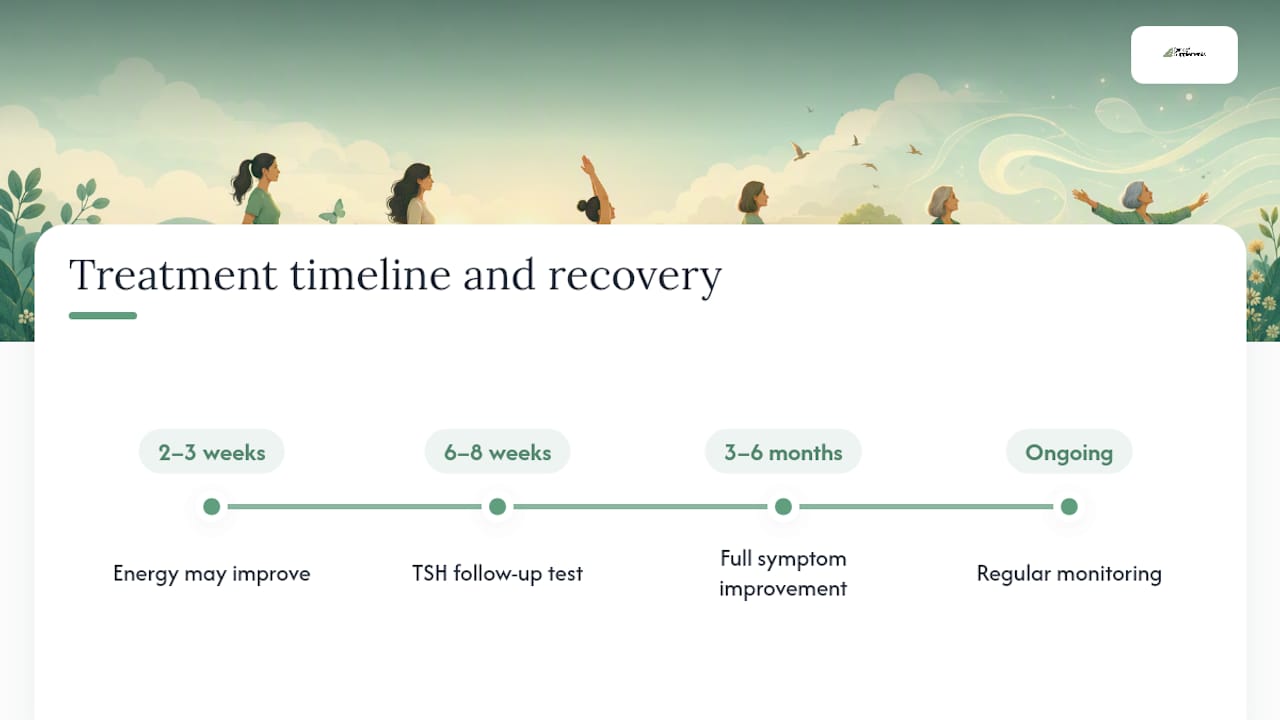
Regular monitoring matters even after symptoms improve, since dosing needs can shift with weight changes, pregnancy, aging, or other medications. Skipping follow-up bloodwork is one of the more common reasons treatment feels like it’s “not working” when the real issue is a dose that’s drifted out of range.
What Lifestyle Changes Actually Help Alongside Treatment?
Medication is the foundation, but daily habits shape how you feel on top of it. A few things make a genuine difference.
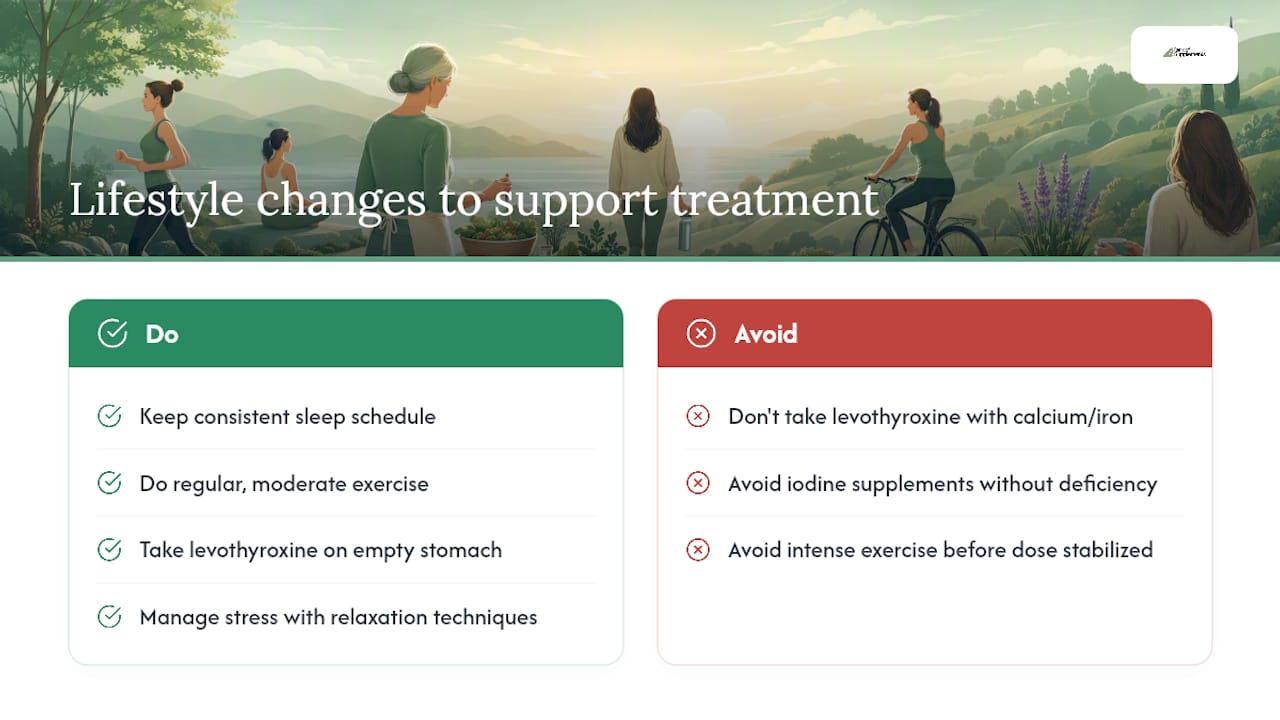
Consistent sleep helps offset the fatigue that lingers even after treatment starts working. Regular, moderate exercise supports the metabolism and mood changes that come with hypothyroidism, though intense exercise before your dose is stabilized can leave you more exhausted, not less.
Diet matters less for “curing” hypothyroidism and more for avoiding interference. Take levothyroxine on an empty stomach, and space it away from calcium, iron supplements, and high-fiber meals, all of which can blunt absorption. Iodine matters for thyroid function generally, but supplementing it without a documented deficiency can backfire in autoimmune thyroid disease, so this is a conversation for your clinician, not a decision to make on your own.
Constipation, a common lingering symptom, often responds to adequate fiber and hydration once hormone levels normalize. Stress management, while it won’t fix a hormone deficiency, does help with the anxiety and mood symptoms that frequently ride alongside thyroid dysfunction.
Rankofsupplements Perspective: Supplements Have a Role, Just Not the Lead Role
Thyroid hormone replacement is the established, effective treatment for hypothyroidism. No supplement replaces it. Where nutrient support can genuinely help is a documented deficiency, iron or vitamin D being the most common, and that only makes sense after testing confirms the gap. Rankofsupplements built its thyroid supplement reviews and Supplement Ingredient Library for exactly this kind of evidence-first research, alongside our broader library of condition-specific supplement guides.
— matteo
Sources
For deeper reading beyond this guide: Mayo Clinic covers symptoms and causes in clinical detail. NIDDK breaks down testing and treatment. MedlinePlus offers a plain-language overview of risk factors. Cleveland Clinic answers common patient questions, and womenshealth.gov focuses specifically on pregnancy and reproductive guidance.
This article is general information, not a substitute for advice from a qualified doctor. Consult a qualified healthcare professional about your own circumstances before acting on anything here.
- Hypothyroidism: MedlinePlus Medical Encyclopedia
- Hypothyroidism (Underactive Thyroid) - NIDDK
- Thyroid disease - Office on Women’s Health
- Hypothyroidism (underactive thyroid) - Symptoms and causes - Mayo Clinic
FAQ
What Is Usually the First Symptom of Hypothyroidism?
Fatigue is typically the earliest and most commonly reported symptom, often showing up before weight gain, cold intolerance, or menstrual changes become noticeable.
How Can You Manage Thyroid Function as a Woman?
Take prescribed thyroid hormone medication consistently and on an empty stomach, keep up with follow-up TSH testing every six to eight weeks after dose changes, and address any confirmed nutrient deficiencies like iron or vitamin D alongside treatment.
What Lifestyle Changes Help With Hypothyroidism?
Consistent sleep, moderate exercise, adequate fiber and hydration for constipation, and spacing your medication away from calcium and iron supplements all support symptom improvement alongside hormone treatment.
What Should You Do if You Think You Have a Thyroid Problem?
Schedule an appointment and ask specifically for TSH and free T4 blood tests, since symptoms alone can’t confirm a diagnosis; if you also have profound lethargy or an unusually slow heart rate, seek care urgently rather than waiting.