
TL;DR:
- Testosterone naturally declines with age, but lifestyle changes can increase free testosterone levels and improve vitality. Resistance training, sleep, nutrition, stress management, and supplements like ashwagandha and vitamin D play crucial roles. Monitoring free testosterone and SHBG guides effective interventions before considering hormone therapy.
Testosterone decline is a biological certainty for men over 50, but it does not have to define your energy, strength, or quality of life. Levels drop 1 to 2% every year after age 30, leaving many men over 50 with borderline total testosterone in the 300 to 400 ng/dL range and critically low free testosterone around 3 to 5 pg/mL. The good news: targeted lifestyle changes can increase testosterone by 15 to 20% within weeks. This guide covers how to increase testosterone levels after 50 using resistance training, nutrition, sleep, stress management, and evidence-based supplements like ashwagandha and vitamin D.
Why free testosterone matters more than total t after 50
Most men get a standard total testosterone test and stop there. That is a mistake. Free testosterone is the fraction not bound to proteins, and it is the only form your cells can actually use. Total testosterone can look acceptable on paper while free testosterone sits dangerously low.
The reason this gap widens with age is a protein called sex hormone-binding globulin, or SHBG. SHBG increases as you get older, binding more testosterone and leaving less of it free and active. A man with a total testosterone of 380 ng/dL but high SHBG may feel every symptom of low testosterone: fatigue, poor sleep, reduced muscle mass, low libido, and brain fog.
Ask your doctor to test both total testosterone and SHBG so free testosterone can be calculated accurately. This single step prevents misdiagnosis and helps you track whether lifestyle changes are actually working.
Typical lab ranges for men over 50
| Marker | Normal Range | Low / Borderline |
|---|---|---|
| Total Testosterone | 400 to 700 ng/dL | Below 300 ng/dL |
| Free Testosterone | 8 to 15 pg/mL | Below 5 pg/mL |
| SHBG | 20 to 50 nmol/L | Above 60 nmol/L (concern) |
These ranges give you a working baseline. If your free testosterone sits below 5 pg/mL, symptoms are expected regardless of what your total T reads.
Signs of low testosterone after 50
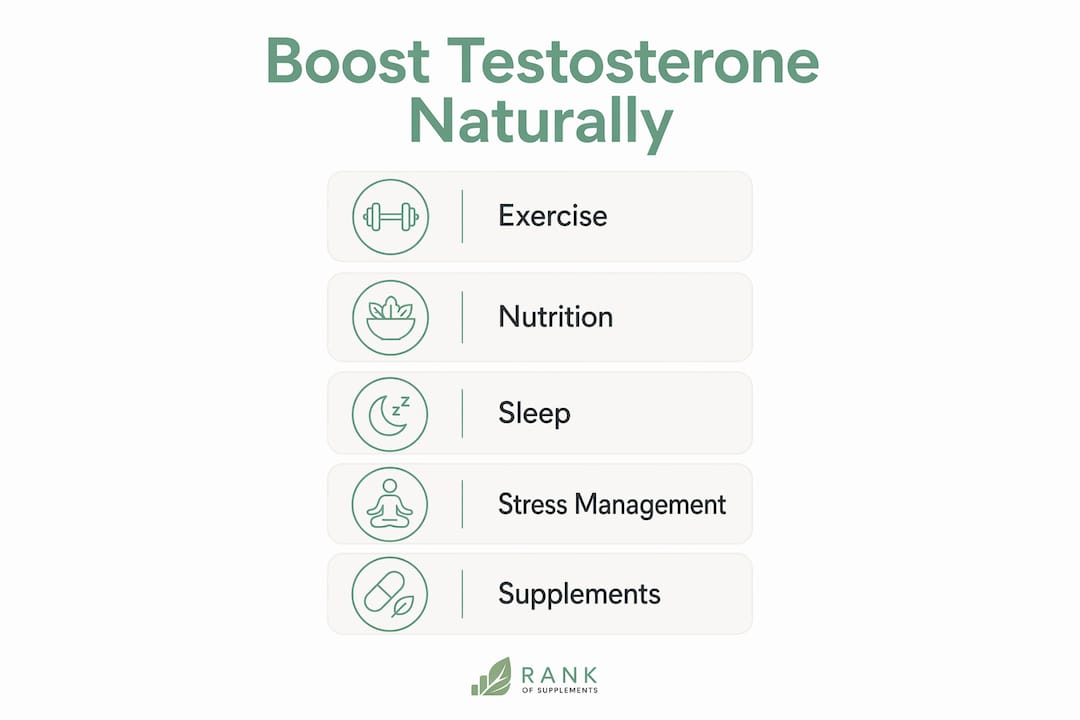
The signs of low testosterone after 50 are often dismissed as normal aging. They are not inevitable. Watch for persistent fatigue that sleep does not fix, loss of muscle mass despite regular activity, increased body fat especially around the abdomen, reduced motivation, and declining sexual function. Recognizing these symptoms early gives you the window to act before levels drop further.
What exercises raise testosterone most effectively?
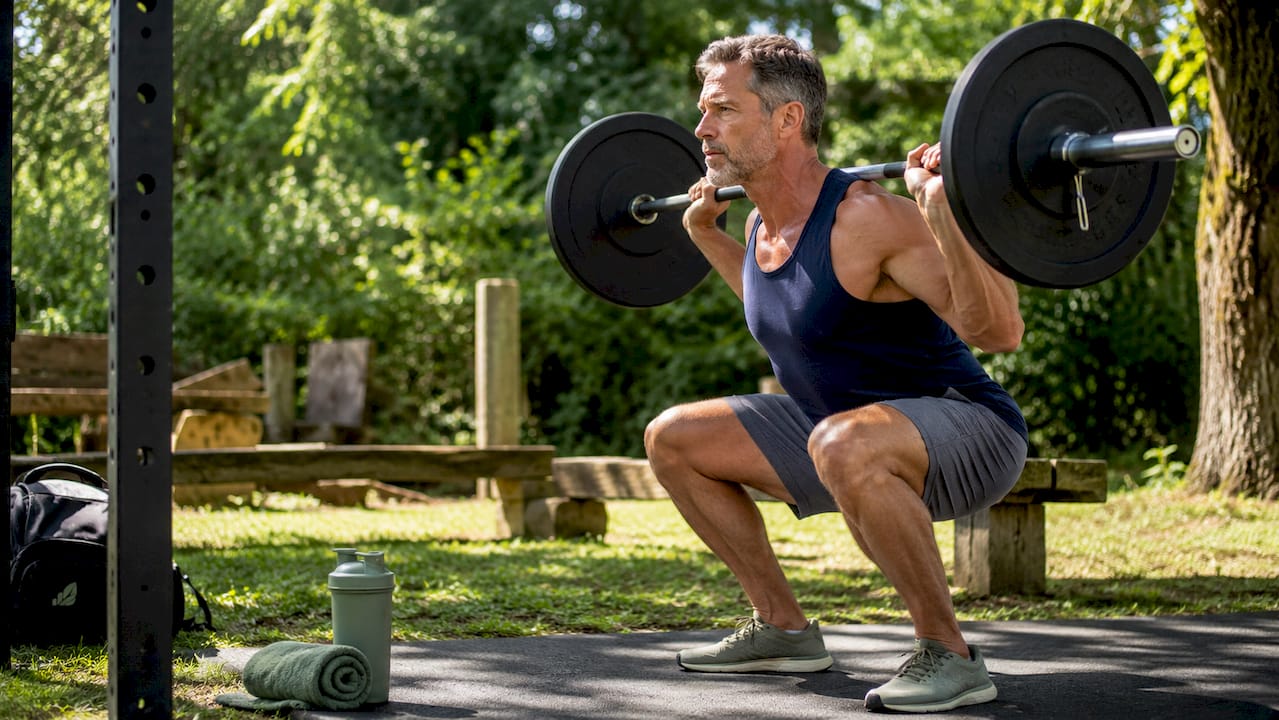
Resistance training is the single most powerful natural tool for raising testosterone after 50. Compound movements like squats, deadlifts, bench press, and barbell rows produce the largest hormonal response because they recruit multiple large muscle groups simultaneously. Isolation exercises like bicep curls do not come close.
The protocol that produces the strongest testosterone release focuses on compound lifts at 75 to 85% of your one-rep max, with 2 to 3 minutes of rest between sets. That rest period matters. Cutting it short spikes cortisol instead of testosterone, which works against you.
Men who combine optimized sleep with high-intensity resistance training 2 to 3 times per week for 30 to 40 minutes can see a 15 to 20% testosterone increase within 8 weeks. That is a meaningful clinical shift without a single prescription.
A practical weekly training structure
- Day 1: Lower body compound focus. Squats, Romanian deadlifts, leg press. Three to four sets of 6 to 8 reps at 75 to 80% of max effort.
- Day 2: Rest or light walking. Active recovery keeps cortisol low.
- Day 3: Upper body compound focus. Bench press, bent-over rows, overhead press. Same set and rep scheme.
- Day 4: Rest or mobility work.
- Day 5: Full body or deadlift-focused session. Deadlifts, pull-ups, farmer carries.
- Days 6 to 7: Full rest. Testosterone production peaks during recovery, not during the workout itself.
High-intensity interval training, or HIIT, also supports testosterone when used 1 to 2 times per week. Keep sessions under 25 minutes. Excessive steady-state cardio, especially long daily runs, can suppress testosterone by elevating cortisol chronically.
Pro Tip: Track your lifts in a simple notebook or app like Strong. Progressive overload, adding weight or reps each week, is what keeps the hormonal signal strong over months.
How does diet affect testosterone production?
Nutrition is the foundation that either supports or undermines every other testosterone strategy. A foundational diet with healthy fats and sufficient protein consistently outperforms any single superfood or trendy elimination diet for hormonal health.
Fat intake is where most men over 50 go wrong. Very low-fat diets under 25% of daily calories from fat are directly linked to significant testosterone drops. Healthy fats should account for 30 to 35% of your daily calories. Testosterone is synthesized from cholesterol, so cutting fat too aggressively cuts off the raw material your body needs.
Testosterone-supporting foods
- Fatty fish (salmon, mackerel, sardines): rich in omega-3s and vitamin D, both linked to higher testosterone
- Oysters: the highest dietary source of zinc, a mineral directly required for testosterone synthesis
- Eggs: contain cholesterol and vitamin D, both precursors to testosterone production
- Leafy greens (spinach, kale): high in magnesium, which supports free testosterone by reducing SHBG binding
- Extra virgin olive oil: monounsaturated fats support Leydig cell function, the cells that produce testosterone
- Brazil nuts: one of the best dietary sources of selenium, which supports testicular function
Foods and habits that suppress testosterone
| Suppressor | Effect on Testosterone |
|---|---|
| Excess alcohol | Reduces Leydig cell output; raises estrogen |
| High sugar intake | Spikes insulin, which lowers testosterone acutely |
| Processed seed oils | Linked to inflammation and hormonal disruption |
| Chronic caloric restriction | Signals starvation, suppressing sex hormone production |
Micronutrient deficiencies in zinc, vitamin D, and magnesium impair natural testosterone production more than most men realize. These are not optional additions. They are the raw materials your endocrine system requires. Check your vitamin D and fitness connection for a deeper look at how micronutrient status affects performance and hormones together.
Vitamin D functions as a hormone precursor, not just a vitamin. Maintaining blood levels above 30 ng/mL correlates with significantly higher testosterone compared to levels below 20 ng/mL. Most men over 50 living in northern states are deficient, especially from october through march.
Ashwagandha at 600 mg daily reduces cortisol and can increase testosterone by approximately 17%. That makes it one of the most evidence-backed natural supplements for men over 50. Read the full ashwagandha evidence guide to understand dosing, timing, and what to look for in a quality product.
Pro Tip: Get a blood panel that includes vitamin D, zinc, and magnesium before buying supplements. Correcting a confirmed deficiency produces far greater results than supplementing when levels are already adequate.
Does sleep really impact testosterone levels?
Sleep is not passive recovery. It is when your body produces the majority of its daily testosterone. Sleep deprivation below 5 hours per night is linked to 10 to 15% lower testosterone levels. That is a measurable hormonal hit from one lifestyle variable alone.
Men over 50 often struggle with sleep quality more than sleep quantity. Waking at 3 a.m. light sleep cycles, and sleep apnea all reduce the deep sleep stages where testosterone production peaks. If you snore heavily or wake unrefreshed despite 7 hours in bed, get screened for sleep apnea. Untreated sleep apnea is one of the most underdiagnosed causes of low testosterone in men over 50. Explore evidence-based sleep supplements if you need support getting consistent, restorative rest.
Practical habits that protect testosterone through better sleep and stress management
- Keep your bedroom below 68°F. Core body temperature must drop for deep sleep to occur.
- Avoid screens for 60 minutes before bed. Blue light suppresses melatonin and disrupts sleep architecture.
- Set a consistent wake time, even on weekends. This anchors your circadian rhythm and stabilizes cortisol patterns.
- Practice 5 minutes of diaphragmatic breathing before sleep. This activates the parasympathetic nervous system and lowers cortisol.
- Take short walks in natural light, especially in the morning. Sunlight exposure regulates cortisol and supports vitamin D synthesis simultaneously.
Cortisol and testosterone operate on a seesaw. When chronic stress keeps cortisol elevated, testosterone production is suppressed at the pituitary level. The brain stops sending the signal to produce more testosterone when it perceives the body is under threat. Stress management is not a soft wellness concept. It is direct hormonal management.
Elevated belly fat raises estrogen production by converting testosterone through a process called aromatization. More belly fat means more estrogen and less testosterone, which then makes it harder to lose the fat. Breaking this cycle requires simultaneous attention to sleep, stress, and diet rather than any single fix.
Pro Tip: Track your sleep, stress, and training consistency for 4 to 6 weeks before evaluating results. Hormonal changes are not visible week to week. Patterns over a month reveal what is actually working.
Common mistakes that stall natural testosterone progress
Many men plateau because they focus on the wrong variables or expect results too quickly. These are the most common errors and how to correct them.
- Testing only total testosterone. Total T without SHBG and free T gives an incomplete picture. You may be symptomatic with a “normal” total T reading. Always request the full panel.
- Expecting overnight results. Lifestyle optimization can raise total testosterone by 50 to 100 ng/dL, but this takes consistent effort over 8 to 12 weeks. Retest after that window, not after two weeks.
- Buying unverified testosterone supplements. The market is full of products making dramatic claims with no clinical evidence. Stick to ingredients with published research: ashwagandha, zinc, vitamin D3, and magnesium. Avoid proprietary blends that hide individual doses.
- Skipping weight management. Losing 15 to 20 pounds of excess body weight is one of the most effective natural testosterone interventions available. Target 1 to 2 pounds per week through a moderate caloric deficit combined with resistance training.
- Pursuing TRT too early. Many men pursue testosterone replacement therapy before exhausting lifestyle options. TRT carries real risks including testicular atrophy, elevated red blood cell count, and cardiovascular considerations. It belongs in the conversation only after 3 to 6 months of consistent lifestyle effort and confirmed clinical deficiency.
“Testosterone replacement therapy is a medical decision, not a shortcut. Men who optimize sleep, training, nutrition, and stress first often find they do not need it at all.”, University of Utah Health
If you have done everything right for 12 weeks and still feel symptomatic with confirmed low free testosterone, that is the right time to have a detailed conversation with an endocrinologist or urologist about testosterone therapy options for seniors.
Key takeaways
Raising testosterone after 50 requires consistent lifestyle changes across training, nutrition, sleep, and stress, with free testosterone as the most reliable marker of progress.
| Point | Details |
|---|---|
| Test free testosterone, not just total T | Request SHBG alongside total testosterone to calculate the free fraction that actually drives symptoms. |
| Resistance training drives the biggest hormonal shift | Compound lifts at 75 to 85% of max effort, 2 to 3 times per week, can raise testosterone 15 to 20% in 8 weeks. |
| Fat intake supports hormone synthesis | Keep dietary fat at 30 to 35% of daily calories; dropping below 25% suppresses testosterone production. |
| Sleep deprivation is a direct testosterone suppressant | Less than 5 hours per night reduces testosterone by 10 to 15%; target 7 to 9 hours consistently. |
| Lifestyle changes before TRT | Optimizing sleep, stress, and micronutrients can raise total T by 50 to 100 ng/dL before medication is needed. |
What i have learned about testosterone after 50
The conversation around testosterone after 50 gets oversimplified in both directions. Some men panic at a single lab number and rush toward TRT. Others dismiss every symptom as normal aging and do nothing. Both responses miss the point.
What I have found, after reviewing the research and watching how men actually respond to these protocols, is that the men who get the best results are the ones who treat this as a systems problem. They do not just add a supplement or start lifting. They fix their sleep, cut the alcohol, get their vitamin D tested, and build a training habit that they can sustain at 55, 60, and beyond.
Ashwagandha is one of the few supplements I consistently recommend for men in this age group because the evidence is specific and the mechanism is clear. It lowers cortisol, and lower cortisol means the pituitary can do its job. That is not magic. That is biology. But it only works if the rest of the foundation is in place.
The number on a lab report matters less than how you feel and function. A man with total testosterone of 420 ng/dL who sleeps well, trains consistently, and maintains a healthy weight will outperform a man with 550 ng/dL who is sedentary, sleep-deprived, and carrying 40 extra pounds. Vitality is the goal. The number is just a tool to track progress.
One thing I push back on hard: the idea that TRT is inevitable. It is not. For men who commit to the lifestyle work, the hormonal response is real and measurable. Give it 12 weeks of genuine effort before you consider anything else.
matteo
Find the right supplements to support your testosterone goals
Natural testosterone support works best when your supplement choices are backed by real evidence, not marketing claims. Rankofsupplements has built one of the most thorough supplement ingredient libraries available, covering every major ingredient relevant to hormonal health for men over 50, including ashwagandha, zinc, vitamin D3, and magnesium, with dosing data and clinical context.
If you are ready to move from research to action, the top-rated testosterone boosters reviewed on Rankofsupplements are ranked by ingredient quality, dose transparency, and clinical evidence. No guesswork. No proprietary blends hiding underdosed actives. Just clear, evidence-based rankings to help you choose with confidence.
FAQ
What is a normal testosterone level for a man over 50?
Total testosterone between 400 to 700 ng/dL is generally considered normal for men over 50, but free testosterone below 5 pg/mL is clinically low regardless of total T. Always test both markers alongside SHBG for an accurate picture.
How long does it take to raise testosterone naturally?
Most men see measurable improvements in 8 to 12 weeks of consistent resistance training, improved sleep, and corrected micronutrient deficiencies. Retesting before that window gives misleading results.
Does ashwagandha actually boost testosterone?
Ashwagandha at 600 mg daily has been shown to reduce cortisol and increase testosterone by approximately 17% in clinical studies. It works best as part of a broader lifestyle approach, not as a standalone fix.
Can losing weight increase testosterone after 50?
Yes. Losing 15 to 20 pounds of excess body fat is one of the most effective natural testosterone interventions because belly fat converts testosterone to estrogen through aromatization. Target 1 to 2 pounds per week for sustainable hormonal benefit.
When should a man over 50 consider testosterone replacement therapy?
TRT becomes a reasonable conversation after 3 to 6 months of consistent lifestyle optimization with confirmed low free testosterone and persistent symptoms. It is a medical decision requiring physician oversight, not a first response to a single borderline lab result.
Recommended
- Related article: Top 5 Supplements to Boost Testosterone and Energy Naturally
- Top list: Best Testosterone Supplements 2026
- Specific product: Nutrigo Lab Strength Review
- Guide: Top Vitamins for Fitness: Your Evidence-Based Guide