TL;DR:
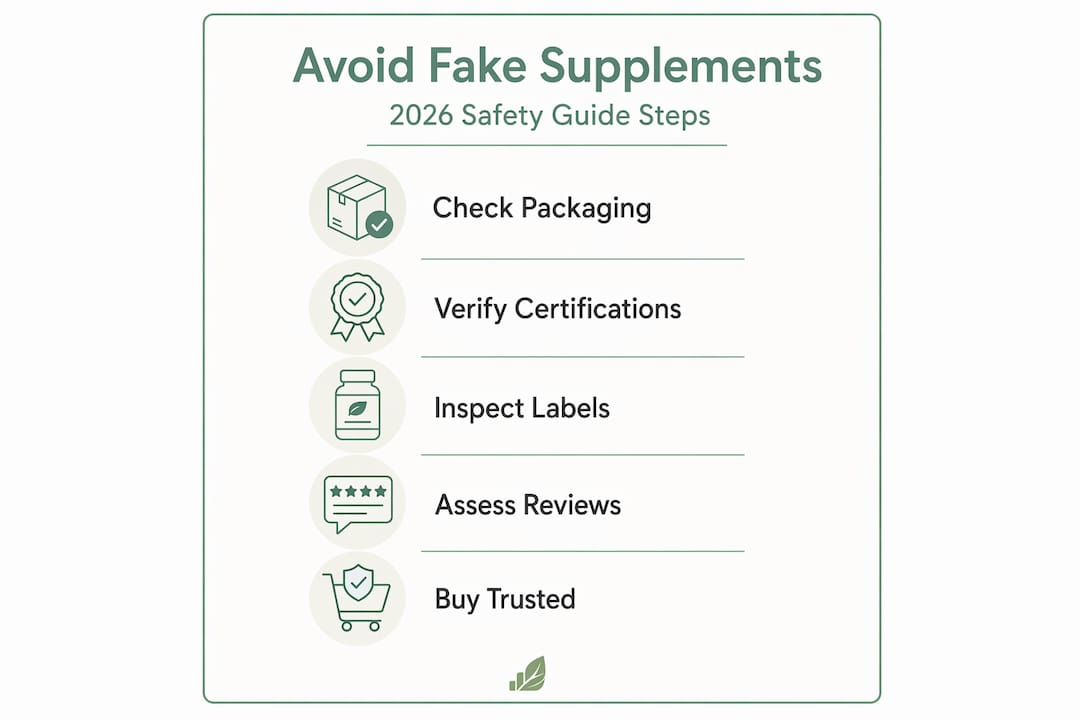
- Avoiding fake supplements is essential for consumer safety by recognizing packaging inconsistencies, false FDA claims, and suspiciously low prices. Verifying third-party certifications through official databases and inspecting detailed labels with transparent ingredient disclosures are crucial steps in authentication. Purchase only from verified brand websites or authorized retailers to reduce counterfeit risks and protect your health.
Avoiding fake supplements is the single most important skill a health-conscious consumer can develop before spending money on any dietary product. The supplement industry operates under far looser regulatory oversight than pharmaceuticals, which means counterfeit, mislabeled, and adulterated products reach store shelves and online carts with alarming regularity. Knowing how to check supplement authenticity, read labels accurately, and recognize trusted certification marks like NSF, USP, and ConsumerLab puts the power back in your hands. This guide covers every practical step you need to protect your health and your wallet.
How to avoid fake supplements: the core warning signs
Counterfeit supplements are defined as products that misrepresent their contents, source, or quality through deceptive packaging, false claims, or outright ingredient substitution. The industry term for this broader problem is “adulterated dietary supplements,” and the FDA has issued hundreds of warnings about specific products in this category. Recognizing the red flags before you buy is your first line of defense.
Packaging inconsistencies that reveal a fake
Counterfeit supplement packaging frequently shows misspelled words, blurry logos, and color inconsistencies compared to authentic products. These errors appear because counterfeiters copy original designs without access to brand files or professional printing equipment. If a label looks slightly off, trust that instinct. Hold the bottle next to an image of the authentic product from the brand’s official website and compare every detail.
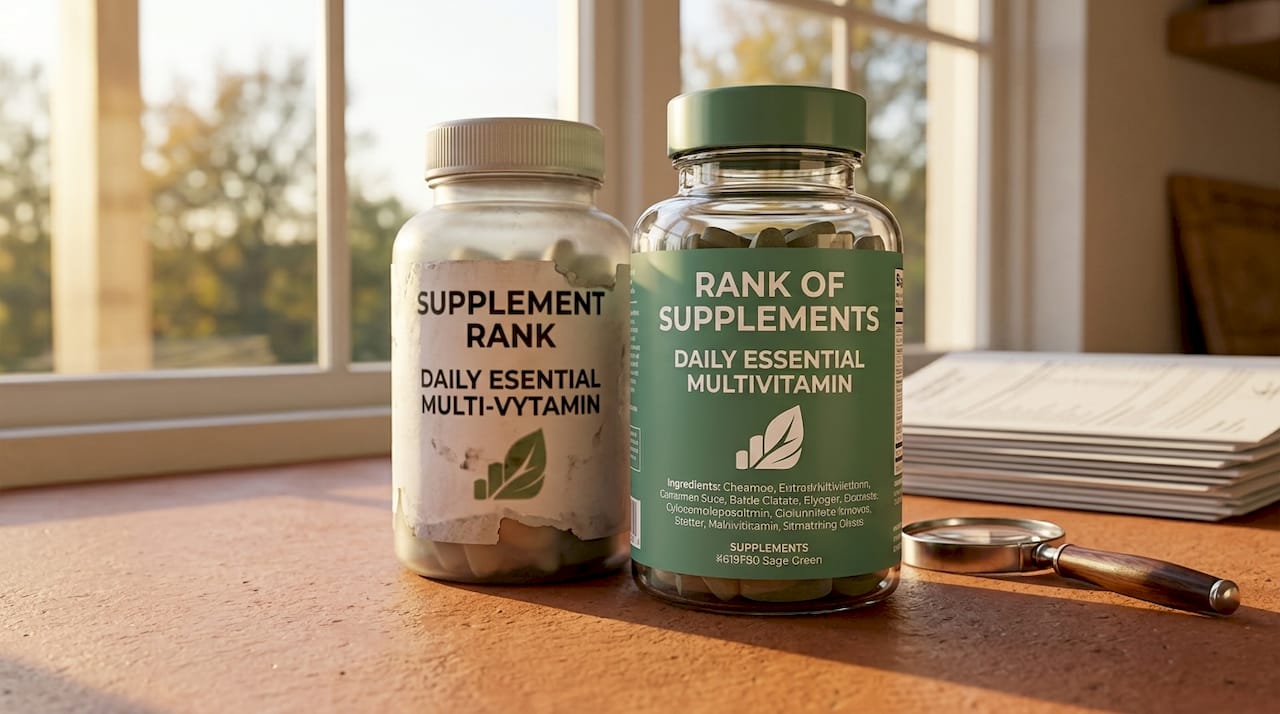
Unusual font choices, misaligned text, and low-resolution images on the label are all physical signs of a counterfeit lot. Legitimate brands invest in professional packaging because it protects their reputation. A blurry barcode that won’t scan, or a barcode that returns no product information, is a strong signal that something is wrong.
False FDA approval claims and fake endorsements
FDA does not approve dietary supplements the way it approves prescription drugs. Any website or label that displays an “FDA Approved” badge for a supplement is either misinformed or deliberately deceptive. This is one of the most common tactics used by scam operations to manufacture false credibility. Legitimate brands use language like “manufactured in an FDA-registered facility,” which is accurate and verifiable.
Fake celebrity endorsements and fabricated doctor testimonials follow the same pattern. If a product claims a specific physician or public figure recommends it, search for that claim independently. Scam supplement sites frequently invent endorsements or use stock photos labeled as medical professionals.
Unrealistic promises and standout cure language
No supplement cures disease. The FDA prohibits disease claims on supplement labels, so any product promising to “cure diabetes,” “eliminate cancer,” or “reverse aging in 30 days” is violating federal law and almost certainly selling a fraudulent product. Legitimate supplements use structure/function claims like “supports immune health” rather than therapeutic promises.
Standout cure language is a reliable filter. If the marketing copy reads more like a late-night infomercial than a science-backed product description, walk away. The same applies to aggressive urgency tactics like “limited supply” countdown timers paired with outrageous health claims.
Suspiciously low prices and fake reviews
Price is a meaningful signal. Authentic supplements from reputable brands carry costs that reflect quality raw materials, third-party testing, and proper manufacturing. A product selling at 60% below the standard market price for that category almost always reflects ingredient substitution, underdosing, or outright fraud.
Online supplement scams routinely involve fake positive reviews, subscription traps buried in fine print, and refund policies that are impossible to execute. Look for review patterns: dozens of five-star reviews posted on the same day, reviews that use identical phrasing, and a complete absence of critical feedback are all signs of manufactured social proof.
Pro Tip: Copy a suspicious review and paste it into a Google search. If the same text appears across multiple unrelated products, it was generated or recycled by a scam operation.
How to read supplement labels to verify authenticity
A legitimate supplement label follows a specific structure required by the FDA’s Dietary Supplement Health and Education Act (DSHEA). Knowing what belongs on a compliant label lets you spot omissions and irregularities that signal a counterfeit or low-quality product.
Here is what every authentic supplement label must include:
- A Supplement Facts panel with serving size, servings per container, and a list of ingredients with amounts per serving and percentage of Daily Value where applicable.
- The manufacturer’s name and address, which you can verify independently by searching the company online or checking the FDA’s registered facility database.
- A lot number and expiration or manufacturing date, which allow the product to be traced back to a specific production batch.
- Net quantity of contents, stated clearly on the principal display panel.
- Directions for use and any relevant warnings, particularly for products containing stimulants, herbs with drug interactions, or high-dose minerals.
Damaged or missing tamper seals and absent batch information are strong indicators of a counterfeit or mishandled product. When your order arrives, inspect the outer seal before opening. A punctured under-the-cap seal or a missing shrink wrap band means the product may have been tampered with or repackaged.
The proprietary blend problem
Proprietary blends on labels list a group of ingredients under a single blend name with only the total blend weight disclosed, not the individual amounts. This practice is legal but creates a transparency gap that counterfeiters and low-quality manufacturers exploit. A blend labeled “Muscle Matrix Complex: 1,500 mg” could contain 1,490 mg of cheap filler and 10 mg of the active ingredient you are paying for.
Experienced buyers verify that per-serving ingredient amounts correspond with label claims rather than relying on blend totals. If a product relies entirely on proprietary blends with no individual dosage disclosure, treat it with skepticism regardless of the brand’s marketing.
Label red flags at a glance
| Label element | What to look for | Red flag |
|---|---|---|
| Supplement Facts panel | Clear ingredient list with amounts | Missing panel or vague ingredient names |
| Lot number | Printed clearly on bottle or box | Absent, scratched off, or illegible |
| Manufacturer address | Full street address | PO box only or no address |
| Tamper seal | Intact shrink wrap and inner seal | Broken, missing, or re-applied seal |
| FDA language | “FDA-registered facility” | “FDA Approved” badge |
| Expiration date | Clearly printed, future date | Missing or already expired |
Pro Tip: Search the manufacturer’s address on Google Maps. Legitimate supplement companies operate from verifiable facilities. A residential address or a virtual office building is a warning sign.
Which third-party certifications actually guarantee supplement quality?
Third-party certification marks represent independent evaluation rather than marketing claims, making them the most reliable indicators of supplement safety and authenticity. Not all certifications are equal, and understanding what each one actually tests for changes how you use them as a buying filter.
| Certification | Issuing body | What it tests | Best for |
|---|---|---|---|
| NSF/ANSI 173 | NSF International | Identity, purity, contaminant levels, label accuracy | General consumers |
| NSF Certified for Sport | NSF International | Banned substances, contamination | Athletes and competitive sports |
| USP Verified | U.S. Pharmacopeia | Ingredient accuracy, dissolution, manufacturing | General consumers |
| ConsumerLab Approved | ConsumerLab.com | Potency, purity, label accuracy | Research-oriented buyers |
| iTested | iHerb | Label accuracy, potency verification | Online supplement shoppers |
The NSF/ANSI 173 certification is widely recognized as the gold standard for dietary supplements, confirming that products have been technically reviewed and tested for safety and truth in labeling. NSF 306, by contrast, focuses specifically on banned substances for competitive athletes. Knowing which certification applies to your specific concern matters. A general wellness consumer needs NSF/ANSI 173 or USP Verified. A competitive athlete needs NSF Certified for Sport.
The USP Verified mark confirms that a product contains the ingredients listed on the label in the declared amounts, that it does not contain harmful levels of contaminants, and that it will break down and release ingredients properly in the body. USP also verifies that the product was made using good manufacturing practices. You can verify any USP-certified product through the USP’s public database at usp.org.
ConsumerLab operates differently from NSF and USP. It purchases products from retail channels and tests them independently, then publishes results including failures. A ConsumerLab approval means the product passed testing at the point of consumer purchase, not just at the factory. That distinction matters because storage and handling during distribution can degrade product quality.
To verify any certification claim, go directly to the certifying body’s official website and search their product directory. Certification marks vary in scope and address different consumer concerns, so cross-referencing the product name in the official directory takes 60 seconds and removes all doubt. Never rely solely on a logo printed on the label, since counterfeiters copy certification logos without authorization.
You can also learn more about what these marks mean in practice through Rankofsupplements’ supplement certification guide, which breaks down each program’s scope and verification process.
Where should you buy supplements to minimize counterfeit risk?
The purchase channel is as important as the product itself. A genuine supplement purchased from an unverified seller can still be counterfeit, expired, or improperly stored. Where you buy determines how much of the supply chain you can trust.
- Buy directly from the brand’s official website. This eliminates the risk of commingled or substituted inventory entirely. Most reputable brands sell direct and offer the same pricing as authorized retailers.
- Use authorized retailers with strict seller policies. Physical pharmacy chains like CVS, Walgreens, and Walmart carry supplements from verified supply chains. Online retailers that enforce brand authorization programs and prohibit third-party resellers of supplements offer comparable safety.
- Avoid large marketplace platforms for supplements. Third-party marketplace sellers may mix counterfeit or unregulated products with authentic brand shipments. Even when a listing says “sold by Brand X,” the fulfillment may route through a commingled warehouse where products from multiple sellers are stored together.
- Check storage and climate conditions. Supplements containing probiotics, fish oil, or certain vitamins degrade rapidly when exposed to heat or humidity. A seller shipping from an uncontrolled warehouse in summer heat may deliver a product that is technically authentic but functionally useless.
- Verify seller credibility before purchasing. Look for a physical address, a working customer service phone number, and a clear return policy. Scam operations typically use contact forms only, provide no phone number, and bury refund restrictions in lengthy terms of service.
Pro Tip: Before buying from any unfamiliar online supplement store, search the company name plus “complaint” or “scam” on Google. The FTC’s complaint database and Reddit’s supplement communities surface problems that don’t appear in curated reviews.
Subscription traps are a specific scam pattern worth understanding. A seller offers a product at a steep introductory discount, buries a subscription enrollment in the checkout flow, and then charges full price monthly while making cancellation deliberately difficult. Read every checkout page carefully and look for pre-checked subscription boxes before entering payment information.
If you encounter a product you suspect is counterfeit or causes an adverse reaction, you can file a voluntary complaint through the FDA’s MedWatch Safety Reporting Portal. This contributes to regulatory oversight and helps protect other consumers from the same product.
Understanding the broader regulatory context also helps. Rankofsupplements covers supplement safety standards in detail, including what current regulations require from manufacturers and where the gaps remain.
Key takeaways
Avoiding counterfeit supplements requires combining label inspection, certification verification, and careful channel selection. No single step is sufficient on its own.
| Point | Details |
|---|---|
| Inspect packaging on arrival | Check tamper seals, lot numbers, and expiration dates before opening any new supplement. |
| Verify certifications directly | Search NSF, USP, or ConsumerLab official directories to confirm a product’s certification status. |
| Avoid marketplace third-party sellers | Buy from brand websites or authorized retailers to eliminate commingled inventory risk. |
| Read the Supplement Facts panel | Reject products with proprietary blends that hide individual ingredient amounts. |
| Treat FDA approval claims as red flags | Dietary supplements are not FDA-approved; any label or site claiming otherwise is deceptive. |
What I’ve learned after years of reviewing supplements
The supplement industry’s regulatory gaps place the burden of verification squarely on the consumer, and that is unlikely to change soon. After reviewing hundreds of products for Rankofsupplements, the pattern I see most often is not outright counterfeiting. It is legal mislabeling: products that technically list their ingredients but use proprietary blends, pixie-dusted dosages, and vague sourcing to obscure the fact that you are paying premium prices for subtherapeutic amounts.
The consumers who get burned most often are the ones who make decisions based on marketing copy rather than label data. A product with a sleek design, a celebrity face, and a compelling origin story is not automatically better than a plain-label product with NSF/ANSI 173 certification and fully disclosed ingredient amounts. The certification and the label tell you what is actually in the bottle. The marketing tells you what the company wants you to believe.
My practical advice: build a short checklist and run every new supplement through it before buying. Does it carry a verifiable third-party certification? Does the Supplement Facts panel show individual ingredient amounts rather than a proprietary blend total? Is the seller authorized by the brand? Can you find the manufacturer’s address and confirm it is a real facility? Four questions, 10 minutes, and you eliminate the vast majority of counterfeit and low-quality products from consideration.
The one habit that has saved me from the most mistakes is checking the certifying body’s directory directly. Logos get copied. Directories do not lie. If a product claims NSF certification and does not appear in NSF’s searchable database, the logo is fake. That check takes less than a minute and is the single most reliable filter available to any consumer.
matteo
Find trusted supplement reviews before you buy
Rankofsupplements exists precisely because the supplement market makes it too easy to buy the wrong product. The platform’s ingredient library gives you a detailed breakdown of what specific compounds actually do, what doses the research supports, and which products deliver those doses honestly. Before spending money on any supplement in 2026, cross-reference the product’s ingredient list against that database. You will immediately see whether the amounts on the label align with what science says is effective. For product-specific guidance, the Nutrigo Lab Strength review demonstrates the level of ingredient-level analysis Rankofsupplements applies to every ranked product. Use these resources as your verification layer before any purchase.
Recommended reading:
- How to check quality when ordering natural products, practical inspection steps for online supplement buyers
- Supplement ingredient library, verify what is actually in your supplement
- Nutrigo Lab Strength review, see how a top-ranked product holds up to ingredient-level scrutiny
- Supplement certification guide, understand what NSF, USP, and ConsumerLab marks actually mean
FAQ
What are the most common signs of fake supplements?
Counterfeit supplements typically show packaging errors like misspellings and blurry logos, make FDA approval claims that are legally impossible for supplements, and sell at prices significantly below market rate. Fake or repetitive online reviews and missing lot numbers are additional red flags.
How do I verify a supplement’s third-party certification?
Go directly to the certifying body’s official website. NSF, USP, and ConsumerLab each maintain searchable product directories. If the product does not appear in the directory, the certification logo on the label is not legitimate.
Is it safe to buy supplements from Amazon or other large marketplaces?
Large marketplace platforms carry significant counterfeit risk because third-party sellers can commingle inventory with authentic products. Buying directly from the brand’s official website or from authorized physical retailers is the safer approach.
What does “FDA Approved” mean on a supplement label?
It means the product is making a false or misleading claim. The FDA does not approve dietary supplements the way it approves drugs. Legitimate supplement labels reference FDA-registered manufacturing facilities, not FDA approval of the product itself.
What should I do if I receive a supplement I suspect is counterfeit?
Do not consume it. Document the packaging with photos, contact the brand directly to report the issue, and file a voluntary complaint through the FDA’s MedWatch Safety Reporting Portal to assist regulatory investigations.