The foods that come closest to mimicking Ozempic work through the same biological doorway: your gut’s GLP-1 pathway. Fermentable soluble fiber (oats, lentils, chia), high-protein whole foods (eggs, Greek yogurt, fish), monounsaturated fats (olive oil, avocado, nuts), and fermented foods (kefir, kimchi) all nudge your body toward the satiety signals semaglutide triggers directly.
None of this replaces the drug. Prescription GLP-1 medications force a sustained hormone spike that food simply cannot match in scale or consistency.
- Compounds like berberine and green tea show modest, real effects in trials, not drug-level results, and neither belongs in your routine without a plan.
- If you have diabetes or take glucose-lowering medication, talk to your clinician before making major dietary shifts. Some of these foods interact with your treatment.
The meal strategies and supplement details below turn this into something you can actually do tonight.
Key Takeaways
Fermentable fiber, protein, monounsaturated fat, and fermented foods modestly raise GLP-1 and satiety, but no food or supplement matches a prescription GLP-1 drug’s effect.
| Point | Details |
|---|---|
| Prioritize fiber and protein together | Combine fermentable fiber (oats, lentils, chia) with protein at every meal for the strongest satiety signal. |
| Meal order changes outcomes | Eating protein and vegetables before starchy carbs appears to improve post-meal GLP-1 and blood sugar response, according to some studies. |
| Berberine has real but modest evidence | Trials use roughly 1 gram per day for around eight weeks, with GI side effects and drug interactions to watch. |
| Diet cannot replace medication | Food raises GLP-1 gradually and modestly; prescription GLP-1 drugs sustain a larger and more consistent hormonal effect. |
| Use Rankofsupplements for supplement decisions | Rankofsupplements’ ingredient library provides dosage and safety guidance before you add berberine or green tea extract to your routine. |
Table of Contents
- Which Foods Mimic Ozempic Effects Most Reliably?
- How Do These Foods Actually Trigger GLP-1?
- What Meal Habits Maximize the Effect?
- Do Berberine and Green Tea Really Work Like Ozempic?
- What Does a Full Day of Eating Look Like?
- What This Guide Gets Right That Most Don’t
- Where to Go for Supplement Safety and Dosage Details
- Sources
- FAQ
Which Foods Mimic Ozempic Effects Most Reliably?
Five food categories show up again and again in research on natural GLP-1 support. Here’s what to prioritize and why each one earns its spot.
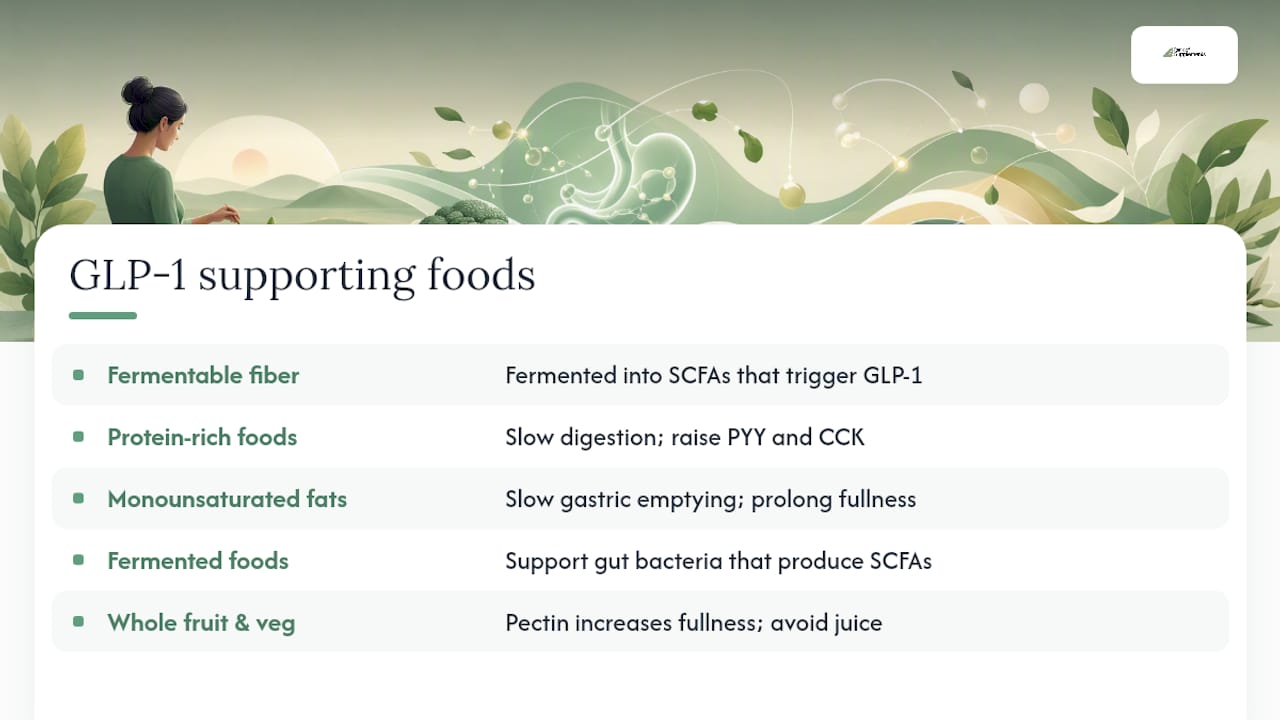
Fermentable fiber tops the list. Oats, lentils, beans, chia seeds, and psyllium husk aren’t digested by your stomach. They travel to your colon, where gut bacteria ferment them into short-chain fatty acids. Those fatty acids bind to receptors on intestinal cells and trigger GLP-1 release, according to reporting from BBC Future. Beta-glucan, the specific fiber in oats, has repeatedly shown up in trial reviews as an effective satiety booster.
Protein-rich whole foods work through a different but complementary route. Eggs, Greek yogurt, lean poultry, fish, and legumes slow digestion and stimulate satiety hormones like PYY and CCK alongside a smaller GLP-1 bump. A high-protein breakfast, specifically, has been linked to lower calorie intake for the rest of the day, per Cleveland Clinic.
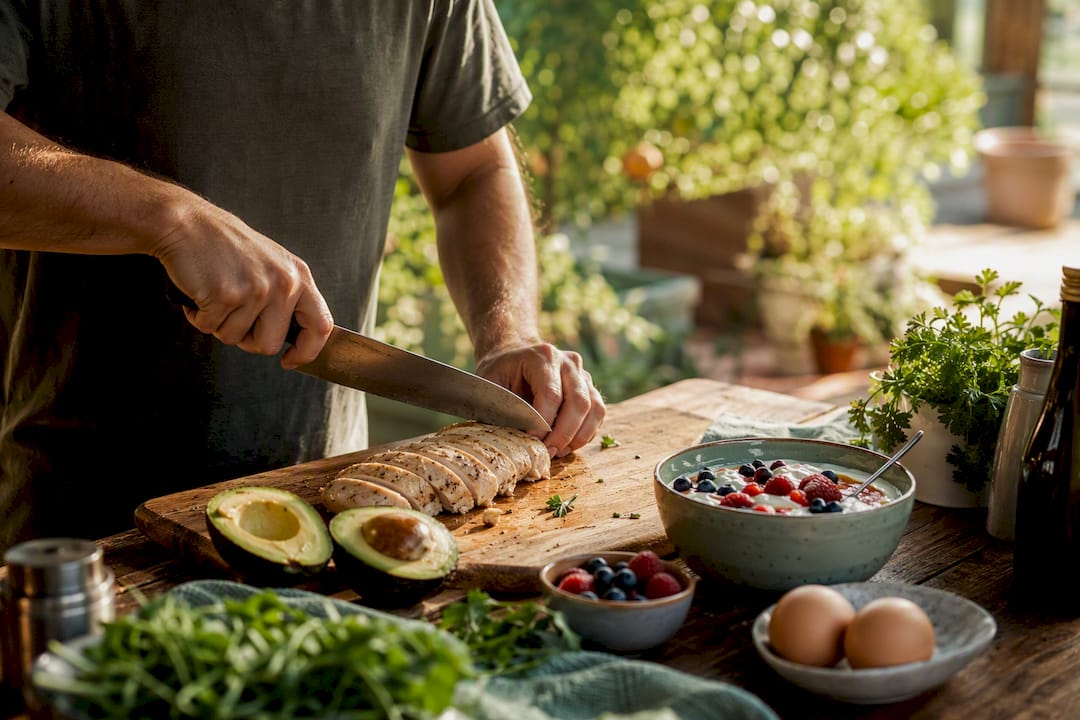
Monounsaturated fats from olive oil, avocado, and nuts slow gastric emptying, which means food sits in your stomach longer and hunger signals stay quiet longer.
Fermented foods like yogurt, kefir, and kimchi support the gut bacteria populations responsible for producing those satiety-linked short-chain fatty acids in the first place.
Whole fruits and vegetables, especially apples, matter more than most people assume. The pectin in a whole apple increases fullness when eaten before a meal, and polyphenols in fruit may influence GLP-1-related hormones, according to BBC Good Food. Skip the juice. Juicing strips out the fiber doing the actual work.
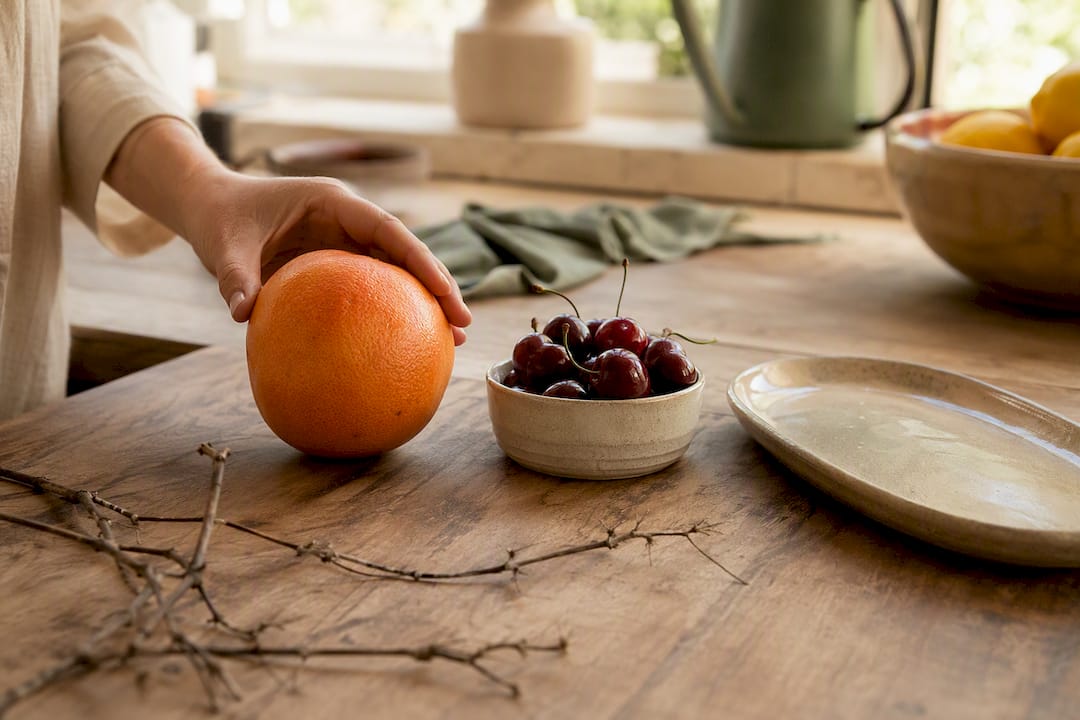
Pro Tip: Eat an apple or a small handful of berries about 15 minutes before your main meal. The pectin swells in your stomach and takes the edge off hunger before your fork even hits the plate.
How Do These Foods Actually Trigger GLP-1?
The mechanism starts in your colon, not your bloodstream. Fermentable fiber reaches gut bacteria that convert it into short-chain fatty acids which then bind to receptors on enteroendocrine cells lining your gut. Those cells release GLP-1 into circulation, the same hormone semaglutide mimics synthetically.
- Protein and fat slow gastric emptying and stimulate PYY and CCK release, adding a second layer of fullness signaling beyond GLP-1 alone.
- Meal order changes the outcome measurably: eating protein and fiber before carbohydrates raises post-meal GLP-1 and improves your blood sugar response, a finding BBC Future highlights as one of the simpler behavioral levers available.
- The gap in magnitude is the part most food-as-medicine articles gloss over, especially compared to semaglutide injections. Reviews comparing dietary strategies against GLP-1 agonists consistently find that food raises GLP-1 modestly and gradually, while semaglutide injections sustain a much larger hormonal effect around the clock. Diet works on a scale of weeks and small percentage shifts. Medication works in days and larger, more consistent ones.
That gap doesn’t make food useless. It makes food a different tool for a different job, mostly appetite regulation and metabolic support rather than rapid, dramatic weight loss.
What Meal Habits Maximize the Effect?
Individual foods matter less than how you combine them. A meal built from protein, fermentable fiber, and healthy fat together produces a stronger satiety signal than any one of those nutrients eaten alone, since each one hits a different part of the gut-hormone cascade at a slightly different pace.
- Build every meal around one protein source, one fermentable fiber, and one healthy fat, rather than treating them as separate boxes to check.
- Work toward a healthy daily fiber intake, but raise your intake gradually and drink more water as you do. Jumping straight to that target from a low-fiber diet is the fastest way to bloating and cramping.
- Eat in this order at meals: protein and vegetables first, starchy carbohydrates last. It’s a small sequencing change with a real effect on post-meal blood sugar.
- Include a fermented food most days, whether that’s yogurt at breakfast or kimchi alongside dinner.
- Cut back on ultra-processed foods where you can. Diets built around them are linked to higher ghrelin (your hunger hormone) and higher overall calorie intake compared with minimally processed alternatives.
Pro Tip: If fiber gives you gas at first, that’s your gut bacteria adjusting, not a sign something’s wrong. Give it two to three weeks before deciding a food doesn’t agree with you.
Do Berberine and Green Tea Really Work Like Ozempic?
Some do move the needle, modestly. None come close to replicating what a GLP-1 injection does.
Berberine has the strongest human evidence of the group. Trials commonly use berberine in doses around 1 gram per day for periods of several weeks, with some studies showing modest improvements in measures such as BMI and waist circumference, according to UCLA Health. It’s not free of downsides: gastrointestinal side effects are common, and berberine interacts with several medications, including some used for diabetes. Anyone already on glucose-lowering drugs needs a clinician involved before adding it.
- Green tea and EGCG: modest metabolic support, with caffeine adding a small boost to energy expenditure. High-dose extracts carry a rare but real liver-safety signal worth knowing about before you supplement beyond what a cup of brewed tea provides.
- Cinnamon, ginger, and fermented teas: evidence here is preliminary and inconsistent across studies. Promising in small trials, not proven enough to lean on.
- No compound in this category has been shown to replicate a prescription GLP-1 drug’s effect, a point Medical News Today makes clear in its review of the evidence.
Before trying any of these, run through a short checklist: current medications (especially anything glucose-lowering), any history of liver disease, and pregnancy status. If any of those apply, this is a conversation with a clinician first, not a solo experiment. For dosage specifics and safety notes on berberine specifically, Rankofsupplements’ berberine ingredient page breaks down trial data and interaction risks in more depth.
What Does a Full Day of Eating Look Like?
- Breakfast: Greek yogurt with a half cup of oats, a handful of berries, and a small scoop of nuts. Protein, fiber, and fat, all in one bowl.
- Lunch: A lentil and grain bowl with mixed vegetables, a drizzle of olive oil, and a portion of salmon or grilled chicken on top.
- Snack: An apple with almond butter, or a small glass of kefir with a spoonful of chia stirred in.
- Dinner: A lean protein, a large serving of nonstarchy vegetables, a small portion of quinoa or sweet potato, and a side salad finished with avocado.
Notice the pattern: every meal carries fiber, protein, and fat together. That’s the whole strategy in practice, not theory.
What This Guide Gets Right That Most Don’t
The honest takeaway from the research here is that food shifts your GLP-1 pathway in the right direction, but treating that shift as “natural Ozempic” oversells what’s happening. The conventional advice on this topic tends to swing to one of two extremes: either dismissing diet entirely because it can’t match a drug, or overselling a single ingredient (usually berberine or cinnamon) as a near-equivalent. Both miss the actual finding, which is more useful than either extreme: combining several modest levers, fiber, protein, fat, meal order, produces a real, additive effect on appetite and blood sugar, even if it never matches semaglutide’s magnitude.
Where I’d push back on typical coverage is the framing around supplements. Berberine’s evidence is genuinely decent for a natural compound, but “decent for a natural compound” and “an alternative to medication” are different claims, and a lot of headlines blur that line. If you’re managing diabetes or already on a GLP-1 prescription, food and supplements are a support system, not a substitute. Prioritize meal composition first. It’s free, it’s low-risk, and the evidence behind it is more consistent than anything in the supplement aisle.
— matteo
Where to Go for Supplement Safety and Dosage Details
If you’re considering berberine, green tea extract, or another compound after reading this, the next step is understanding dosage and interaction risk before you buy anything. Rankofsupplements built its supplement ingredient library specifically for this: evidence-based breakdowns of dosing, safety flags, and what the actual trials found, rather than marketing copy dressed up as research.
The berberine ingredient page covers the same 1 gram per day trial dosing referenced above, plus the drug interactions worth flagging to your doctor. If you want a wider view of how supplements stack up against each other for GLP-1 support, Natural GLP-1 Supplements: Top 8 Ranked by Evidence ranks the options by what the evidence actually shows, not by marketing claims. Start there before you spend money on a bottle that promises more than the research backs up.
Sources
- Is it possible to lose weight on an ‘Ozempic’ diet? — BBC Future
- What to know about berberine — UCLA Health
- How to suppress appetite naturally — Cleveland Clinic
- Natural appetite suppressants — BBC Good Food
FAQ
Can Food Really Mimic Ozempic’s Effects?
Certain foods, especially fermentable fiber, protein, and monounsaturated fats, modestly raise your body’s own GLP-1 levels, but the effect is far smaller and slower than what a prescription GLP-1 drug produces.
What Is the Best Food for Appetite Suppression?
Fermentable fiber sources like oats, lentils, and chia rank highest because gut bacteria convert them into short-chain fatty acids that directly trigger GLP-1 release, according to BBC Future.
How Much Berberine Should I Take?
Human trials commonly use about 1 gram per day for roughly eight weeks to see modest changes in BMI and waist circumference, but berberine interacts with several medications and requires clinical oversight, per UCLA Health. Rankofsupplements’ berberine ingredient page covers dosage and interaction details in more depth.
How Long Until Dietary Changes Affect Appetite or Weight?
Most people notice changes in fullness and blood sugar response within two to four weeks of consistent fiber and protein intake, with more measurable body composition changes taking eight weeks or longer.
Should I Stop My GLP-1 Medication If I Improve My Diet?
No. Diet and food-based strategies support metabolic health but don’t replace prescription GLP-1 drugs, and any medication change should go through your prescribing clinician, not a dietary decision alone.